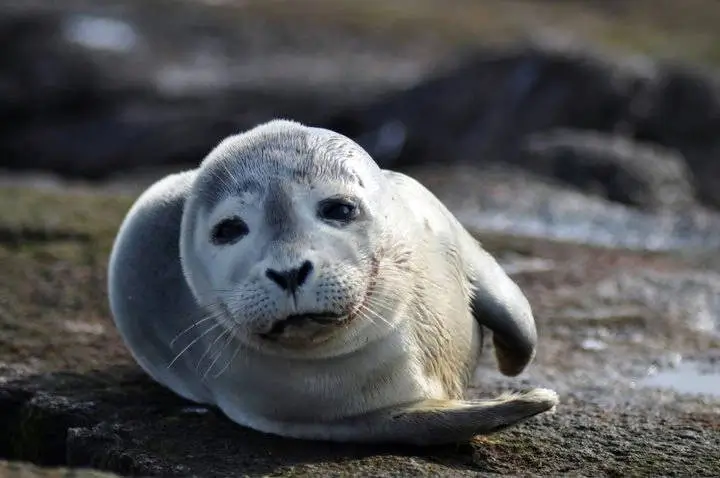
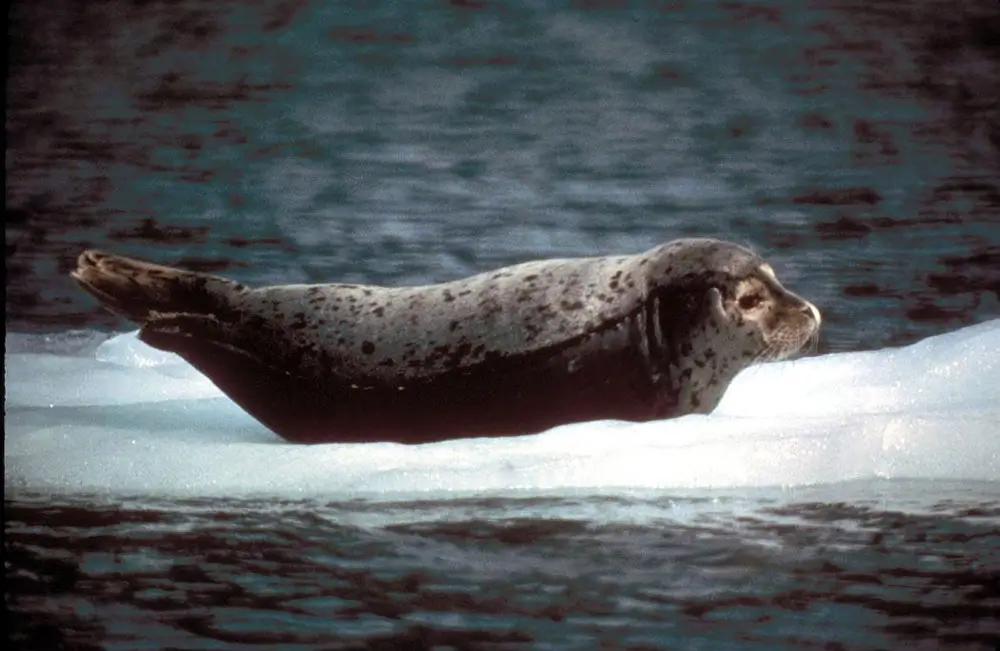
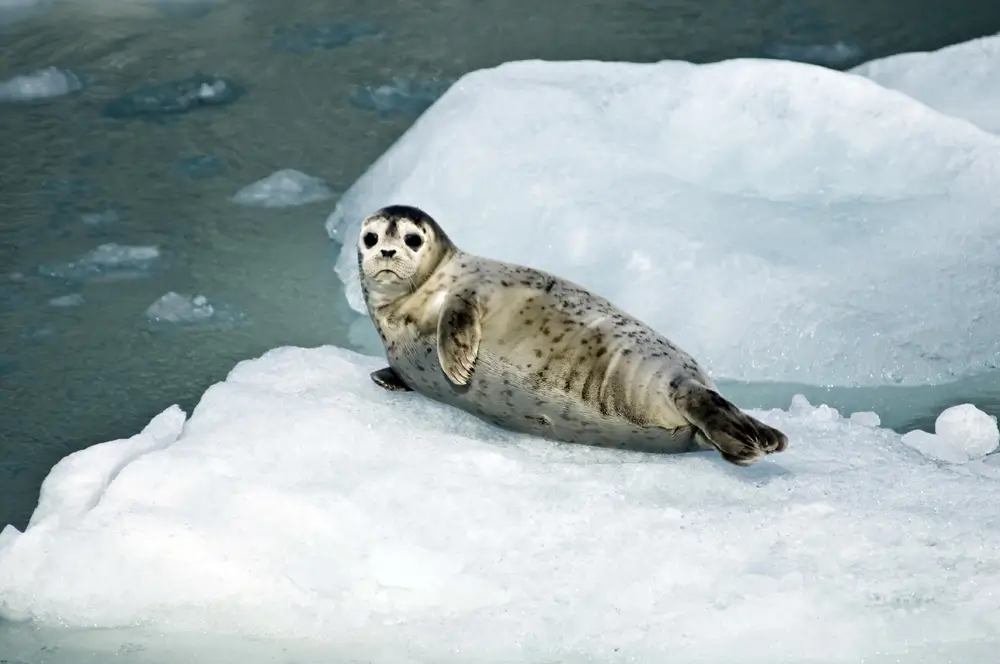
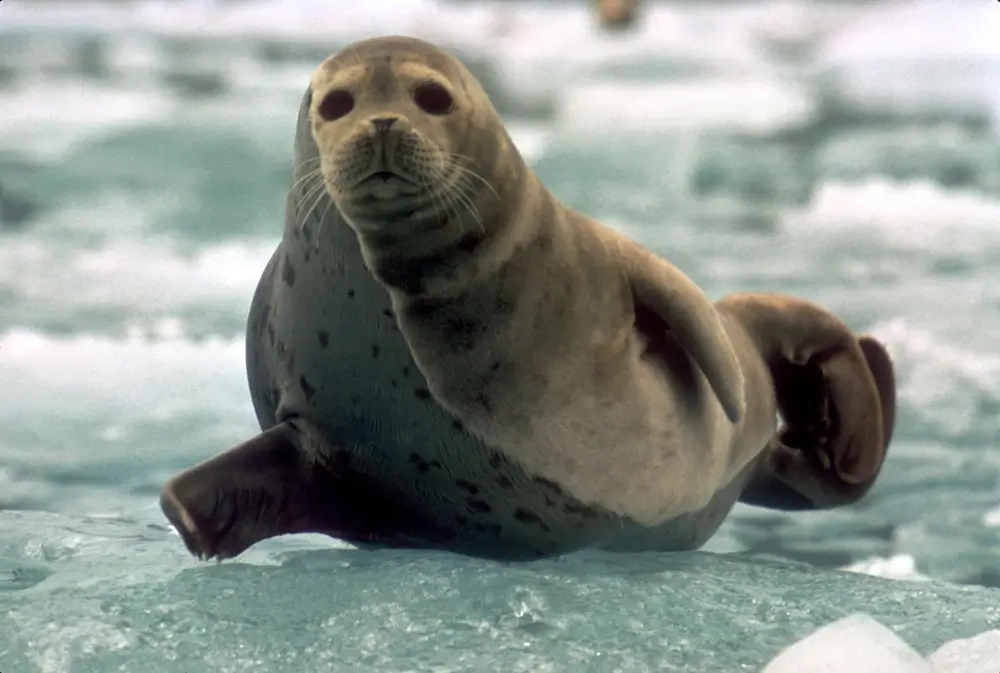
Harbor seals are 5-6 feet (1.5-1.8 m) in length and weigh 100- 375 pounds (45- 170 kg). Males are larger than females.
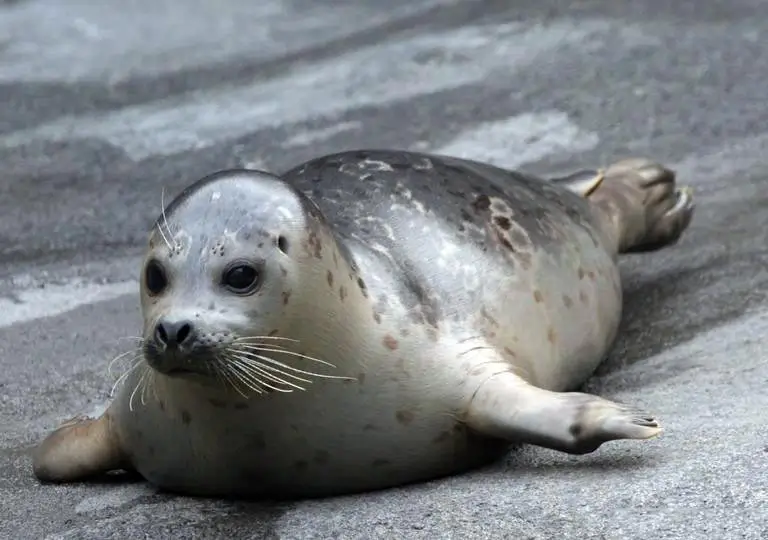
It has a gland in its skin that secretes oil that waterproofs its gray fur. It has a rounded head, a short snout, and a V-shaped nose that closes when it is underwater.
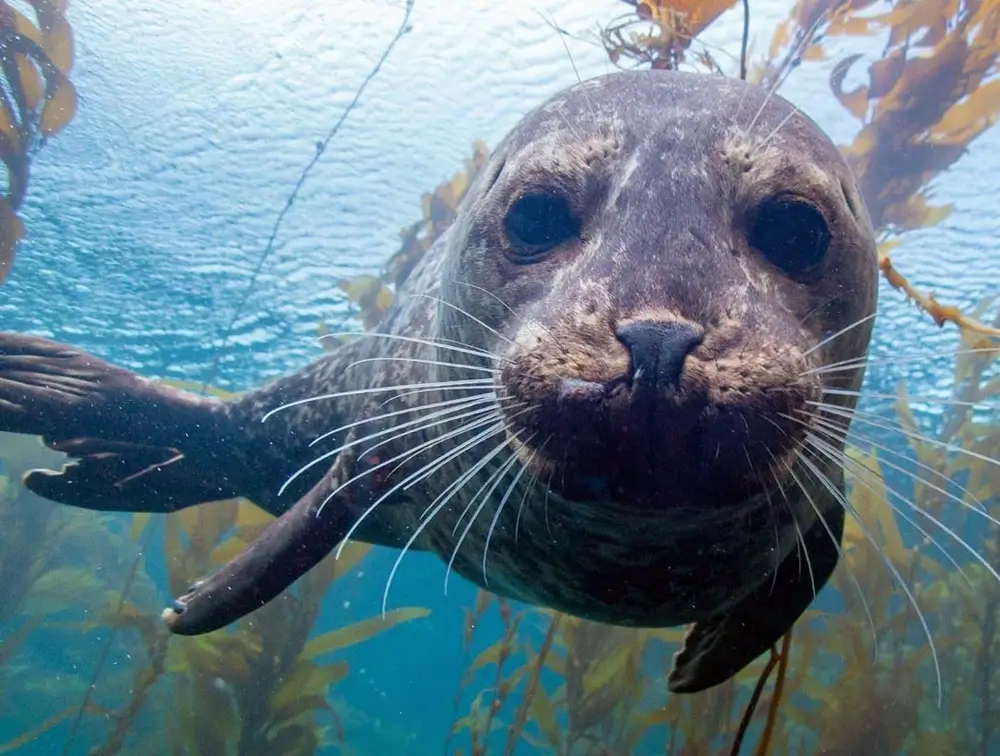
It has ear openings and long, droopy whiskers that it uses to find food underwater, and big, round, dark eyes. The harbor seal has short, webbed front flippers with five digits with 1-2 inch (2.54-5.1 cm) claws on the end that it uses for grooming and defense.
The harbor seal has webbed hind flippers that also have five digits. The first and fifth digits are longer than the middle digits, and its hind flippers look like fans when they lie flat. It has a short, flattened tail between its hind flippers. The harbor seal moves its hind flippers from side to side to propel itself through the water.
Harbor seals can swim right-side up or upside-down at speeds of up to 12 mph (19 kph).
Habitat
The harbor seal is found in shallow areas of estuaries, rivers, and places where sandbars and beaches are uncovered at low tide.
Diet
The harbor seal feeds mostly on fish like cod, herring, mackerel, salmon, hake, and flounder. It may also eat squid, clams, octopus, crayfish, crab, and shrimp. Adult harbor seals eat 5-6% of their body weight every day.
They swallow their prey whole or tear it into pieces. They use their back molars to crush shellfish. The harbor seal sometimes follows fishing boats and feeds on scraps thrown overboard. The harbor seal feeds at high tide and rests during low tide.
Life Cycle
Mating season runs from the spring through the fall. Harbor seals mate when they are 3-7 years old. The male may mate with more than one female. The female gives birth to one pup in the spring, 9-11 months after mating. She can give birth on land or in the water.
The pup weighs 12-20 pounds (5.4-9.1 kg) when it is born and is about 2.5 feet (0.762 m) long. It is covered with fur when it is born and can swim with its mother and follow her onto land within a few minutes of birth.
A pup sometimes rides on its mother’s back when she dives. The pup nurses for 3-6 weeks. The female mates again once her pup is weaned. Harbor seals can live 25-30 years in the wild. Females usually live longer than males.
Behavior
The harbor seal can dive to depths of 300 feet (91 m) and can stay submerged for close to 30 minutes, but most dives last only 5-10 minutes. Because it spends so much time underwater, the harbor seal has some adaptations that help it in a watery environment.
Its eyes are adapted for seeing in dark, underwater environments, and its sight is better in the water than it is on land. The harbor seal also has a better sense of hearing underwater than it does on land. The harbor seal moves its whiskers, or vibrissae, back and forth in a sweeping motion underwater to locate food. Its vibrissae can also detect movement in the water that might signal a fish or other prey moving.
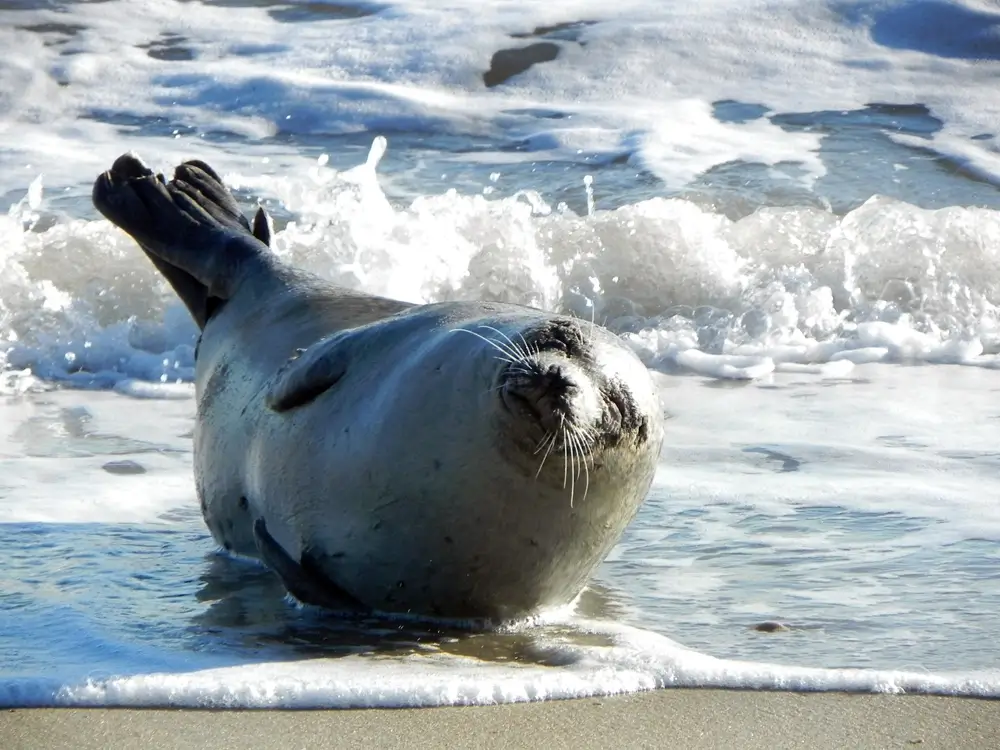
The harbor seal will “haul out” of the water and rest on rocks with its head raised and its rear flippers in the air in what is called the banana position. The harbor seal usually hauls out in the same area.
The harbor seal is the least vocal of the seal and sea lion family. It usually only vocalizes with snorts, growls, hisses, and sneezes when it feels threatened.
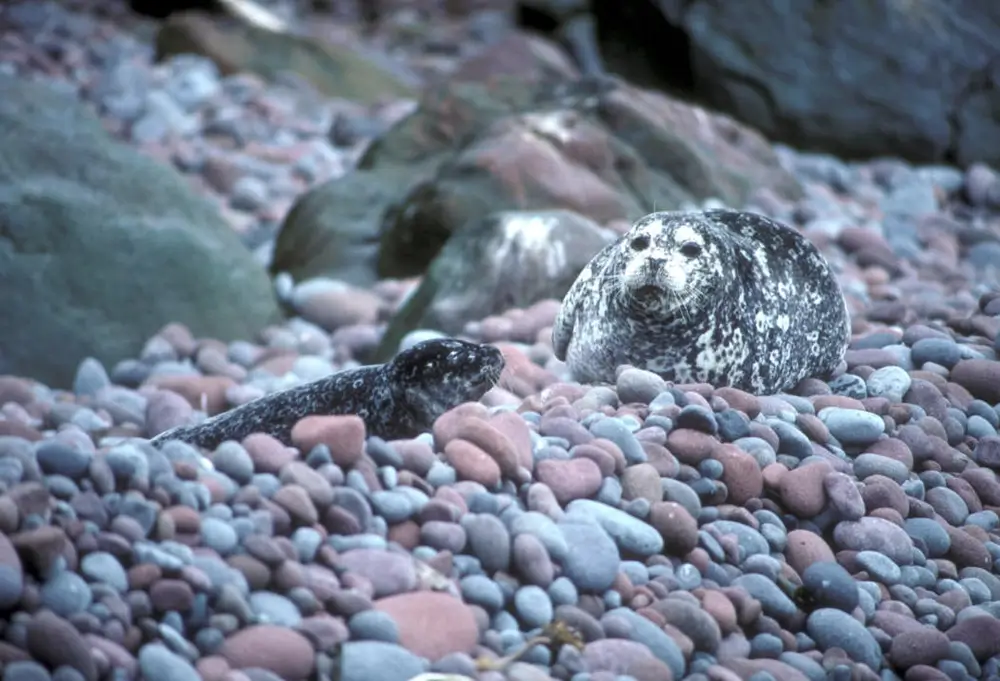
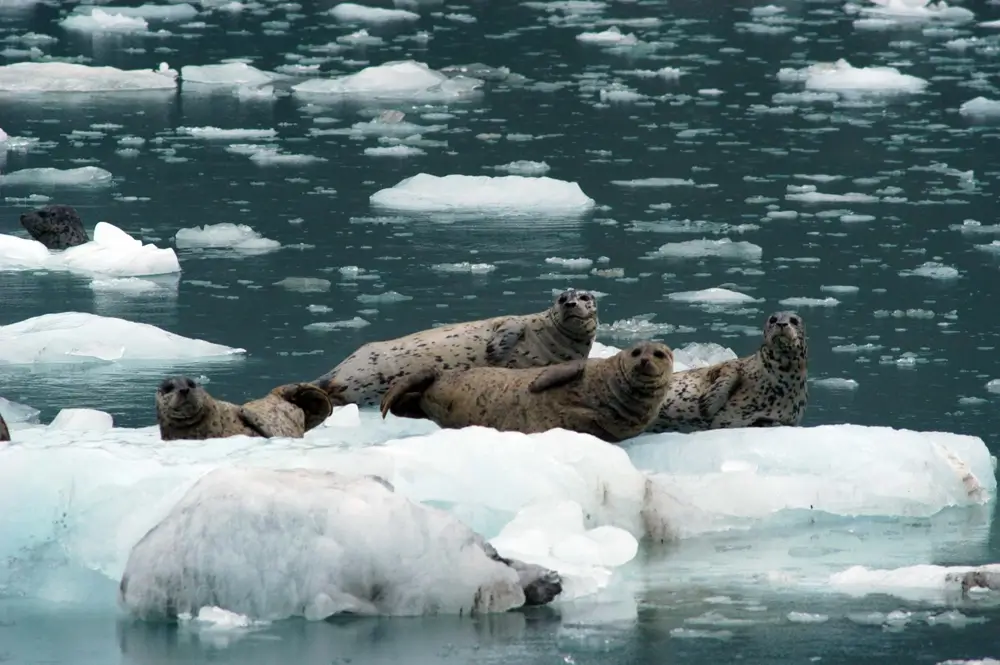
Adult harbor seals are usually solitary, but they do haul out in groups. When they haul out, they avoid touching each other. If they do touch, they growl, snort, head butt, scratch, or even bite each other.
Did You Know?
The harbor seal can sleep in the water. It takes a position known as bottling where all of its body, except for its head, is underwater.
Support for NatureWorks is provided by:
The Harbor Seal in NH
Harbor seals can frequently be seen in the winter and spring basking in the sun on the rocks exposed during low tide just north of Wallis Sands Beach in Rye.
You’ll have to look carefully because they look like rocks. You can see them really well with binoculars.
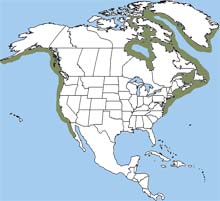
The harbor seal is found along the Atlantic Coast from Greenland and the Hudson Bay south to the Carolinas and along the Pacific Coast from the Southern Arctic south to the Baja California. Some populations of harbor seals migrate south in the winter.