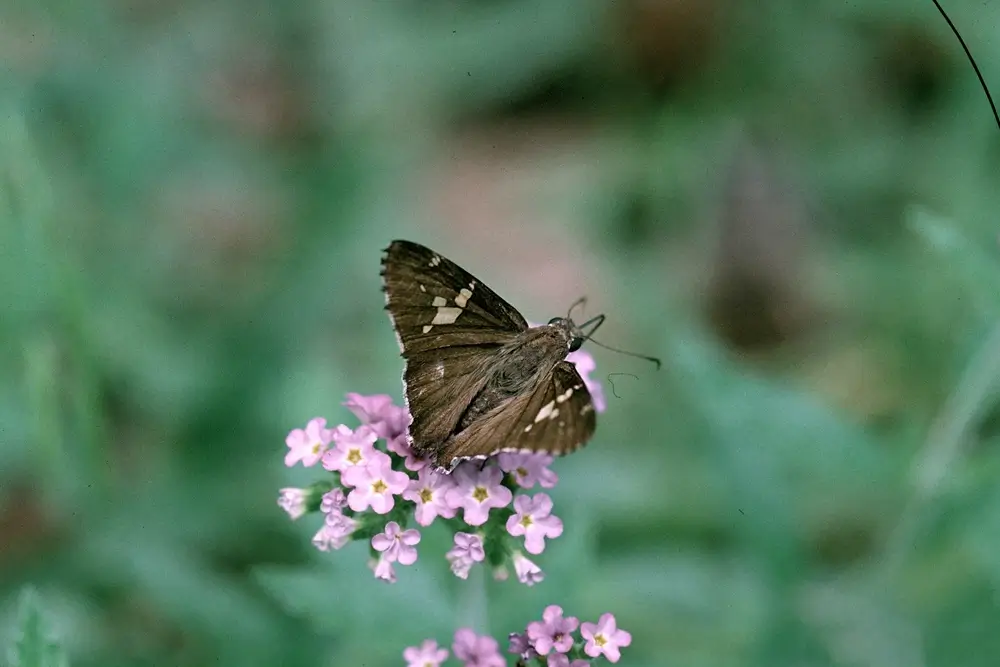
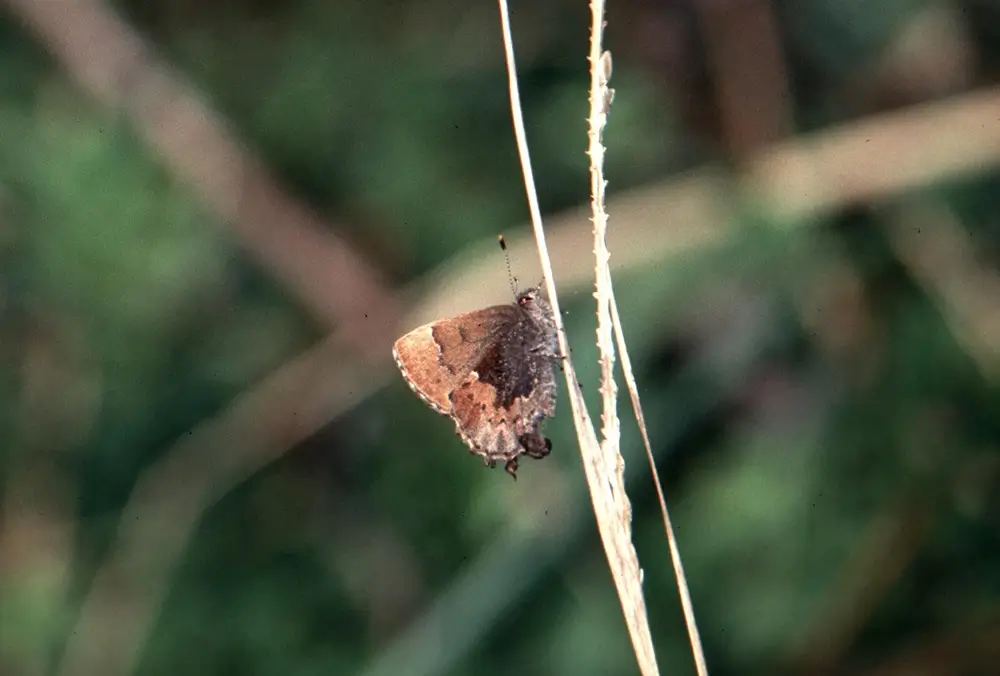
The Hoary Edge is a small butterfly with a wingspan of about 1.5 to 2 inches (3.8 to 5.1 cm).
Its forewings are triangular and dark brown on the upper side. Across the middle of each forewing, there is a row of pale yellow to orange-gold spots that form a loose band.
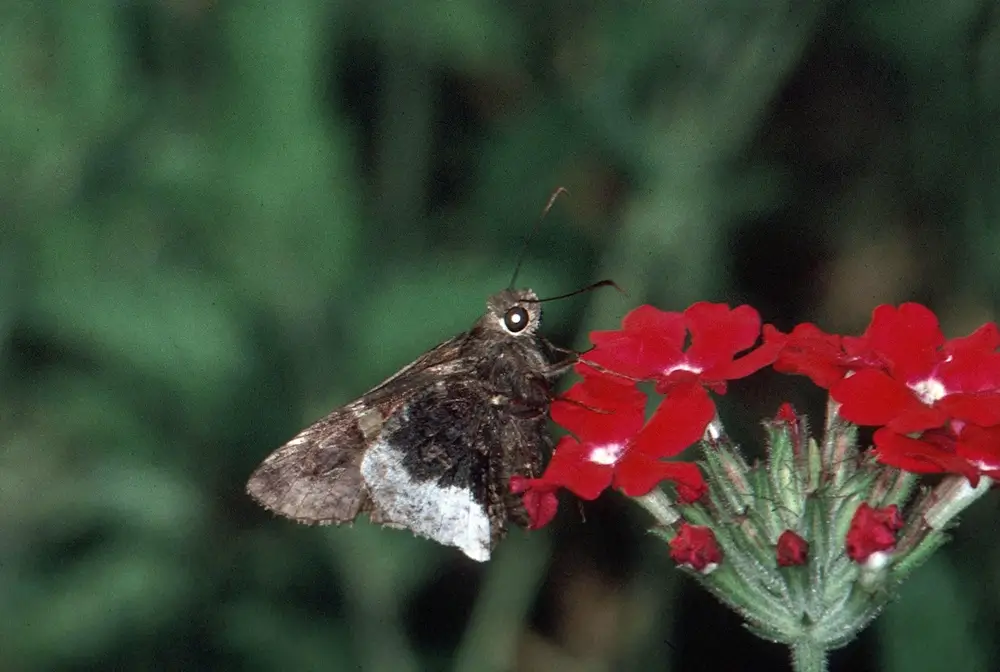
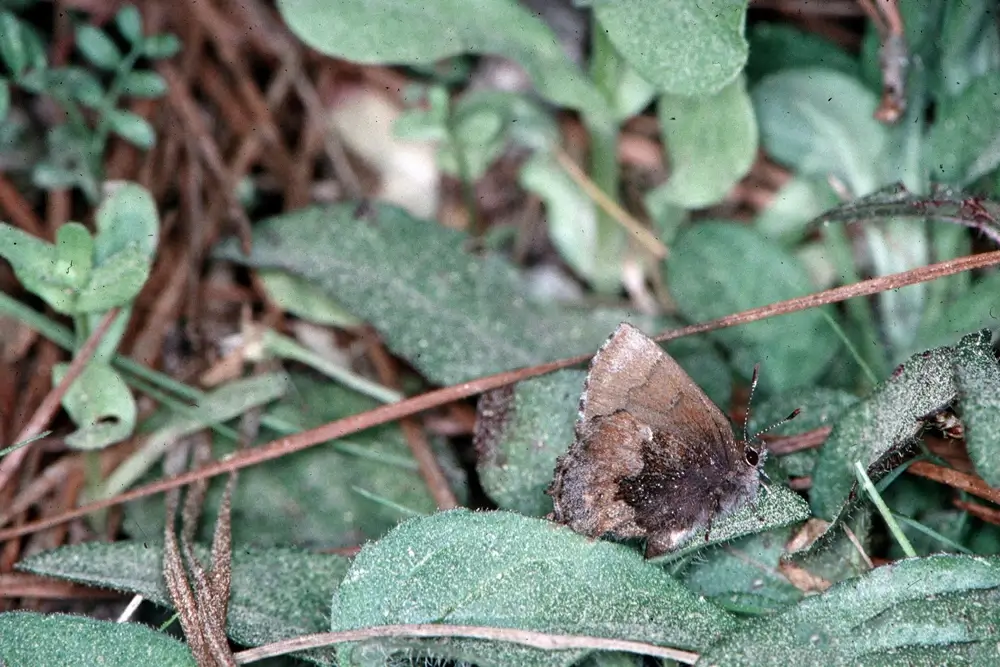
On the underside, the hindwings are dark brown to black with scattered darker markings in the center. The outer edges have a frosty gray-white border, which makes the wings look lighter around the edges and helps give the butterfly its “hoary,” or frosted, appearance.
The Hoary Edge is found in open woodlands and brushy areas with oak and pine trees and sandy soil. It is also found in meadows, gardens, and on roadsides.
The Hoary Edge caterpillar eats plants in the legume or Fabaceae family, especially bush clover, false indigo, and tick trefoil.
The adult eats nectar from a variety of flowers, including milkweed, dogbane, buttonbush, and Japanese honeysuckle.
The male Hoary Edge selects a spot on a tree or shrub 3-6 feet (0.9-1.8 m) above the ground, perches, and waits for a female. He defends his spot from other males and gives chase if one gets too close.
The female lays one egg at a time on the underside of a leaf.
In the northern part of its range, the Hoary Edge produces one brood a year. In the southern part of its range, it produces two broods a year. The larvae have a black head and a green body with yellowish-orange dots.
The Hoary Edge is very territorial and will aggressively chase other butterflies and insects away.
While their main food is flower nectar, Hoary Edge Butterflies, like many other butterflies, also practice a behavior called “mud-puddling.”
This is when they gather on damp soil, mud, or wet sand to drink water and absorb important minerals like salts and nutrients that they can’t get from nectar alone.

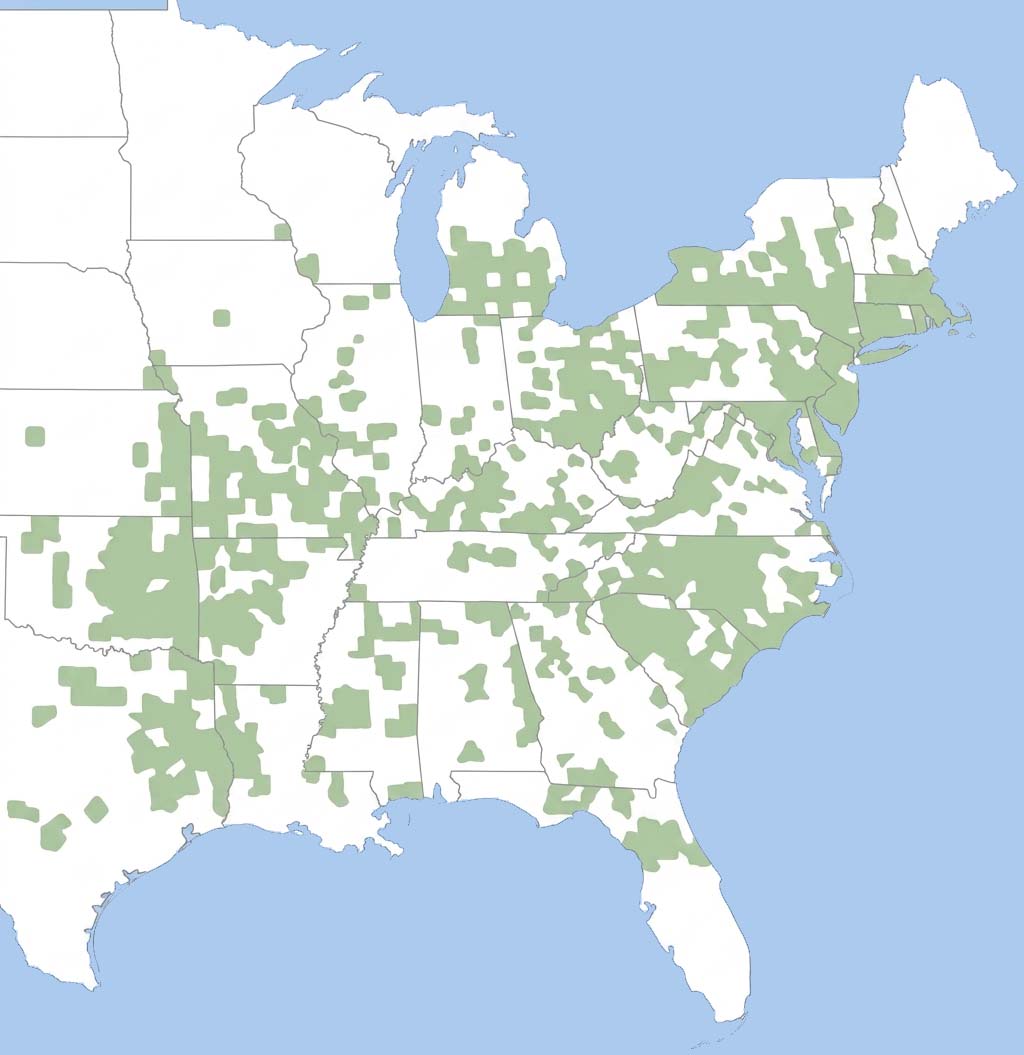
The Hoary Edge is found in New Hampshire, but it is rare.
The Hoary Edge is found from Minnesota east to New Hampshire and south to Texas and Florida.
NHPBS inspires one million Granite Staters each month with engaging and trusted local and national programs on-air, online, in classrooms and in communities.