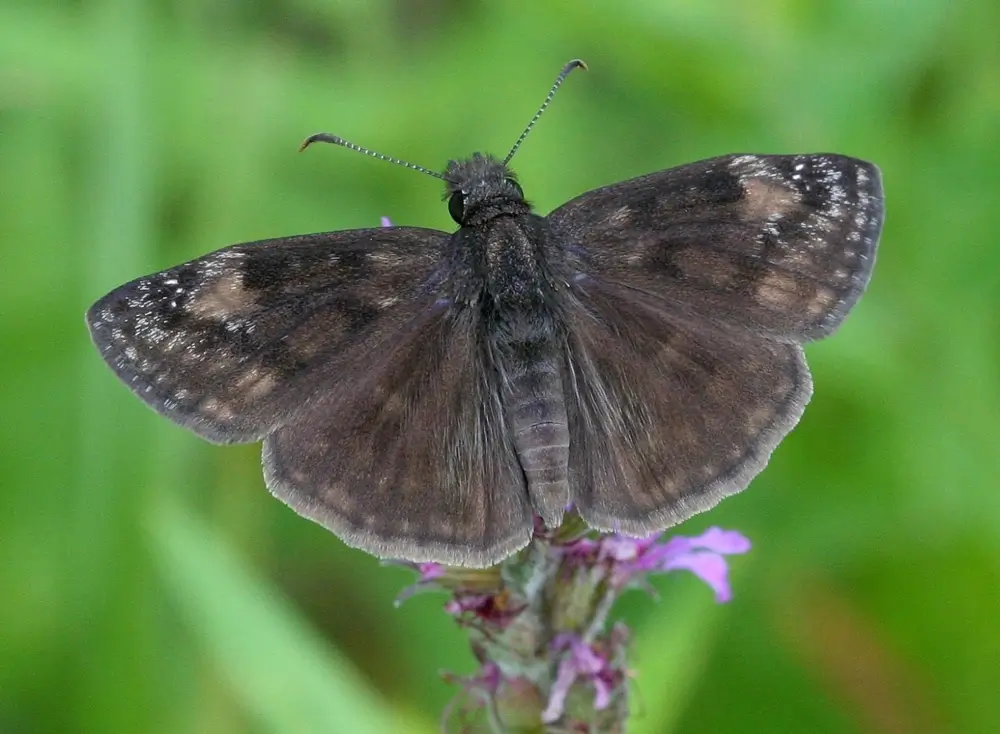
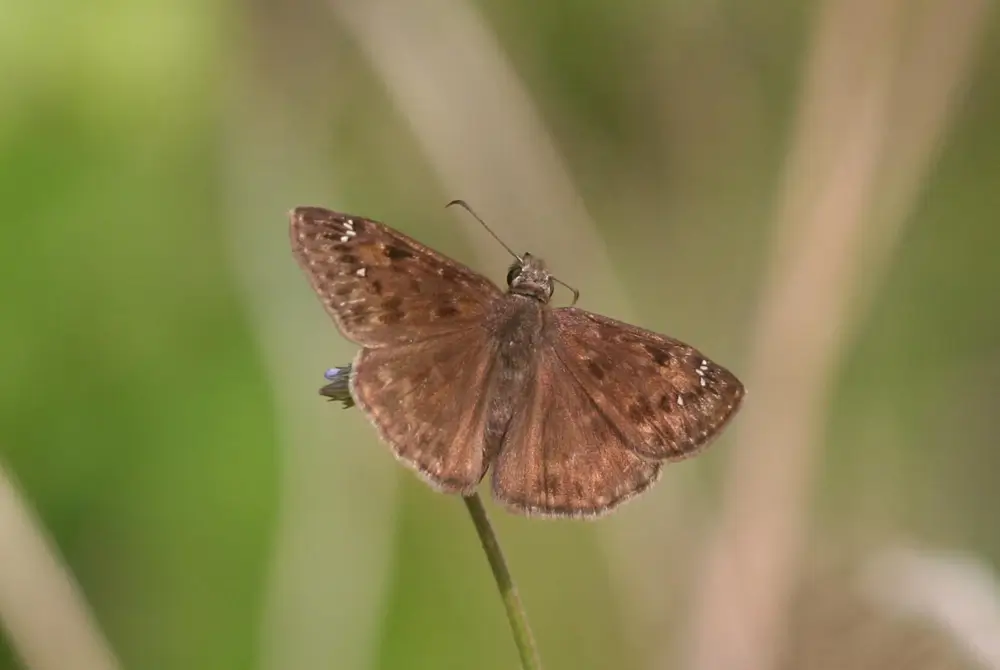
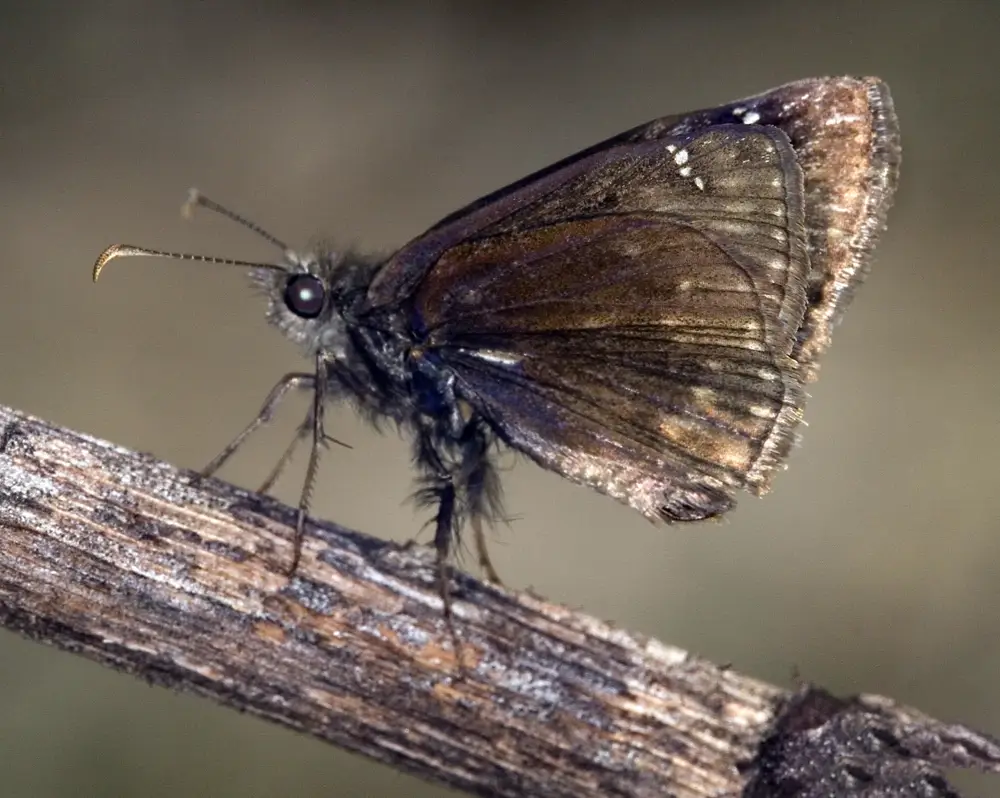
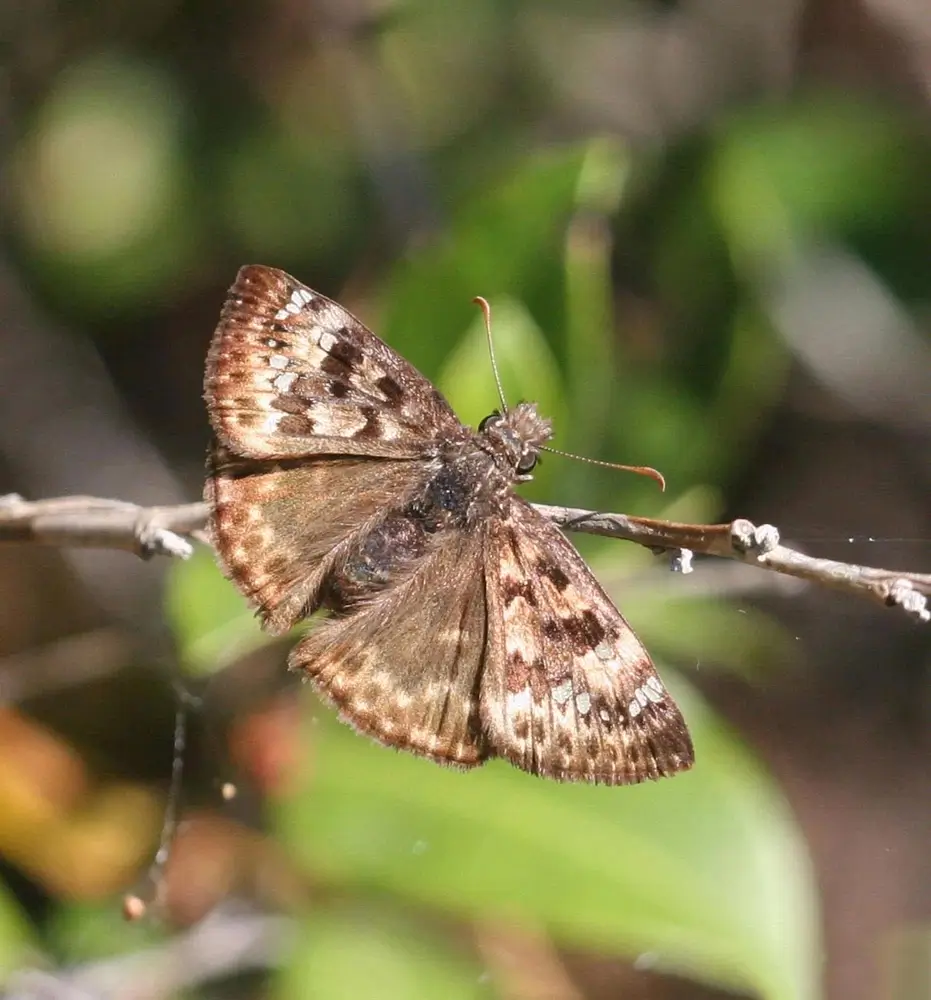
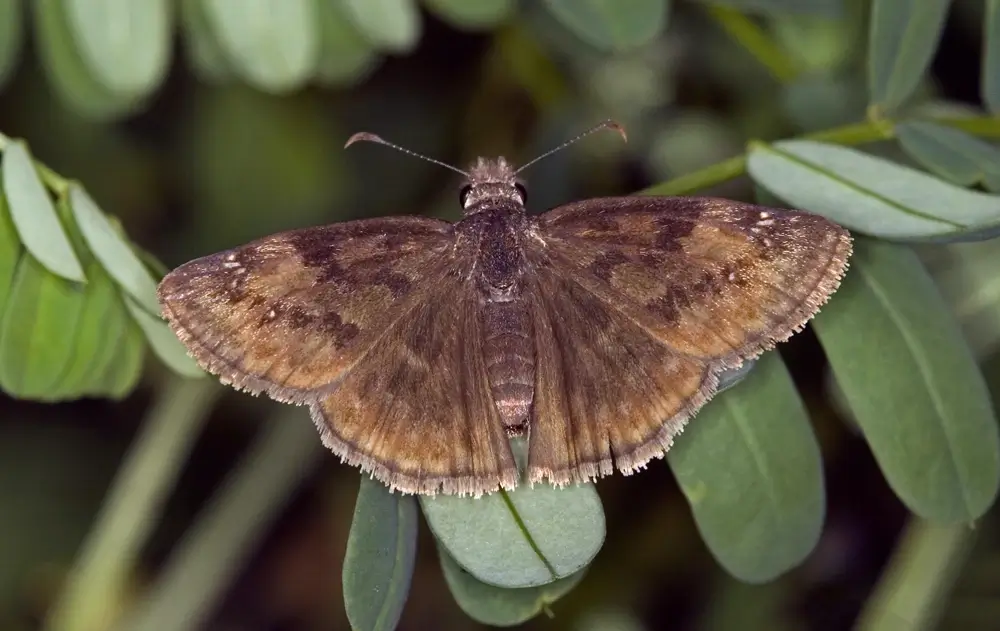
Horace’s duskywing is a large skipper with a wingspan of 1.5 to 2 inches (3.8-5.1 cm).
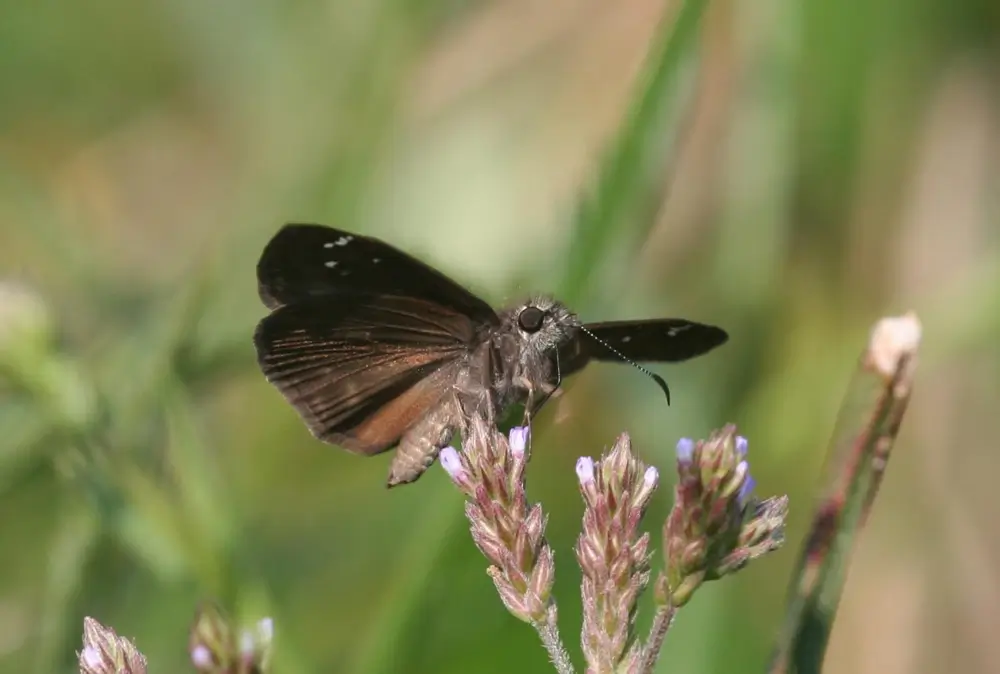
It has brown-fringed wings. The male has dark brown forewings with small white spots. The female has lighter, mottled brown forewings with larger white spots.
The male has a costal fold containing yellow scent scales. A costal fold is a fold or flap of scales on the forewing of some male butterflies and moths.
Habitat
Horace’s duskywing is found in sunny spots at the edges of woodlands, clearings, oak scrub, and roadsides.
Diet
The Horace’s duskywing caterpillar eats new leaves of red and white oak trees, including northern red oak, scrub oak, water oak, and willow oak.
The adult prefers flowering plants that are 4.5 feet tall, including goldenrod, dogbane, buttonbush, and peppermint.
Life Cycle
The male Horace’s duskywing perches on a twig about a foot above the ground and waits for a female.
The female lays one egg at a time on the new leaves of host plants. The female Horace’s duskywing produces two or three broods a year. The caterpillars in the last brood overwinter.
The caterpillar is hairy with a light green body with white spots. It has a red, orange, or yellow head.
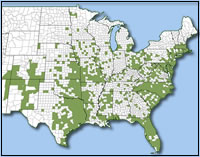
Horace’s duskywing is found from South Dakota east to New England and south to Texas and Florida. It is also found in Utah, Colorado, New Mexico, and Arizona.