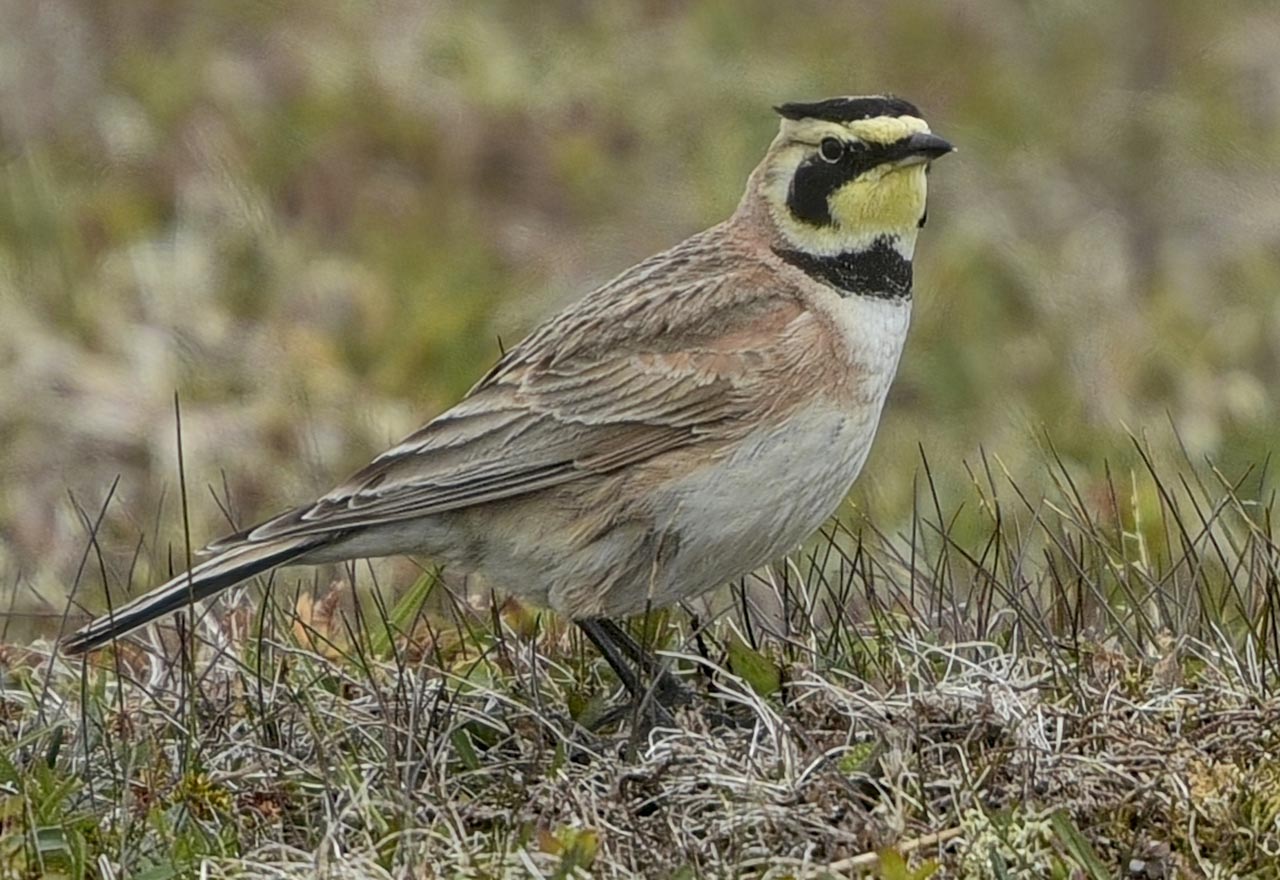
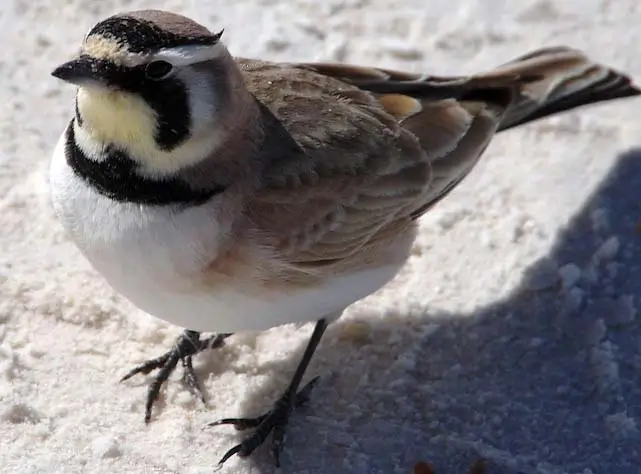
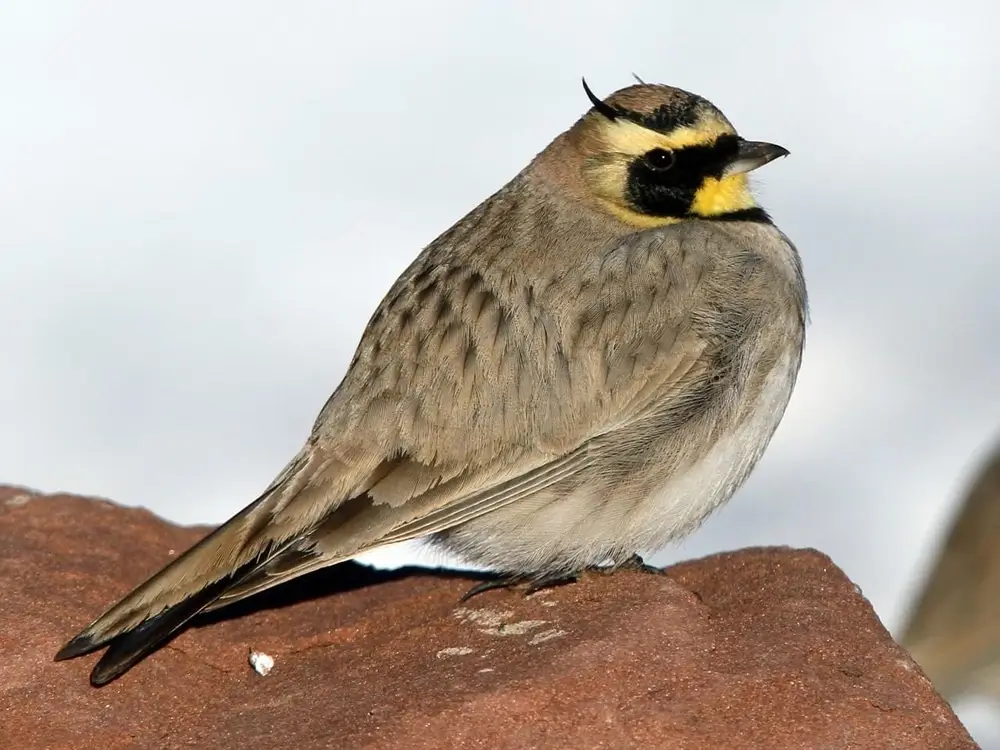
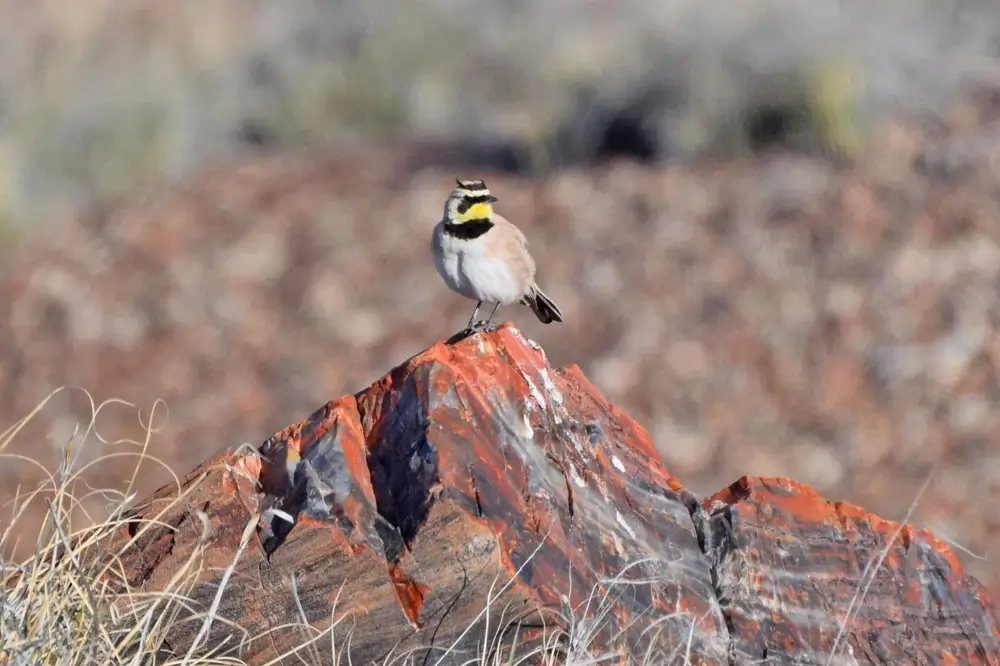
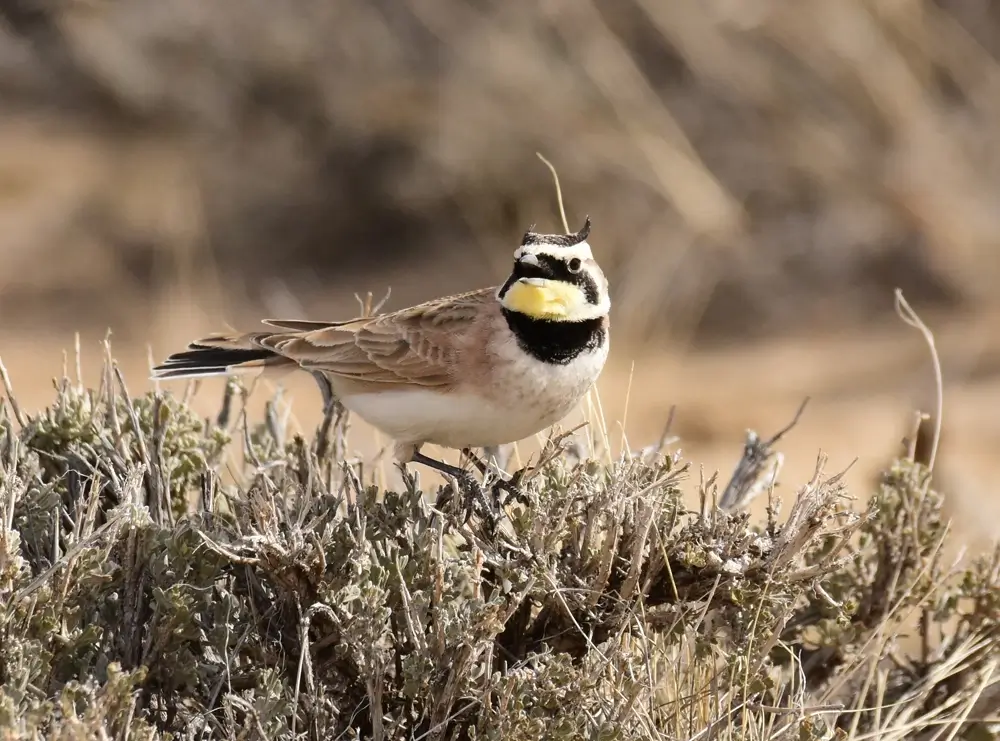
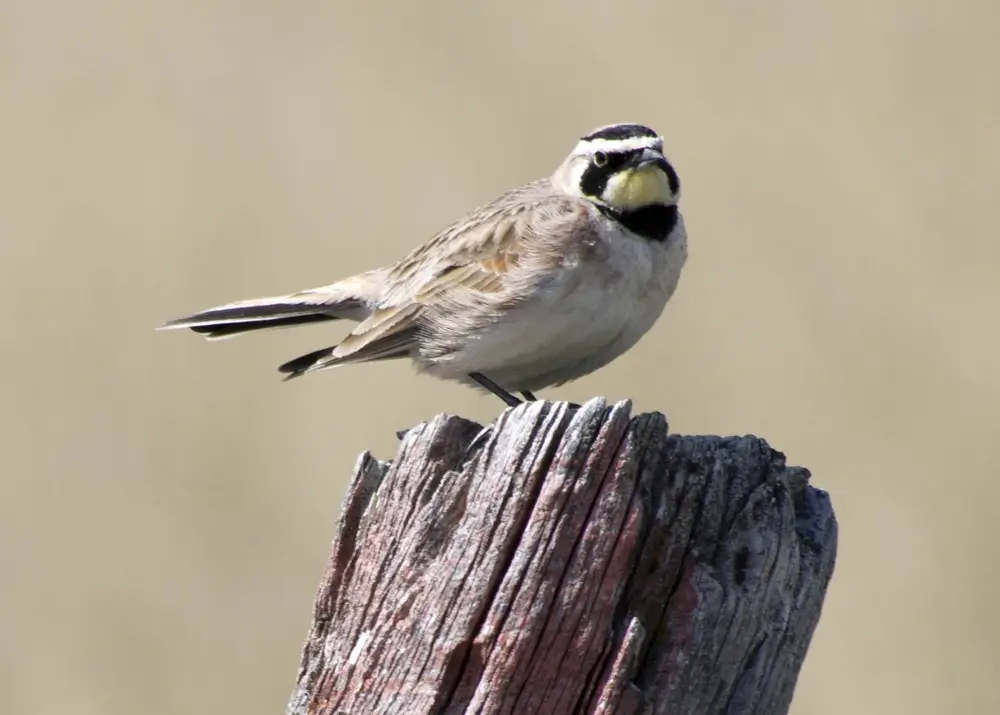
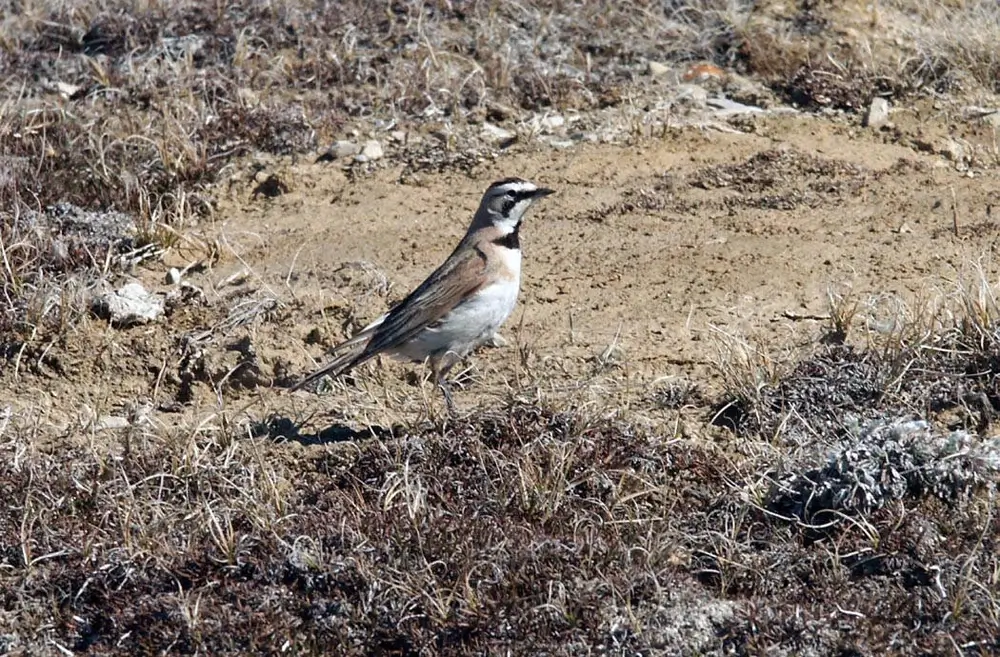
The horned lark is the only lark native to North America. It is 6-8 inches (cm) in length and has a wingspan of 12-13 inches (cm). It has a tan back, a black, crescent-shaped patch on its breast, a black stripe on its face, and a black tail.
It has a yellow throat and tufts of feathers on its head that look like horns. It has a long, straight claw on its hind toe called a larkspur. The larkspur is common on other species of larks.
Male and female horned larks look alike, but the female is a little duller in color.
Habitat
The horned lark is found in open areas and areas with short grass. It is often found in fields, prairies, on lawns, near airports, and along beaches.
Diet
The horned lark eats small seeds from a wide variety of grasses and weeds. It occasionally eats insects, especially in the summer. It may also eat berries and snails.
Life Cycle
The male horned lark flies above the female in circles and sings. He then dives toward the ground with his wings folded. Just before he hits the ground, he opens his wings and lands.
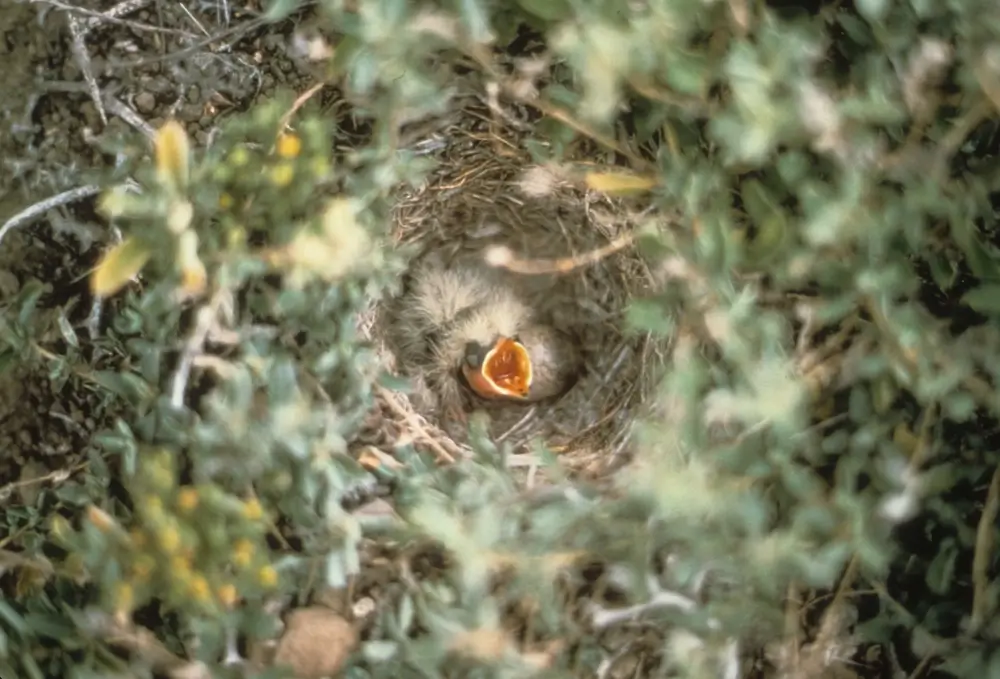
The female lays 2-5 eggs in a nest made of woven grasses and other plants. The nest is lined with feathers and made in a depression in the ground. The female incubates the eggs for 10 to 14 days.
The male and the female feed and care for the chicks. The chicks fledge when they are 9-12 days old, but their parents continue to feed them for a while. The female may have as many as three broods a year.
The horned lark has a lifespan of 3 to 5 years in the wild.
Behavior
The horned lark is a ground-dwelling bird; it may perch on a fence post or tree stump, but never in a tree. On the ground, it doesn’t hop – it walks or runs.
Did You Know?
The horned lark is a very vocal bird and makes a “tsee-ee” sound. It sings in the air and on the ground.
Support for NatureWorks is provided by:
The Horned Lark in NH
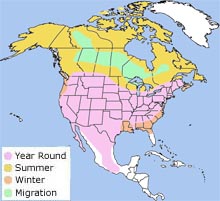
The horned lark was once common north of the White Mountains after the area was deforested in the 1800s, but it has largely disappeared from that area since the late 1990s.
Its current breeding range in the state is now limited to airports in Concord and Portsmouth. Horned larks also once nested on dunes in Hampton and Seabrook.
They can also be seen in the state during the winter and during migration, usually in the Connecticut and Merrimack River valleys and in the Seacoast region.