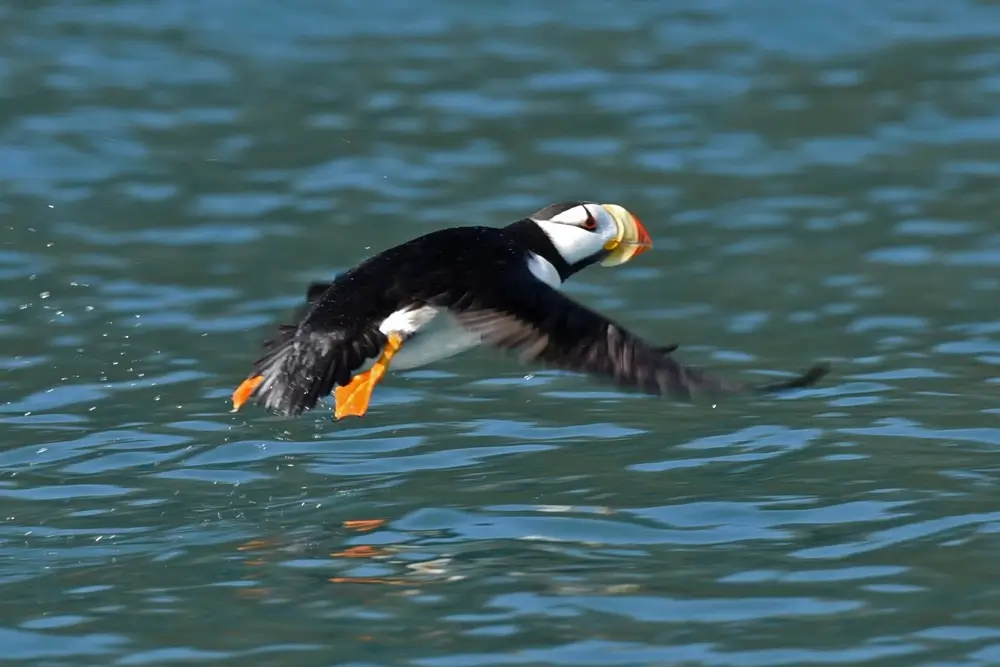
The horned puffin is a small, pigeon-sized bird. It is around 15 inches (38 cm) in length and has a wingspan of 23 inches (58.4 cm).
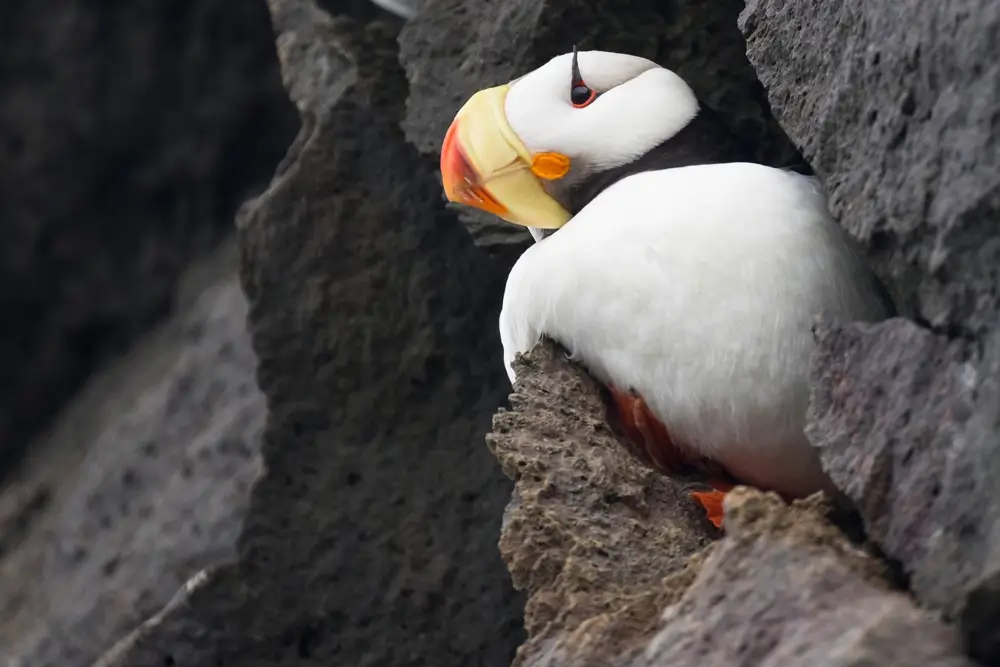
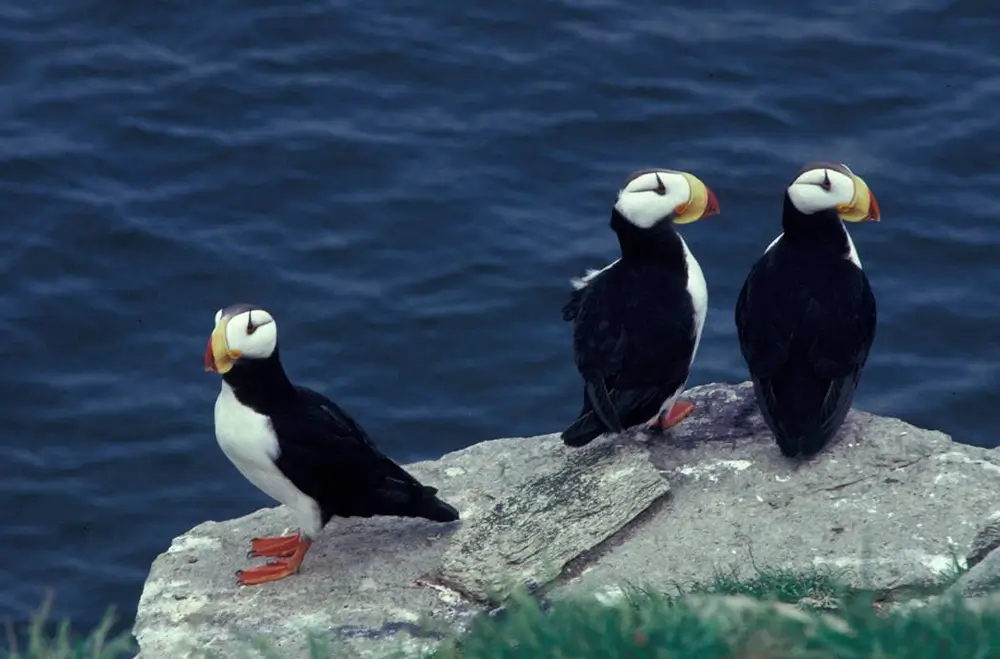
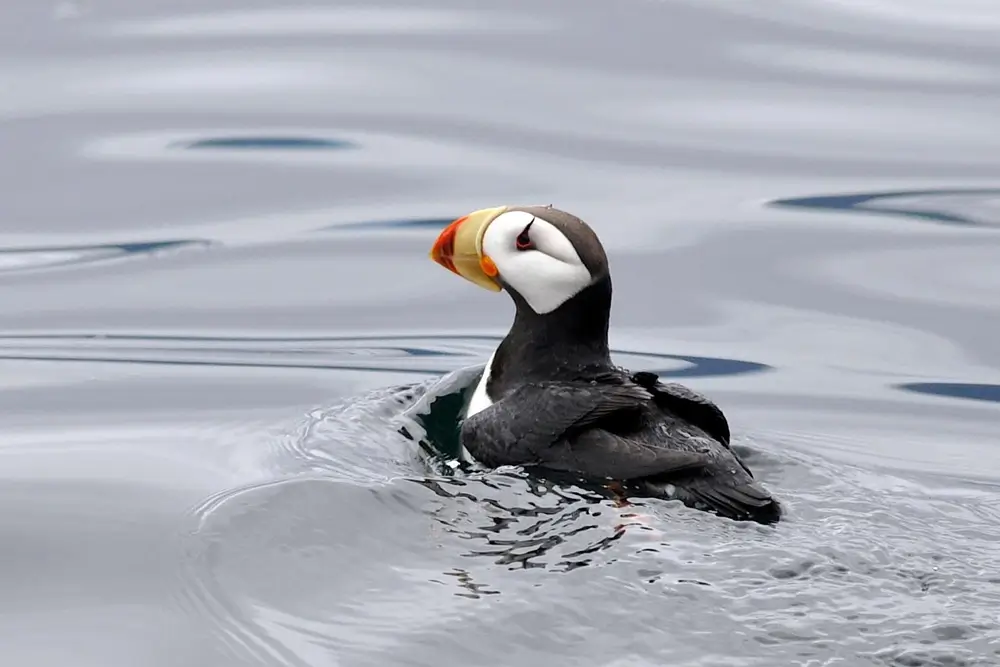
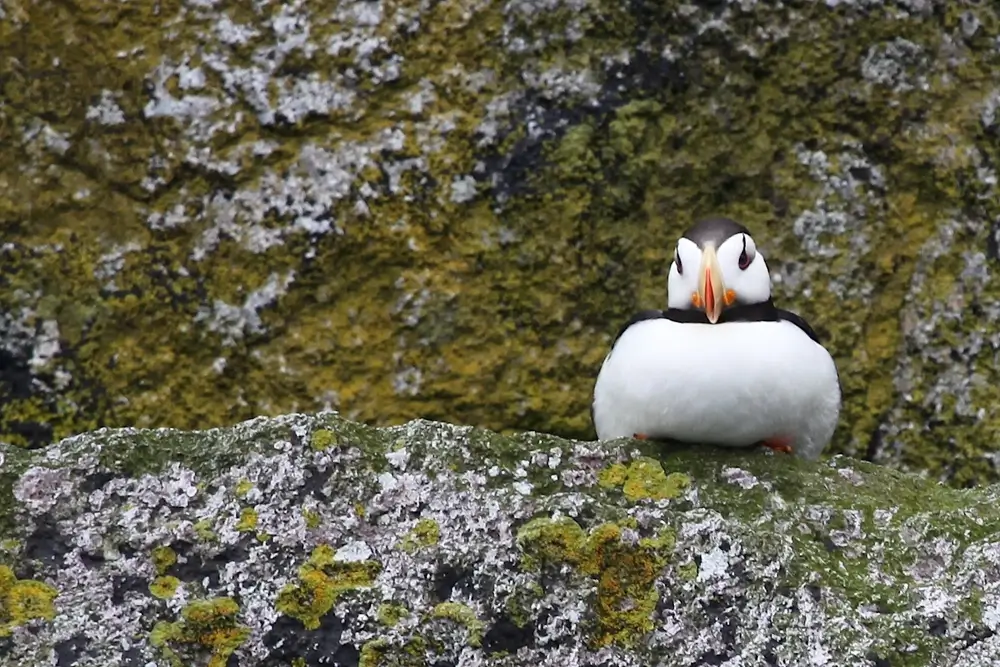
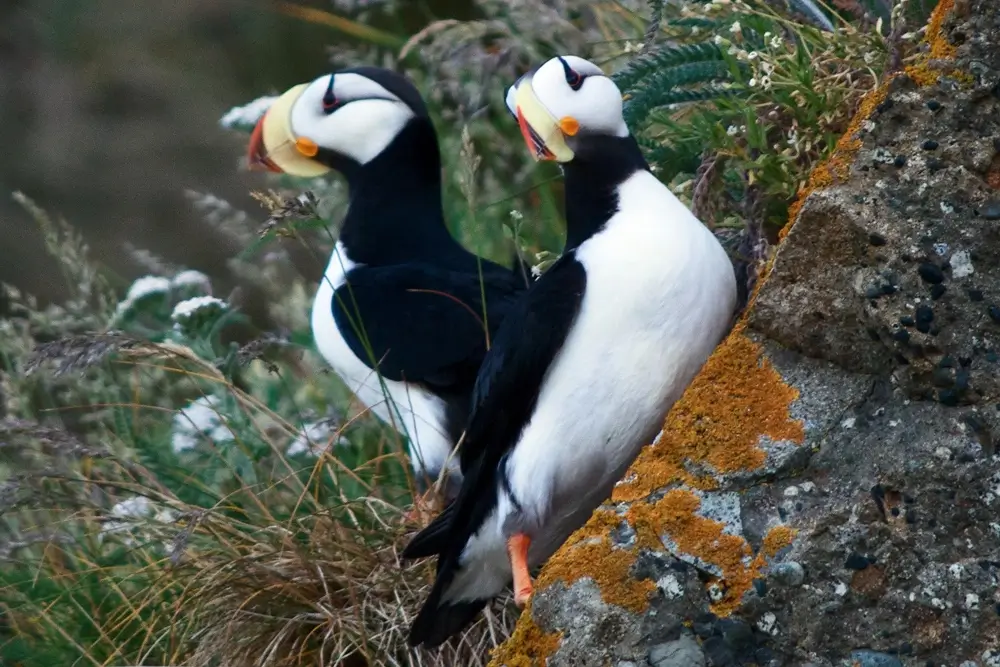
During the breeding season, it has black uppersides and a white chest and undersides. It has a white face and cheeks with a small black “horn” above its eyes and a thin, dark line that runs from its eyes to the nape of its neck. It has a large, triangular orange bill with a red tip. It has bright orange legs and webbed feet with claws on the ends of them.
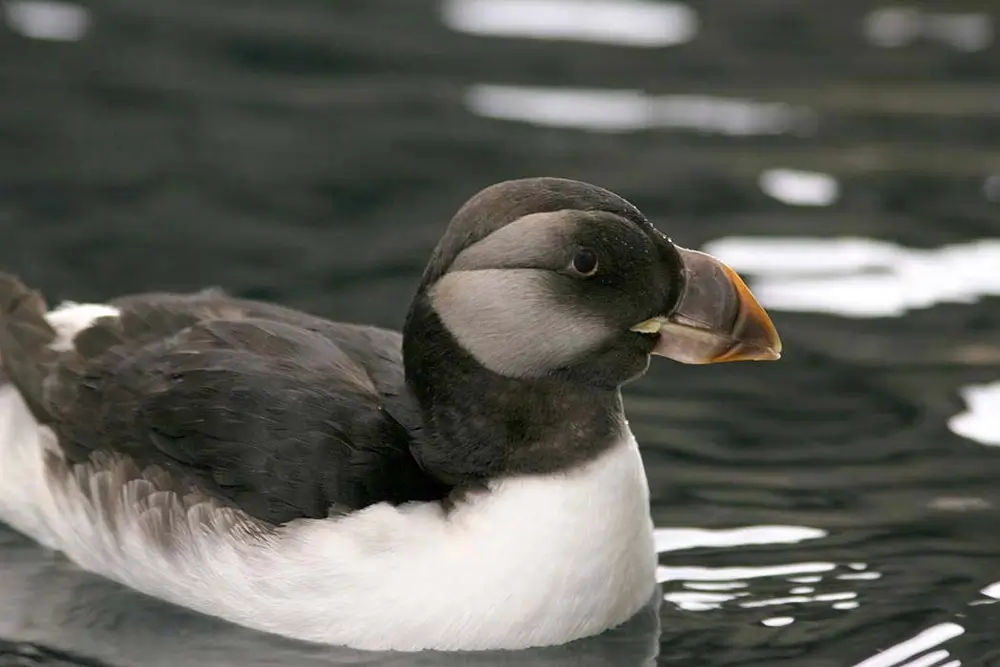
In the winter, the horned puffin’s bill is smaller, its feathers are grayer, and its face is darker. Males and females look similar, but the male’s bill is bigger and brighter than the female’s bill, and the male is a little larger. Because of its colorful bill, the horned puffin is sometimes called the sea parrot.
Horned puffins exhibit a type of deceptive coloration called countershading. Animals with countershading have different colors on their backs and stomachs. The puffin’s dark coloring on the top makes it hard for predators above them in the water to see them because the puffin blends into the dark water. The light coloring on the underside of the puffin helps them to blend into the sunlit water above and makes locating the puffin more difficult for predators swimming under them.
Habitat
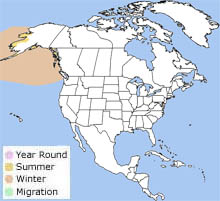
The horned puffin is pelagic. A pelagic animal lives on the open sea. In breeding season, it is found on sea cliffs or on rocky islets.
Diet
The horned puffin uses its large bill to catch fish and marine invertebrates. It can dive up to depths of 80 feet to catch its prey. The horned puffin can carry more than one fish in its mouth at a time.
Life Cycle
In the summer, horned puffins come in from the open ocean to mate. Horned puffins form pairs that mate for life. A pair usually builds a nest in a crevice on a cliff or in a hole between boulders. The female lays only one egg a year.
Both parents incubate the egg. They place the egg under a wing and then lean their body against the egg. The egg hatches in about 40 days, and both parents feed and protect the chick.
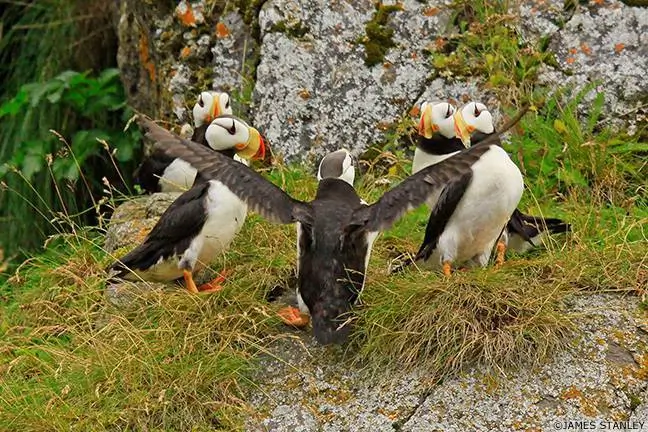
When the chick fledges in 40 days, the parents leave the chick and return to the open ocean. The chick then goes out to the open ocean waters and remains there for at least two years. Horned puffins breed in large colonies with the tufted puffin.
The horned puffin has a lifespan of around 20 years.
Behavior
The horned puffin’s legs are set well back on its body, and it is not very graceful on land, but it is an excellent swimmer. It uses its wings to propel itself in the water and its legs to maneuver. The puffin can fly, but it is a much better swimmer.
Did You Know?
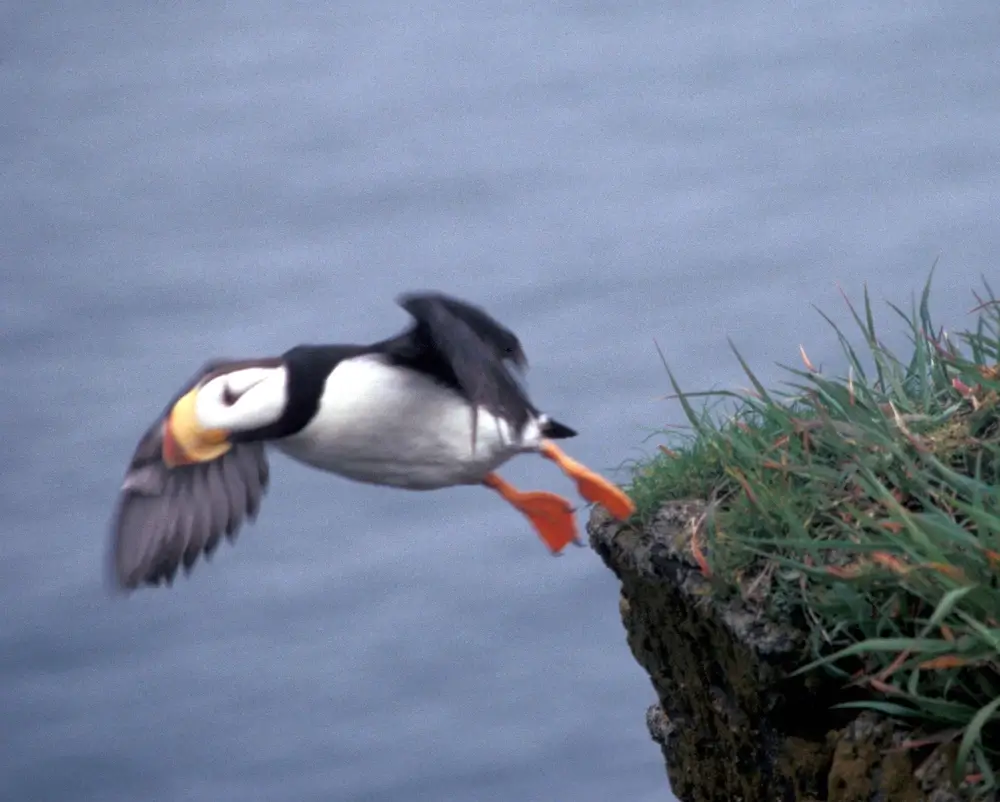
To get airborne, the puffin must run on the surface of the water for a long distance. It also dives off cliffs to take flight.