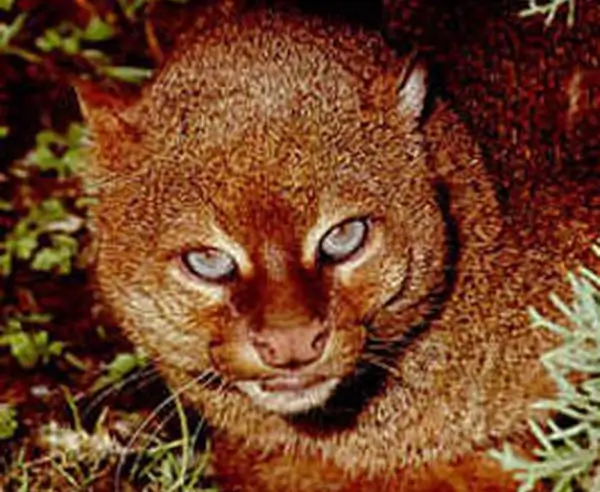
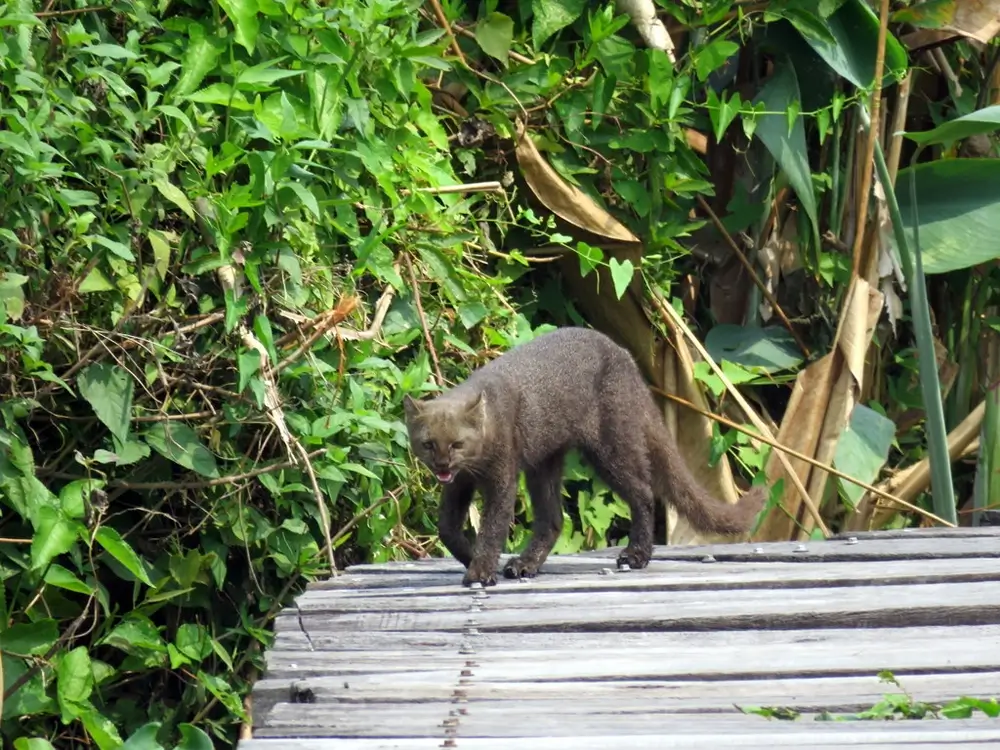
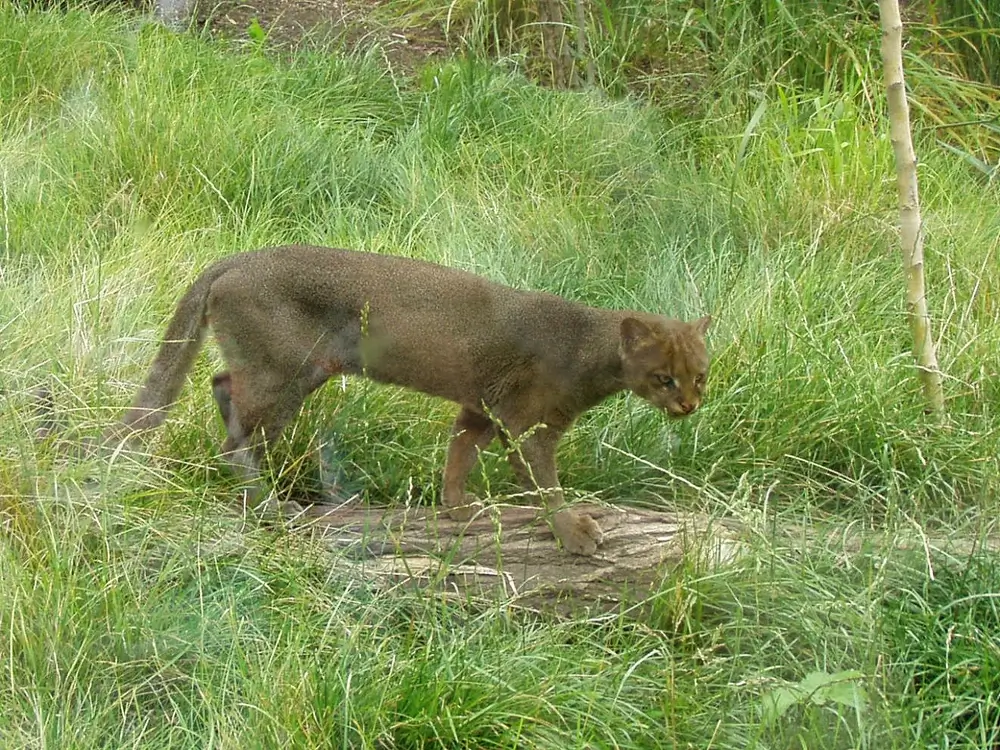
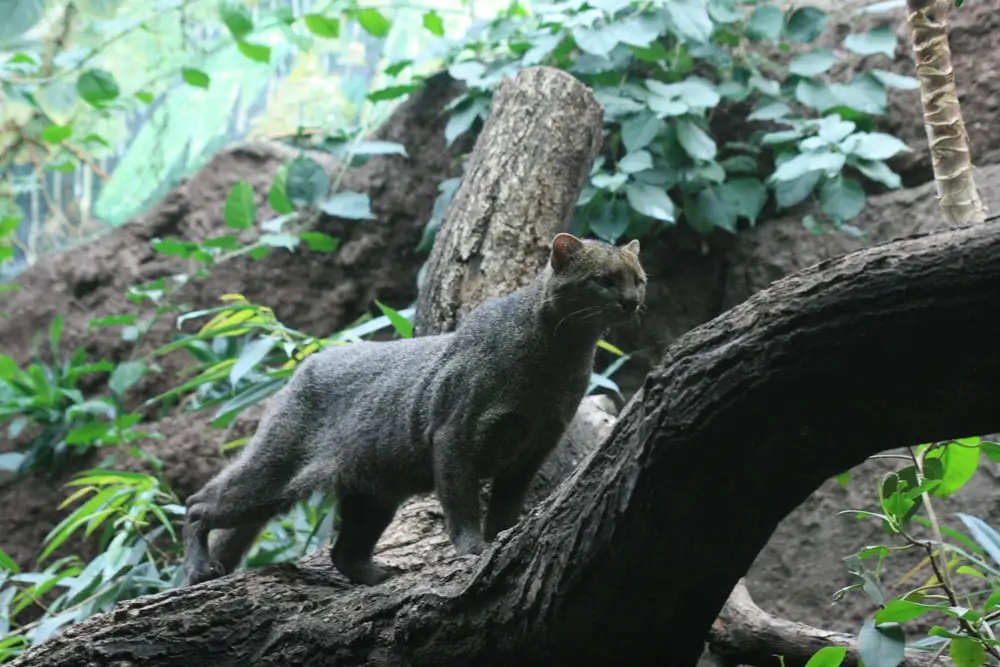
The jaguarundi is 3 to 4.5 feet (0.91-1.4 m) in length from the tip of its nose to the end of its tail and 10-24 inches (25.4-61 cm) tall at the shoulders. Its tail can be as long as 1-2 feet (0.3-.61 m). It weighs 12-18 pounds (5.4-8.2 kg) and has unspotted gray or reddish-brown fur.
If it is gray, it has two white patches under its nose. If it is reddish-brown, it may also have a white or cream throat. It has a long, slender body; a flattened, triangular head with short, rounded ears; an extremely long tail; and short, powerful legs.
It has been compared in looks to a weasel or an otter. In fact, in Mexico, it is sometimes called the “otter cat.”
Habitat
The jaguarundi lives in brushy lowland areas with cactus, mesquite, and other spiny plants. It is also found in swamps and forests. It usually lives near water.
It does not make its own den; it finds a natural den in a cave, under a bank, or in the tall grass.
Diet
The jaguarundi hunts both at night and during the day. It eats birds, small mammals, and reptiles. It stalks its prey and then pounces on it. It is a good swimmer and also eats fish. It occasionally eats fruit.
Life Cycle
The jaguarundi breeds year-round. After a gestation period of about 75 days, the female gives birth to 1-4 kittens. The kittens have spots that eventually disappear.
The kittens are weaned when they are about a month old. The mother takes the kittens out and teaches them how to hunt. The kittens stay with their mother until they are about 10 months old.
The jaguarundi has a lifespan of 10-15 years in the wild. In captivity, it can live to be 6-22 years old. Threats to the jaguarundi are habitat loss and fragmentation from farming and development.
Behavior
The jaguarundi is a solitary animal and usually only socializes to mate and to raise young. It is a very vocal cat with as many as 13 separate vocalizations.
It is mostly active during the day, but it is sometimes active at night. The jaguarundi is a good climber and swimmer.