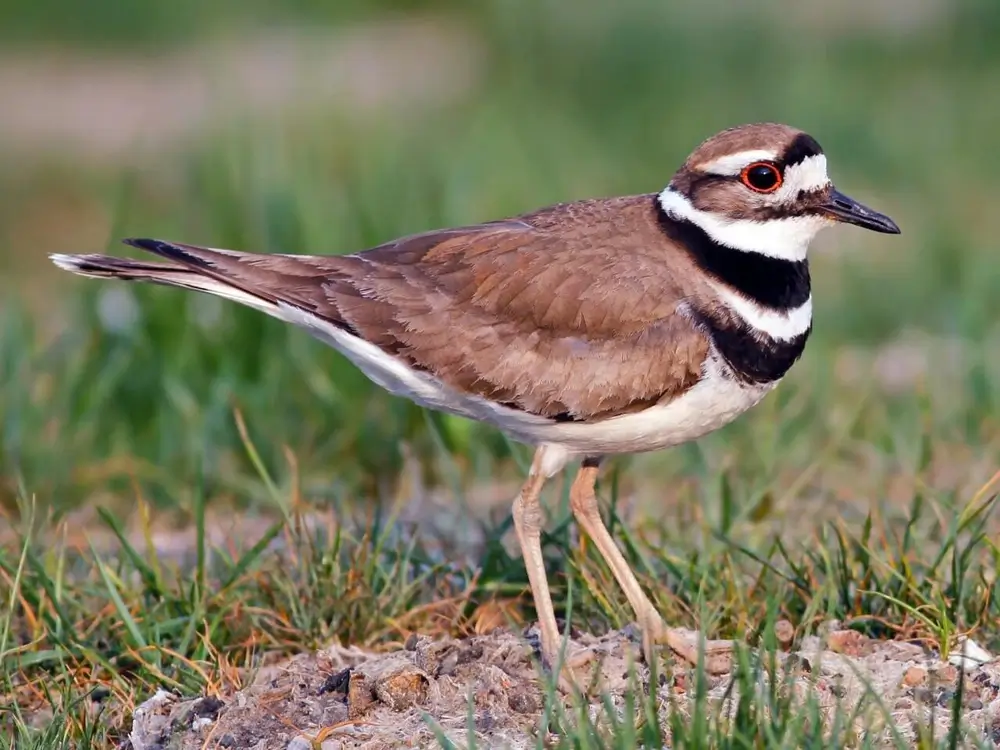
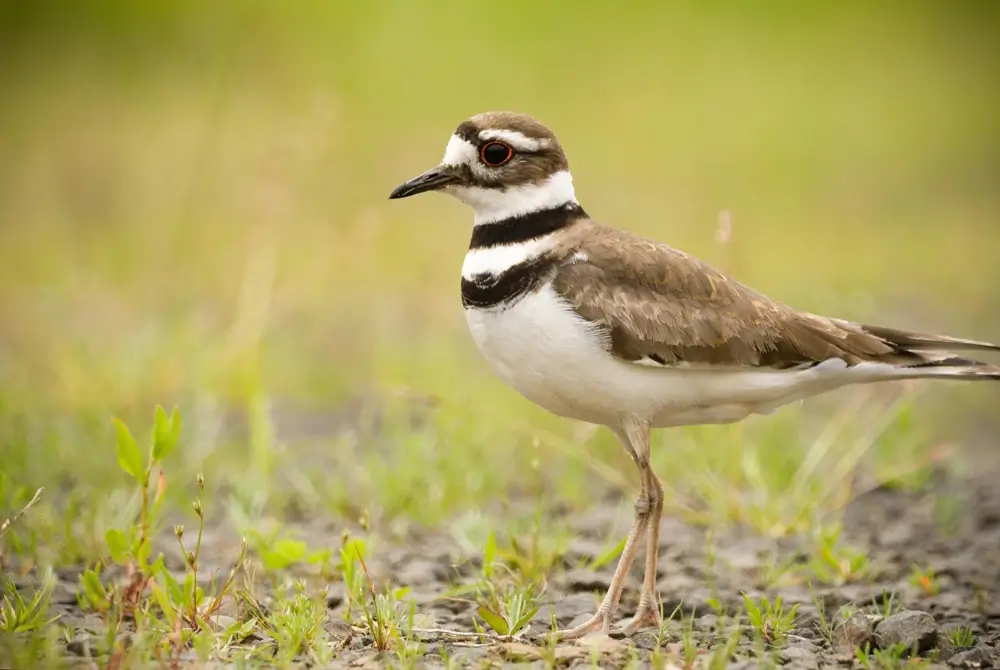
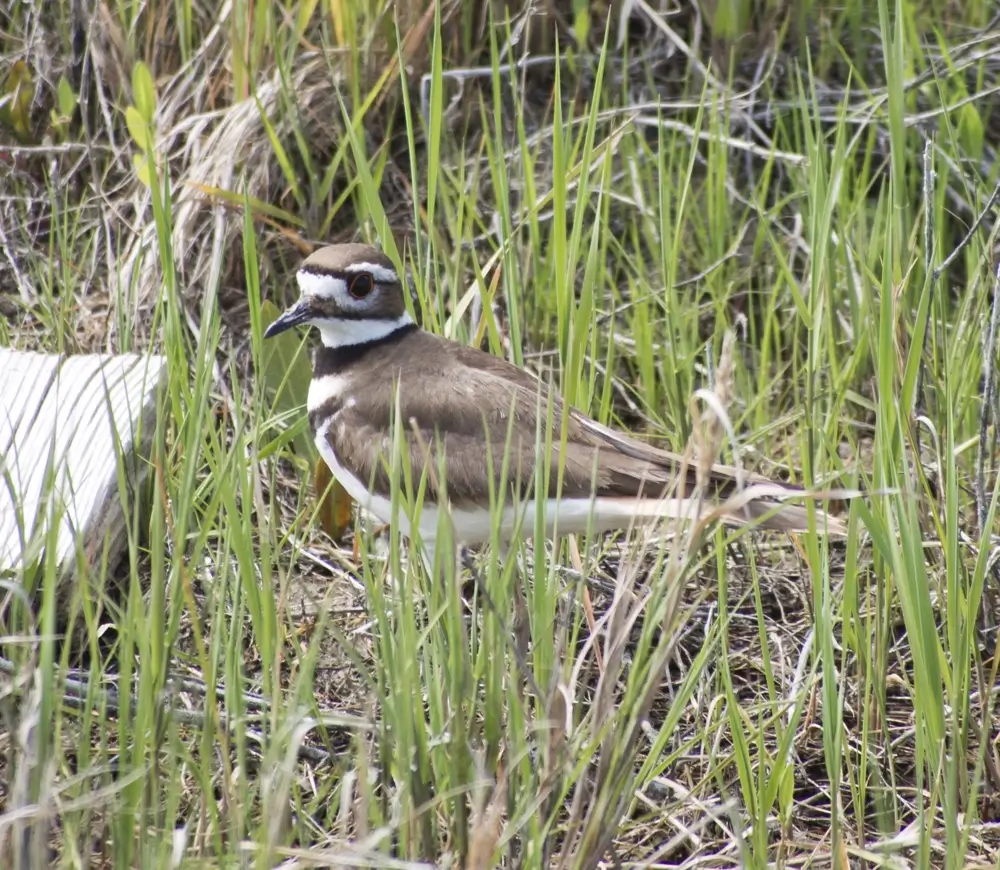
The Killdeer is a robin-sized bird. It is about 9–11 inches (23–28 cm) long with a wingspan of 18.1–18.9 inches (46–48 cm).
It has brown upper sides and white undersides. It has a brown head with a black band between its eyes, white eyebrows, and black bands around its upper chest. It has a sharp, black bill; long legs; and a long tail. Males and females look the same.
Habitat
The Killdeer is found in open grasslands, wetlands, fields, pastures, and short-grass prairies. It is often found on sandbars, mudflats, and pastures.
Diet
Insects make up the majority of the Killdeer’s diet, but it also eats berries and crustaceans.
Life Cycle
The male Killdeer claims a nesting territory before selecting a mate. To attract a mate, the male stands in his territory and makes a two-note call for hours at a time. The male may also scrape at the ground and fly over his territory.
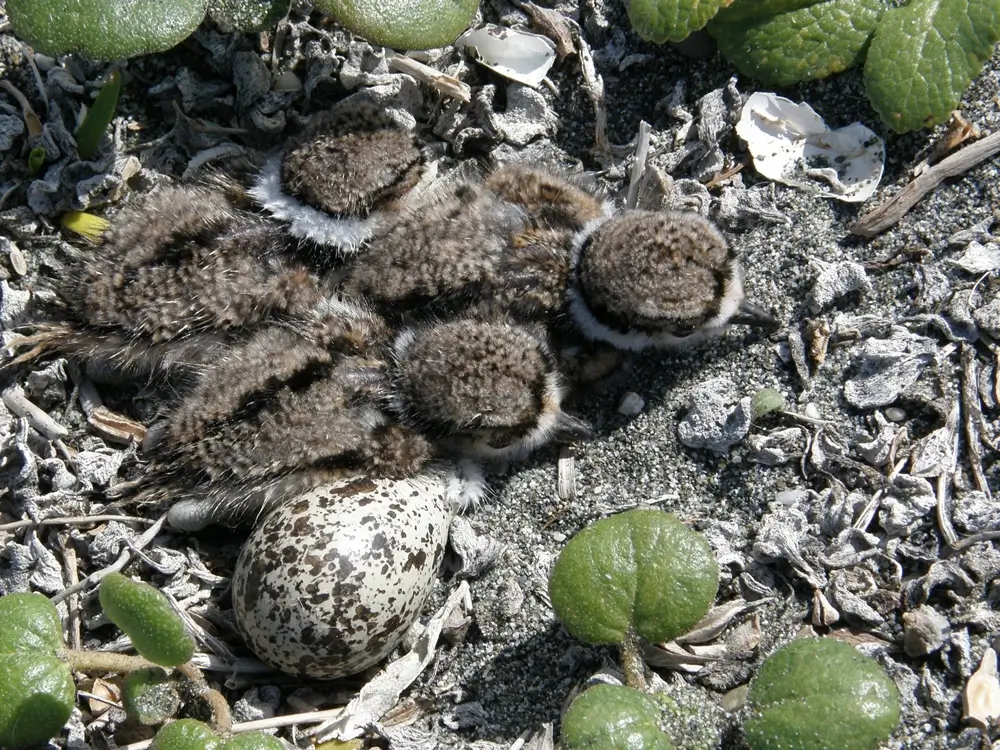
Once Killdeer have mated, the pair scrapes out a nesting site. The female Killdeer lays an average of four eggs. Both the male and the female incubate the eggs. It takes about 24-28 days for the eggs to hatch.
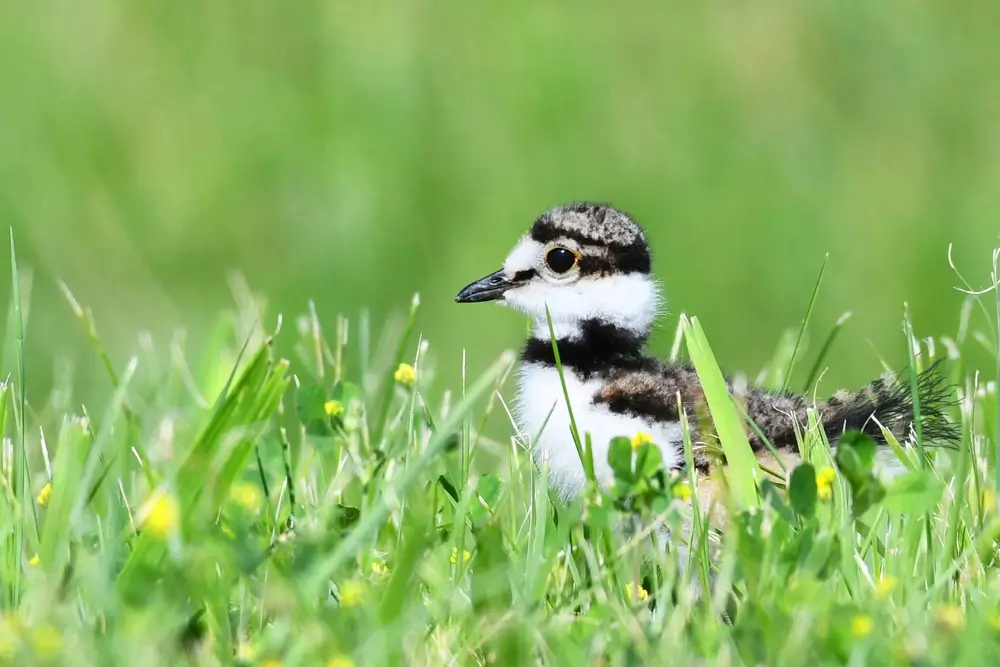
The chicks are precocial, which means they can move around and feed themselves shortly after birth. Once the chicks’ down dries, the parents lead them to a feeding area.
The chicks stay with their parents until they fledge (develop flight feathers), a month after birth. The Killdeer may have two broods a year.
The Killdeer has a lifespan of 3-5 years. The oldest killdeer on record was close to 12 years old.
Behavior
Killdeer do not usually gather in flocks. They are most often seen alone or in male–female pairs.
Killdeer sometimes protect their nests by distracting predators. One of their most famous behaviors is pretending to be injured. The adult may drag itself along the ground, sometimes appearing to have a broken wing or even limping on one leg.
This act draws the predator’s attention away from the nest. Once the predator is far enough from the eggs or chicks, the Killdeer suddenly flies away.
Did You Know?
Killdeer sometimes build their nests on gravel rooftops. Gravel rooftops can be dangerous because chicks may not be able to get down from the roof.
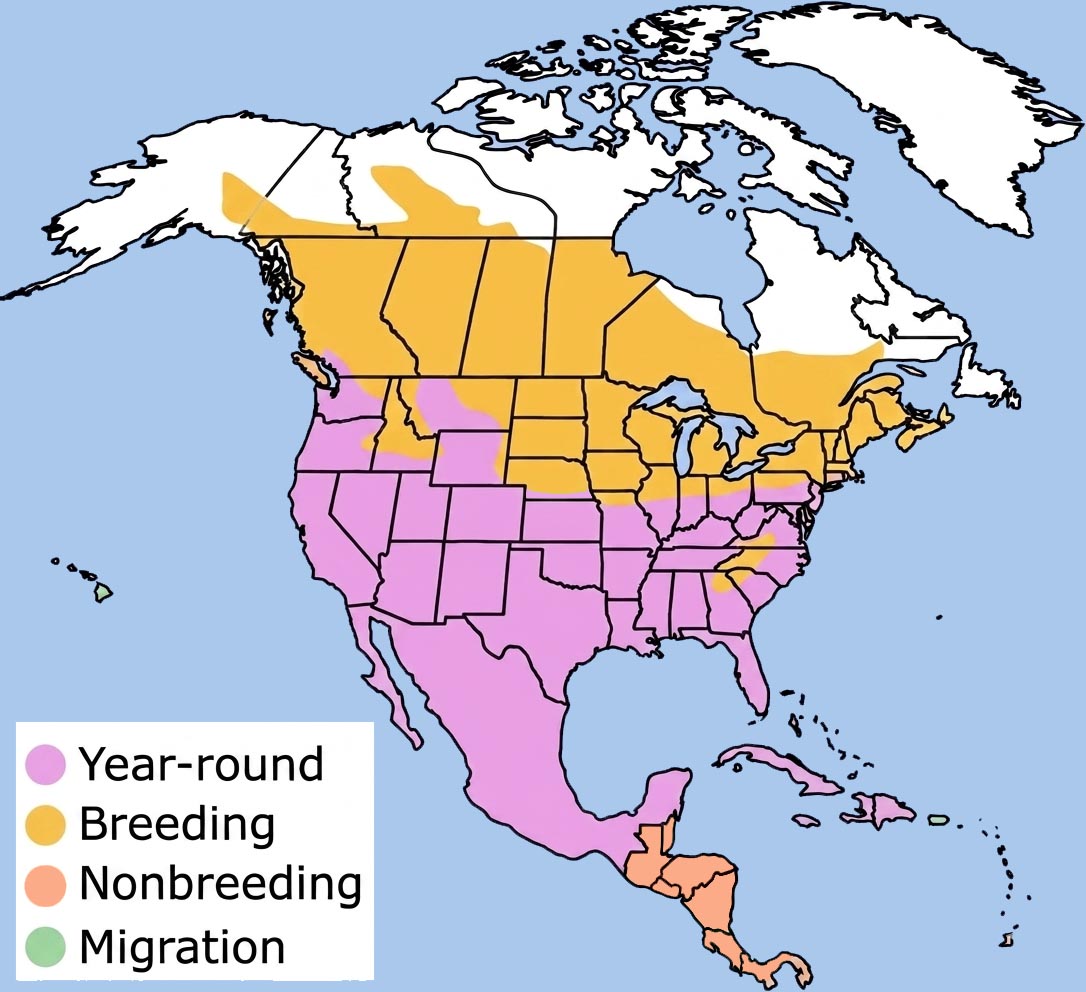
The Killdeer is found from Alaska to Newfoundland, Canada, south throughout the United States and into Mexico, Central America, the Caribbean, and South America.