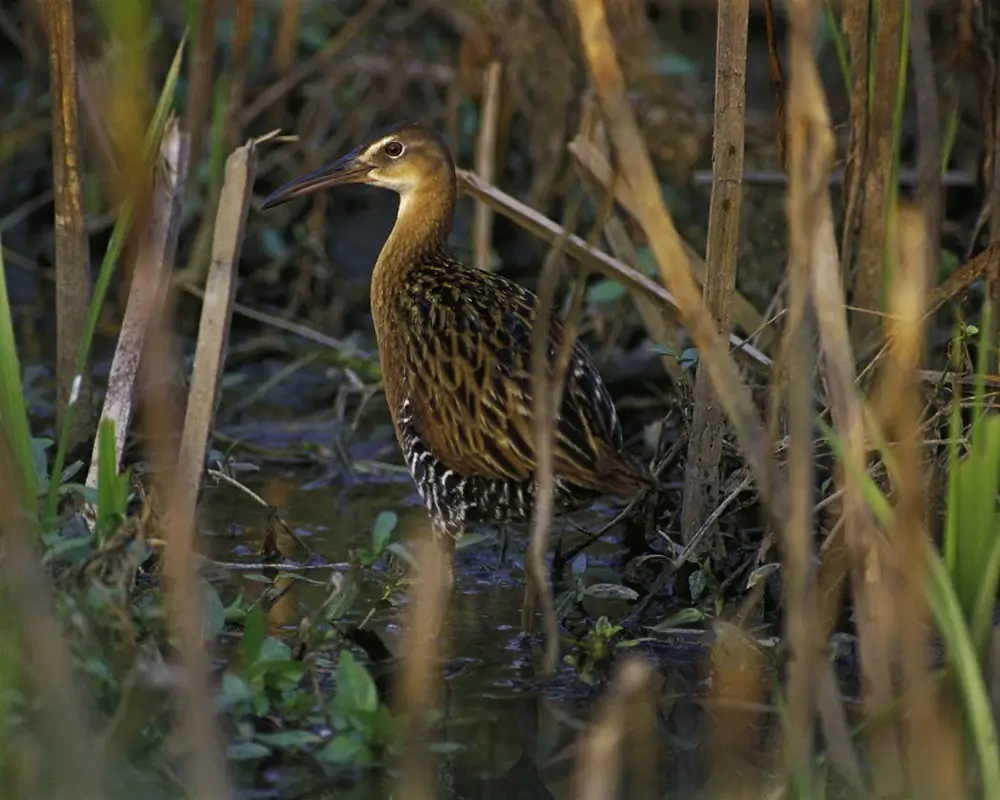
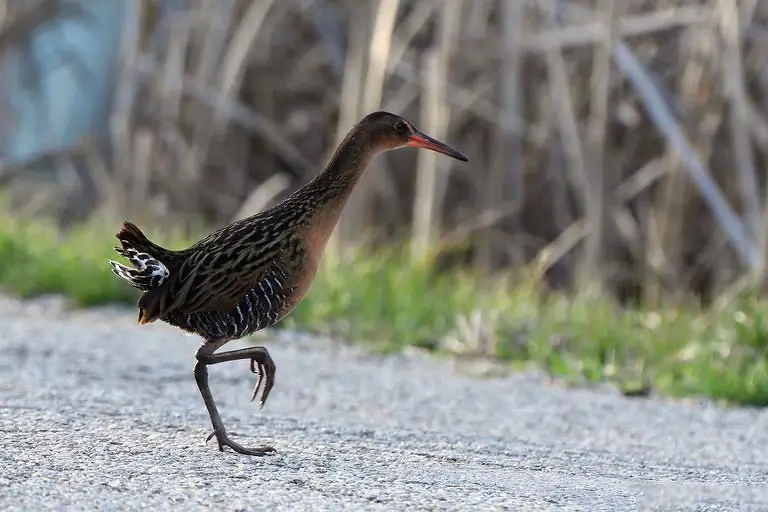
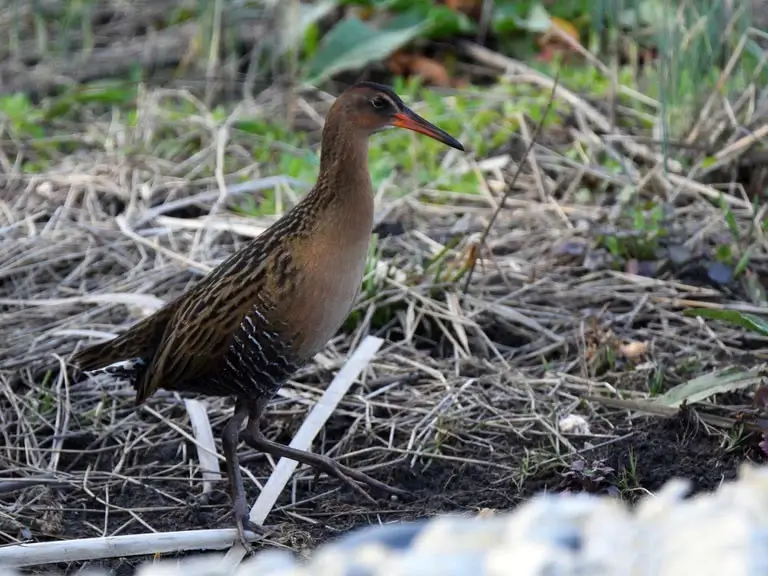
The king rail is a chicken-sized marsh bird. It is 15.0-18.9 inches (38-48 cm) in length with a wingspan of 19.7-20.5 inches (50-52 cm).
Its feathers are rust-colored with a speckled pattern on the wings and white spots on the side of its body. The king rail has a long, curved bill, which helps it hunt in weedy marshes.
Habitat
The king rail prefers freshwater marshes but will use brackish (mixed salt and freshwater) wetlands as well. It is important that the King Rail’s habitat has grasses, sedges, rushes, and cattails to use as cover during nesting.
The king rail is found in rice fields in the southern United States and coastal saltwater marshes along the East Coast.
Diet
The king rail is an omnivore and mostly feeds in the water. It mainly feeds on crustaceans like crayfish, fiddler crabs, and clams, fish, and insects.
Occasionally, the king Rail eats plants and seeds. If it must feed on land, the king rail will dunk the food in water before eating it.
Life Cycle
Breeding and nesting occur between April and July. The female lays between 6-14 light-colored eggs. The male and female incubate the eggs for 22 days, taking turns. During this time, the male defends the nest.
After hatching, the young can follow their mother around immediately. 4-6 weeks after hatching, the young can forage and feed themselves. After two months, young King Rails can fly on their own.
The king rail has a lifespan of 5-9 years.
Behavior
After laying her eggs, the female king rail molts, sheds her feathers completely, and is flightless for nearly a month.
Did You Know?
Support for NatureWorks is provided by:
The King Rail in NH
The king rail may be present in the extreme southern part of New Hampshire.
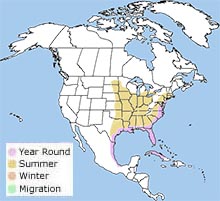
Found in the United States, Central America, and the Caribbean, the king rail has a very large range that stretches from the Midwestern United States to the Atlantic Ocean.
The king rail can live in the southern part of its range year-round. In the summer, it migrates to the northern part of its range to breed.