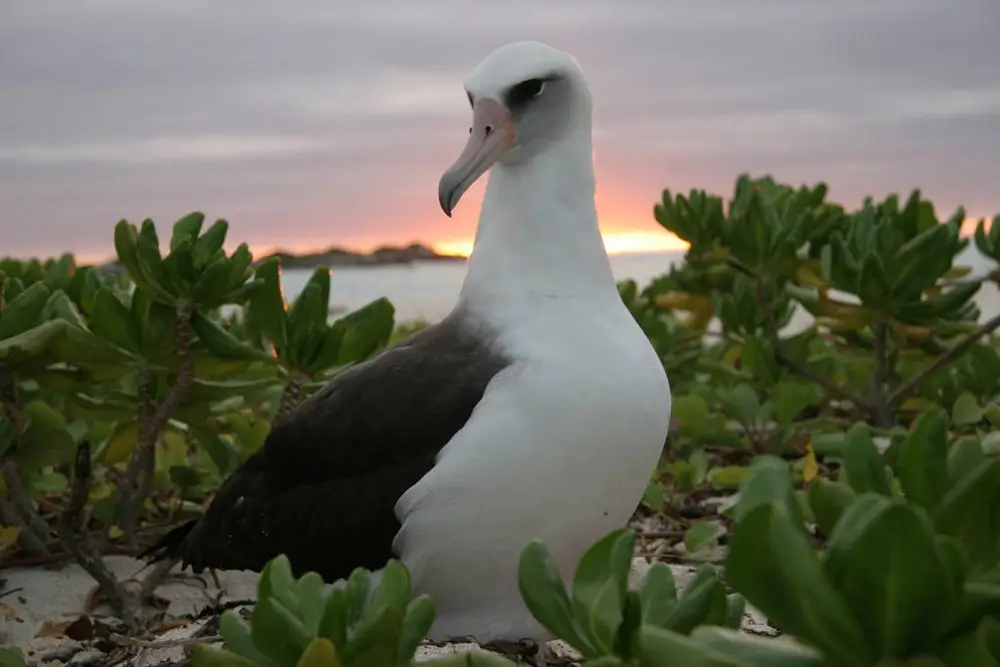
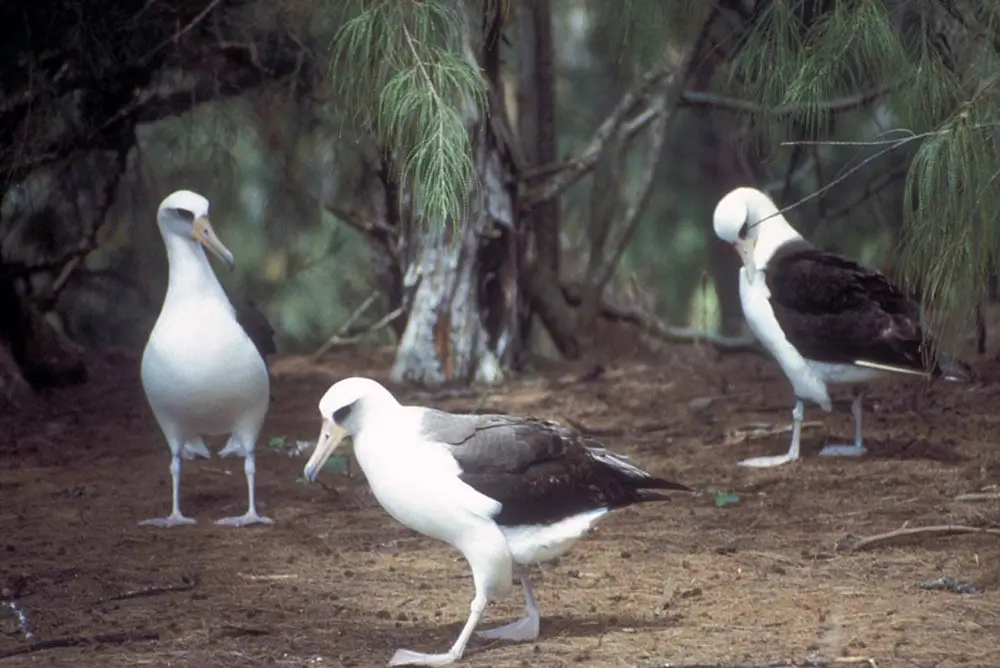
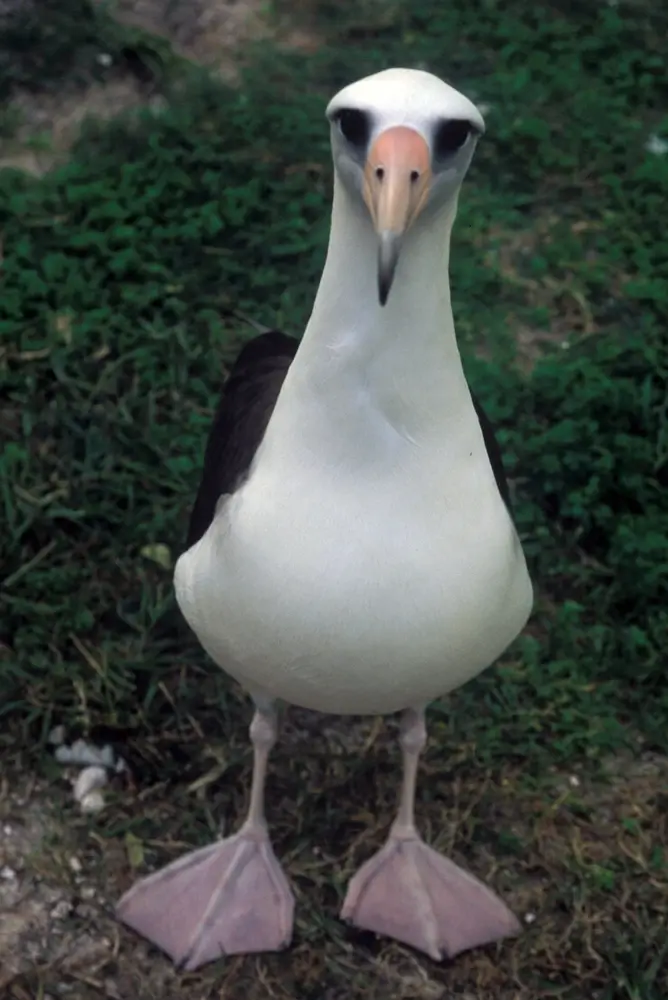
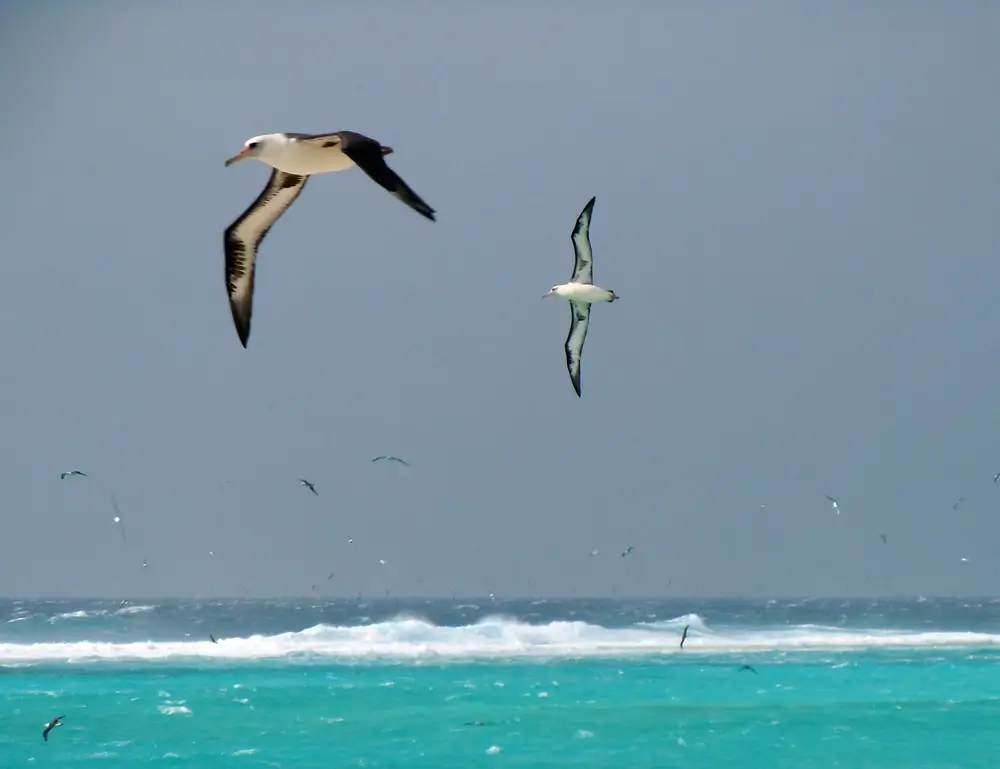
The Laysan albatross is 31.1-31.9 inches (79-81 cm) in length and has a wingspan of 6.4-6.7 feet (1.95-2 m). It weighs 4.9-9.5 pounds (2.2-4.3 kg)
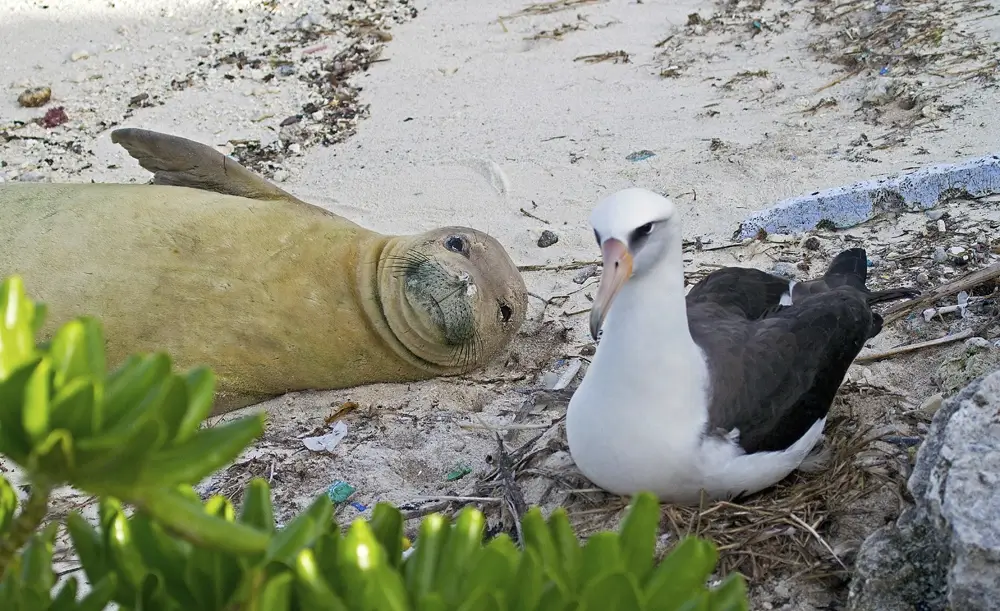
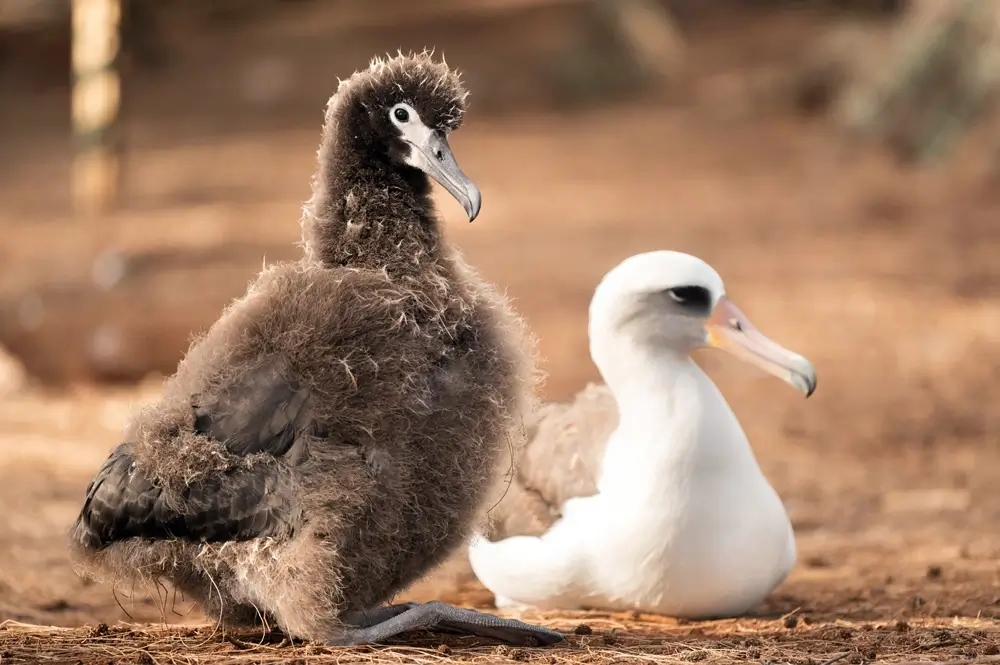
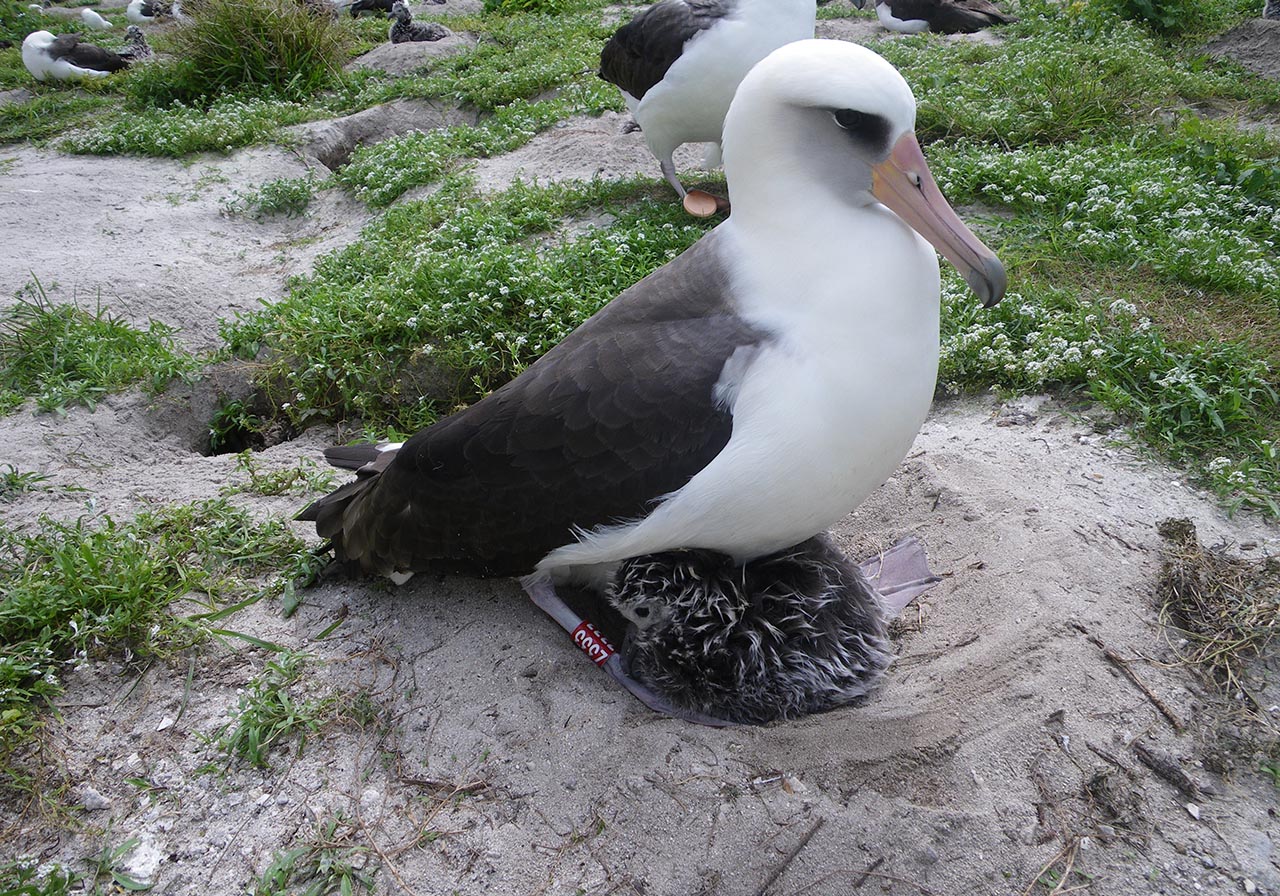
It has black wings and tail, a white head and body, pink legs, and webbed feet. There is a soft gray and black patch around and under its eyes. It has a large gray-to-yellow-orange bill with a black, hooked tip. Males and females look alike.
Habitat
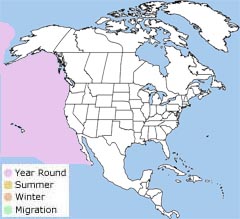
The Laysan albatross lives on open ocean waters and breeds on islands.
Diet
The Laysan albatross eats squid, but it also eats crustaceans, fish eggs, and fish. It is a surface feeder. It scoops up its prey from just under the surface of the water. It does most of its feeding at night.
Life Cycle
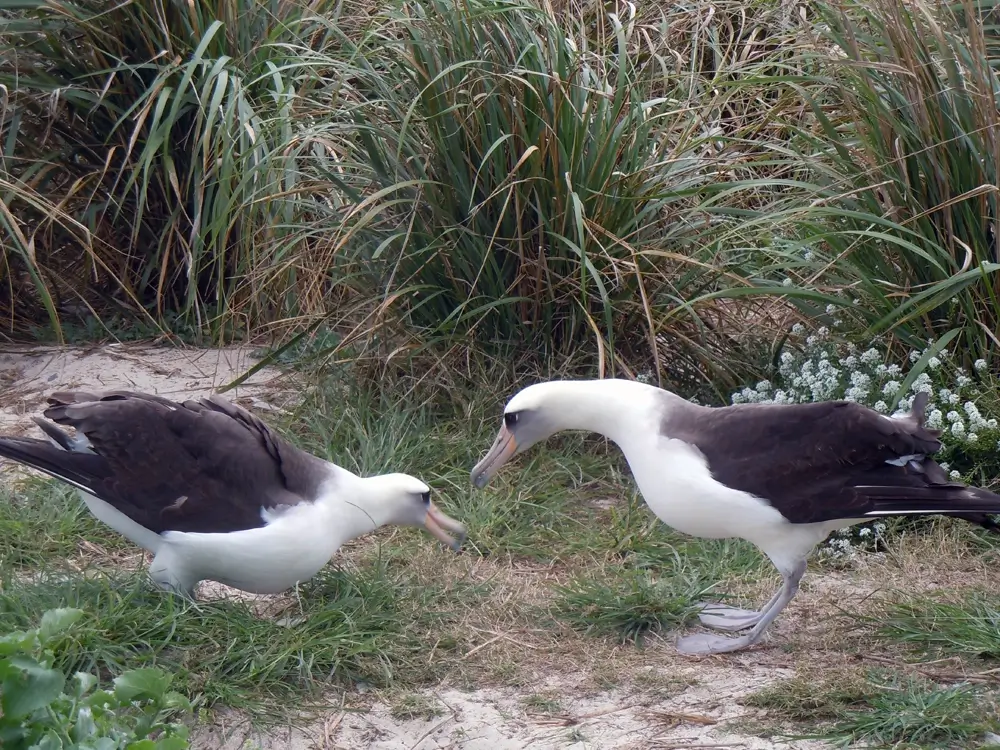
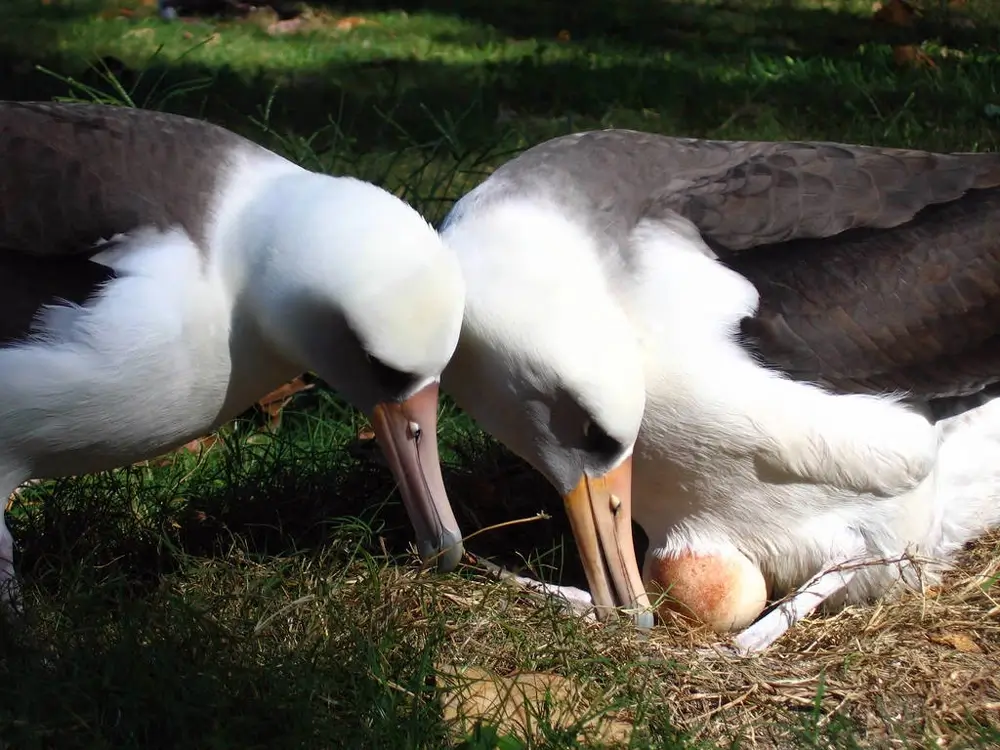
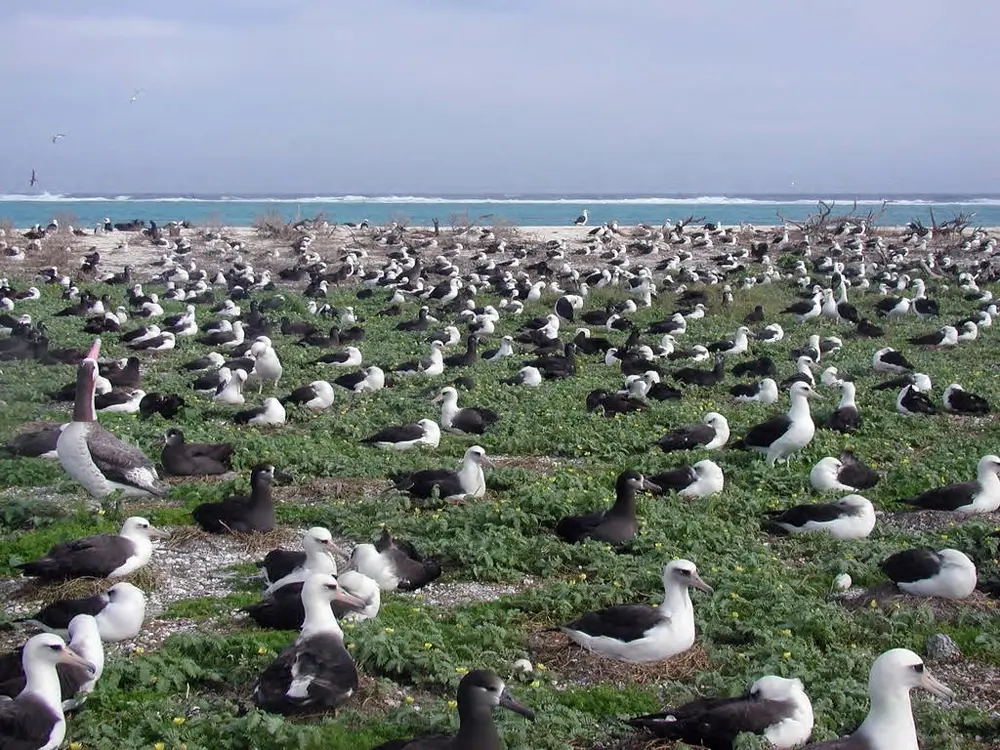
From November through July, Laysan albatrosses gather in large colonies on offshore islands in the Pacific Ocean. They perform courtship displays, which include bobbing their heads, pointing their bills at the sky, touching each other’s bills, spreading their wings out, and tucking their bill under their wings.
The female Laysan albatross lays one egg in a depression in the sand.
Both the male and the female incubate the egg. The female incubates the egg for the first few days. Then the male takes over for up to three weeks.
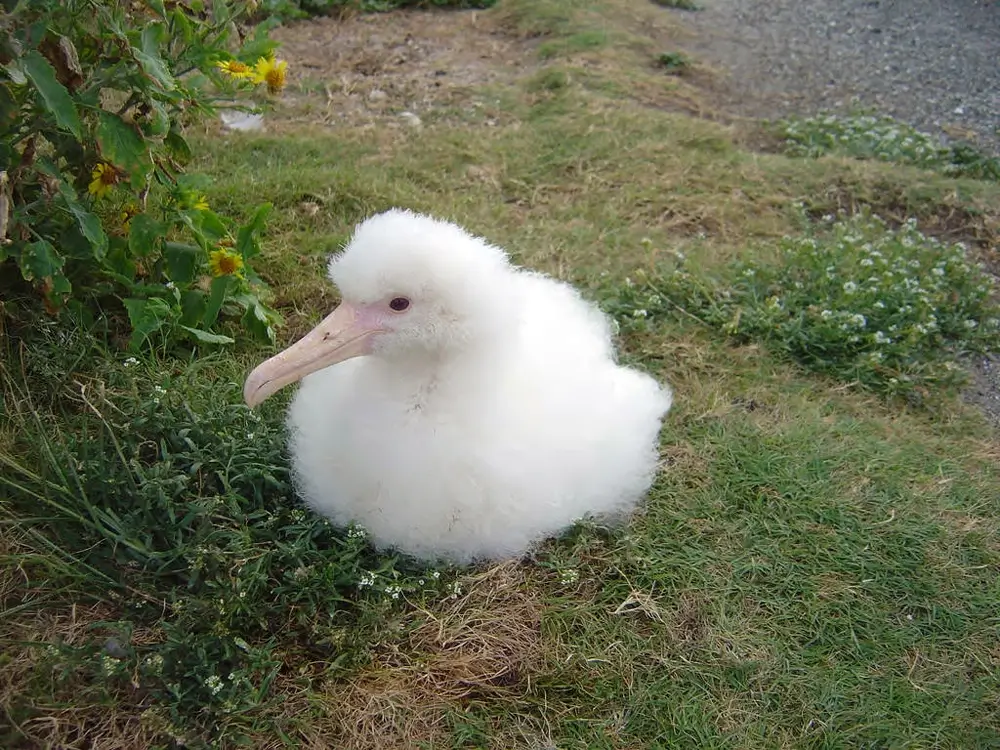
The chick hatches in about two months. Both parents feed the chick regurgitated (swallowed then brought back up) food, primarily squid oil and flying fish eggs.
Both parents may leave the chick for days at a time to hunt for food. The chick fledges (develops wing feathers for flight) in about five months.
The Laysan albatross has a lifespan of 12-50 years. The oldest known Laysan albatross is named Wisdom. She was first tagged in 1956 at Midway Atoll by the US Geological Survey (USGS). She was still alive and breeding as of 2025.
Behavior
The Laysan albatross only comes to land to breed. It spends most of its time on the open ocean, 30 or more miles from land.
Once a chick leaves the nest and heads to open waters, it won’t return to land until it is ready to find a mate.
It returns to its nesting colony and searches for a mate using elaborate mating dances. It won’t mate for the first time until it is between 6-7 years old. Laysan albatrosses mate for life.