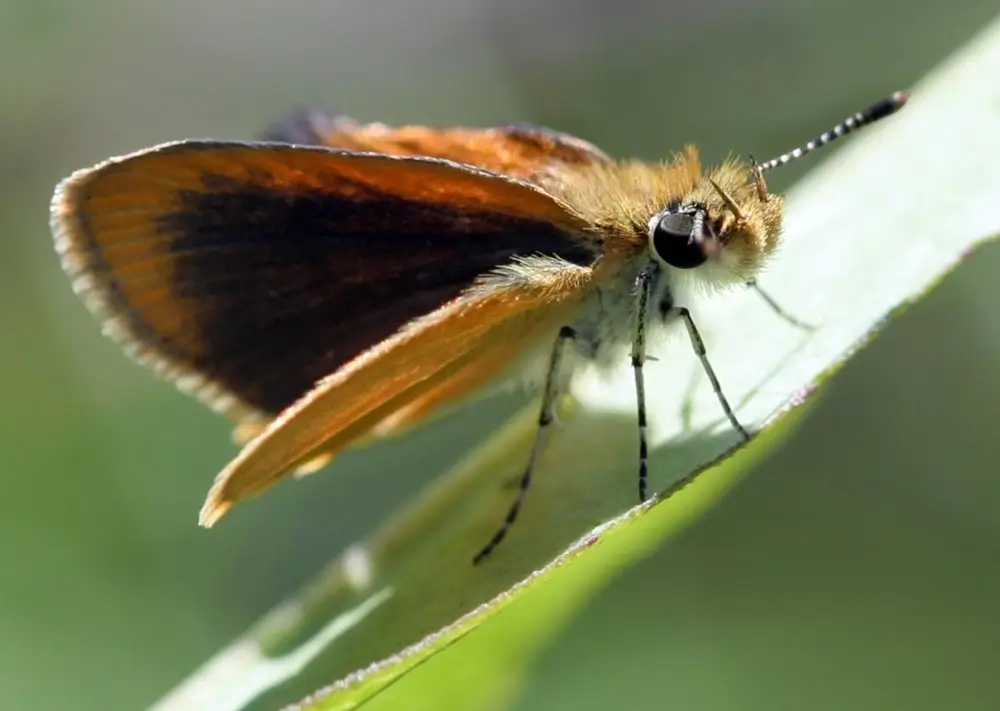
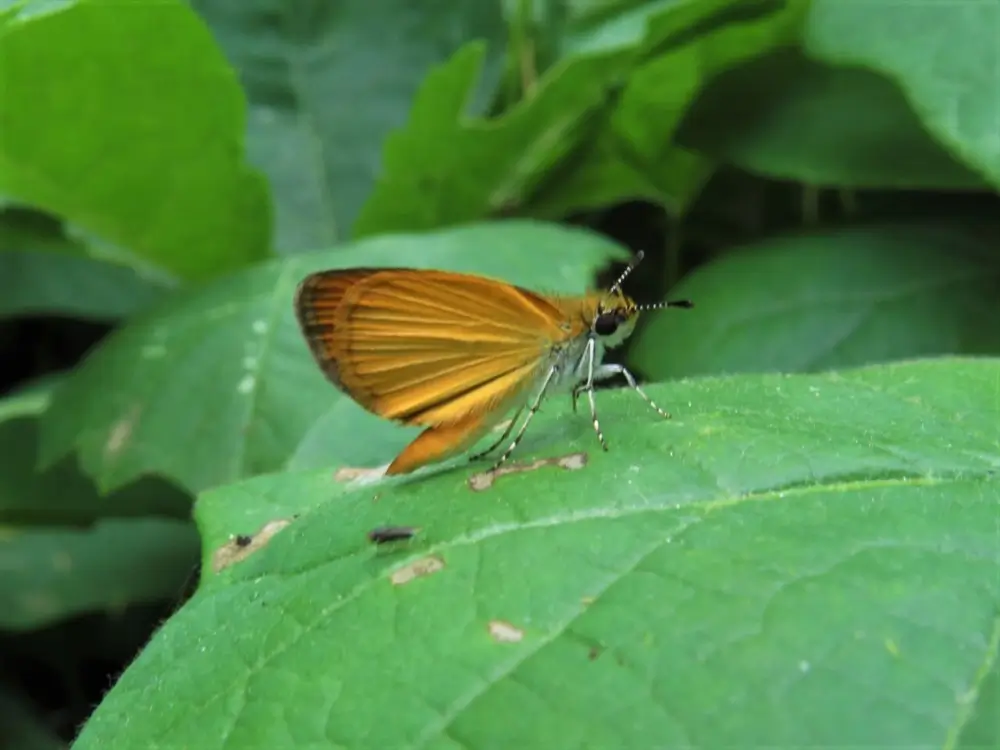
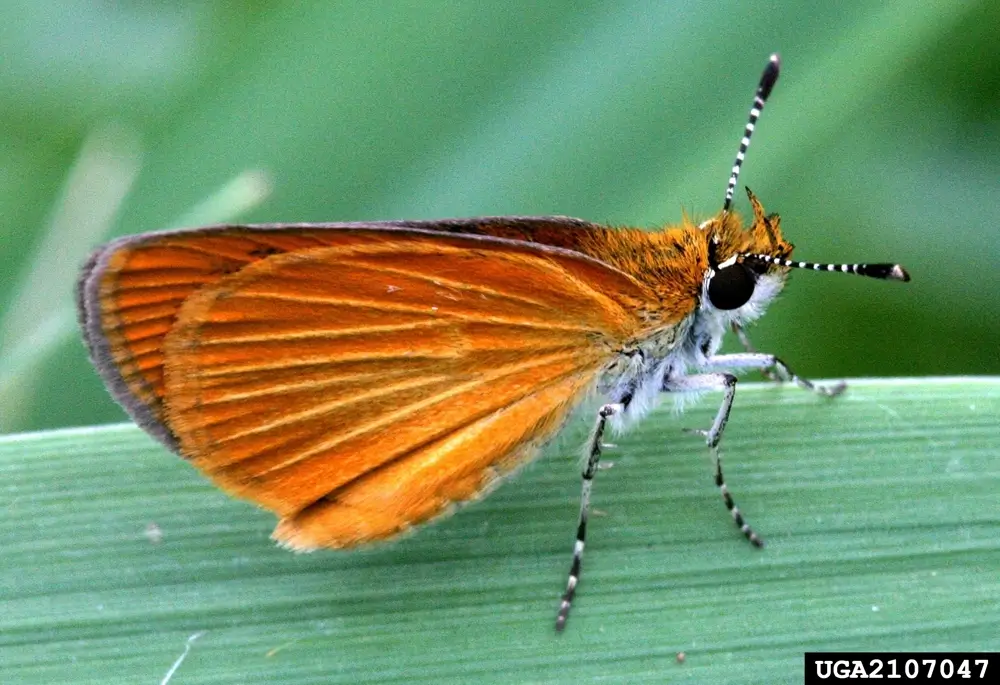
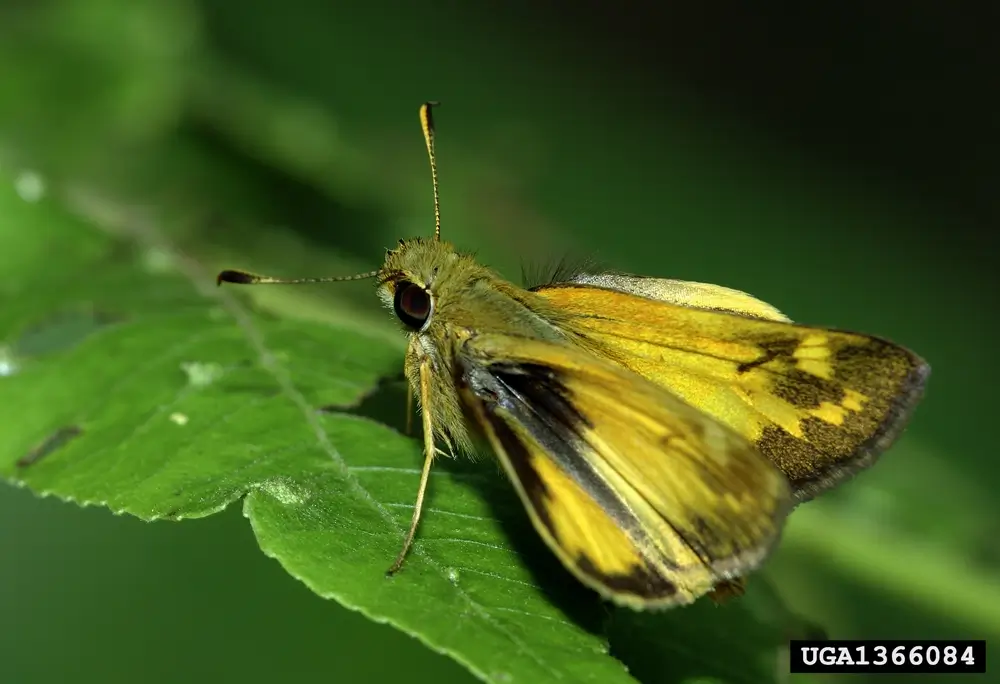
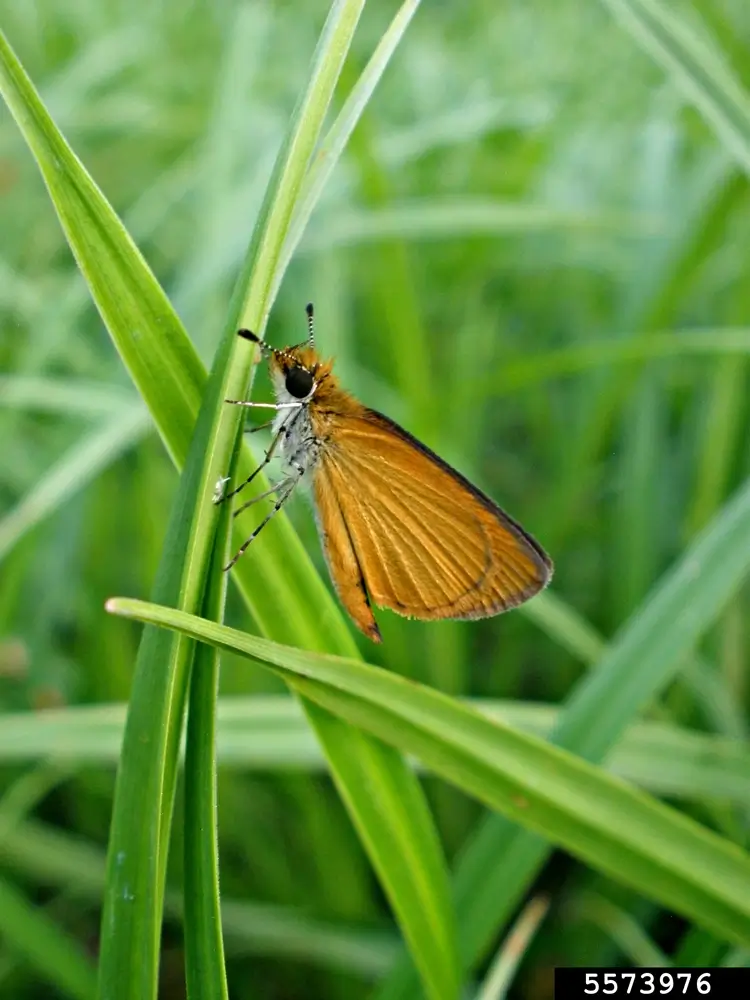
The least skipper has a wingspan of 0.75 – 1 inch (1.9-2.5 cm). It has short antennae and rounded wings.
The uppersides of its forewings are orange, bordered by black. Its hindwings are gold with a black border. The undersides of its forewings are black or black with an orange border, and the undersides of its hindwings are a golden-orange.
Habitat
The least skipper is found in moist or wet habitats with tall grasses like swampy meadows, marshes, gardens, ditches, and near streams.
Diet
The least skipper caterpillar eats grasses like rice cutgrass and bluegrass.
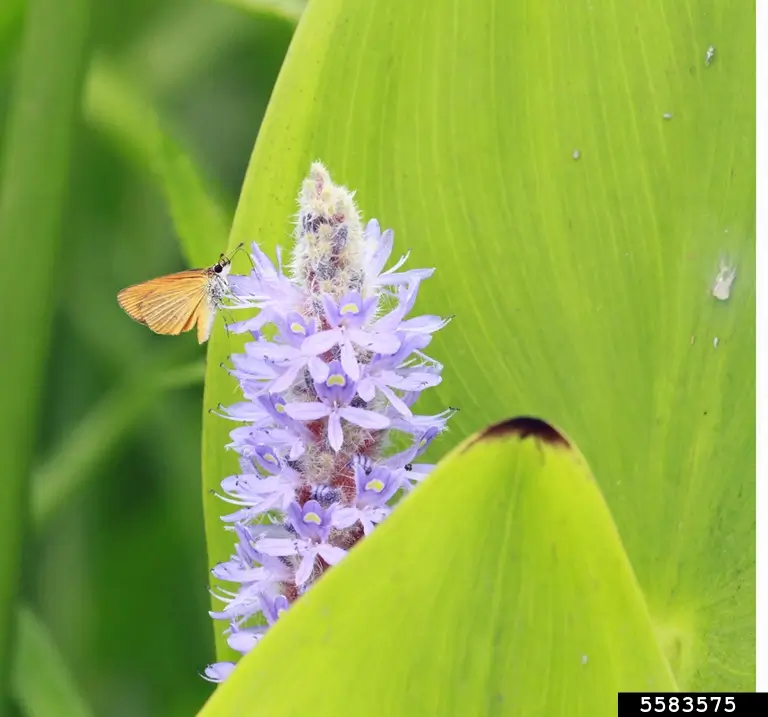
The adult feeds on the nectar of low-growing plants like chicory, milkweed, pickerelweed, swamp verbena, thistle, white clover, and wood sorrel
Life Cycle
The male least skipper perches in grassy areas and waits for a female.
The female lays one egg at a time on the leaves of a host plant. The least skipper produces one to three broods a year.
The caterpillar is light green and has a brown head.
Behavior
It usually flies low over the grass when searching for food, usually no more than a foot (3 m) off the ground. When it perches, it usually keeps its wings folded.