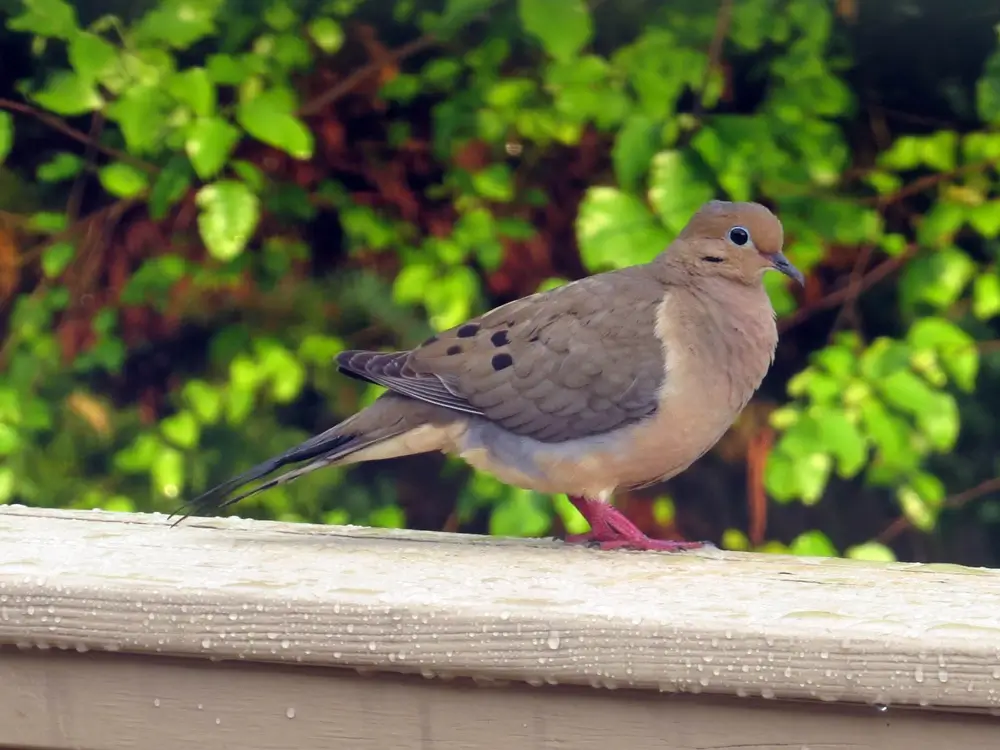
The mourning dove is 9-13 inches (23-33 cm) in length with a wingspan of 15-18 inches (38.1-46 cm).
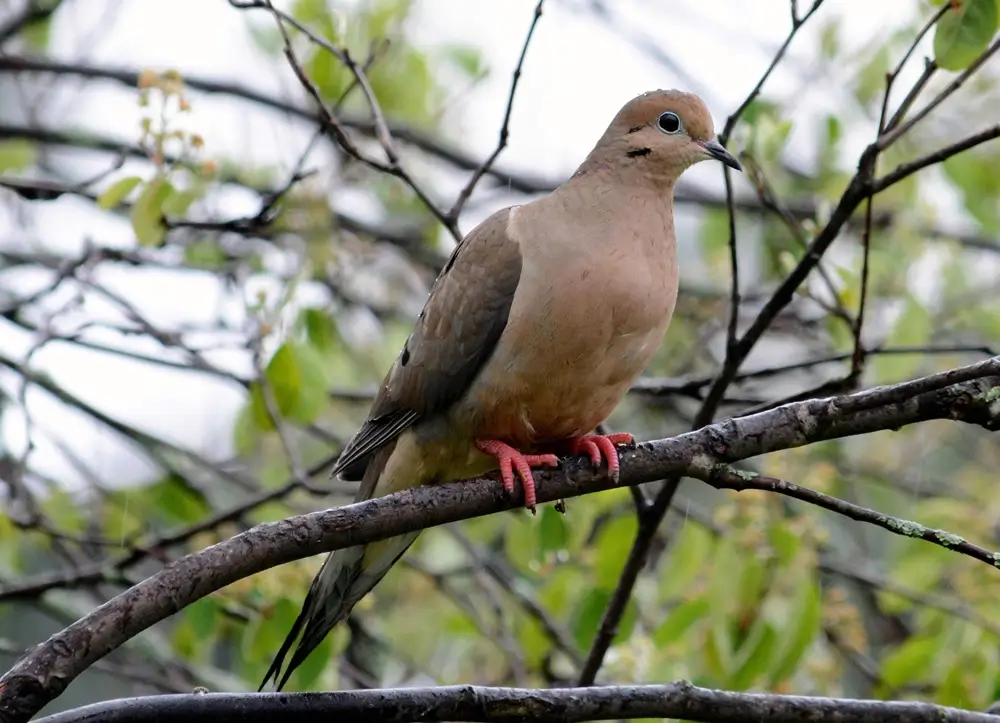
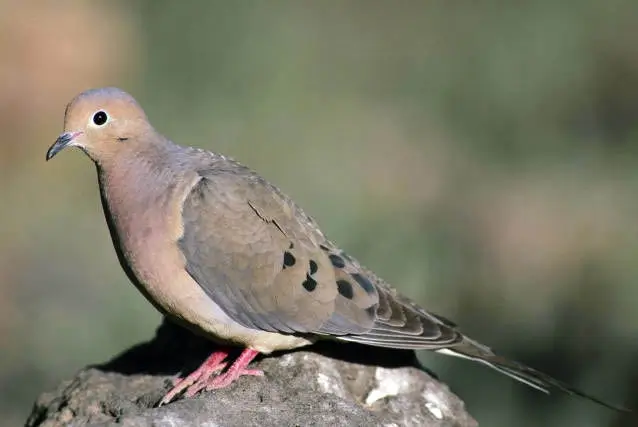
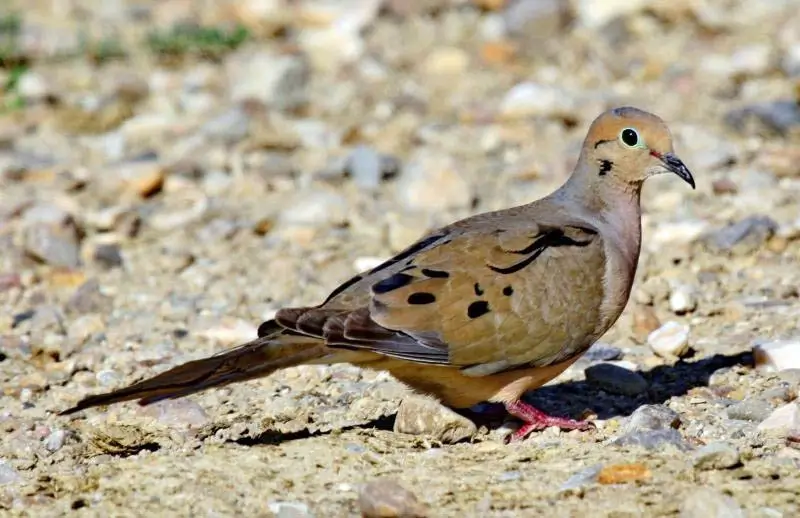
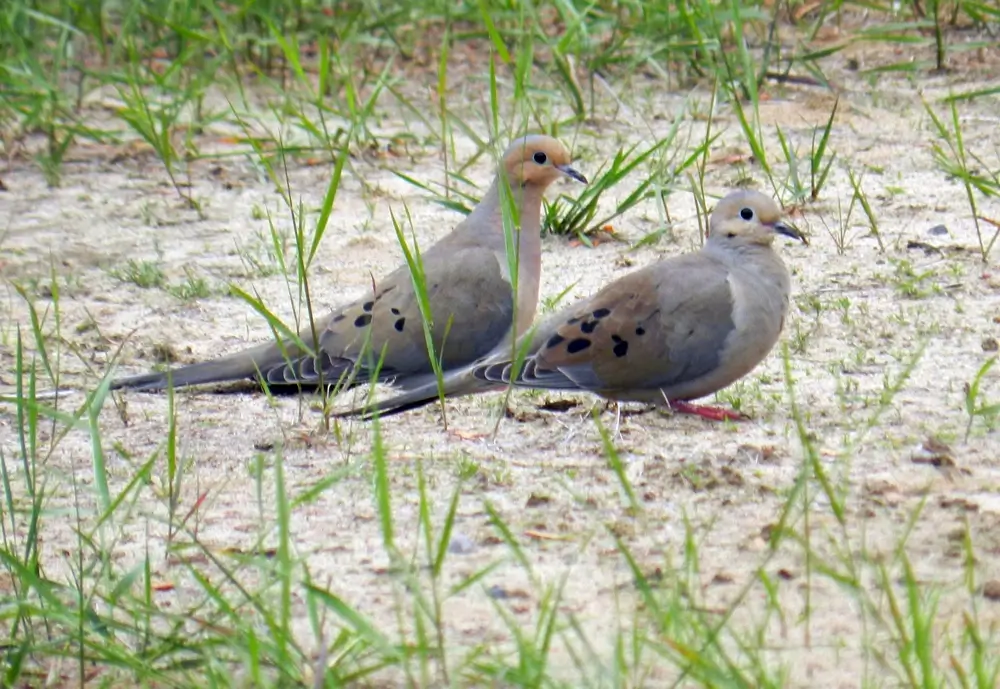
It has a grayish-brown body; a long, pointed tail bordered in white; a small, round head; a small, thin, black bill; and small pink legs and feet. It has black spots on its wings and a black spot under its eye. It has brown eyes surrounded by a blue circle of skin. Males and females look alike, but the female is slightly smaller and duller in color.
The mourning dove is the most hunted game bird in North America. Every year, hunters kill more than 20 million mourning doves, but the mourning dove is resilient, and there are around 350 million mourning doves in the U.S.
Habitat
The mourning dove is found in a variety of open habitats, including farms, parks, woods, deserts, forest edges, cities, and suburbs.
Diet
The mourning dove forages on the ground for seeds. It feeds in pairs or flocks. It swallows fine gravel to help it digest hard seeds. 99% of the mourning dove’s diet is made up of seeds. It is a frequent visitor to bird feeders.
Life Cycle
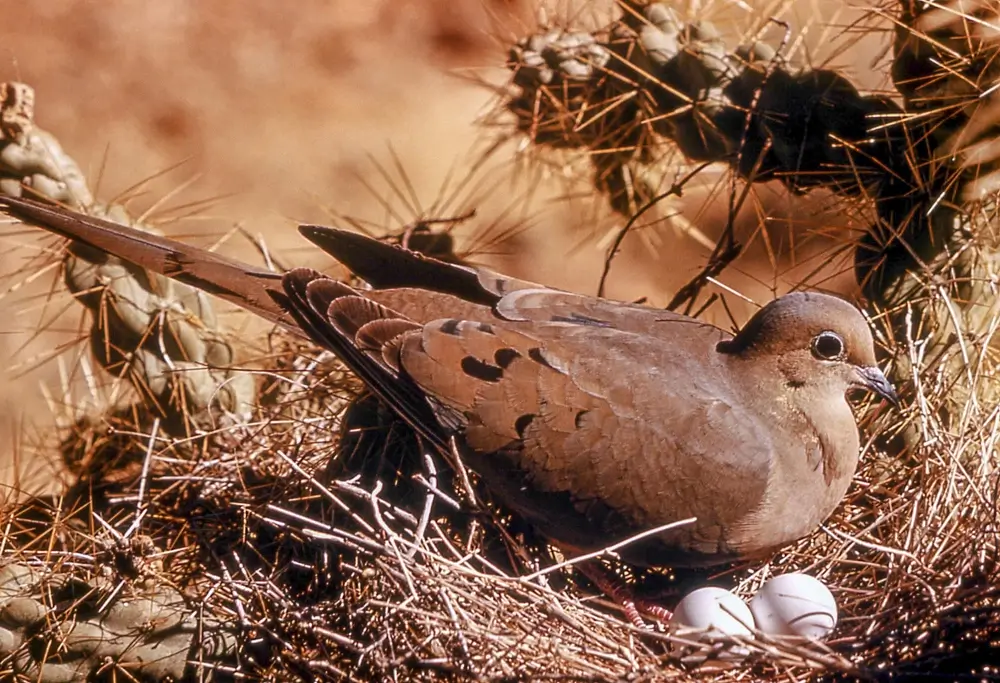
The male collects materials for the nest, and the female weaves the materials into a platform of grass, pine needles, and twigs in a tree or shrub. The female usually lays 2 eggs. Both the male and the female incubate the eggs for 14 days.
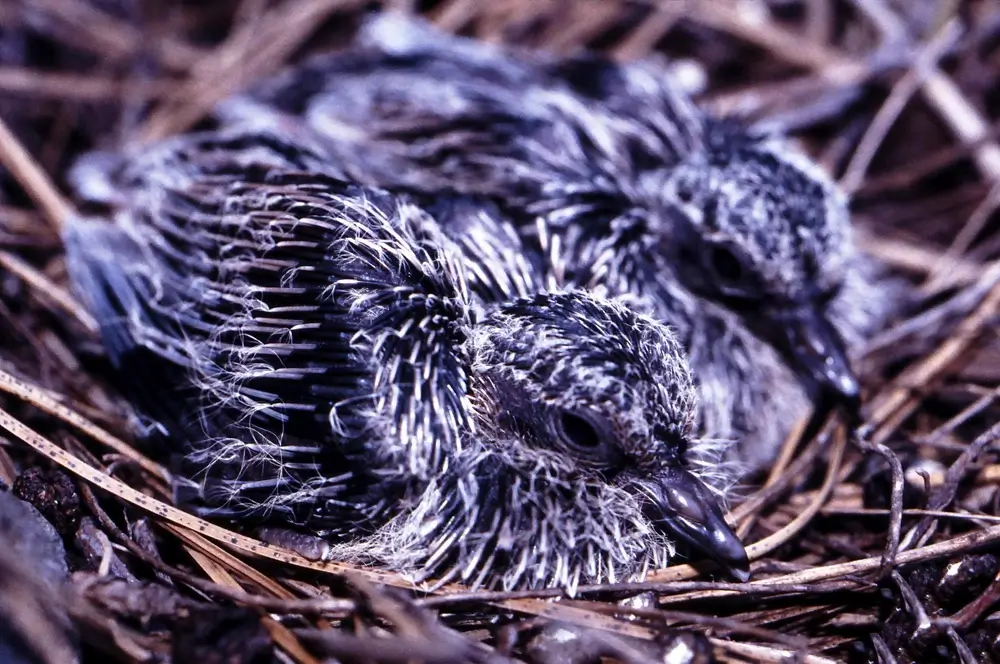
Both parents feed the chicks, or squabs, “pigeon milk .” Pigeon milk is a mixture of water, fat, minerals, and protein that the male and female mourning dove produce in their crop. Their crop is a sac at the bottom of their esophagus. Pigeon milk is also called crop milk.
The chicks fledge when they are 2 weeks old, but they stay near their parents for 1-2 weeks and continue to be fed by them. In warm areas, the female mourning dove may have as many as six broods a year.
The mourning dove has a lifespan of 1-5 years in the wild.
Behavior
The male mourning dove woos a female in the air and on the ground. On the ground, he puffs his chest out and approaches the female while cooing at her.
Did You Know?
The mourning dove is named for its haunting and sad cooing sound. Its call is sometimes mistaken for the call of an owl.
When the mourning dove flies, its wings make a whistling sound.
Support for NatureWorks is provided by:
The Mourning Dove in NH
The mourning dove is a year-long resident of New Hampshire.
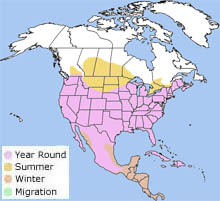
The mourning dove breeds from southern Canada south through most of the United States. Only the northernmost populations migrate in the fall. The mourning dove is also found in Central America and the Caribbean.