The northern goshawk is 22-24 inches (55-61 cm) in length and has a wingspan of 3.2-3.8 feet (0.97-1.2 m).
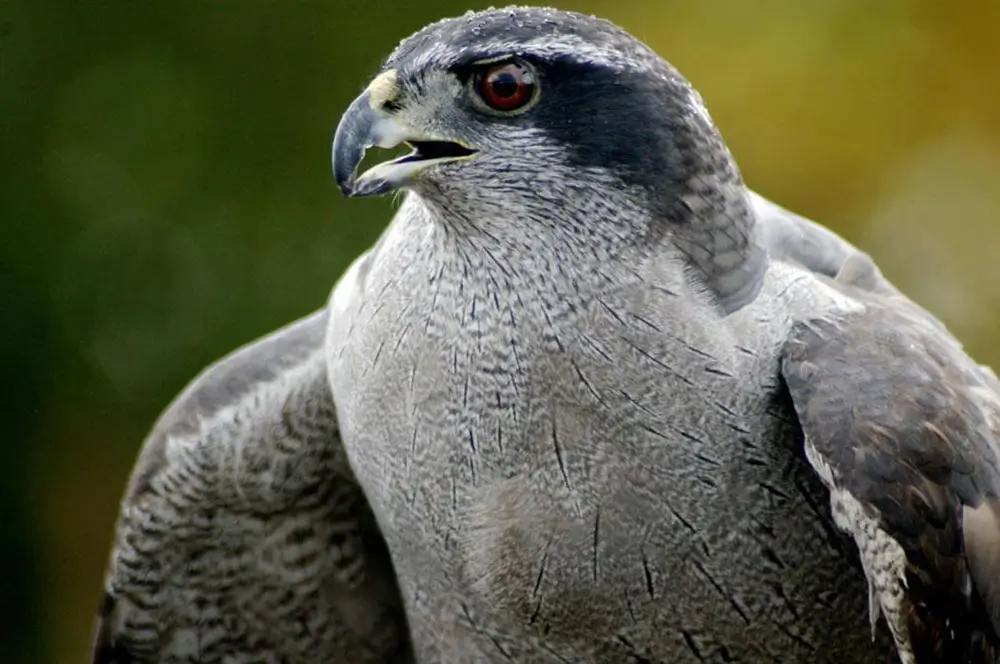
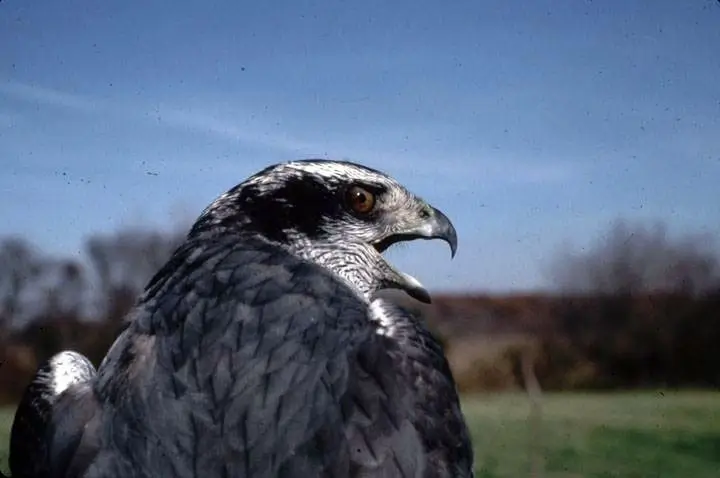
It has reddish-brown eyes; a short, hooked bill; a long, light gray, narrow tail; and short, rounded wings. It is slate gray on its uppersides and a lighter gray with darker bars on its undersides. It has a black cap on its head and white “eyebrows.”
Males and females look alike, but females are a little larger.
Habitat
The northern goshawk lives in coniferous and mixed coniferous-deciduous forests.
Diet
The northern goshawk perches in trees and waits for prey like birds, rabbits, hares, and squirrels. It drops down on prey on the ground.
It also chases birds through the forest and uses its tail to help maneuver through the trees. It may chase prey for up to 30 minutes.
The northern goshawk also hunts in open fields. It takes its catch back to a perch and eats it.
Life Cycle
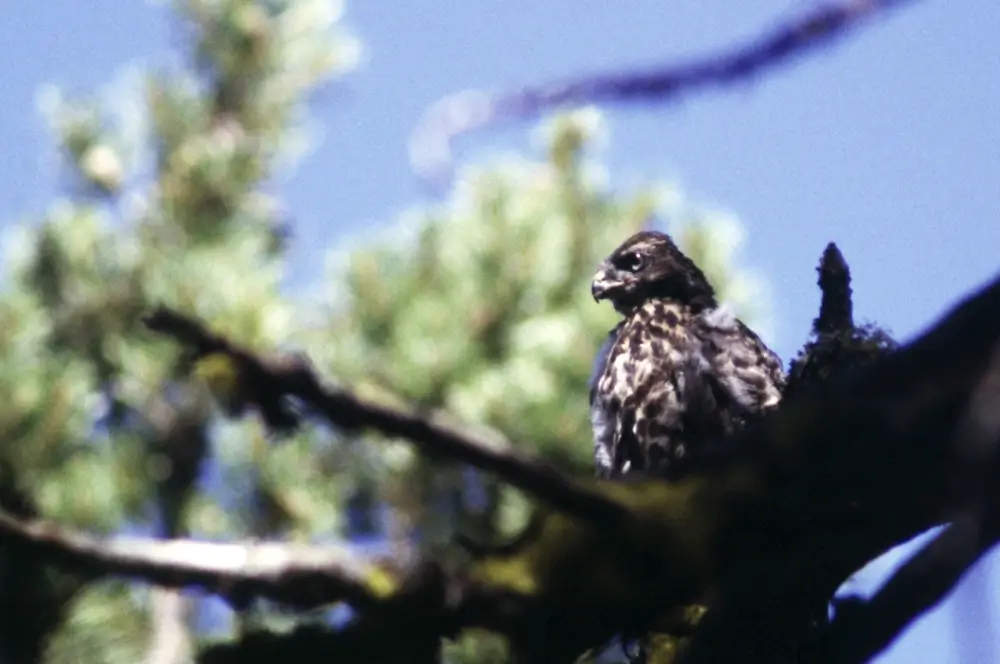
The female northern goshawk lays 2-4 eggs in a nest of sticks that is placed high in a tree. The female usually does most of the nest building, and the nest may be used for more than one year. The male brings the female food while she is incubating the eggs. He sometimes helps incubate the eggs.
The eggs hatch in around 32 days. The male continues to bring the female and the chicks food after they hatch.
The chicks fledge when they are around 35 days old. The male and the female care for and feed the chicks until they are about 70 days old. Male and female pairs may mate for more than one year.
The northern goshawk has an average lifespan of 11 years in the wild.
Behavior
The northern goshawk aggressively protects its nest and attacks intruders, including humans.
Did You Know?
Support for NatureWorks is provided by:
The Northern Goshawk in NH
The northern goshawk is found across New Hampshire and is a year-long resident. It is not common in the Seacoast.
Its population is sensitive to the loss of forest habitat, especially in the southern part of the state.
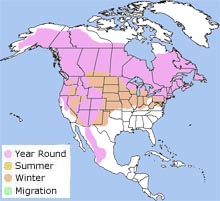
The northern goshawk is found in most of the United States and Canada. It breeds from Alaska east to Newfoundland and south to New Mexico, the Great Lakes, and New England.
In the winter, it is found throughout its breeding range south to New Mexico, Ohio, and Virginia. The northern goshawk is also found in the mountains in Mexico and in Northern Europe.