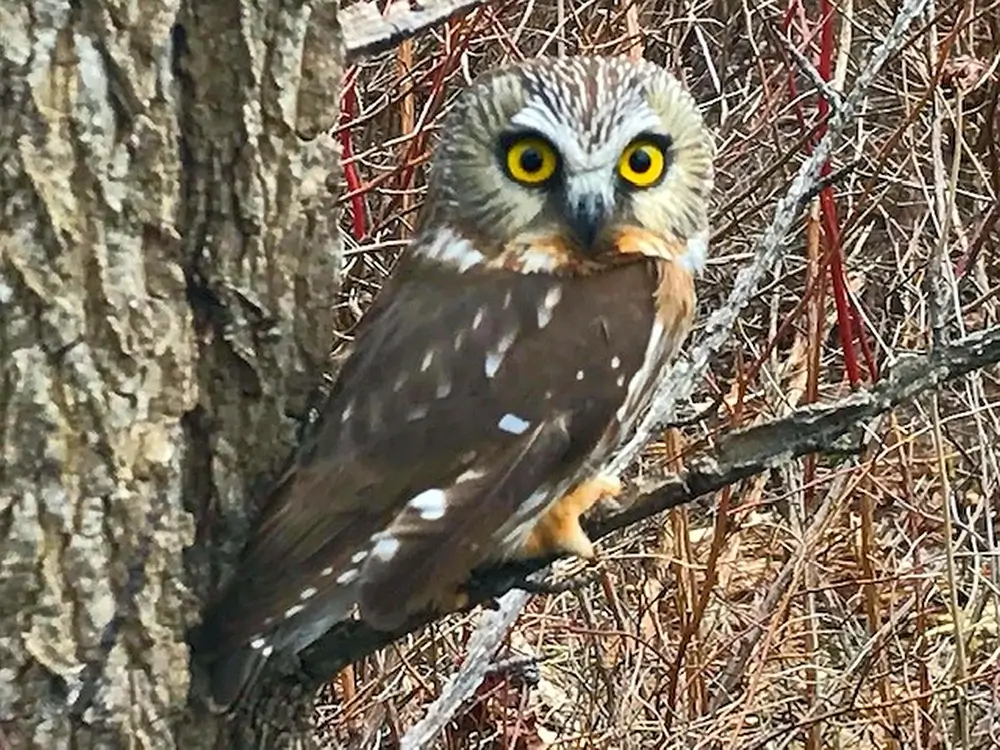
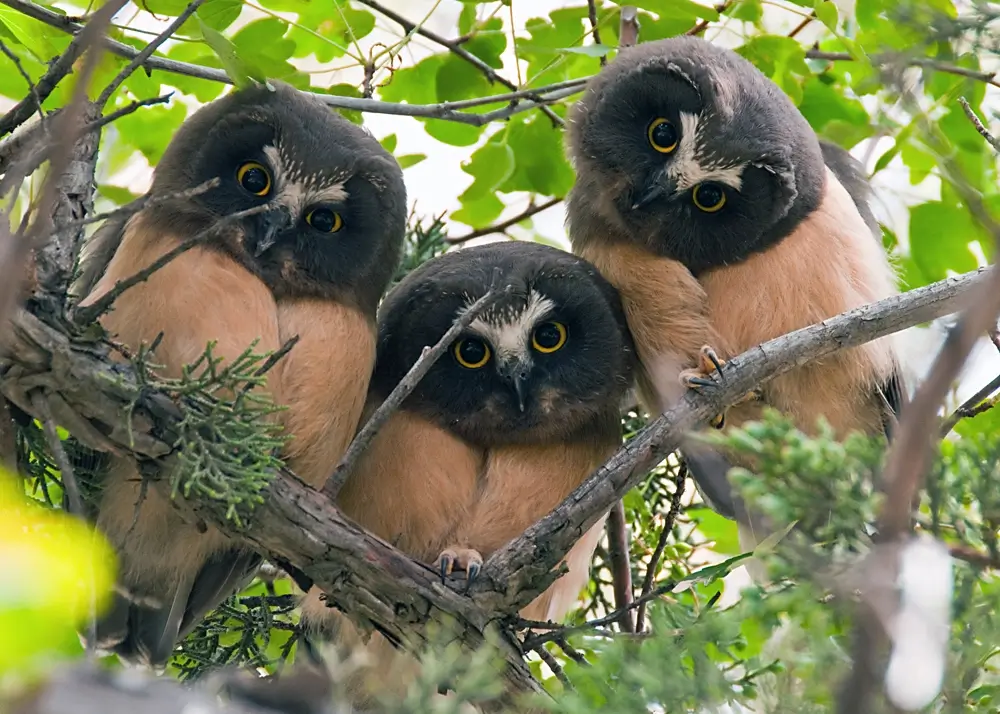
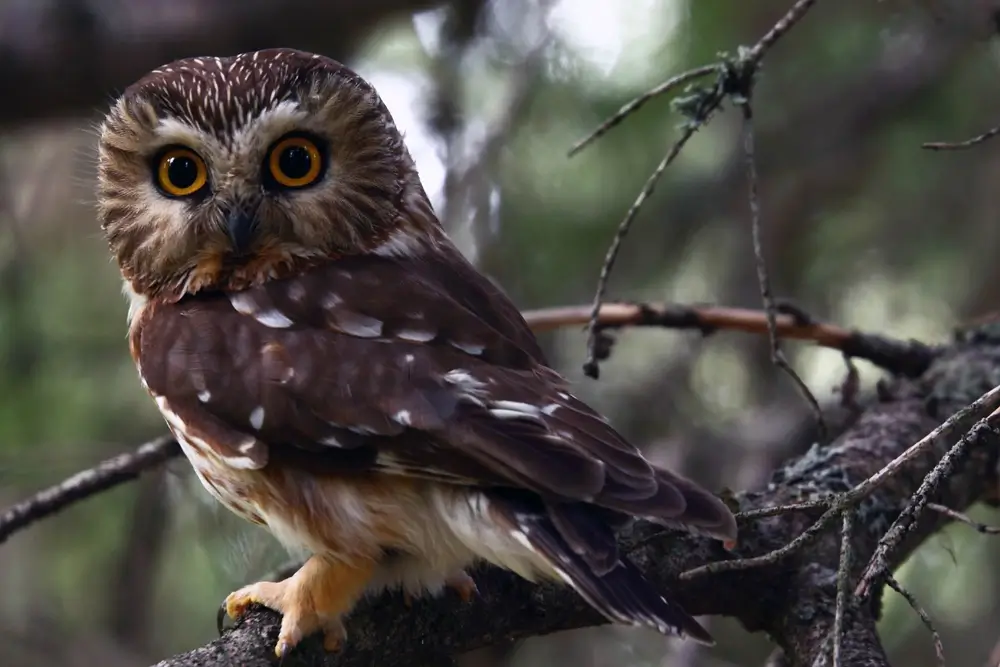
The northern saw-whet owl is the smallest owl species in North America. It is 7 to 8 inches (18–20 cm) tall with a wingspan of 17 to 18 inches (43–46 cm). It weighs 3 to 5 ounces (54–151 g), about as much as a robin.
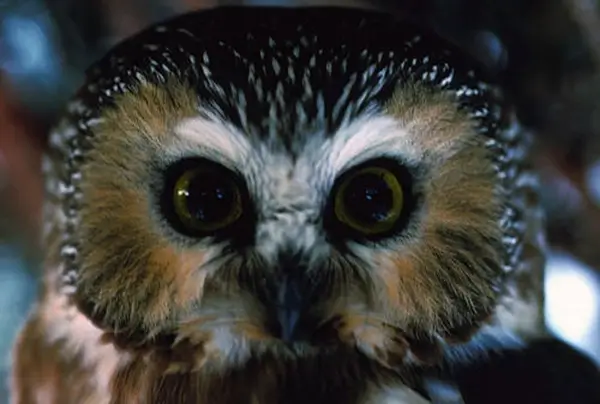
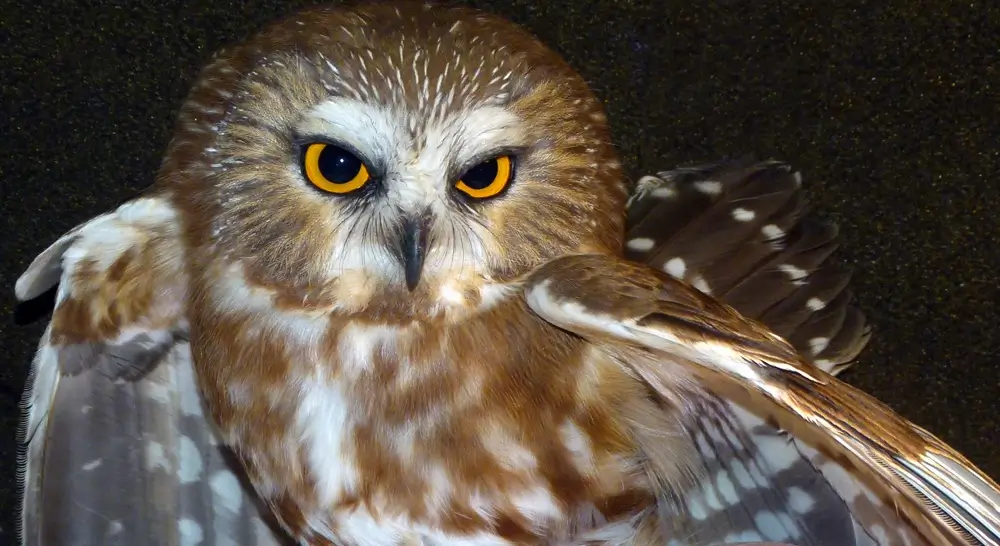
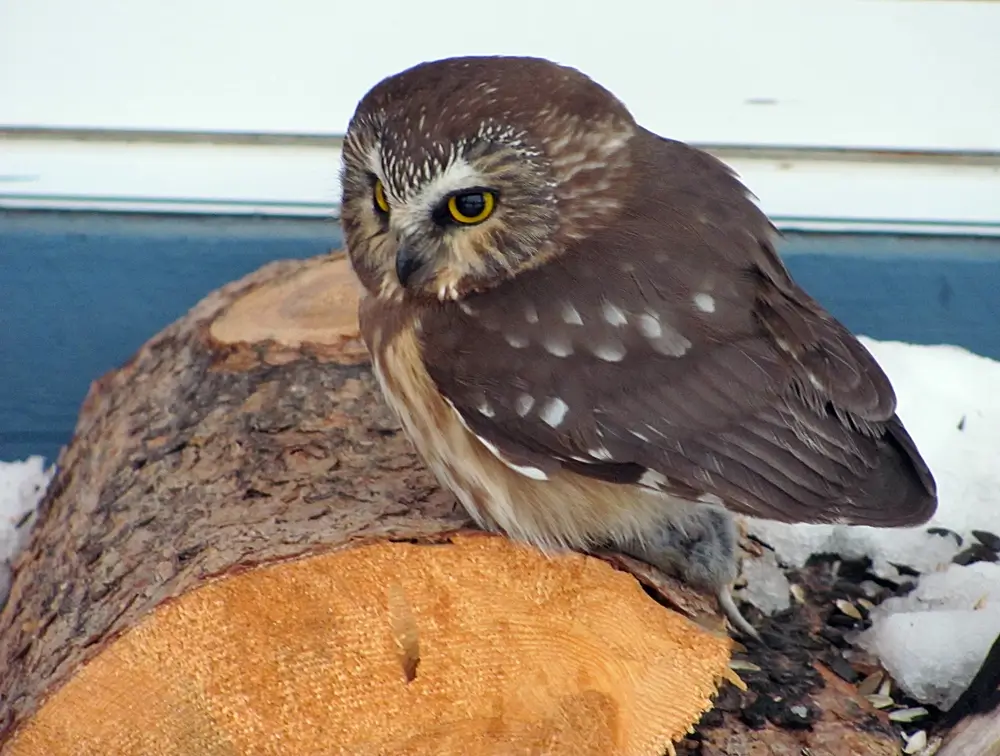
It is medium brown in color with vertical white stripes and easily blends into its surroundings. The northern saw-whet owl has yellow eyes and no ear tufts.
Habitat
The northern saw-whet owl lives in woodlands of all types, including suburban and urban environments.
It looks for dense trees for roosting and a perch from which to hunt. During the winter or migration, it may live in many different habitats and altitudes.
Diet
The northern saw-whet owl eats small mammals such as mice, voles, shrews, and lemmings. It also eats young squirrels, chipmunks, and gophers.
Occasionally, the northern saw-whet owl eats insects like beetles and grasshoppers.
Life Cycle
The northern saw-whet owl breeds between March and July. The northern saw-whet owl often builds a nest in an old woodpecker hole.
Females lay 5-6 eggs. While the female is incubating the eggs, the male brings her food and protects the nest.
Eggs hatch after about 27 days, but the chick’s eyes don’t open for another week. Chicks first fly when they are about one month old. After 8 weeks, the chicks leave the nest for good.
The northern saw-whet owl has a lifespan of around 7 years in the wild. It can live as long as 16 years in captivity.
Behavior
The northern saw-whet owl hunts at night. Its excellent hearing allows the owl to detect prey using only their ears. To hunt, the owl drops out of a perch and grabs its prey with its talons.
Did You Know?
Support for NatureWorks is provided by:
The Northern Saw-Whet Owl in NH
The northern saw-whet owl is a year-round resident across New Hampshire, although some northern saw-whet owls in the northern parts of the state may migrate a bit south in the fall.