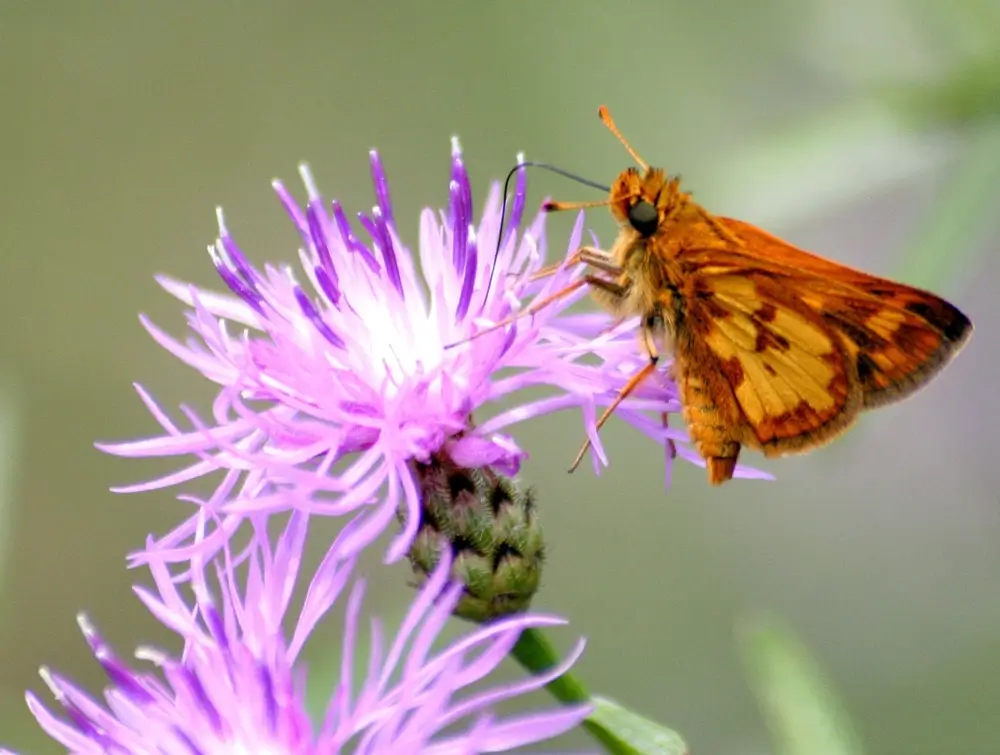
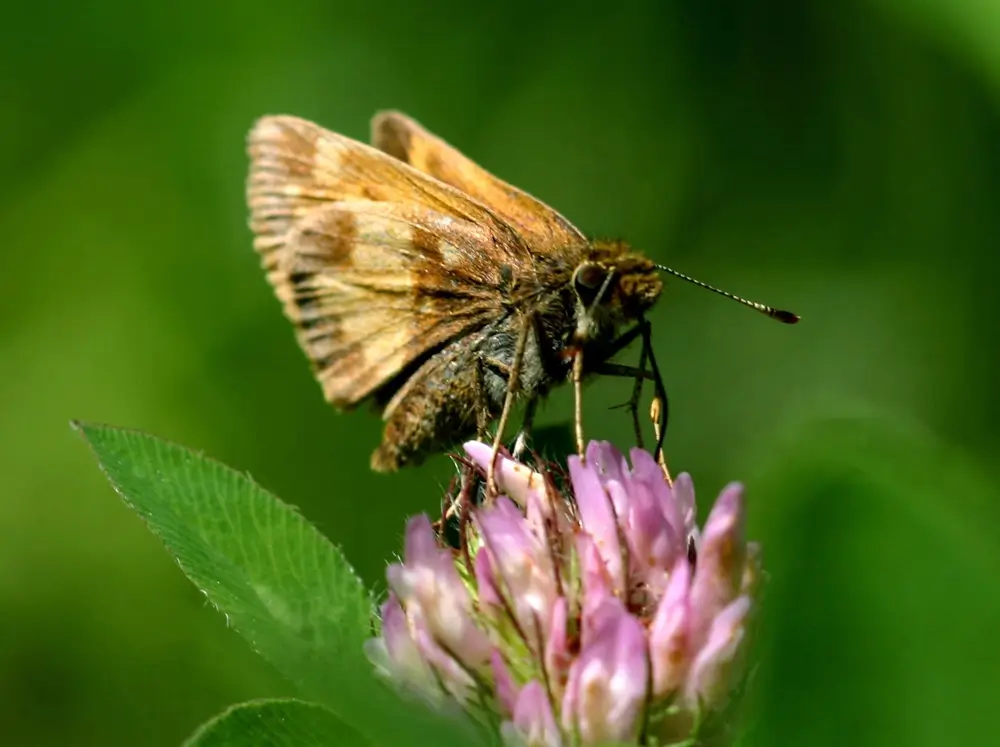
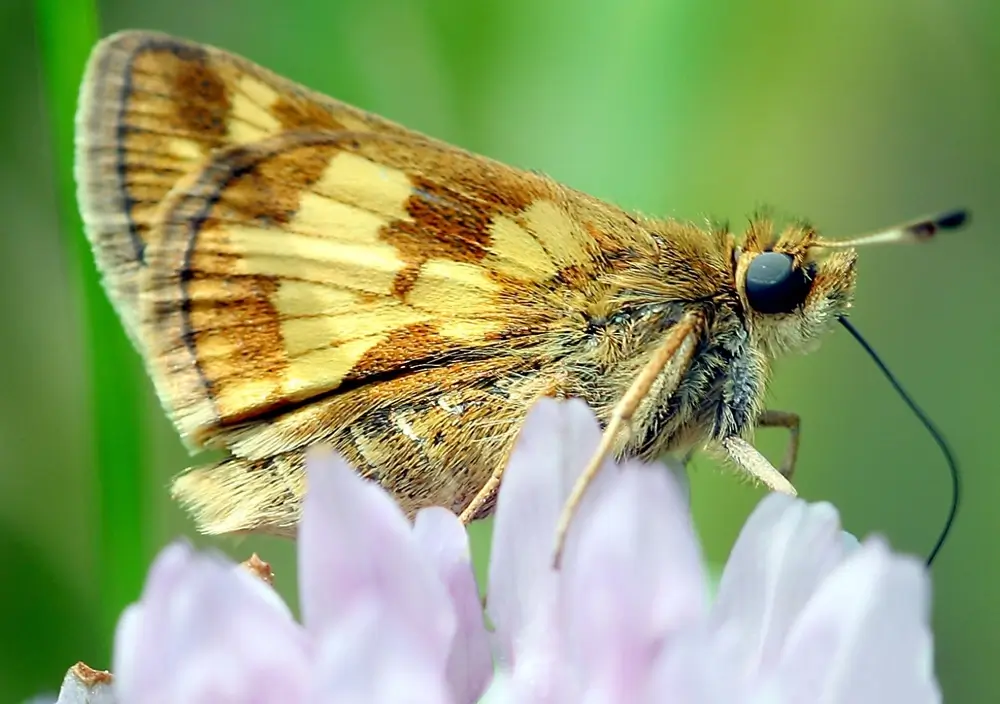
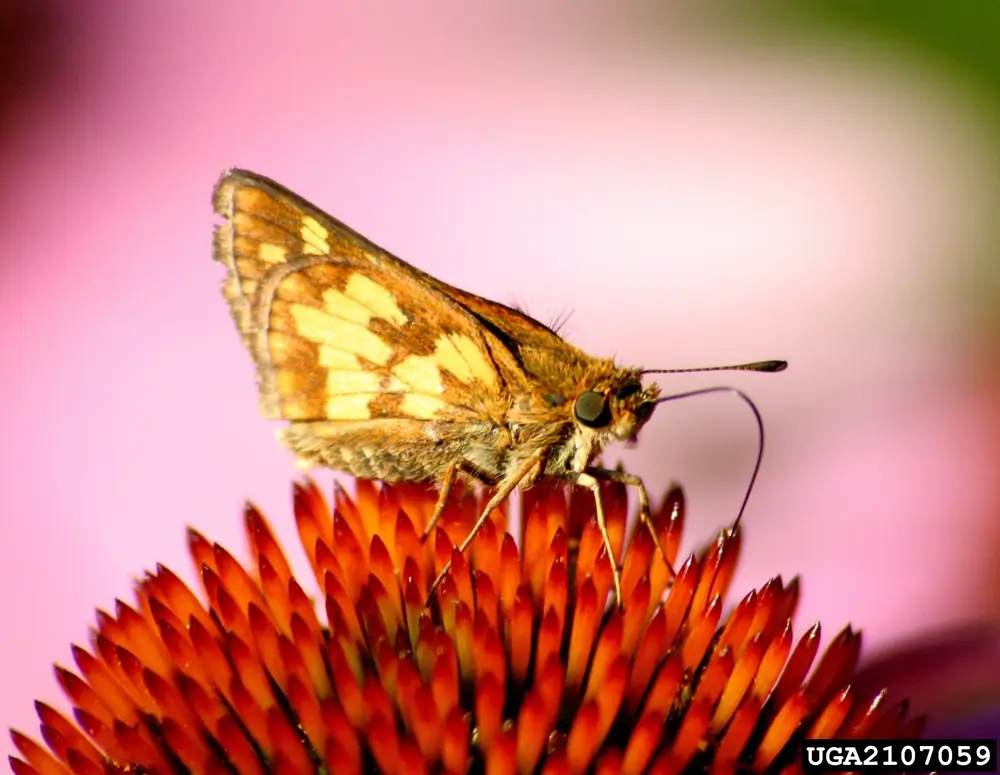
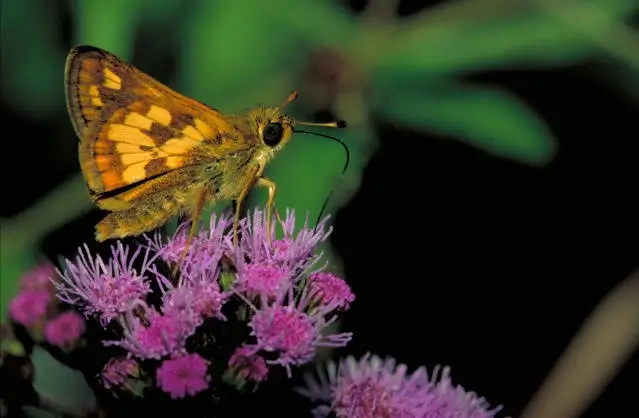
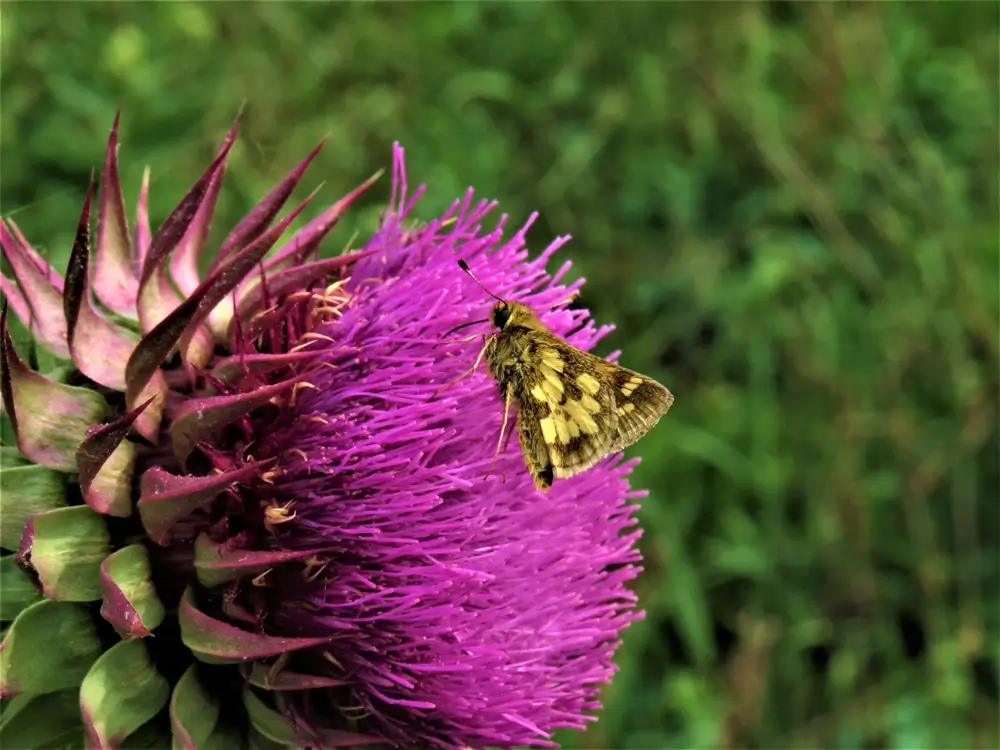
Peck’s skipper has a wingspan of 1-1.25 inches (2.5-3.1 cm). It has dark brown uppersides, small orange flecks on its forewing, and an orange patch on its hindwing. The underside of the hindwing has a patch of pale yellow spots surrounded by brown. The male has a curved black stigma, or scent patch, on his forewing.
Habitat
Peck’s skipper is found in open grassy areas like meadows, marshes, lawns, and roadsides.
Diet
The Peck’s skipper caterpillar eats grasses like rice cutgrass and bluegrass. The adult eats nectar from plants like red clover, purple vetch, thistles, New York ironweed, milkweed, and dogbane.
Life Cycle
The male Peck’s skipper perches in sunny areas and waits for a female. The female lays one egg at a time on the leaves of a host plant. The female Peck’s skipper produces 1-3 broods a year.
The caterpillar is maroon with light brown markings. It has a black head with white spots and streaks. The caterpillar overwinters.
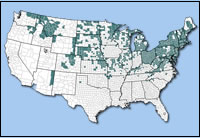
Peck’s skipper is found across southern Canada from British Columbia east to Nova Scotia. In the United States, it is found from eastern Oregon and Washington east to Maine and south to New Mexico, Colorado, Missouri, and northern Georgia.