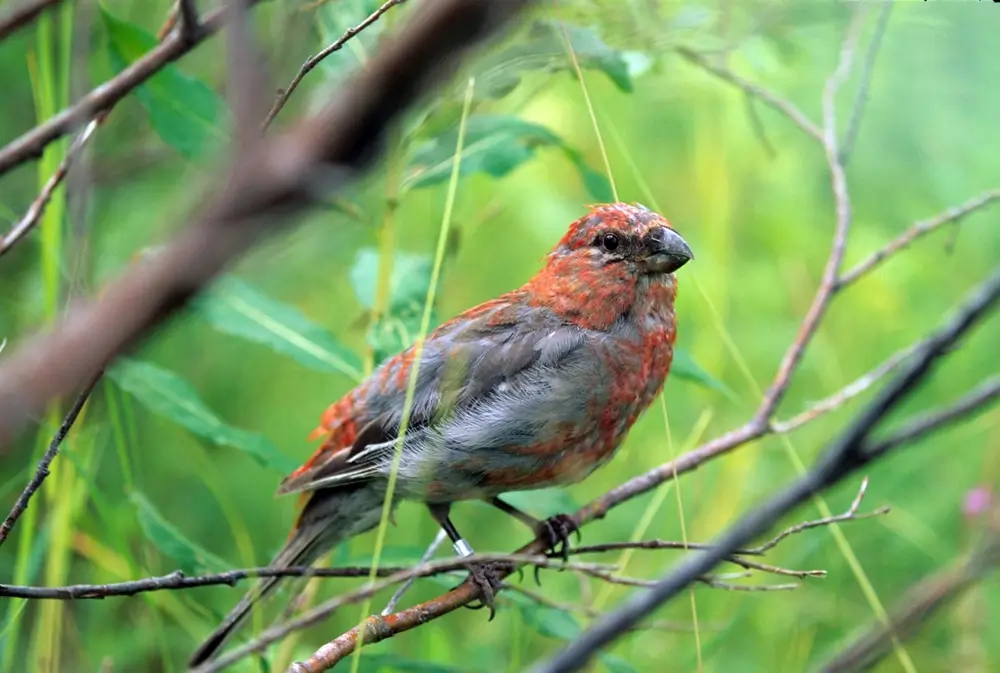
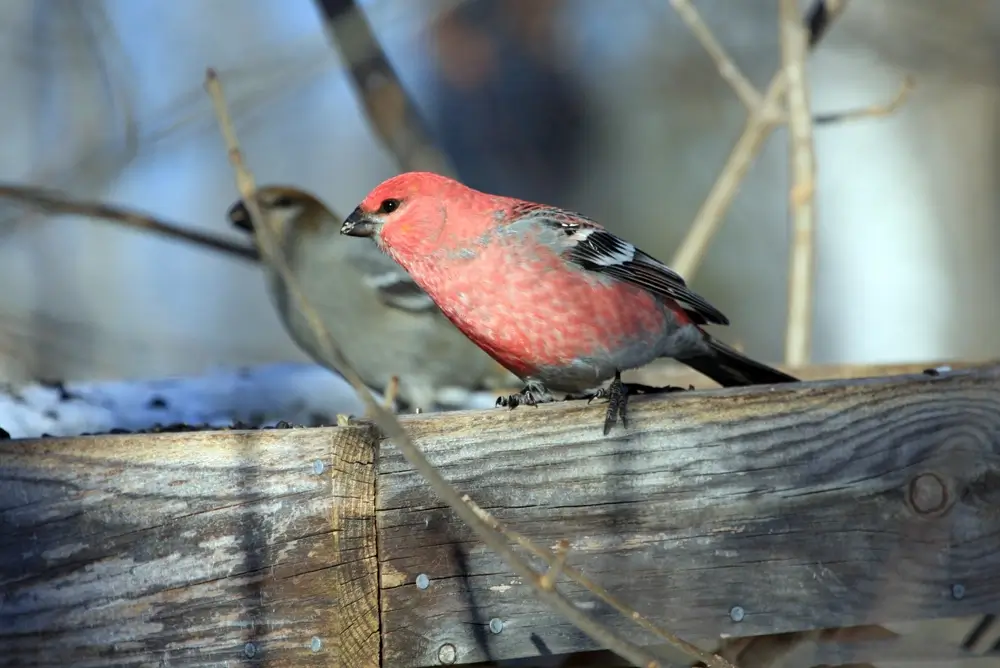
The pine grosbeak is 7.9-9.8 inches (20-25 cm) in length with a wingspan of 12-13 inches (30.5-m).
It is a sturdy bird with a strong, short, cone-shaped bill; a long, slightly forked tail; and dark brown wings with white bars.
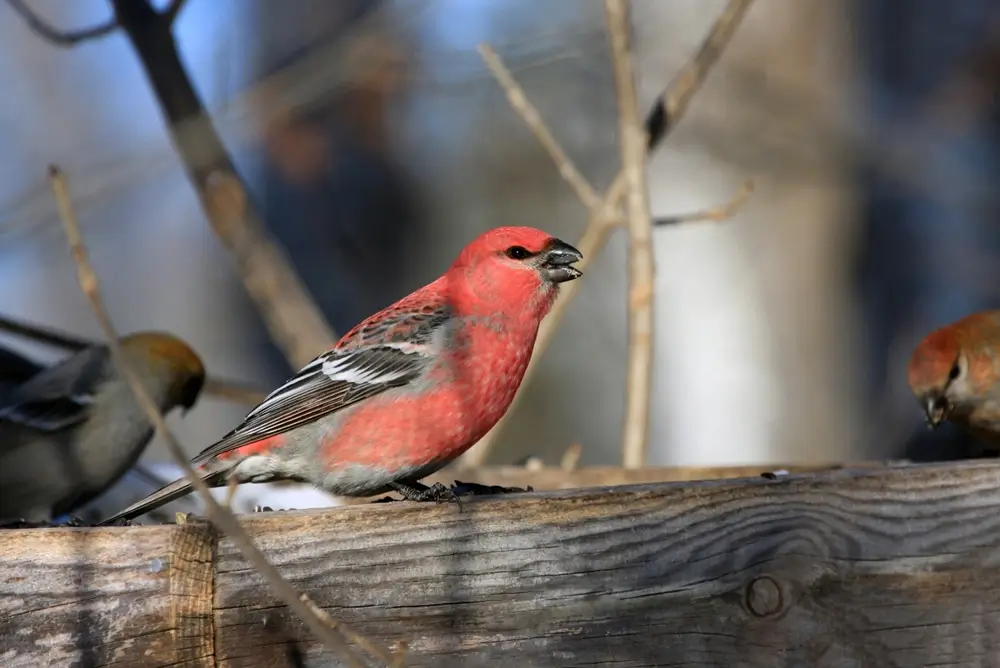
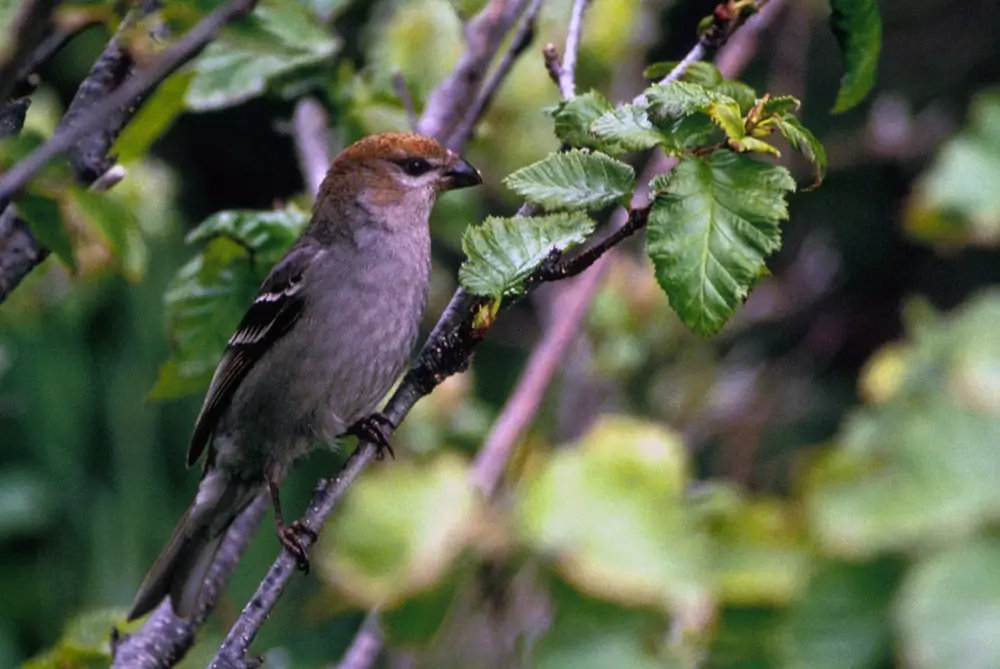
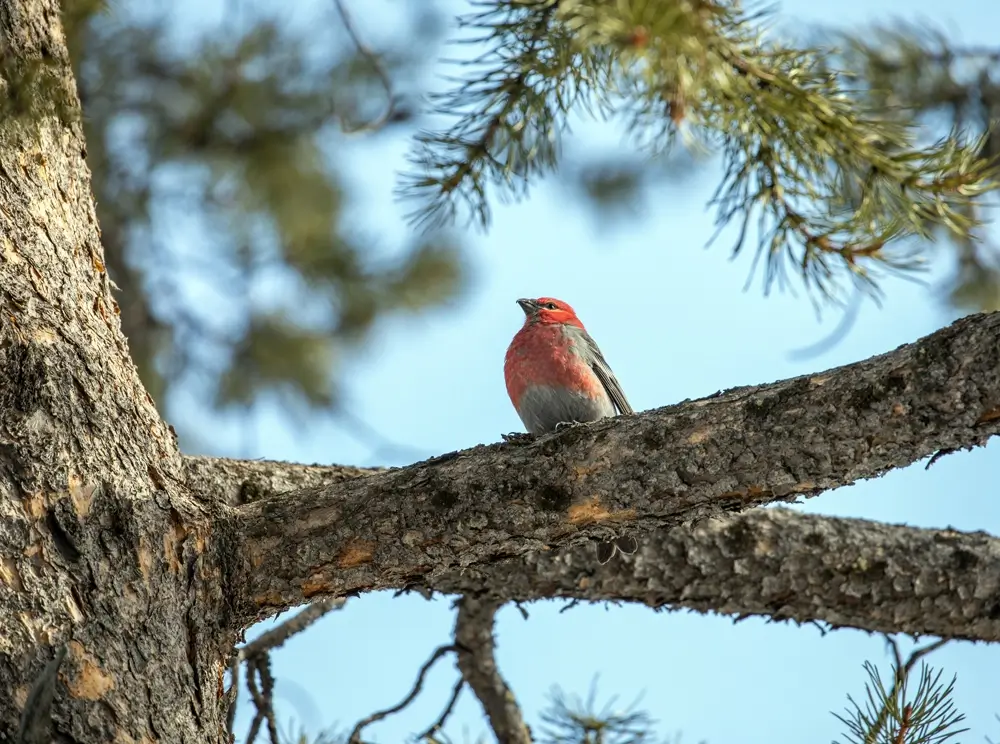
The male has a rose-red head, breast, and back. The female has a yellowish-brown head and a gray breast and belly.
Male and female immature pine grosbeaks can be hard to tell apart by sight until their second year. In his second year, the male pine grosbeak molts and grows new red feathers.
Habitat
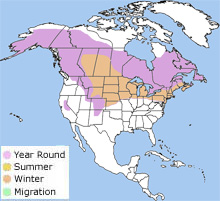
The pine grosbeak breeds in coniferous forests. It winters in coniferous, deciduous, mixed forests, and other areas where it can find food, including cities and suburban areas.
Diet
Most of the pine grosbeak’s diet is made up of seeds, buds, and fruits, but it also occasionally eats insects.
Life Cycle
The female pine grosbeak lays 3-4 eggs in a twig nest lined with lichen, moss, and grass. The nest is built close to the ground.
The female incubates the eggs for 13-14 days. The male brings the female food while she is incubating the eggs. Both the male and the female feed the chicks.
The chicks fledge when they are about two weeks old, but they may still be fed by their parents after they fledge.
The pine grosbeak has a lifespan of up to 9 years in the wild.
Behavior
During the breeding season, pine grosbeaks are usually found in pairs. In the winter, they gather in flocks to forage for food. They are somewhat nomadic and move from place to place in search of food.
Did You Know?
The pine grosbeak feeds its chicks a paste of regurgitated insects and plants that they store in pouches in their lower jaw on either side of their tongues.