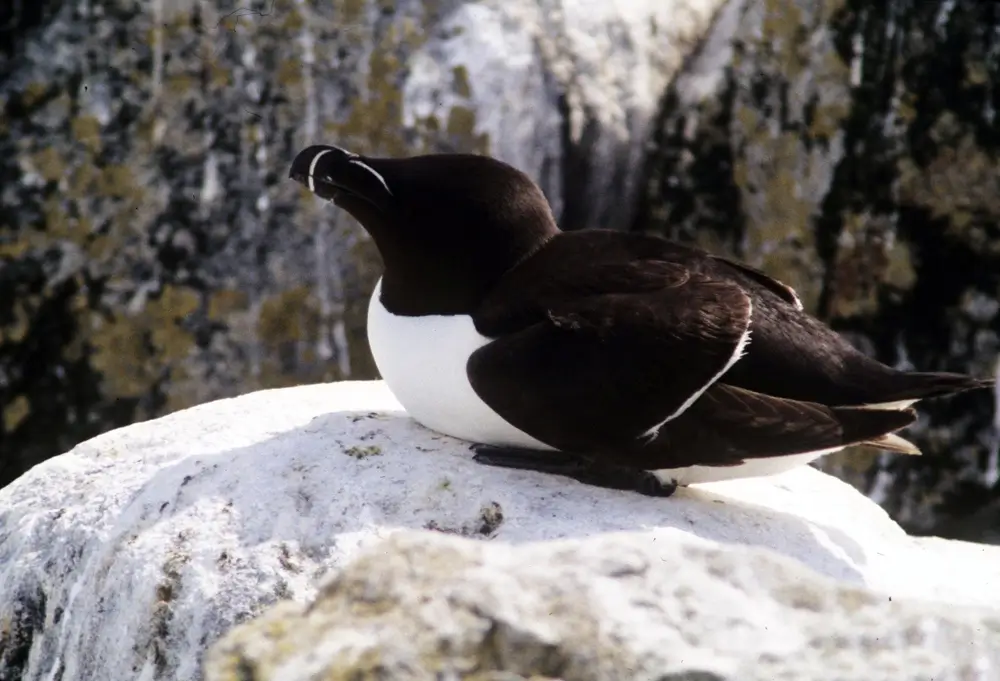
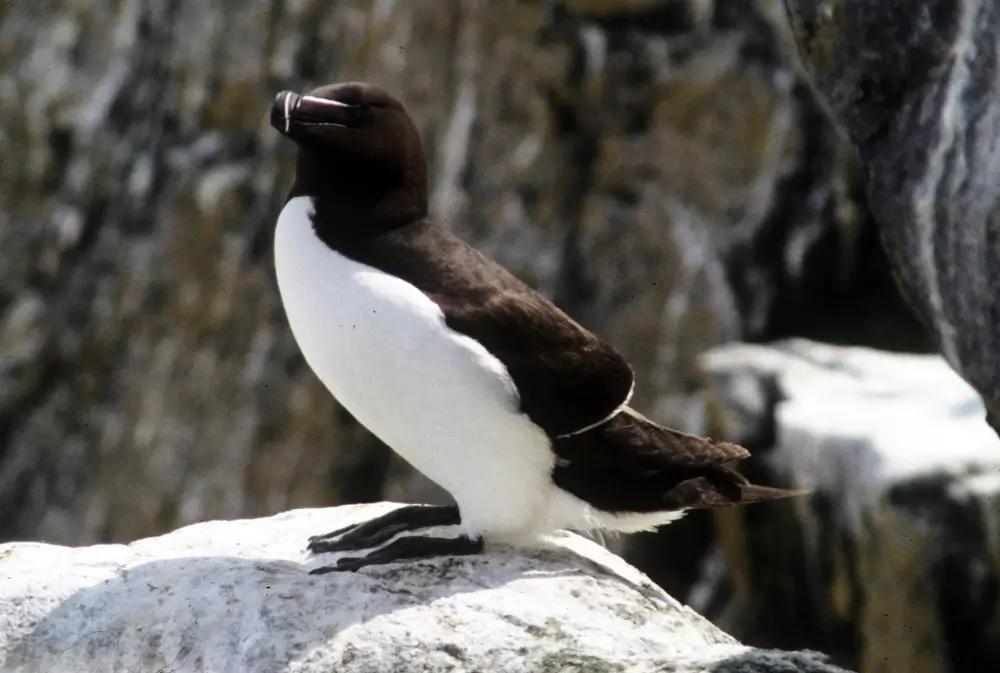
The razorbill is a crow-sized diving bird that is 14-17 inches (35.6-43.2 cm) in length. It has a wingspan of 24.8-26.8 inches (63-68 cm).
It has a black head and upper side and a white chest and belly. It has a white line from its eyes to its bill that is missing in the winter. Its thick, hooked bill has a thin white band around it. It has a sharply pointed tail and black webbed feet. Males and females look alike.
Habitat
Except for during the breeding season, the razorbill lives offshore in open waters.
Diet
The razorbill feeds mostly on fish, shrimp, and squid. It dives from the surface of the water and can reach depths of up to 60 feet (18.3 m) to reach its prey.
Life Cycle
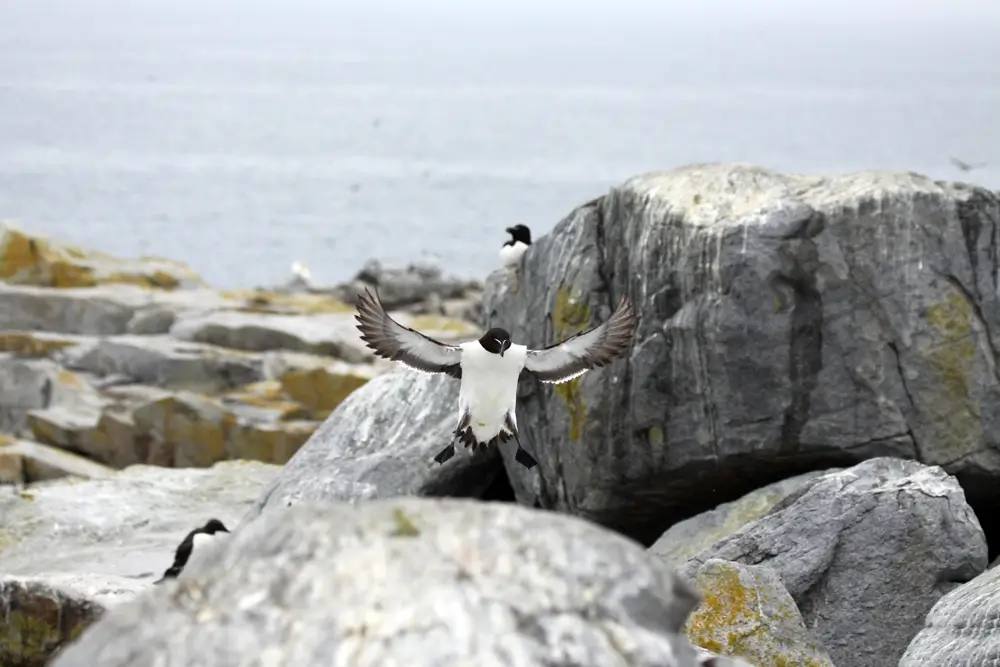
The razorbill nests in colonies on cliffs or islands among the boulders and rocks. The female razorbill lays a single egg on the ground or on rocks. Incubation takes about 5 weeks.
The chick stays in the nest for 16-25 days and then goes out to sea with its parents. It takes another 2 months before it reaches adult size and has adult plumage.
The razorbill has an average lifespan of 13 years. The oldest razorbill on record lived to be 41 years old.
Behavior
Except for during the breeding season, the razorbill spends most of its time on the open water. It even cares for its young while on the open water, bringing them food until they are old enough to hunt for themselves. The razorbill swims in the water with the end of its tail tipped up.
Did You Know?
Support for NatureWorks Redesign is provided by:
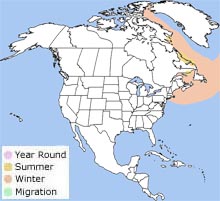
The Razorbill in NH
In the winter, the razorbill can sometimes be found off the coast of New Hampshire.