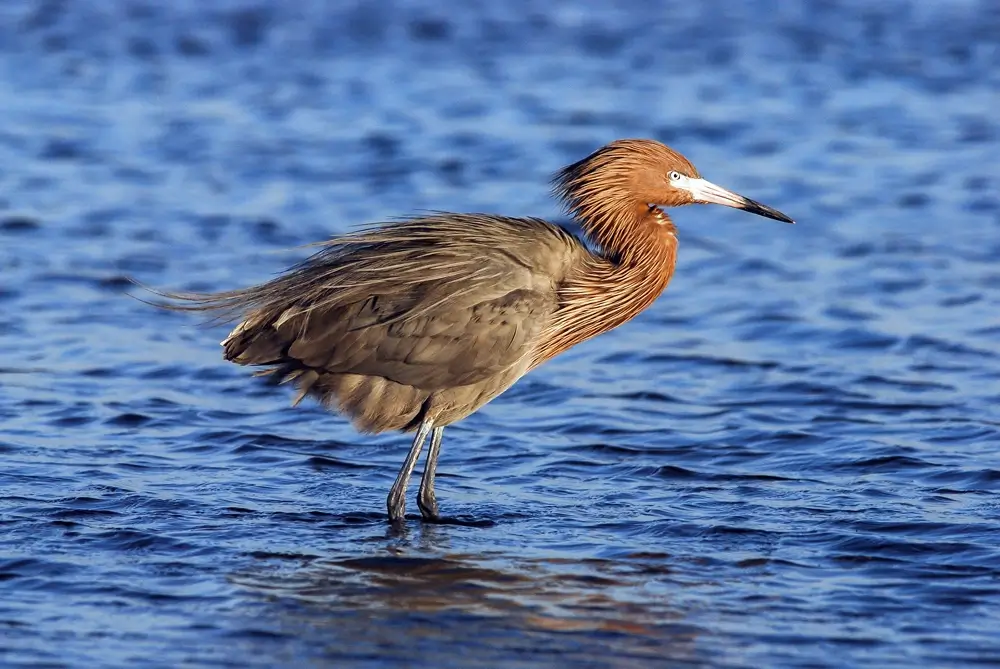
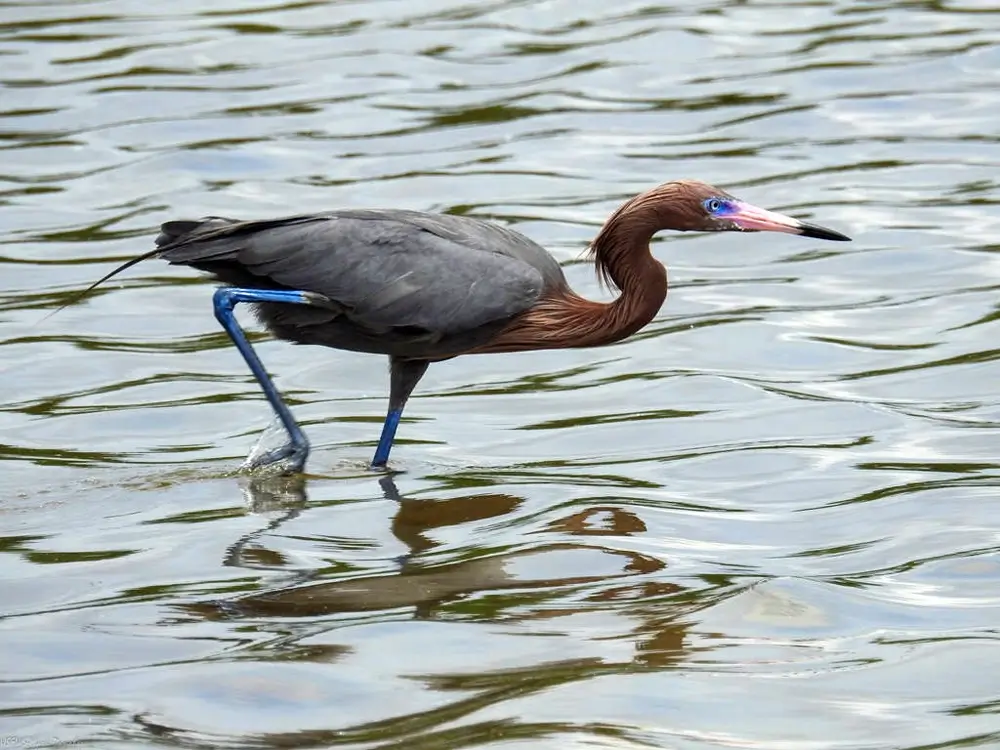
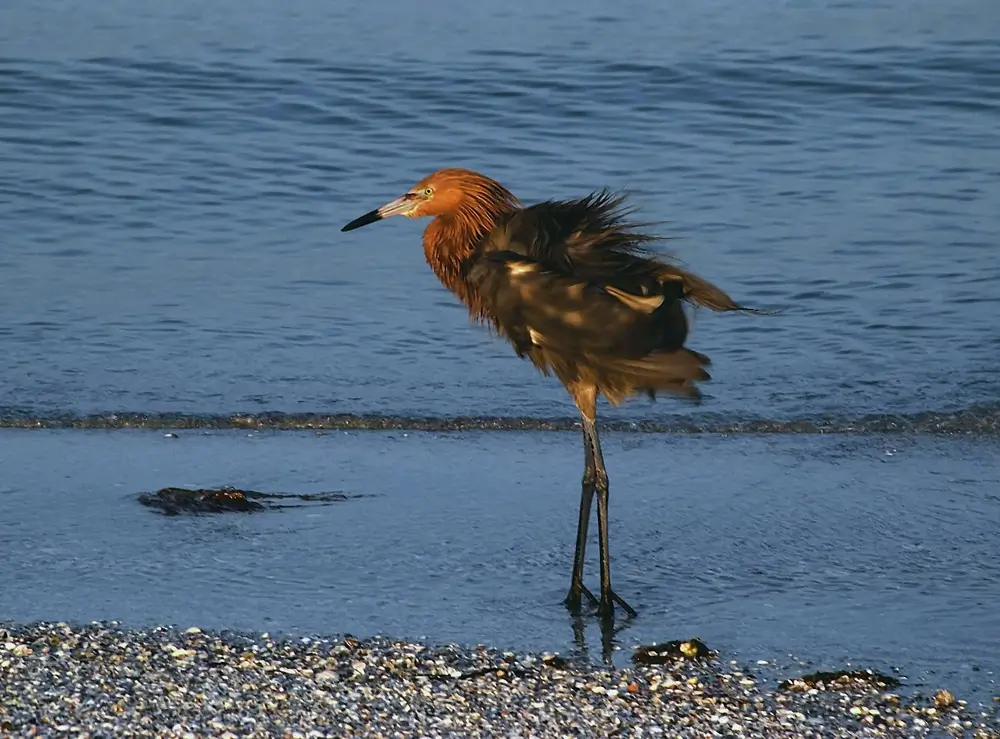
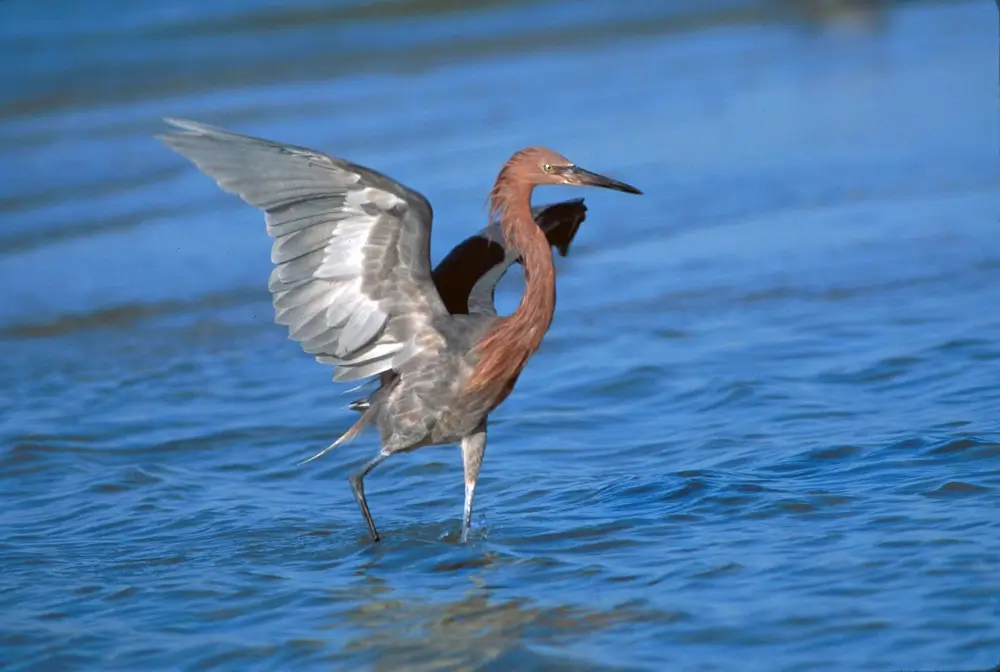
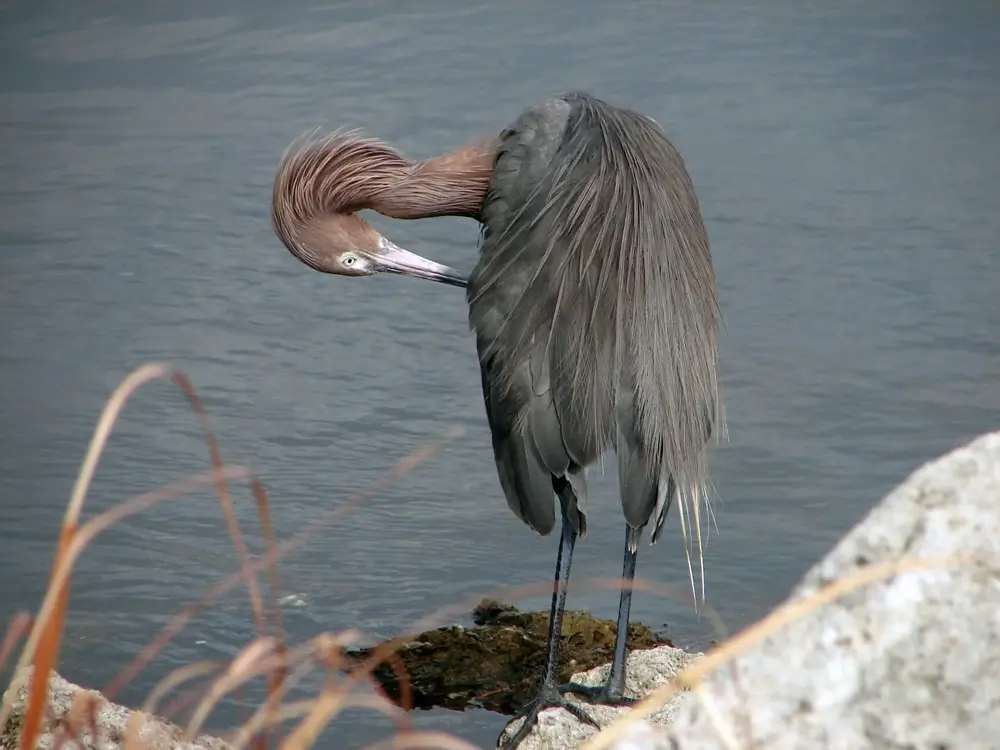
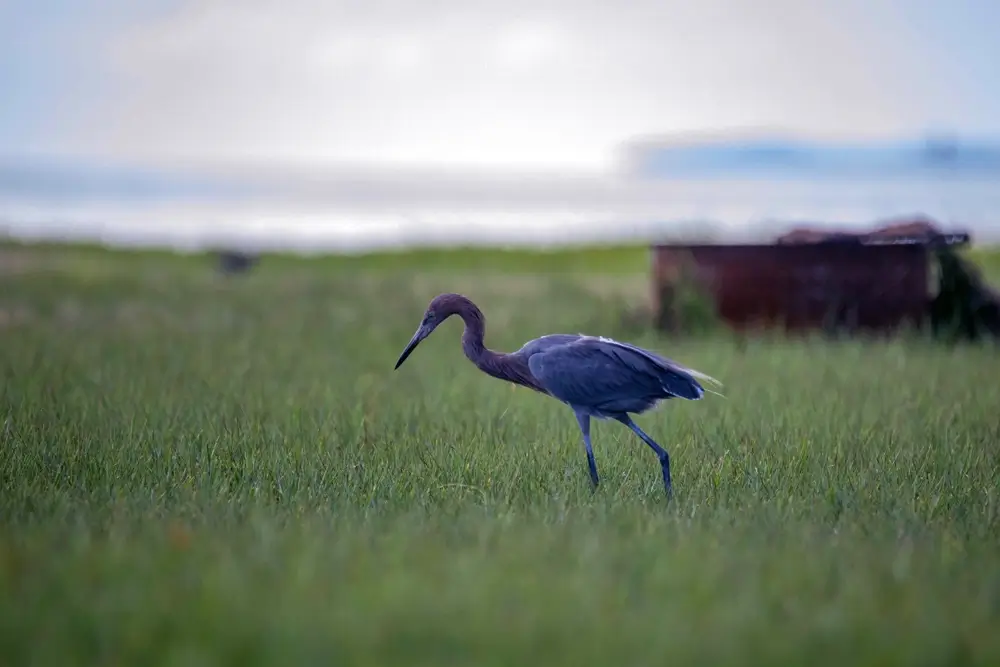
The reddish egret stands about 2.5 feet (0.76 m) tall and has a wingspan of about 3.8 feet (1.2 m). It has a blue-gray body and wings with a reddish neck and head. Adults in breeding plumage have long plumes on their heads and necks.
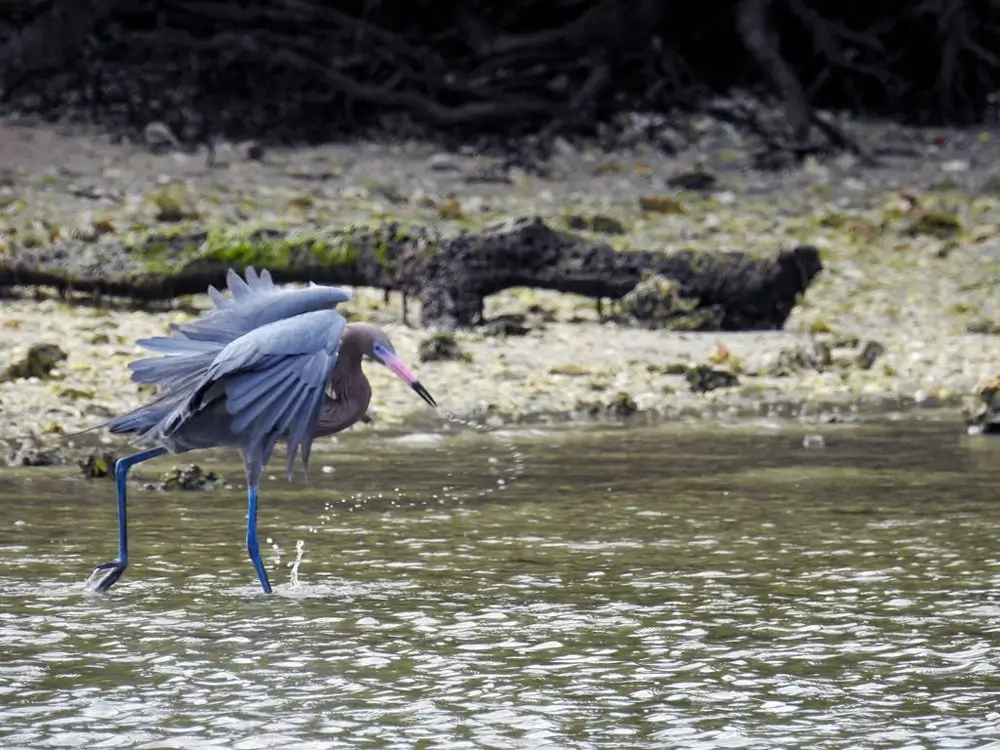
The reddish egret has long blue legs and a pointed salmon-pink bill with a black tip. It usually holds its neck in an “S” shape when it is in flight and when it is at rest.
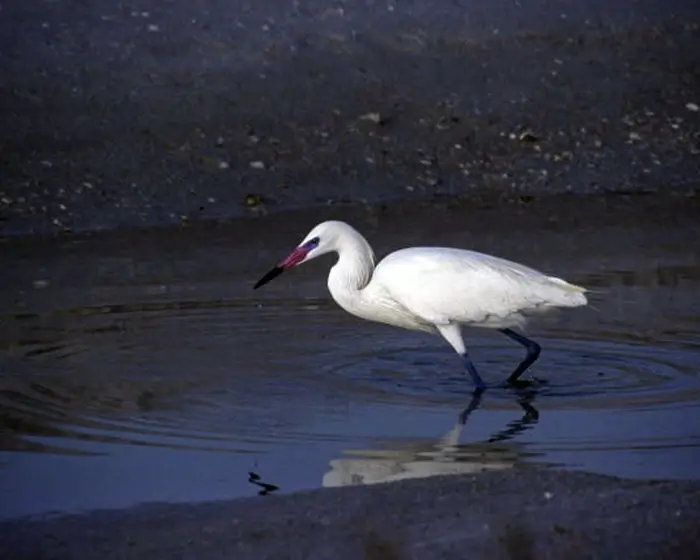
A white morph of the reddish egret is found in some areas. A morph is a color variation in a species. Morphs of a species are usually found in a particular geographic location.
Habitat
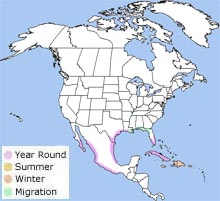
The reddish egret is found in areas with salty or brackish water. Habitats include coastal tidal flats, salt marshes, and lagoons.
Diet
When the reddish egret hunts for food, it races back and forth in the shallow water, often spreading its wings wide and flapping them. It eats fish, frogs, and crustaceans.
Sometimes it curves its wings forward around its body and makes a canopy that casts shade on the water. When prey swims towards the shady spot, the reddish egret quickly snatches it up.
Life Cycle
The reddish egret nests in colonies. The female lays 3-4 eggs on a platform of sticks placed in mangroves, low bushes, or on the ground.
The chicks hatch in 25-26 days and fledge when they are about 45 days old. Both the male and the female build the nest, incubate the eggs, and care for the young.
The reddish egret can live for up to 12 years in the wild.
Behavior
Male and female reddish egrets don’t seem to care what morph their mate is and a brood of reddish egrets can have chicks of both the white morph and and reddish morph.
Did You Know?
Like other egrets and herons, the reddish egret was once hunted for its feathers in the late 1800s and early 1900s, and its numbers decreased dramatically.
It is now protected, and its numbers have increased.