Rock Pigeon

Columba livia

Kingdom
Phylum
Class
Order
Family
Genus

Characteristics

The rock pigeon is also known as the rock dove and just the pigeon.

It is 11-15 inches (28-38 cm) in length with a wingspan of 1.6-2.2 feet(0.49-0.67 m).

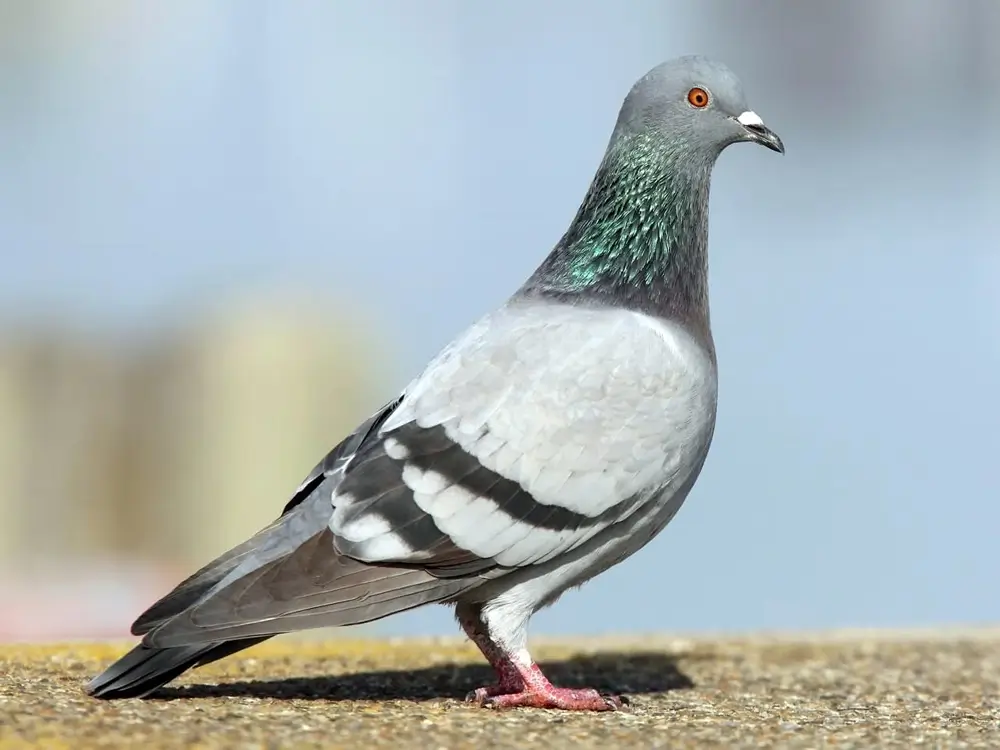
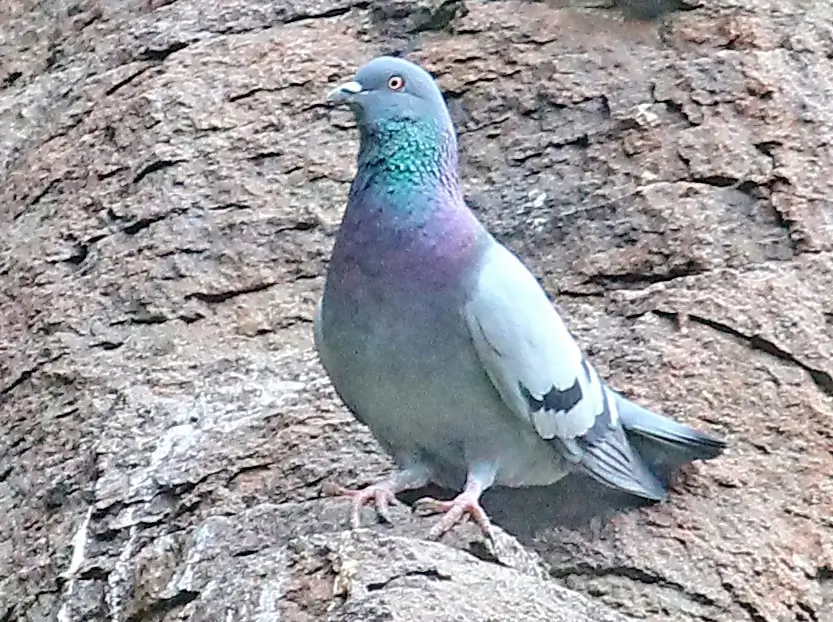
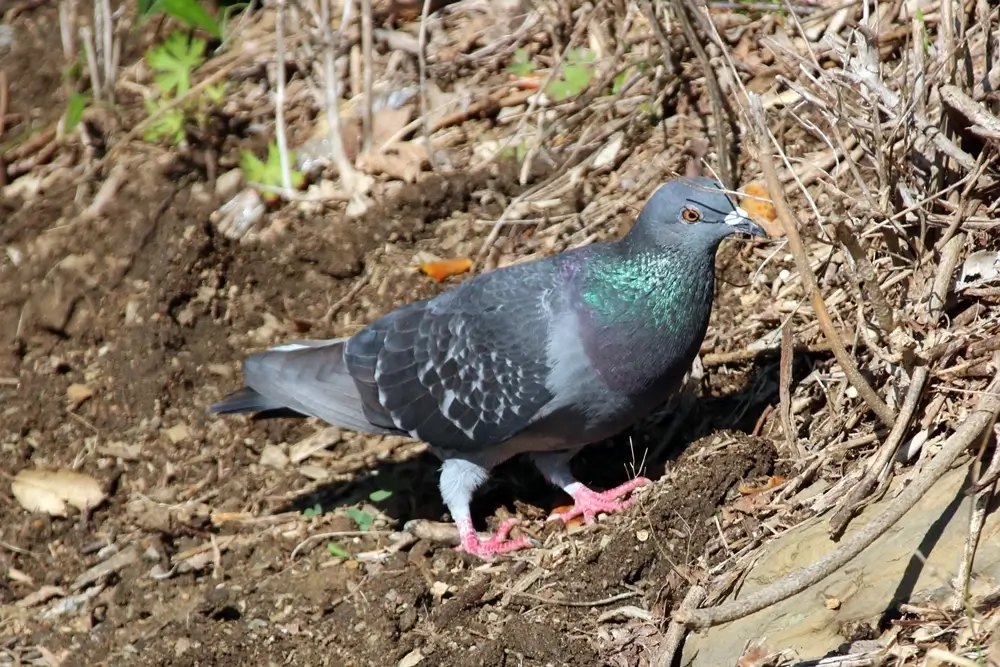
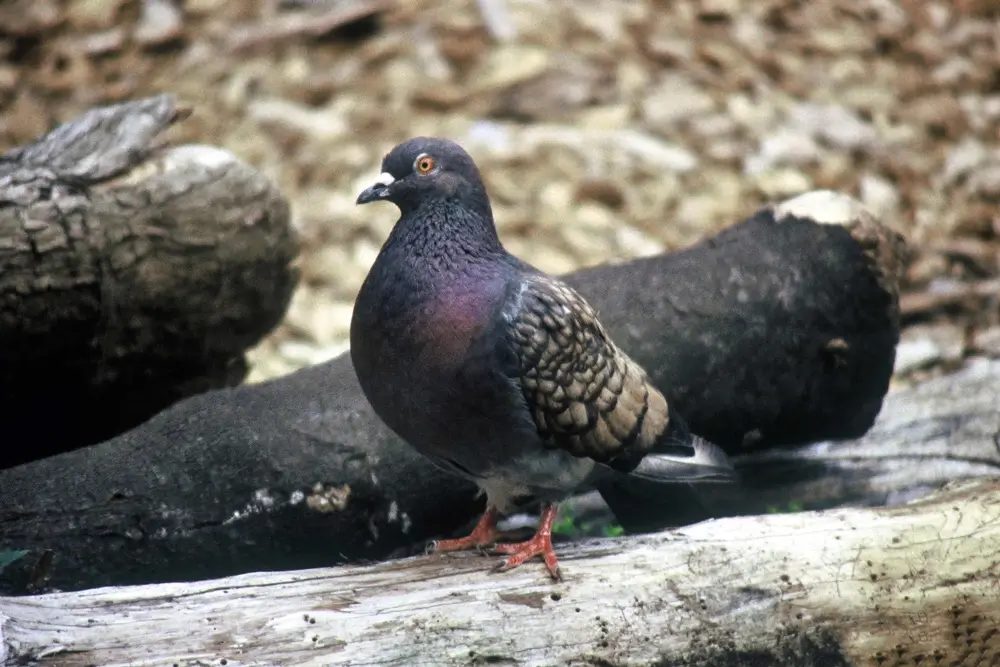
The rock pigeon is a plump bird with a rounded tail, pointed wings, and small red-to-pink to grayish-black legs and feet. It has round eyes surrounded by a ring of skin and a small bill with a cere or fleshy covering on the upper part of its bill. In the wild, the rock pigeon has a bluish-gray body, pale gray wings with two black bars, and a white rump.

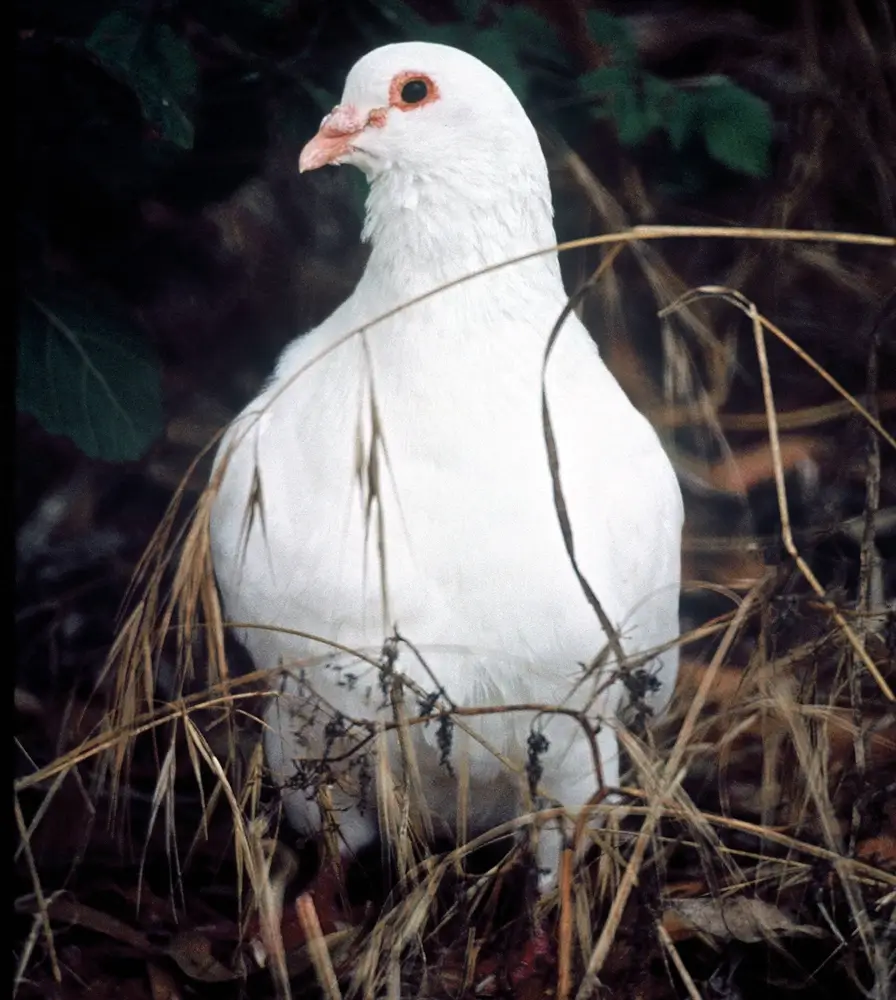
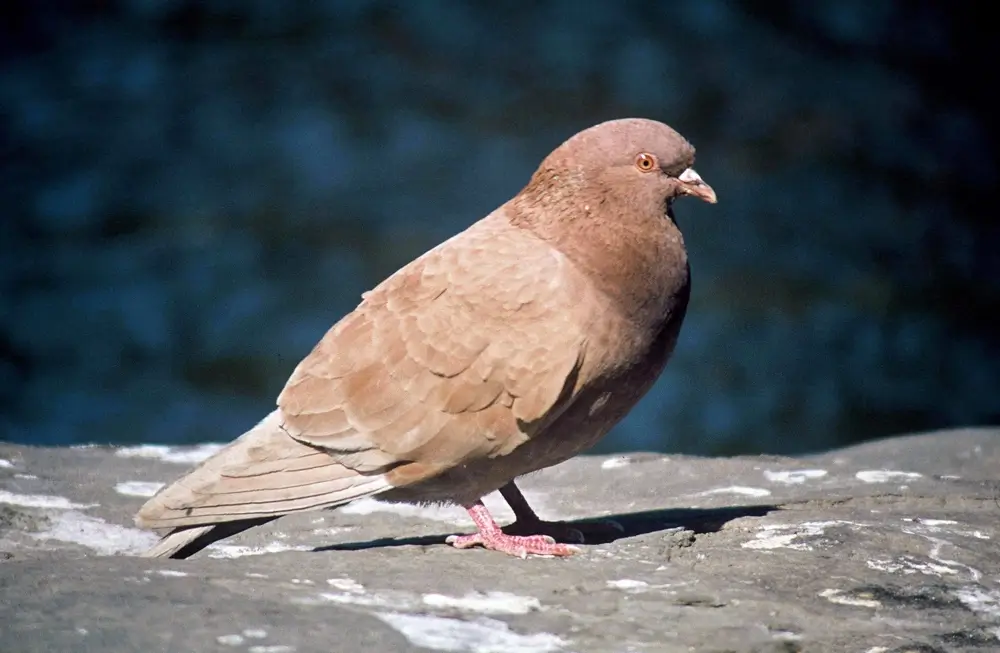
Rock pigeons found in cities can come in a wide variety of colors, from bluish-gray, pure white to brown. The wide variety of colors found in rock pigeons occurs because people have bred rock pigeons. Males and females look alike, but males are a little larger.

Habitat

The rock pigeon is found in a variety of habitats, including rocky cliffs, farmland, parks, gardens, cities, and suburbs. Humans have trained rock pigeons as homing pigeons.

Homing pigeons can find their way home from long distances. Rock pigeons that are not trained usually don’t wander far from their territory.

Diet

The rock pigeon eats a wide variety of seeds. It may also eat some insects and plants. In cities, rock pigeons eat seeds, peanuts, french fries, popcorn, and a variety of handouts from humans. The rock pigeon feeds on the ground in groups.

Life Cycle

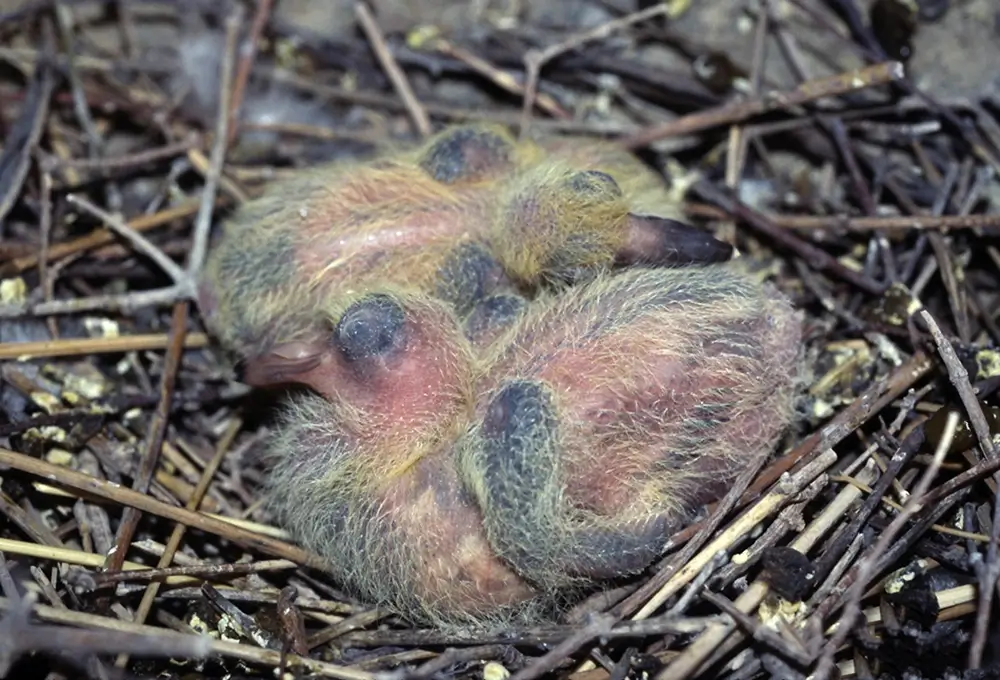
The female rock pigeon lays 2 eggs in a nest lined with sticks, leaves, stems, roots, and debris. In the wild, the nest is built on a cliff. In cities and towns, the nest is placed on window ledges, on roofs, in traffic lights, and under bridges. The male builds the nest.

Both the male and the female incubate the eggs for 19 days. Both parents feed the squabs or chicks “pigeon milk.”

Pigeon milk is a mixture of water, fat, minerals, and protein that the male and female rock pigeon produce in their crop. Their crop is a sac at the bottom of their esophagus.

Rock pigeons fledge when they are 25-35 days old. Fledglings remain near their parents for a few weeks after leaving the nest.

The rock pigeon has a lifespan of 3-5 years in the wild.  In captivity, they can live to be 20 years old.

Behavior

The rock pigeon and other birds in the Columbidae family have a unique way of drinking water. Most birds take a sip of water and then throw back their heads to swallow. The rock pigeon uses its bill like a straw to suck up water.

Did You Know?

The rock pigeon is native to Europe, North Africa, and southwestern Asia.

In the 17th century, colonists brought the rock pigeon to Atlantic Coast settlements in North America.

They were brought over as a source of food and were raised on farms. They were also brought over to use as messengers.


Support for NatureWorks Redesign is provided by: 

The Rock Pigeon in NH

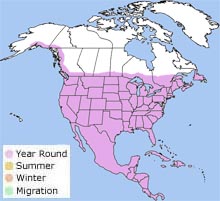
The rock pigeon is found across New Hamsphire and is a year-long resident. It is not a native species.

World Status: Least Concern

Listen Here

Bernabe Lopez-Lanus, xeno-canto.org
rock pigeon

Range

In North America, the rock pigeon is an introduced species and is found from southern Canada and Alaska south through the United States, Mexico, and Central America.

It is also found in Asia, Europe, and Africa. It is an introduced species in Australia and Oceania.