The rock ptarmigan is a plump chicken-like bird that is around 11-16 inches (28-41 cm) in length with a wingspan of 17–20 inches (43-51 cm).
It has a square tail and a small black bill. It has feathered legs and toes that help it walk in the snow, dig snow burrows, and help keep it warm.
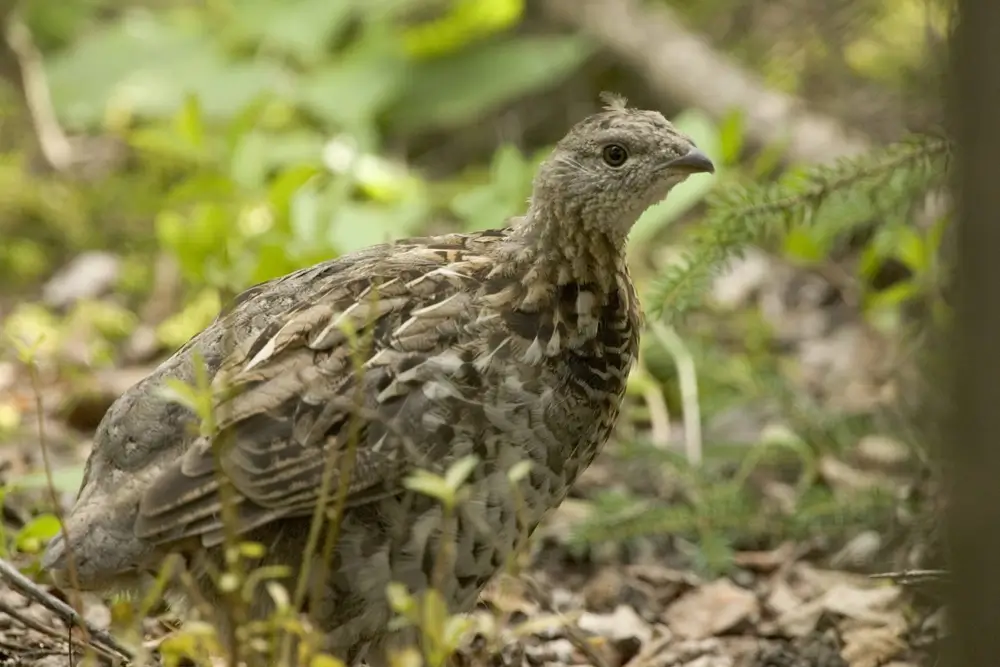
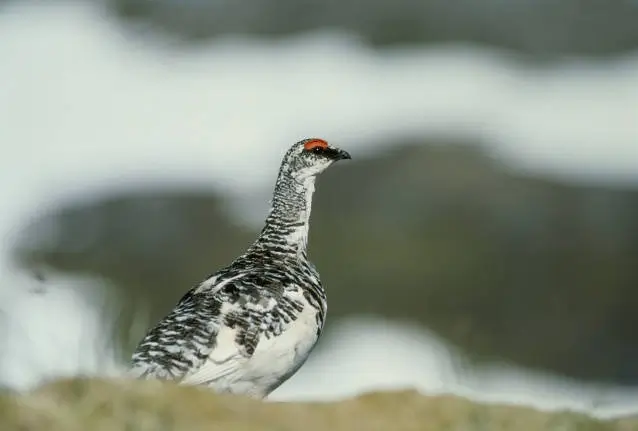
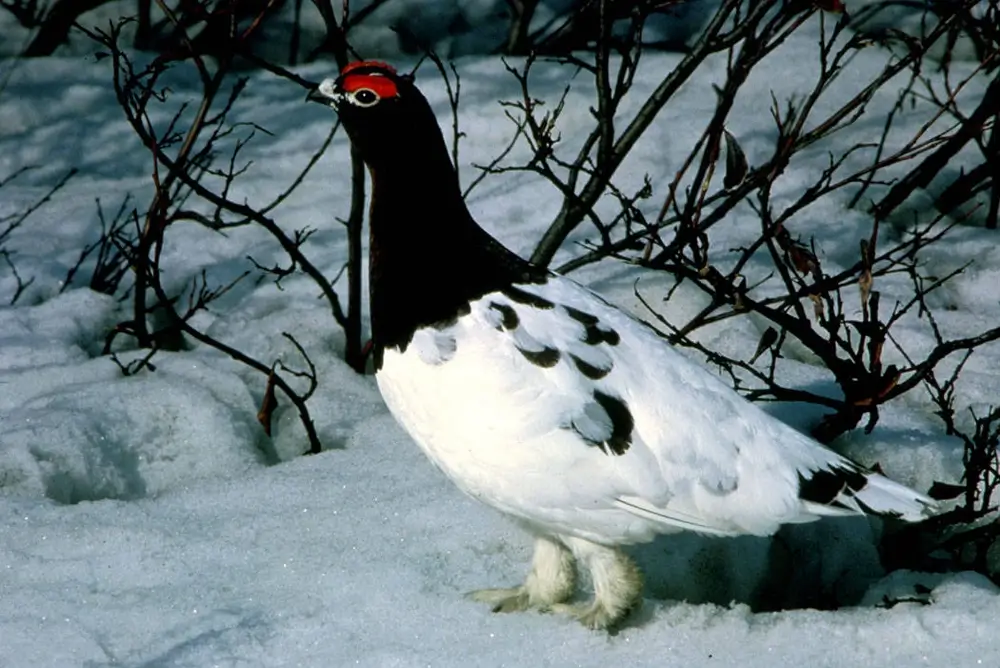
In summer, males have whitish bellies and wings, with brown and gray speckles on their backs. Females are speckled brown and gray all over. Males also have a red comb above their eyes.
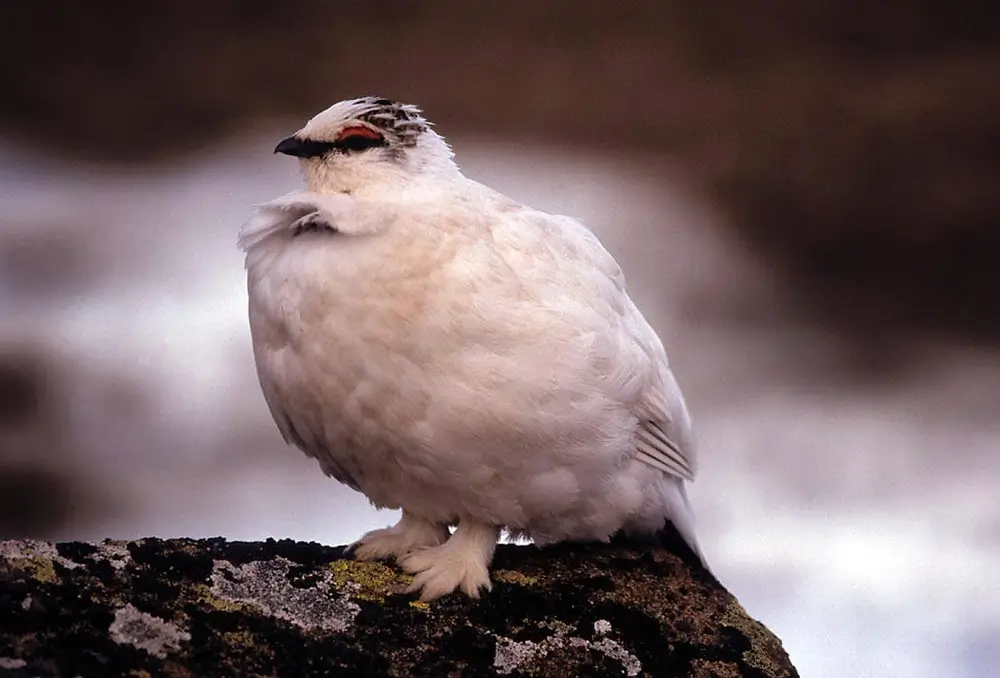
In winter, the rock ptarmigan is all white, except for a black-tipped tail and a black line across its eyes.
Habitat
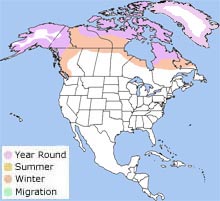
The rock ptarmigan lives on upland tundras. In winter, it may move to forest edges and thickets (areas dense or thick with bushes and trees).
Diet
Adult rock ptarmigans eat a variety of plant parts, including berries, buds, and twigs. They may also eat some insects.
Life Cycle
The male rock ptarmigan selects a breeding territory and protects it from other males. Males protect their territory with aerial displays, chases, and calls. They leap into the air and flap their wings, fly straight up, fan out their tails, and glide back to the ground. During courtship, the male drags one wing on the ground, fans out his tail, raises his red comb, and circles the female.
The female lays 6-10 eggs in a sheltered hollow lined with grass and moss. The male and female stay together until incubation reaches the halfway mark, then the male leaves. The chicks hatch after 21-24 days.
The female raises the chicks, who are precocial and walk around the tundra searching for insects to eat a day after birth. They fledge (develop flight feathers) at 10-12 days old and are fully independent at about three months.
The rock ptarmigan has a lifespan of 3-5 years in the wild.
Behavior
The rock ptarmigan doesn’t leave the tundra in winter, but it may migrate short distances to lowland areas in search of food.
In the winter, males and females live in separate groups.