The ruby-throated hummingbird is the only species of hummingbird that breeds in eastern North America. It is 2.8-3.5 inches (7-9 cm) in length with a wingspan of 3.1-4.3 inches (8–11 cm). It weighs only 0.071-0.212 ounces (2-6 g), about the weight of a penny.
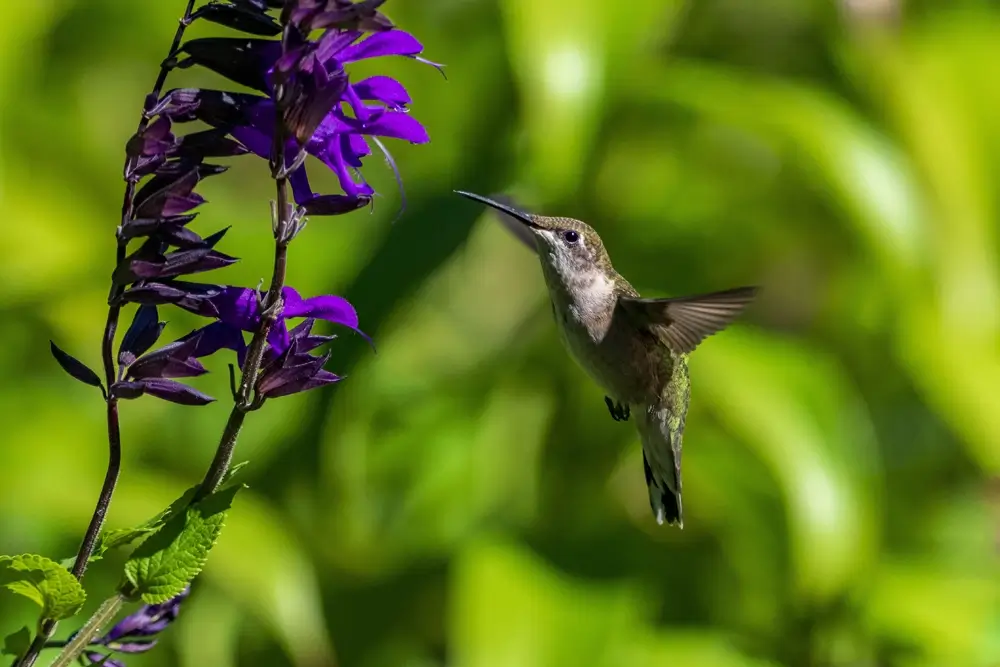
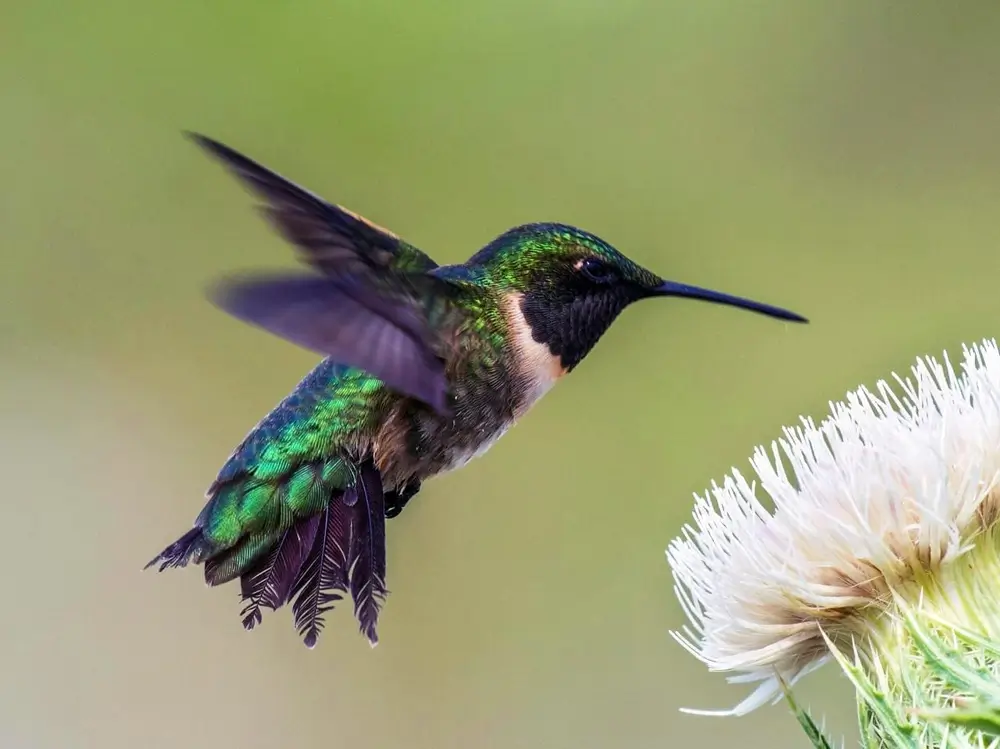
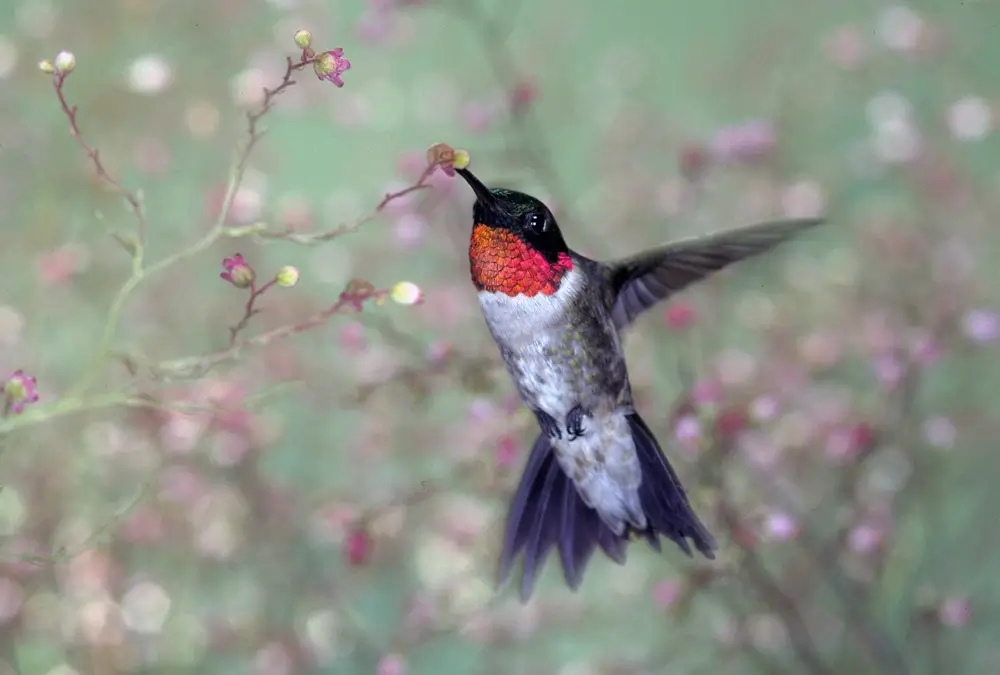
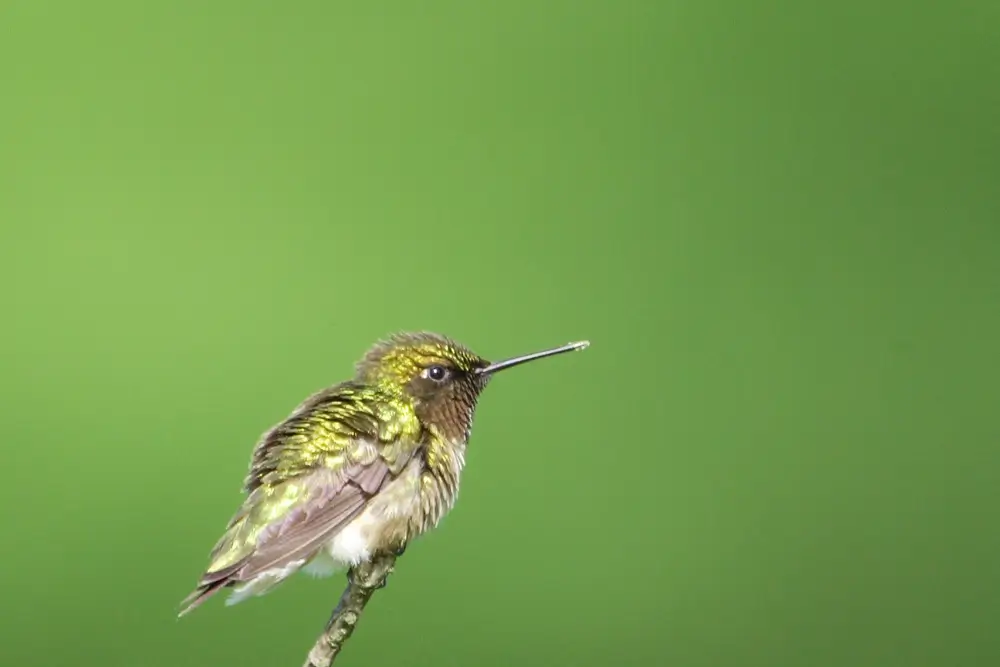
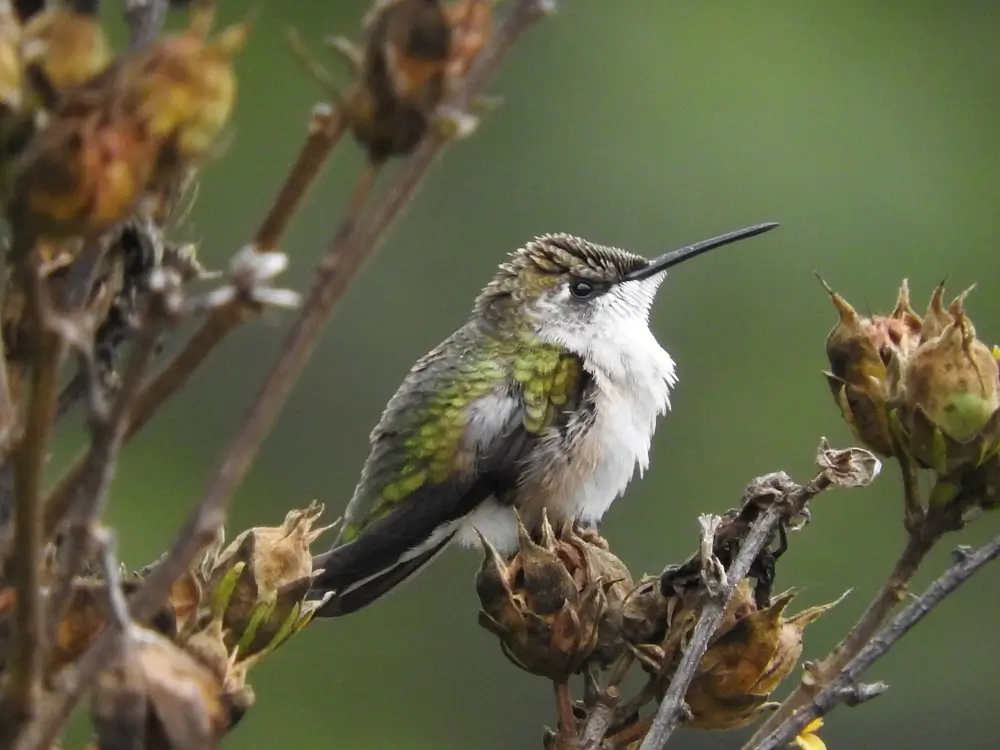
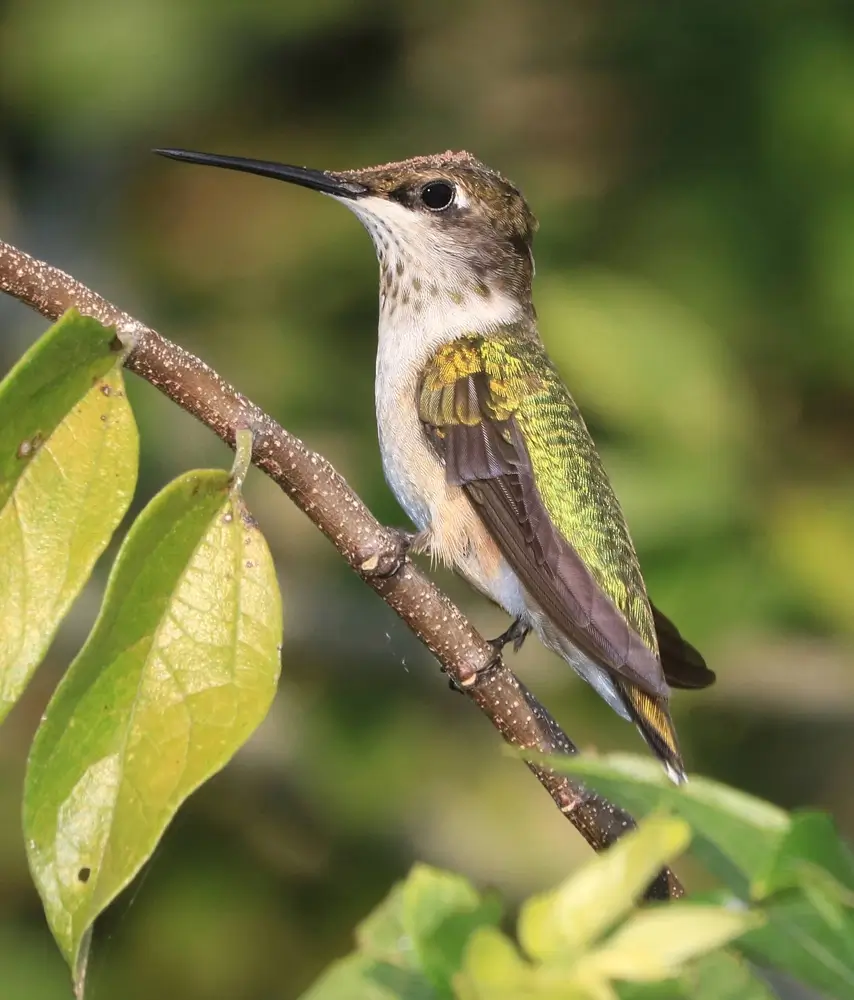
It has a long, straight, thin, pointed bill. The male has an iridescent green back, a ruby-red throat, a black chin, a light brown chest and belly, and a forked dark purple to black tail. The female has an iridescent green back; a grayish-white throat, chest, and belly; and white tips on her tail feathers.
Habitat
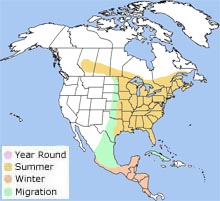
The ruby-throated hummingbird is found in mixed woodlands and eastern deciduous forests, gardens, parks, and orchards during the breeding season.
In the winter, it is found in tropical forests, forest edges, scrubland, old fields, and citrus groves.
Diet
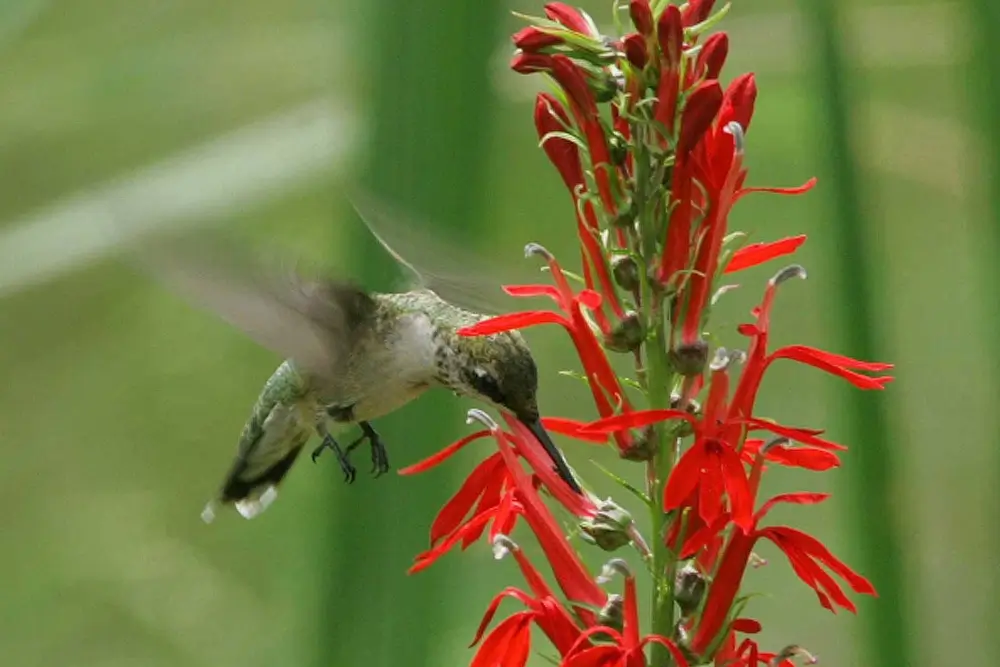
The ruby-throated hummingbird hovers over a flower and uses its long tongue to collect nectar. It is especially attracted to red tube-shaped flowers and often eats the nectar of salvia, trumpet creeper, bee balm, thistle, petunia, coral honeysuckle, wild bergamot, cardinal flower, buckeye, jewelweed, and columbine. It can eat its own weight in nectar each day.
It also eats insects.
Life Cycle
The male ruby-throated hummingbird courts the female by flying in loops and diving over her and then flying in side-to-side horizontal arcs. If the female is interested, she calls out to the male and tips her head to the side. The male will mate with more than one female.
The female makes a cup-shaped nest on a tree branch. The nest is made of plant matter like thistles and dandelion down and is held together with spider webs and covered in lichen.
The female lays 1-3 eggs and incubates them for 10-14 days. The chicks fledge when they are 18-22 days old, but the female may continue to feed them for another 4-7 days. The female may have as many as three broods a year.
The ruby-throated hummingbird has a lifespan of 3-5 years. The oldest known ruby-throated hummingbird lived to be nine years old.
Behavior
The ruby-throated hummingbird is a solitary bird, except during the breeding season and when raising young.
It has very tiny feet and never walks on the ground. It may perch for brief periods of time on a twig or wire, or on its nest.
When the weather is cold, the ruby-throated hummingbird drops its body temperature and heart rate and goes into torpor, or a period of lowered breathing and heart rate to save energy. It can take 30 minutes or so for a hummingbird to come out of torpor.
Did You Know?
The ruby-throated hummingbird beats its wings over 50 times every second.
Support for NatureWorks is provided by:
The Ruby-Throated Hummingbird in NH
The ruby-throated hummingbird breeds in New Hampshire and migrates south in the late summer.