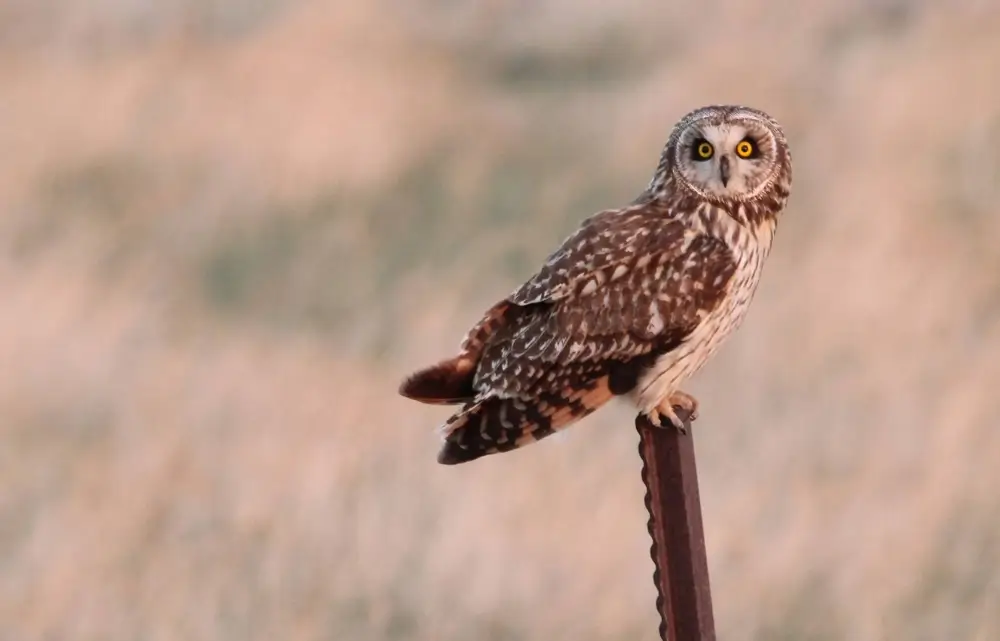
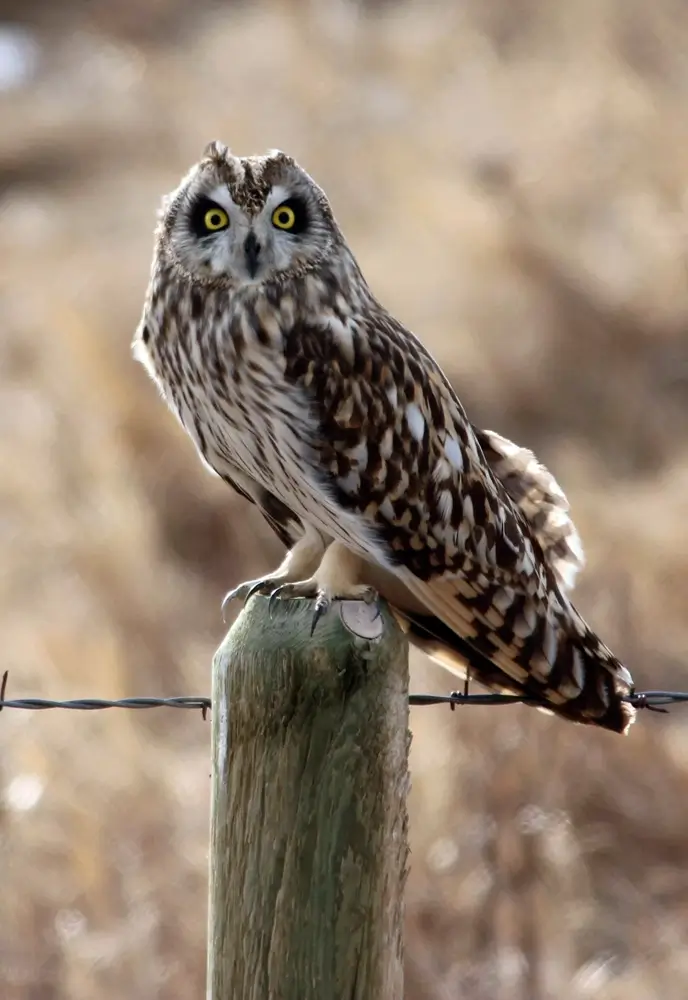
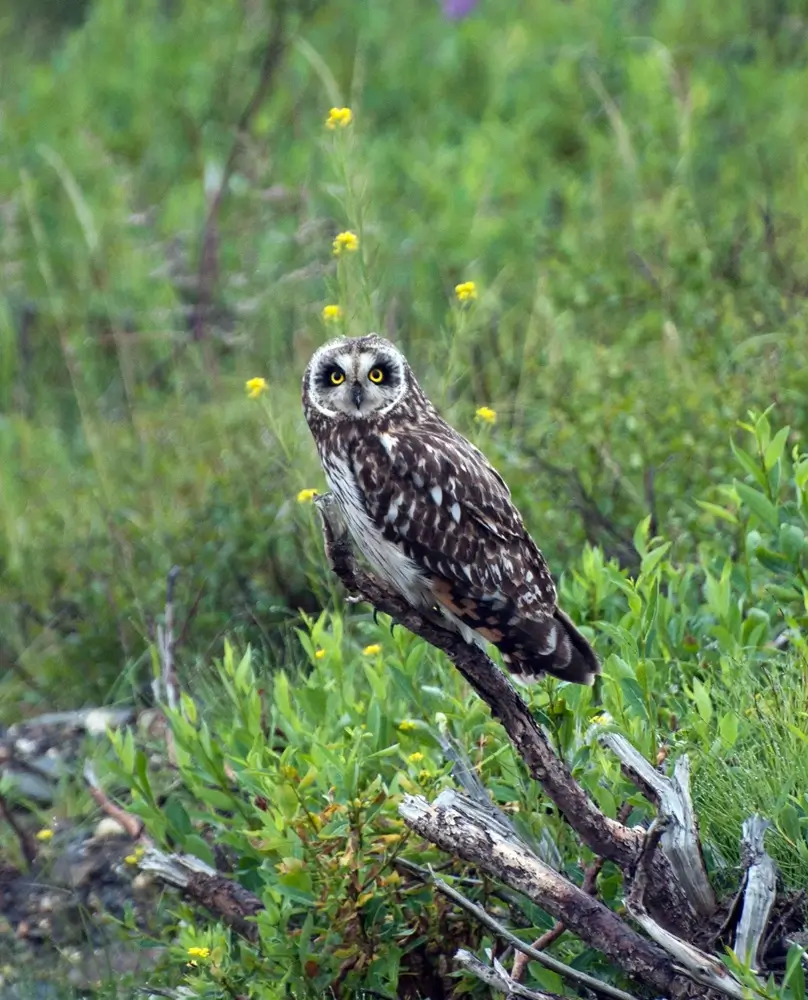
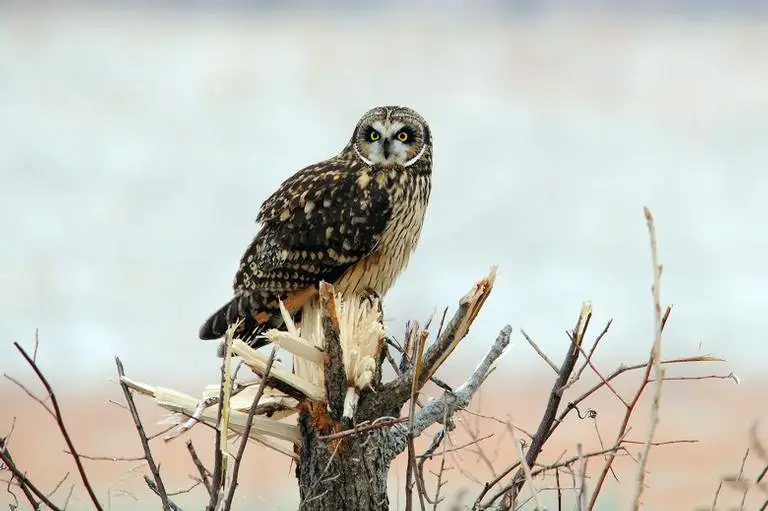
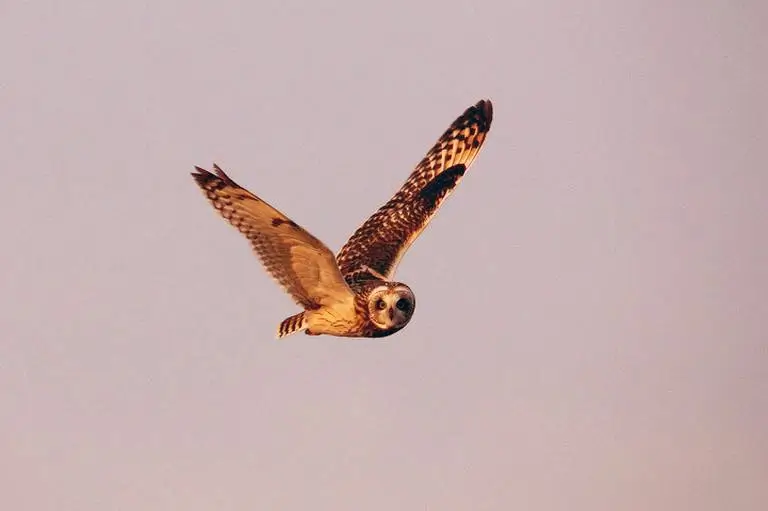
The short-eared owl is 13-17 inches (33-43.2 cm) in length and has a wingspan of 33-40 inches (84-102 cm).
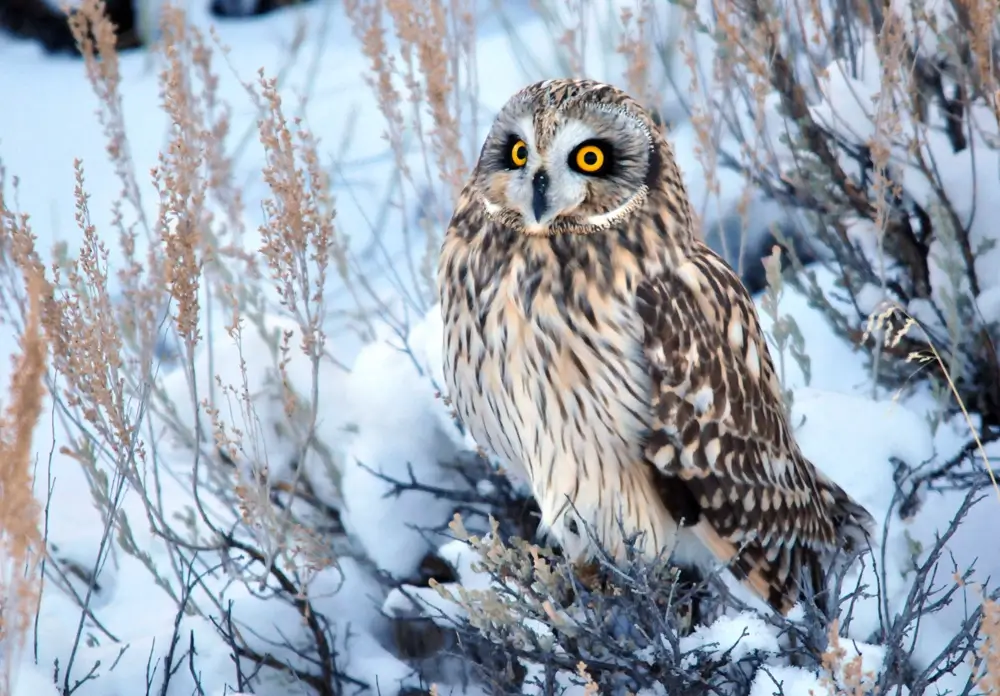
It is streaked with brown, tan, and cream markings on its back and has a creamy breast with brown streaks. It has yellow eyes and small ears. Males and females look alike.
Habitat
The short-eared owl prefers open areas like marshes and bogs. It stays in areas where it can find food, which is important because the owl has a specialized diet. The short-eared owl builds its nest on dry sites in open land.
The short-eared owl seems to benefit from strip mining. It nests in the open areas left behind after the mining is complete.
Diet
Unlike other owls, the short-eared owl hunts during the day. It eats mice, voles, and other small mammals.
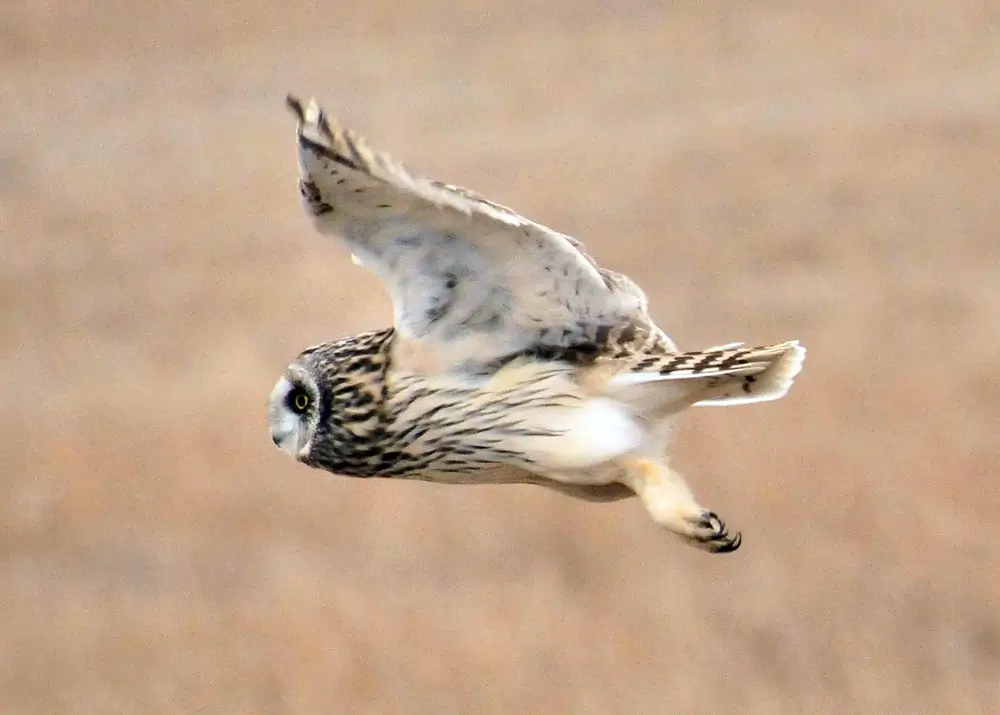
The short-eared owl uses its strong beak and talons to snatch up prey while it is in flight.
Life Cycle
The short-eared owl breeding season begins in April. The female lays 4-7 white eggs. She incubates them for 3 weeks. During this time, the male brings food to the female and defends the nest.
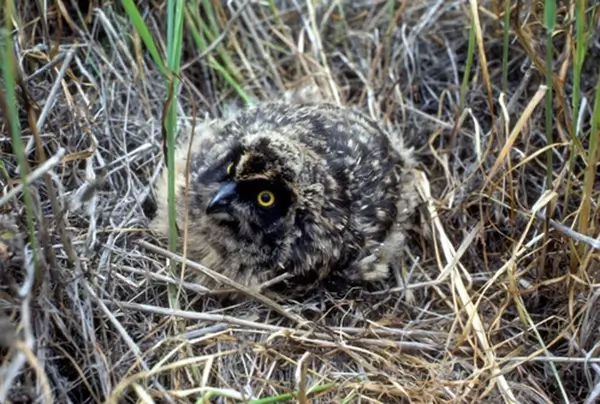
Two weeks after hatching, the owlets make their first flight. After four weeks, they leave the nest for good.
The short-eared owl has a lifespan of 4-12 years in the wild. In captivity, they can live to be 15 years old.
Behavior
The short-eared owl has incredible hearing. It can locate and grab its prey from under thick grass or snow using only its ears.
If threatened, the short-eared owl often pretends to have a broken wing.
Did You Know?
The short-eared owl is a very clumsy flier and tends to fly close to the ground.
Support for NatureWorks is provided by:
The Short-Eared Owl in NH
In New Hampshire, the short-eared owl is considered an uncommon and declining species.
It is mainly seen during migration and occasionally in winter, rather than as a regular breeder.
Historically, it nested in the state’s seacoast marshes and large inland grasslands, but habitat loss has greatly reduced its presence.
Today, short-eared owls are most likely to be spotted in coastal areas, open fields, and marshes in the fall and early winter.
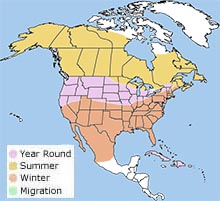
The short-eared owl is found on every continent except Australia and Antarctica.
In North America, it is found throughout Alaska, Canada, the continental United States, and Northern Mexico.
It breeds across much of Canada, Alaska, and the northern United States, favoring open habitats like grasslands, marshes, and tundra.
During winter, some populations migrate south and can be found throughout most of the United States and into Mexico, especially in open country such as fields, prairies, and coastal marshes.
The range of the short-eared owl can shift from year to year depending on small mammal populations, which are its main food source.