

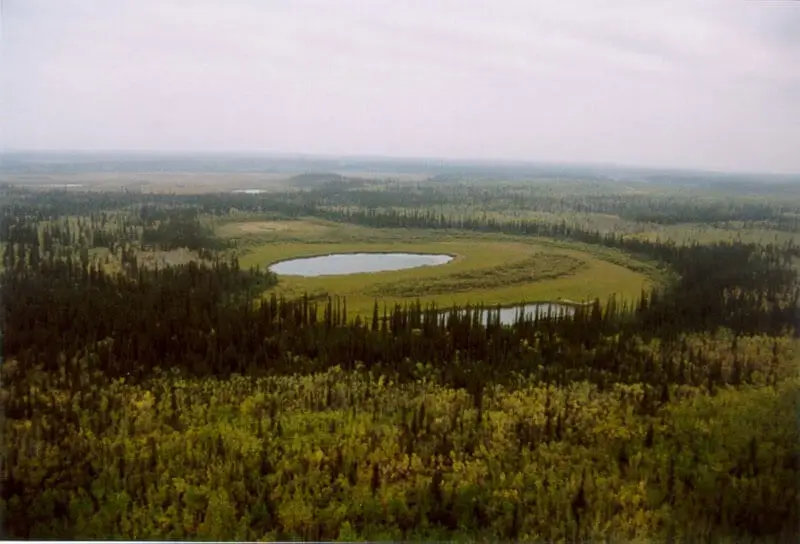
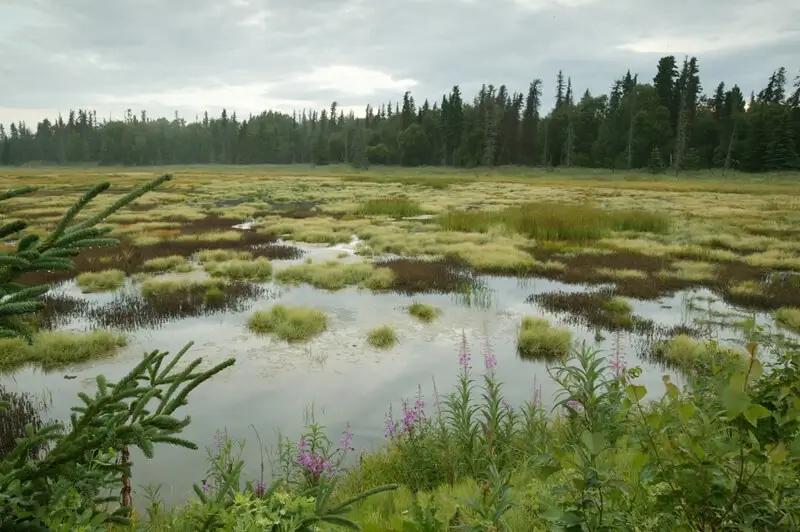
Bogs have low levels of oxygen because water doesn't flow in and out of them easily.
Bogs have very low oxygen levels because water does not flow in and out easily. This slow-moving water limits how much air reaches the ground.
The cold temperatures and lack of oxygen also make it hard for fungi and bacteria to break down dead plants quickly.
As a result, plant material builds up instead of decaying normally. Over time, this partially decomposed material forms a thick layer called peat, which stores carbon and helps create the unique bog environment.
Because decomposition happens so slowly, the soil and water in bogs is very acidic.
Because decomposition happens very slowly in bogs, the soil and water become very acidic. Only certain plants can survive in these conditions.
Mosses, along with some evergreen trees and shrubs, thrive in bogs because they can tolerate the acidity. These plants have special adaptations that help them survive in low-nutrient, watery environments.
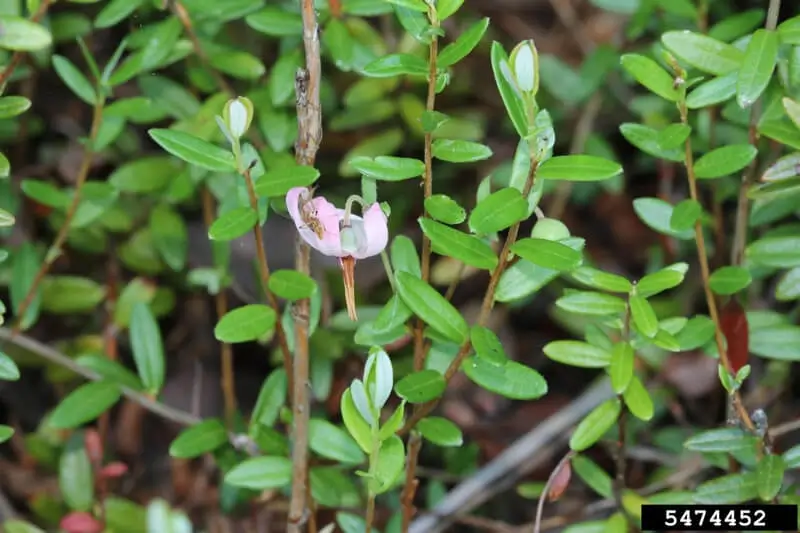
Other plants, such as orchids, water lilies, cranberries, and blueberries, grow in bog habitats. Many of these plants are specially adapted to handle wet, acidic soil where most other plants cannot survive.
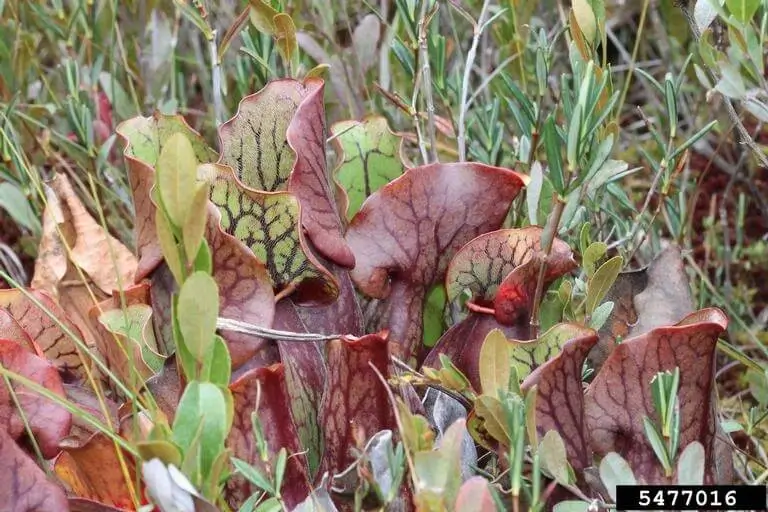
Insect-eating plants like pitcher plants and sundew often are found in bogs. (Purple Pitcher Plant)
Insect-eating plants, such as pitcher plants and sundews, are often found in bogs. These plants get many of the nutrients they need by trapping and digesting insects, which helps them survive in bogs where the soil is low in nutrients.
Turtles, frogs, insects, and insect-eating birds are also common in these habitats. However, there are not many fish in bogs because the water contains very low levels of oxygen.
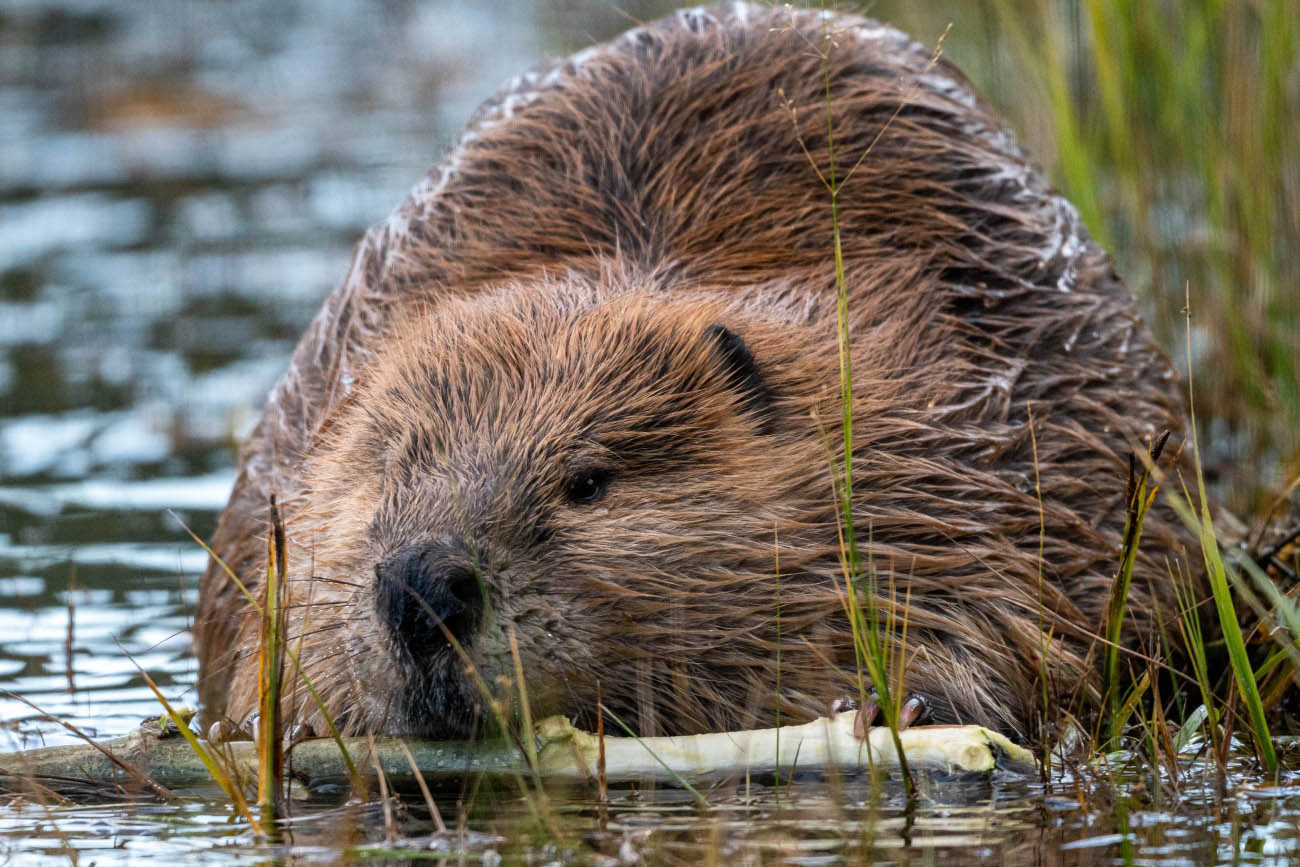
Mammals like the snowshoe hare, moose, beaver and muskrat can also be found in and around bogs.
Mammals such as the snowshoe hare, moose, beaver, and muskrat are also found in and around bogs. Bogs provide these animals with food, water, and shelter.
And on a gruesome note: Preserved bodies are sometimes found in bogs! Because decomposition happens so slowly, anything that falls into a bog, including animals and people, can be preserved for a very long time.