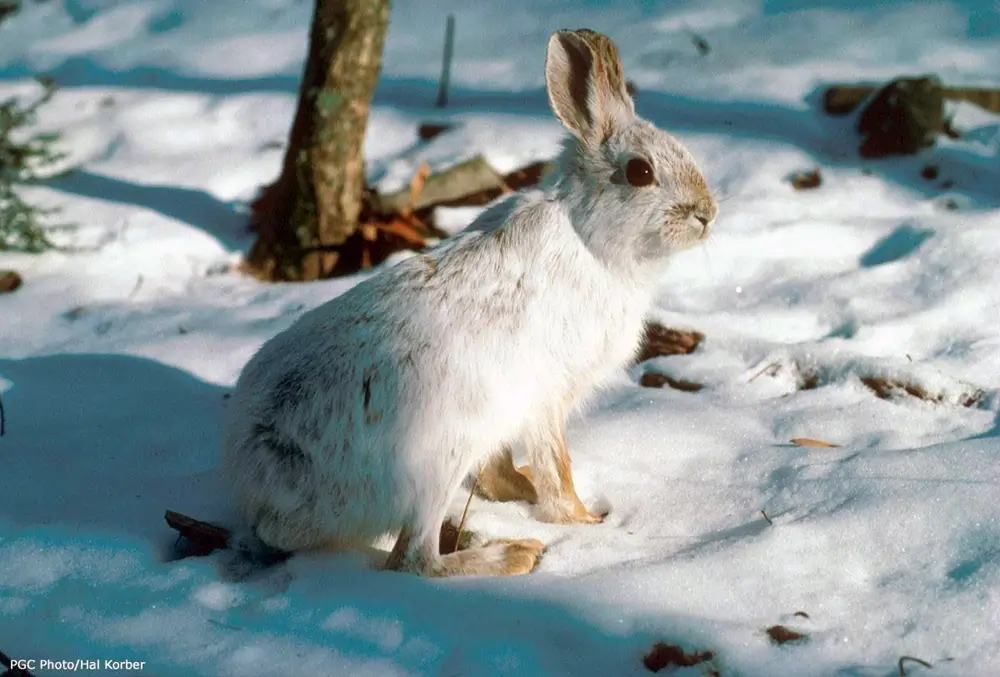
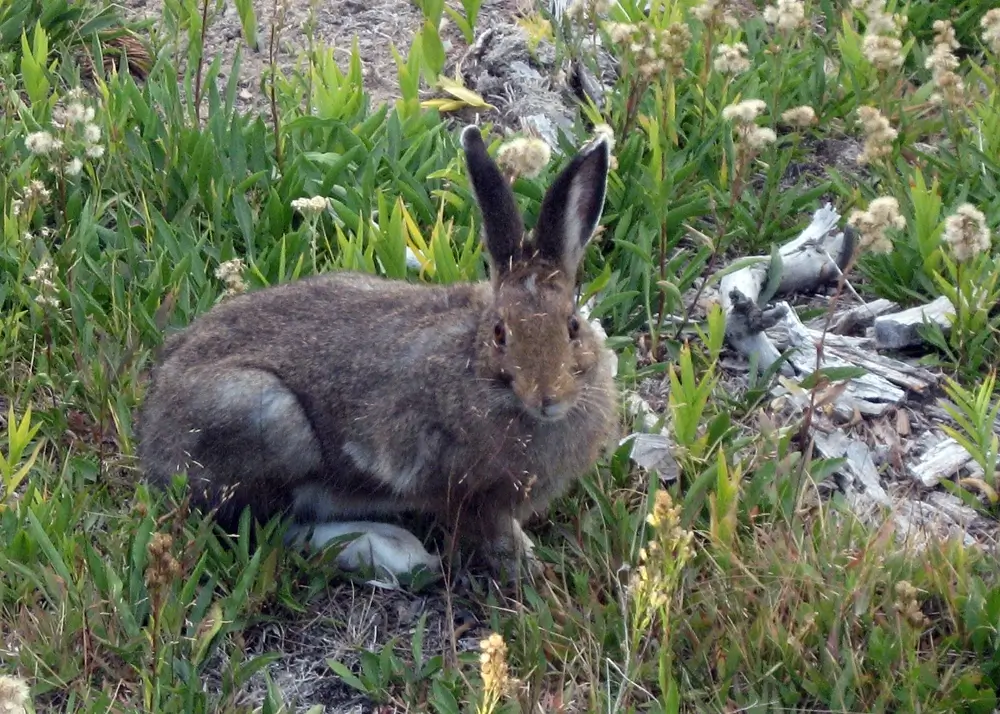
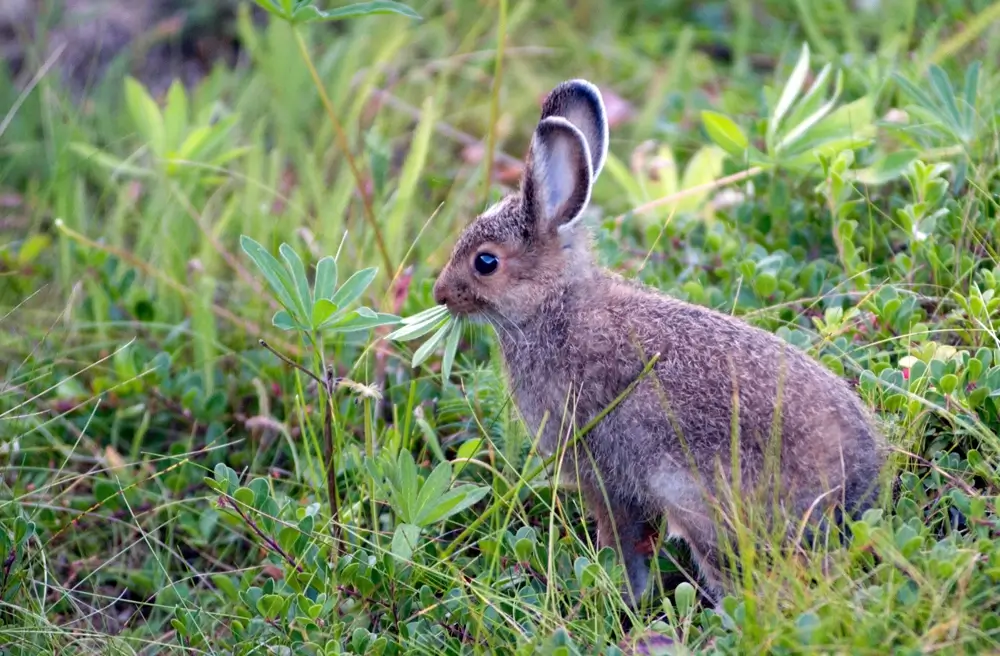
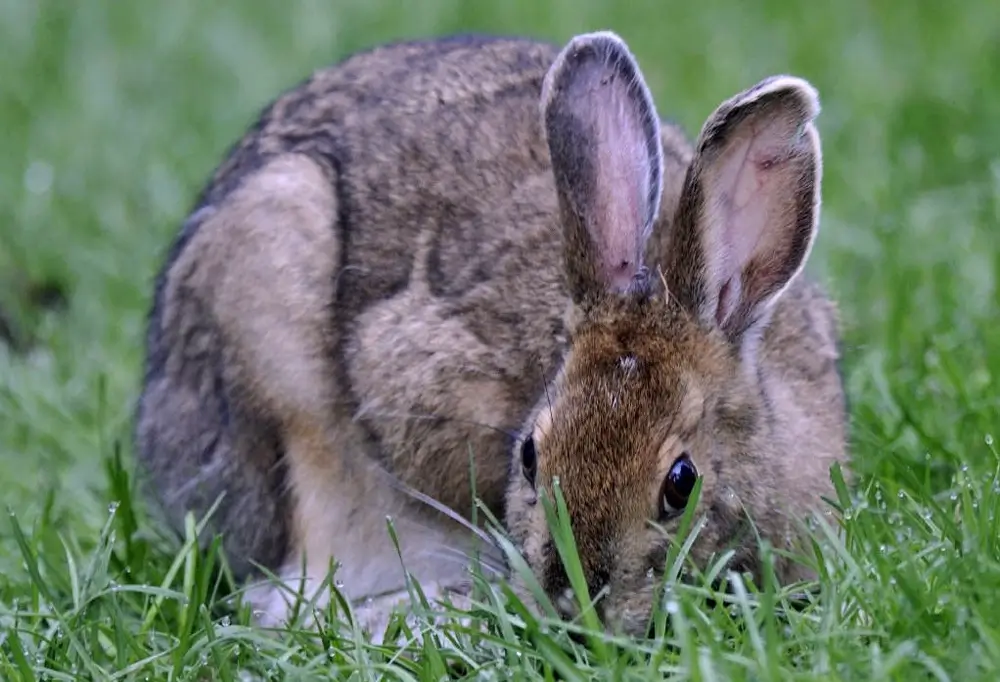
The snowshoe hare is 16-20 inches (40.6-50.8 cm) in length. Males are usually smaller than females.
It has long hind feet with fur on the soles. Its long hind legs help it keep its balance when it is standing up and eating plants. The fur on its soles keeps its feet warm in the winter and helps give the hare traction on the ice and snow. It has long ears and excellent hearing.
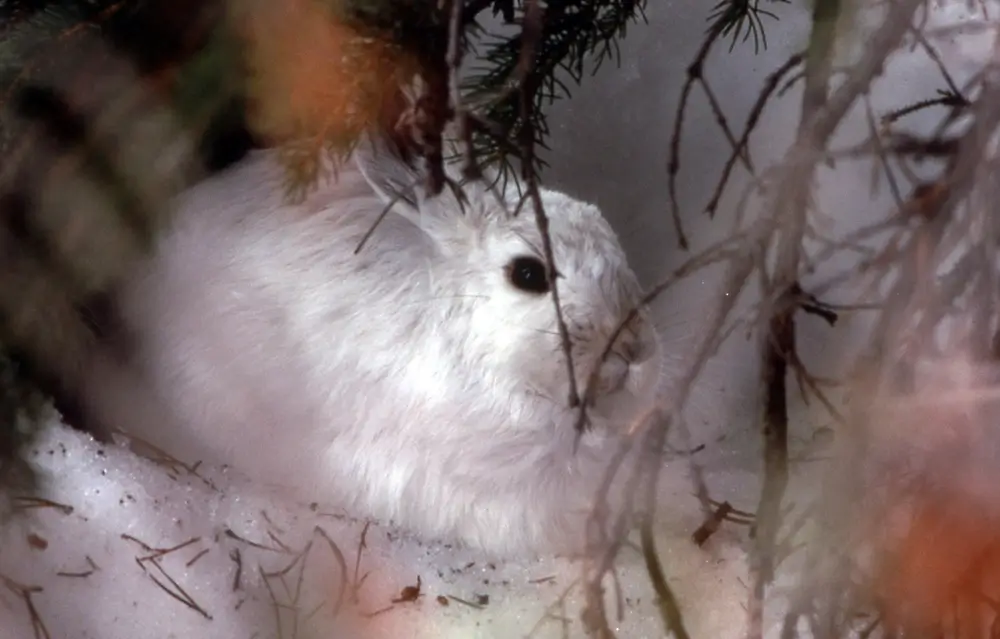
In the summer, the snowshoe hare is grayish brown with a white belly. In the winter, it is completely white except for black eyelids and black tips on its ears.
Habitat
The snowshoe hare is found in open fields, fence rows, swamps, riverside thickets, cedar bogs, and coniferous lowlands.
Diet
The snowshoe hare eats a variety of plants and plant matter. In the summer, it eats grasses, clover, dandelions, willow, and berries. In the winter, it eats tree buds, twigs, bark, and even carrion. Carrion is dead animals.
Life Cycle
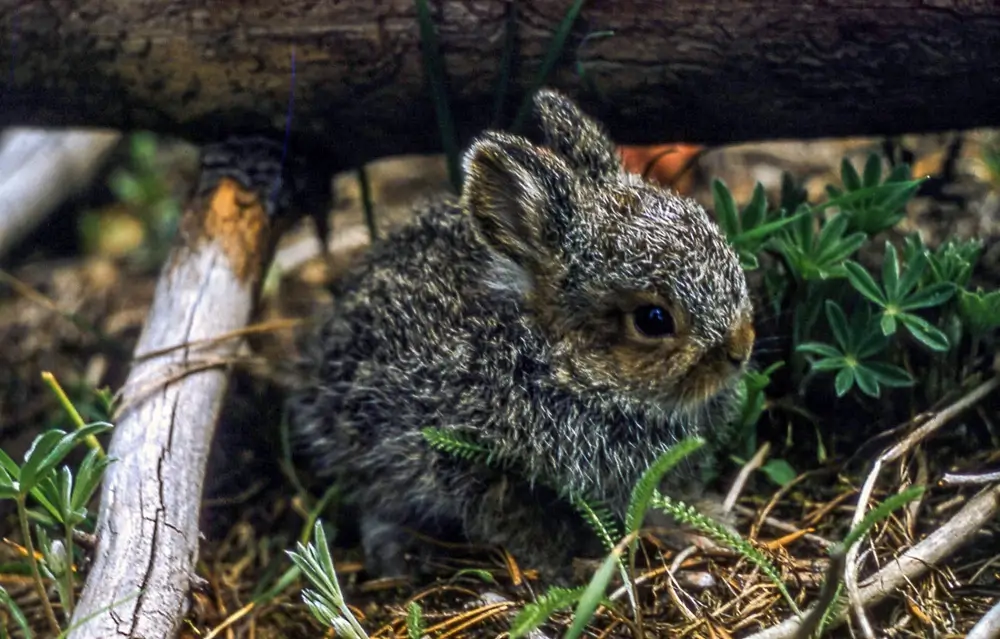
Snowshoe hares mate from March through August. The female gives birth a little over a month after mating. She has 2-8 leverets or babies in a nest of matted-down grasses. The leverets are covered in fur at birth, and their eyes are already open. They can run shortly after they are born.
The female cares for the young until they are fully weaned at four weeks old. Females can have as many as four litters a year.
Most snowshoe hares die in their first year due to predation. If they survive past their first year, they can live to be 5-8 years old.
Behavior
The snowshoe hare is solitary, although it may share its home range with other hares. It is most active at dawn and dusk and on cloudy days. During the day, it spends most of its time grooming and napping.
Did You Know?
The snowshoe hare is an excellent swimmer and can run at speeds of up to 27 miles per hour and leap distances of up to 12 feet. When being chased by a predator, it runs in a zig-zag pattern that makes it difficult to catch.
Support for NatureWorks is provided by:
The Snowshoe Hare in NH
The snowshoe hare is found in New Hampshire, mostly in the northern part of the state in Grafton, Carroll, and Coos counties. But it is also found in the southern part of the state, where it can be found in old fields with cover for the hares to hide under.
The snowshoe hare is found throughout Canada and the northern United States, south to northern California, northern New Mexico, northern Minnesota, northern Michigan, and northern New Jersey.