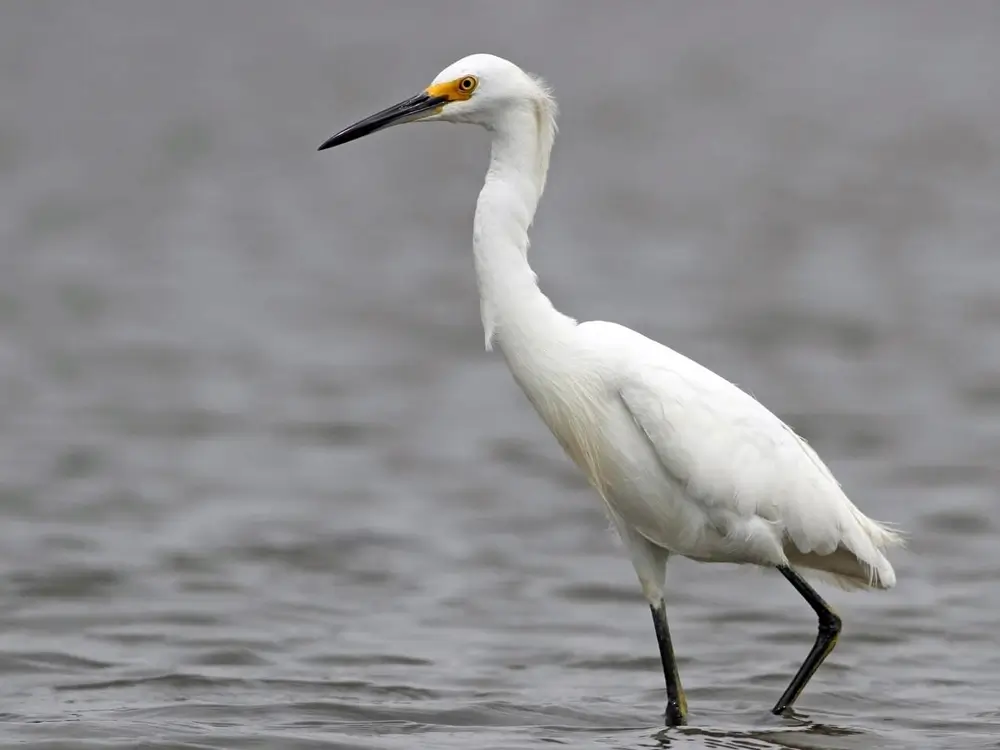
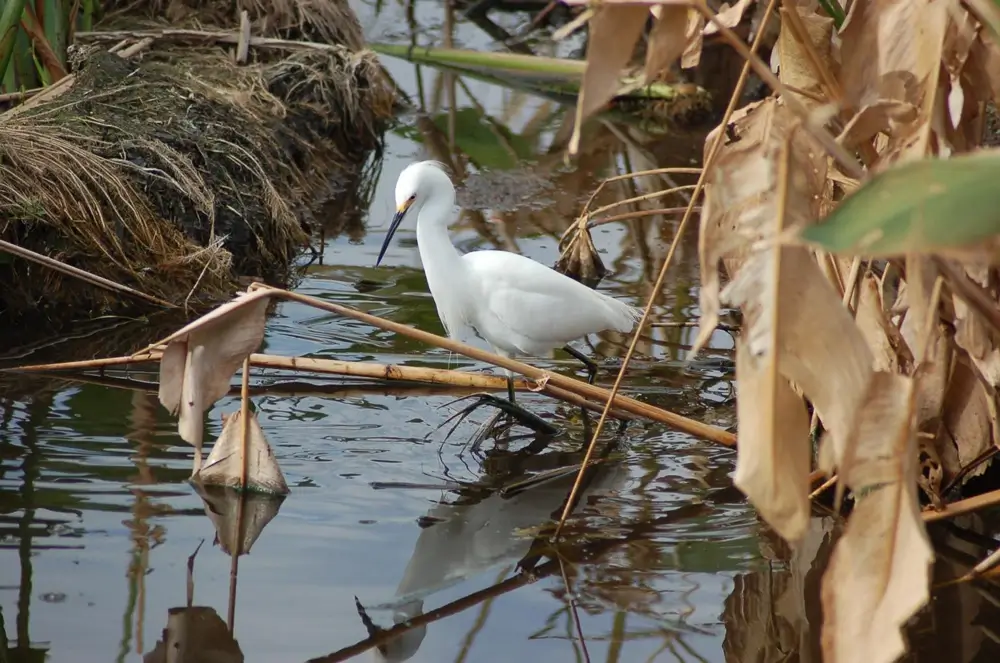
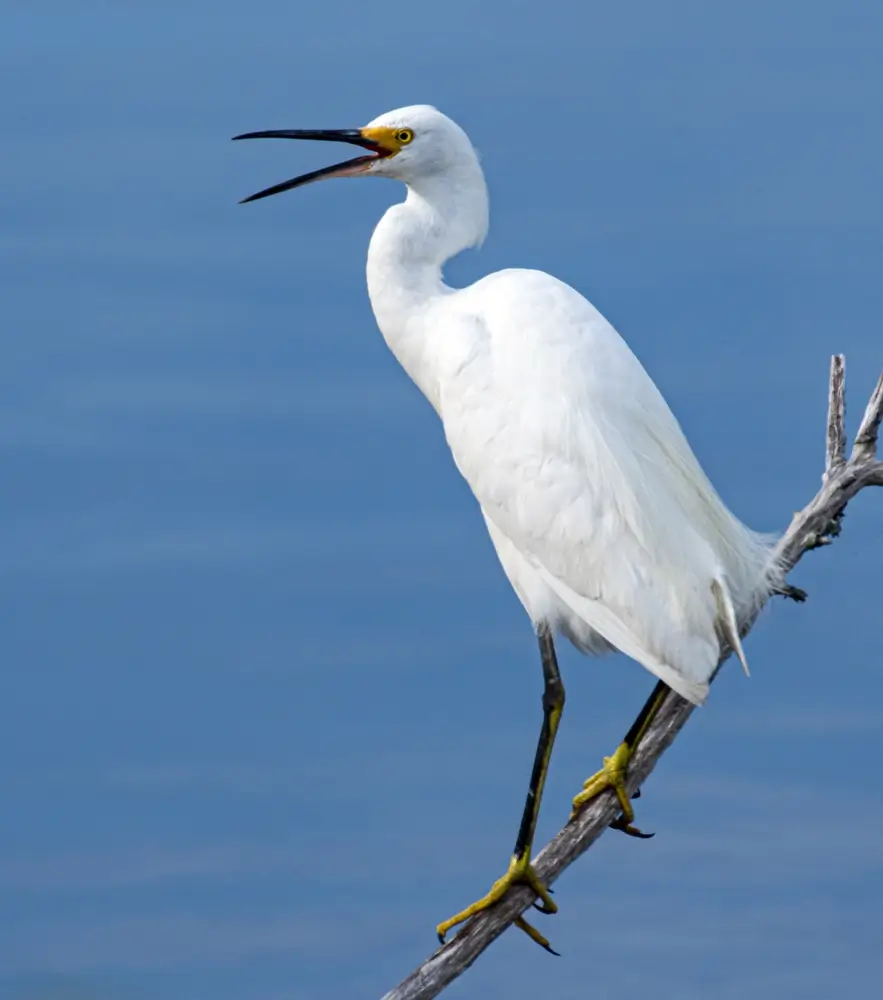
The snowy egret is a small heron, about two feet (0.61 m) in length with a wingspan of about three feet (0.91 m).
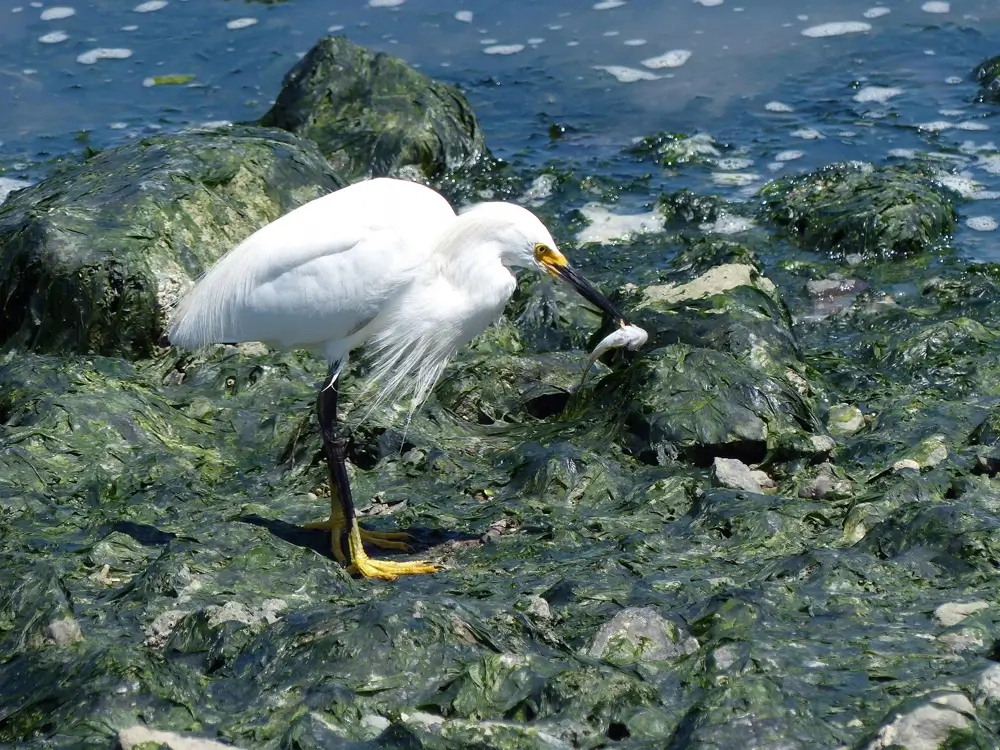
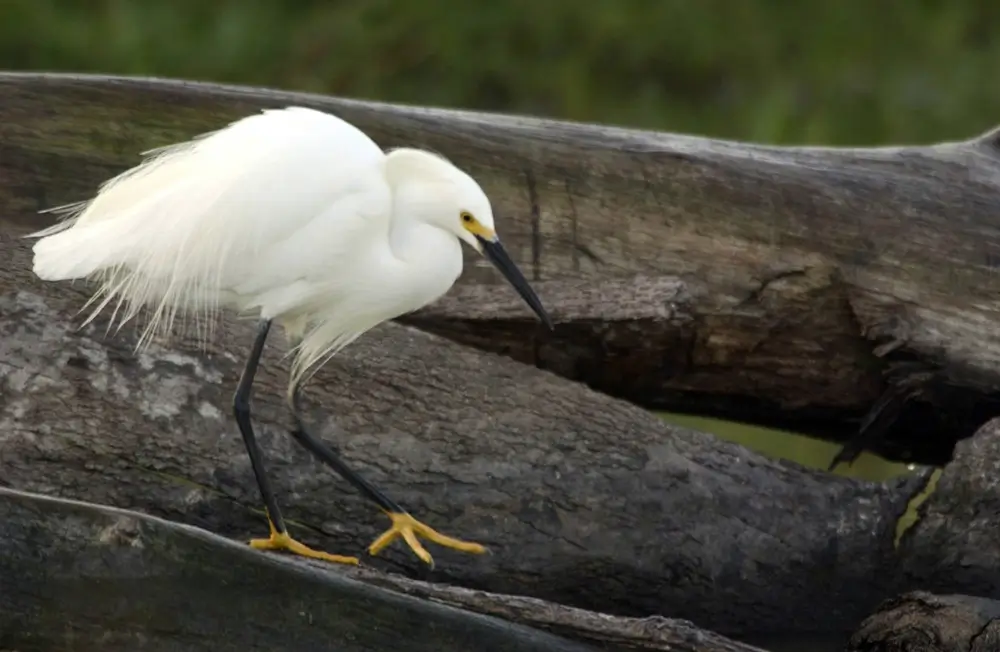
It has white feathers, a yellow patch of skin around its eyes, a black bill, and black legs with bright yellow feet.
In breeding season, it has lacy plumes on its head, neck, and back. Its yellow feet and the yellow around its bill turn a bit red. Males and females look alike, but males are slightly larger.
Habitat
The snowy egret is found in a variety of freshwater and marine habitats with shallow water for feeding. It can be found in salt and freshwater marshes, swamps, shorelines, mudflats, and ponds.
Diet
Most of the snowy egret’s diet is made up of fish and crustaceans, but it also eats worms, insects, snails, snakes, small lizards, frogs, and aquatic vegetation.
The snowy egret has a lot of strategies for stirring up and locating prey. It runs through shallow water and uses its feet to flush out prey. It stands still in the water waiting for its prey to go by. It walks slowly through the water, stirring up the mud with its feet and looking for prey. It stands in the water and stirs up the mud with one foot to flush out prey.
It will also fly and hover above the water and then dive to catch its prey, and it sometimes follows farm animals and eats the insects that are flushed out.
Life Cycle
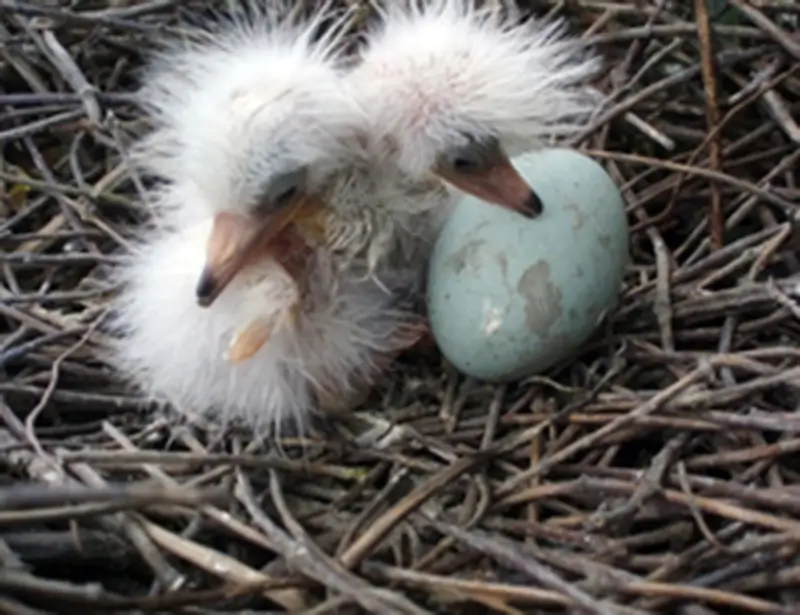
The snowy egret nests in colonies, often with other heron species. The male selects a breeding area. Both the male and female build the nest. The male collects the materials and the female does the construction.
The nest is flat and shallow and is made of reeds and twigs. It is lined with small twigs and rushes and placed in a tree or bush, or sometimes on the ground.
The female lays 3-5 eggs, and both parents share incubation duties. The eggs hatch in about three weeks. Both parents care for the chicks and feed them regurgitated food. The chicks fledge when they are about a month old.
The snowy egret has a lifespan of 10-15 years in the wild. It can live longer in captivity.
Behavior
Sometimes, stronger snowy egret chicks will toss a weaker sibling out of the nest. This ensures that the stronger chicks will have a greater chance of survival because they will have fewer chicks to compete with for food.
Did You Know?
Like other egrets, the snowy egret was once killed for its plumes. Its population was seriously damaged in the 1800s. It has made a recovery and is no longer hunted.
Support for NatureWorks is provided by:
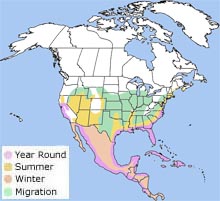
The Snowy Egret in NH
The snowy egret breeds along the coast of southern New Hampshire.