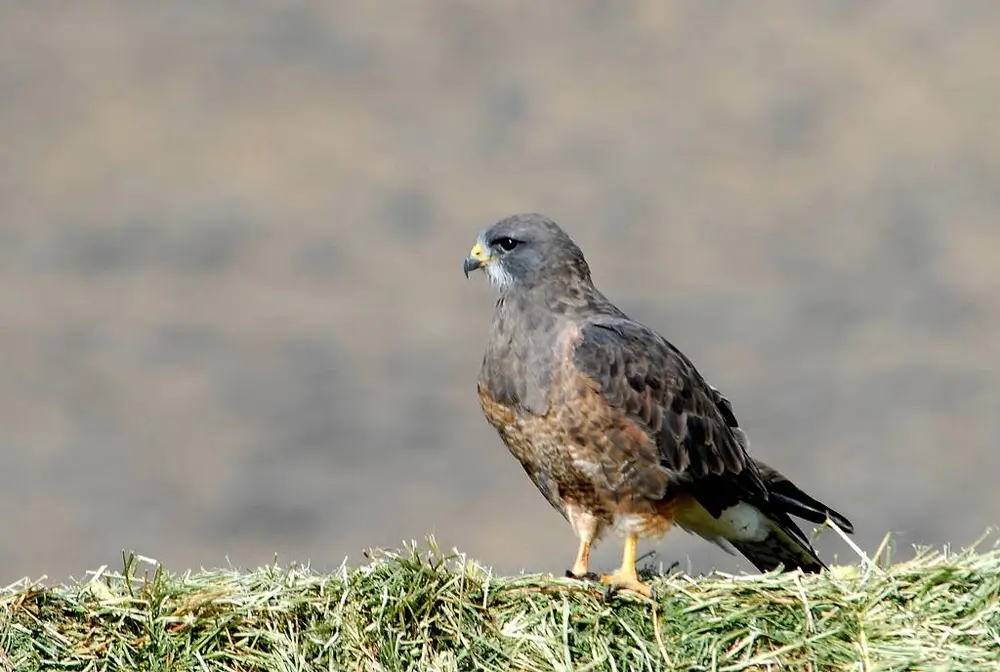
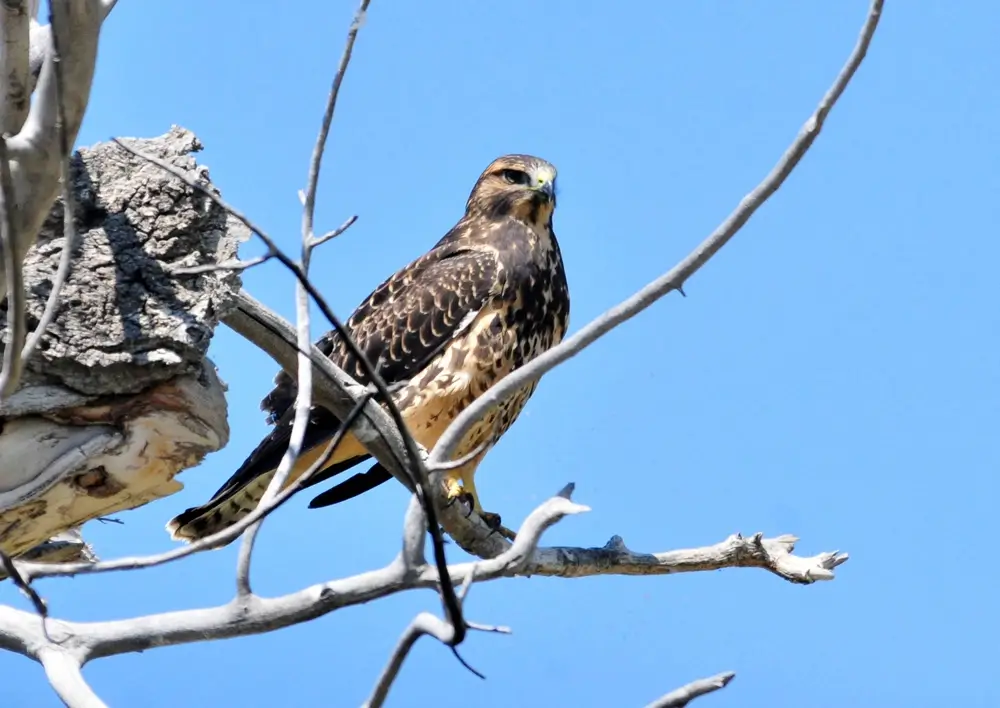
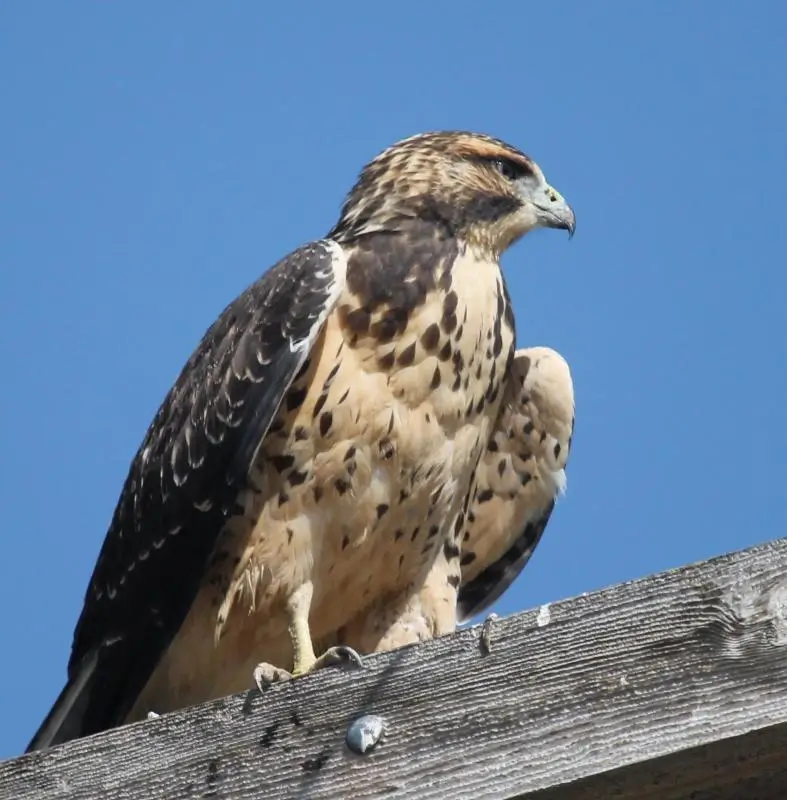
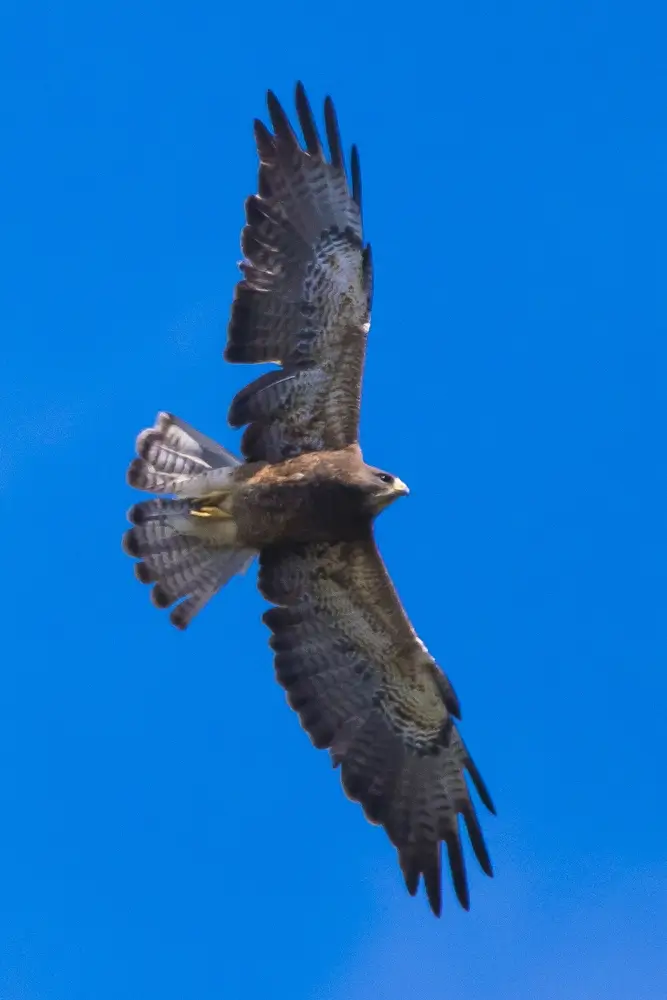
Swainson’s hawk is a large hawk. It is 18.9–22.1 inches (48-56 cm) in length with a wingspan of 4 to 4.5 feet (1.2-1.4 m).
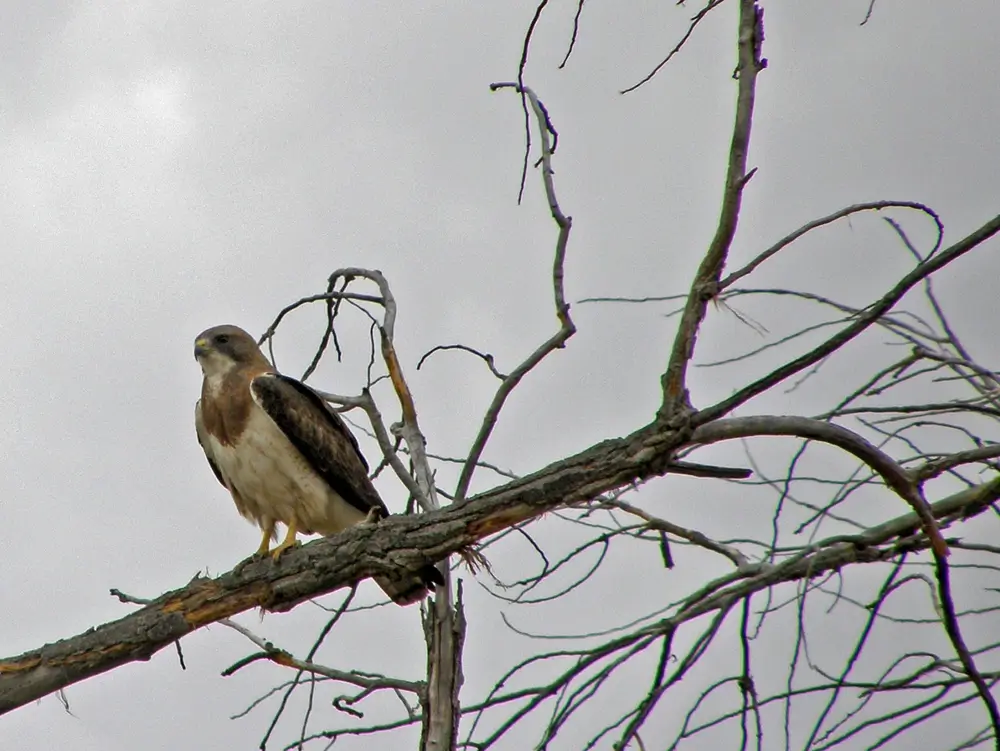
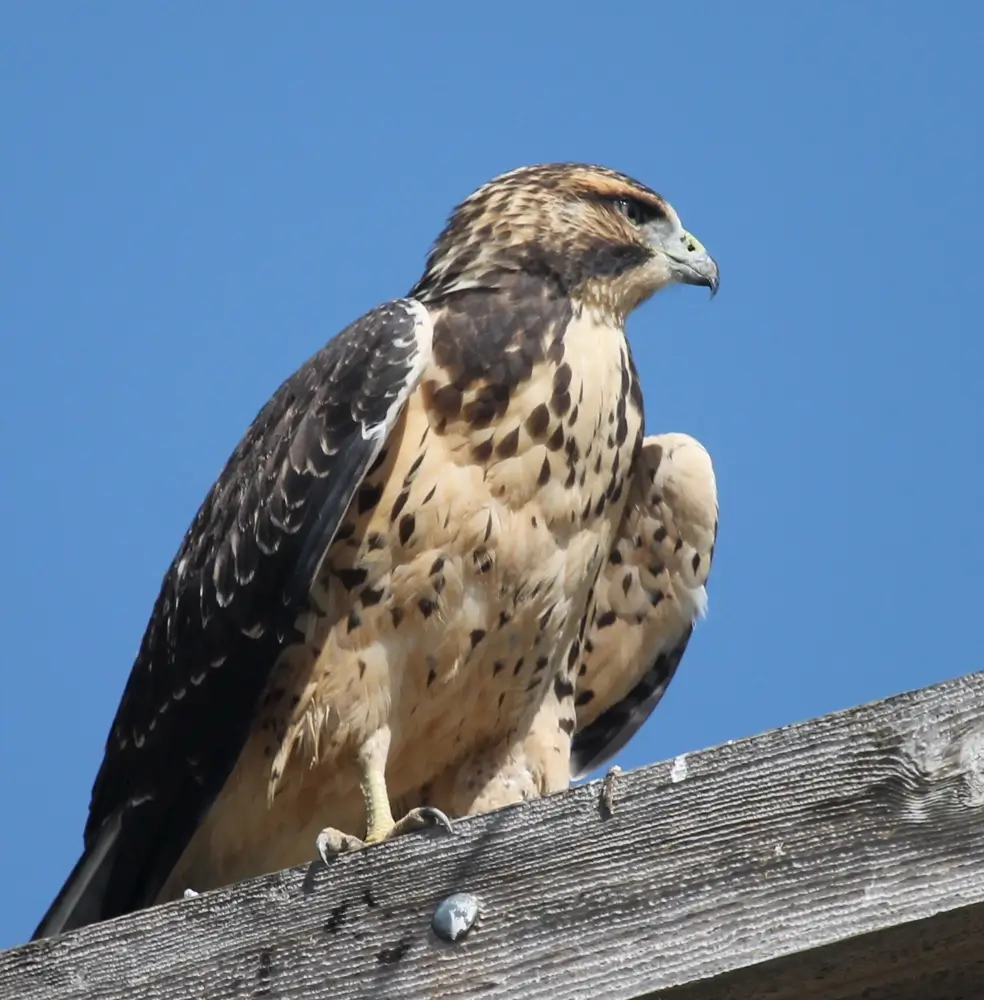
It is dark brown above with a lighter brown chest and a white belly. It has a short, hooked bill and slightly pointed wings. When it is perched, its wings extend beyond its tail. Males and females look alike.
Habitat
Swainson’s hawk lives on open plains, prairies, agricultural areas, and other grasslands. It is often seen perched on poles and fence posts looking for prey.
Diet
Swainson’s hawk eats insects, especially grasshoppers, crickets, and locusts. It can sometimes be seen following tractors and snatching up insects like grasshoppers that are flushed out. In fact, it is sometimes called the grasshopper hawk.
It also eats birds, small rodents, reptiles, and amphibians.
Life Cycle
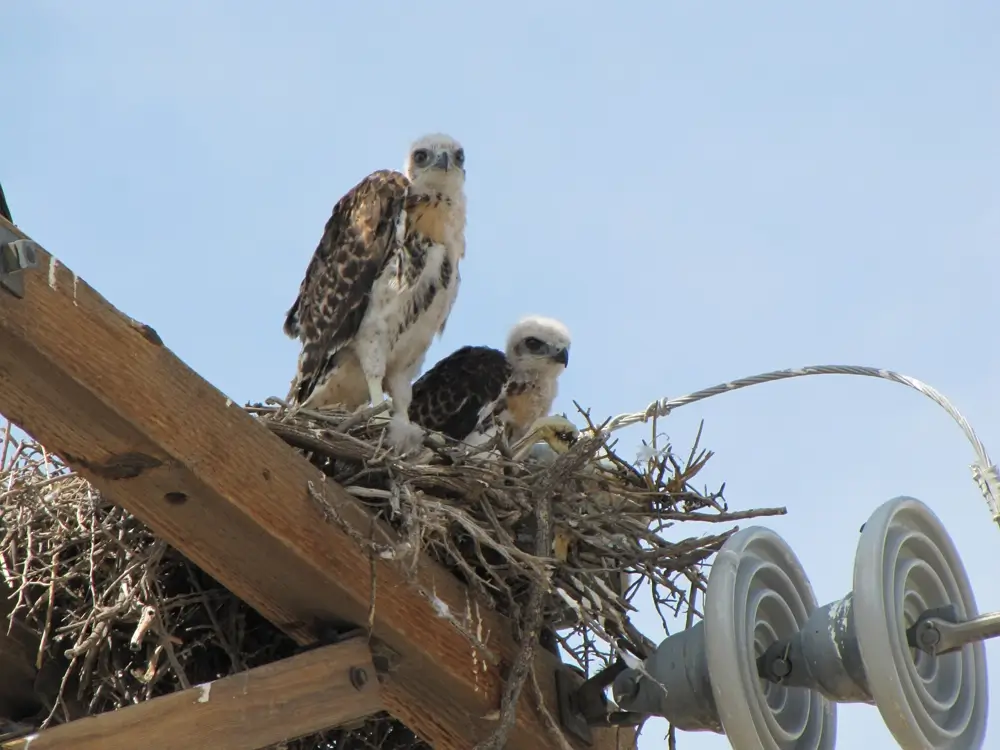
The male Swainson’s hawk arrives at the breeding territory first and selects a site and builds a nest of sticks in a tree, bush, or on the ground.
The female lays 2-4 eggs and incubates them. When the female has to leave the nest to feed, the male incubates the eggs.
The chicks hatch in 28-35 days and fledge when they are about a month old. The chicks first learn to hunt insects on the ground before they learn to hunt in the air.
Swainson’s hawk has an average lifespan of 8-10 years in the wild. The oldest Swainson’s hawk on record lived to be 26 years old.
Behavior
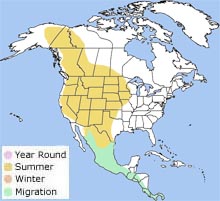
Swainson’s hawks migrate in groups of 20-100 individuals. Migration begins in August and runs through October.
Most Swainson’s hawks migrate to the La Pampas region in Argentina. Some juvenile hawks may not migrate in the winter.