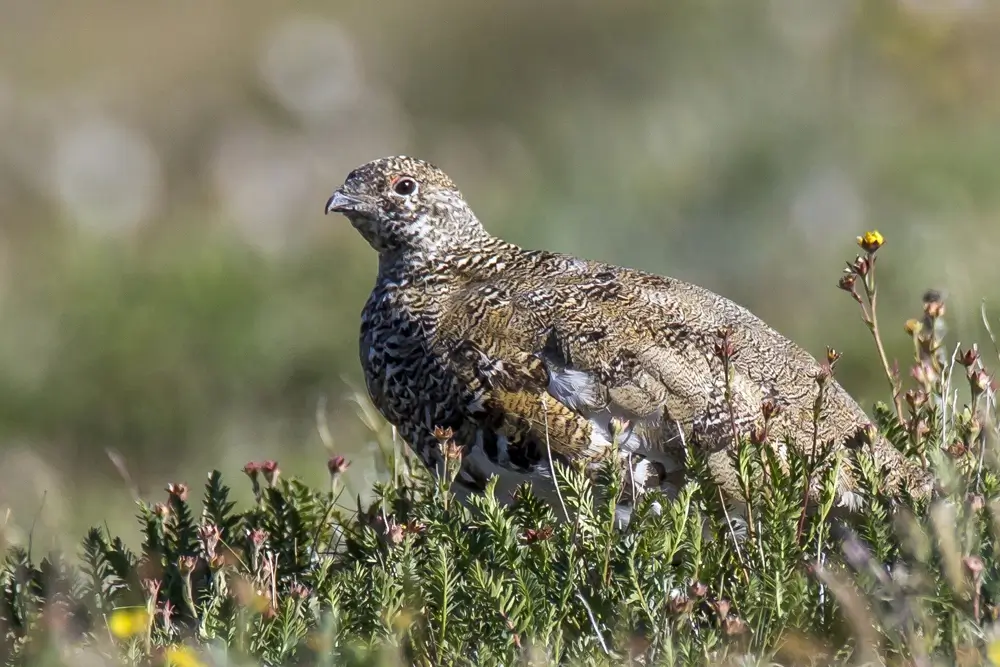
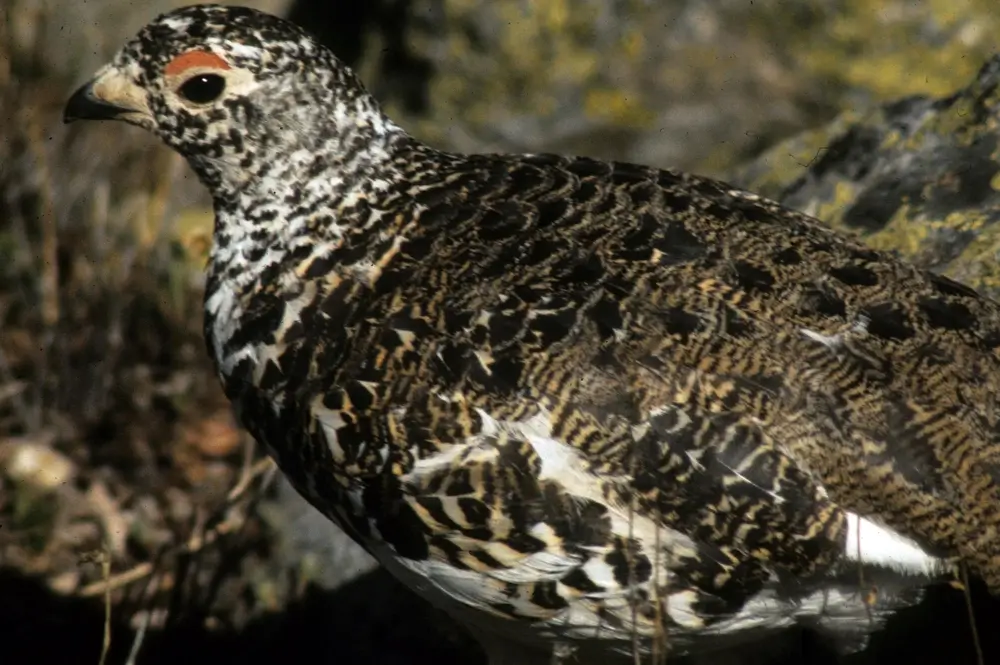
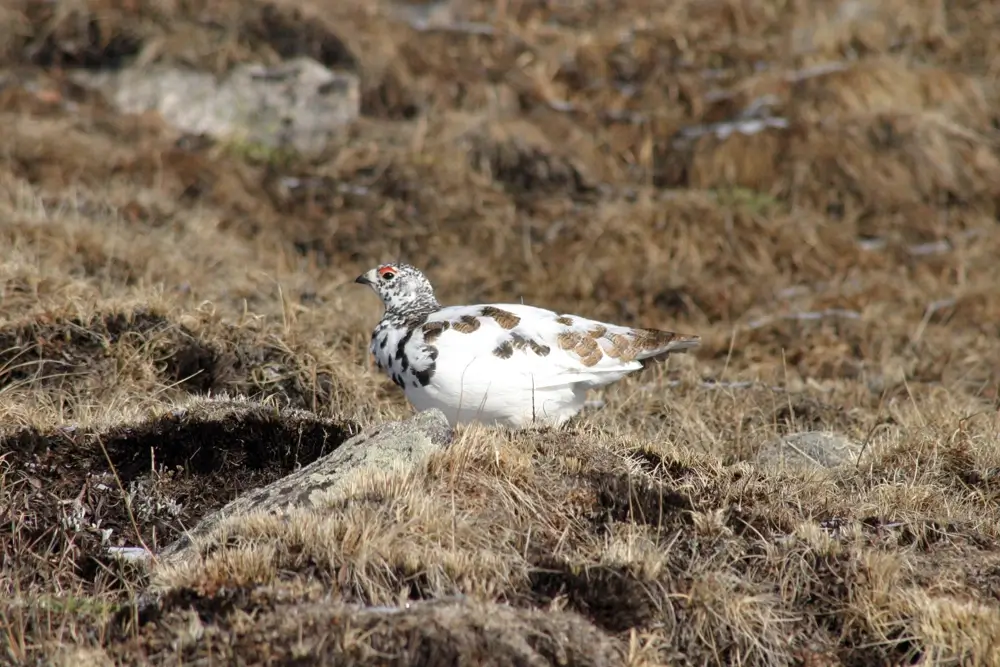
The white-tailed ptarmigan is a small, pear-shaped grouse. It is a foot in length (0.31 m) and is the smallest of the ptarmigans and the only ptarmigan with a white tail.
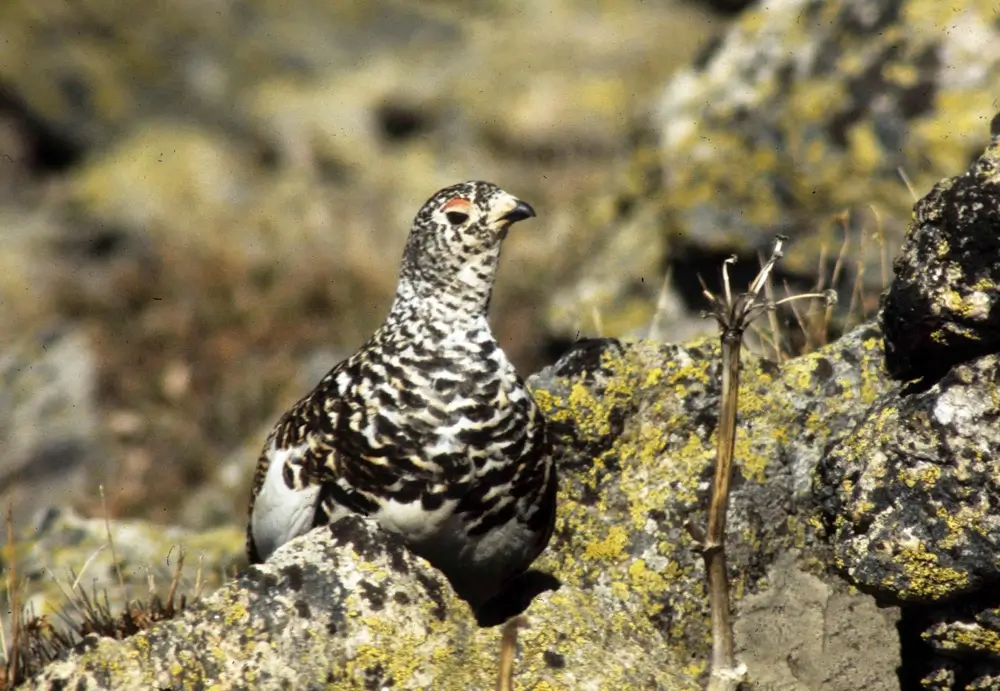
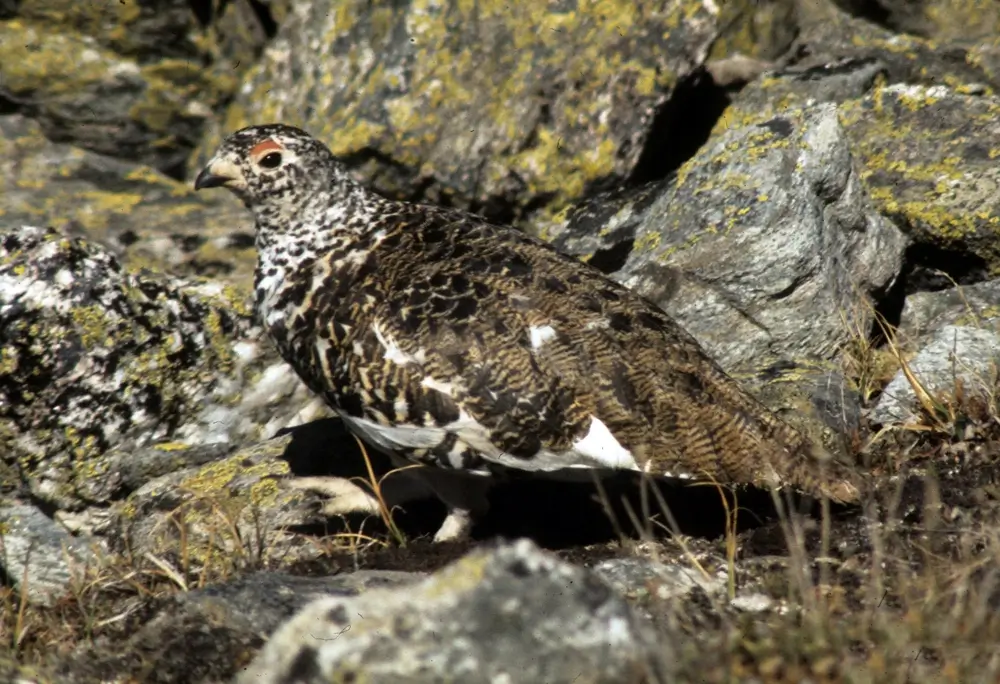
It is a mottled grayish-brown in summer and white in winter. It has white wings and a short, white tail. It has feathers on its legs and a small bill. Males and females look alike in winter.
In breeding season, the male has a red comb over his eyes. The female has a smaller comb over her eyes.
Habitat
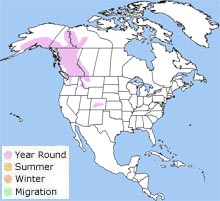
The white-tailed ptarmigan lives in alpine meadows and rocky areas at or above the tree line.
Diet
A large part of the white-tailed ptarmigan’s diet is made up of the buds and leaves of willows. It also eats berries, insects, leaves, and flowers.
The white-tailed ptarmigan eats grit (small pieces of sand and stone) to help digest its food.
Life Cycle
The male white-tailed ptarmigan fans out his tail and struts and bobs to attract a female. He aggressively protects his territory by running low to the ground, flaring out his eye combs, and calling out with a harsh cackle.
The female lays 2-8 eggs in a scrape on the ground. The eggs incubate for 20-24 days. The chicks are precocial and leave the nest and feed themselves a few hours after hatching.
The lifespan of the white-tailed ptarmigan is 3-4 years.
Behavior
The white-tailed ptarmigan conserves energy in winter by walking instead of flying. It also roosts in snow banks to stay warm.