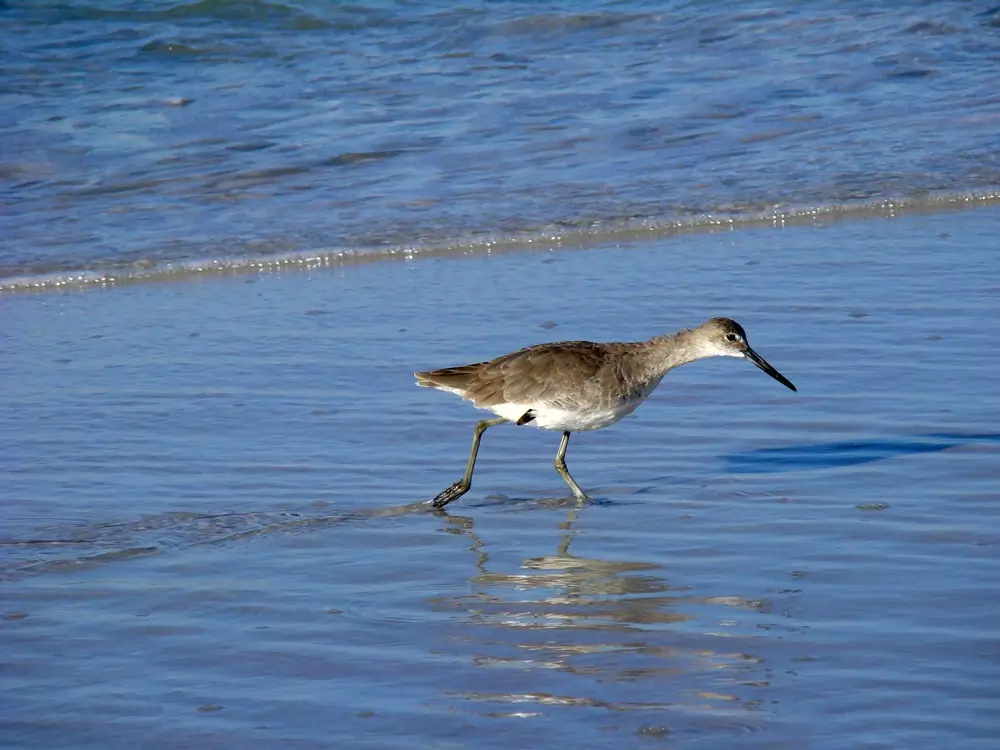
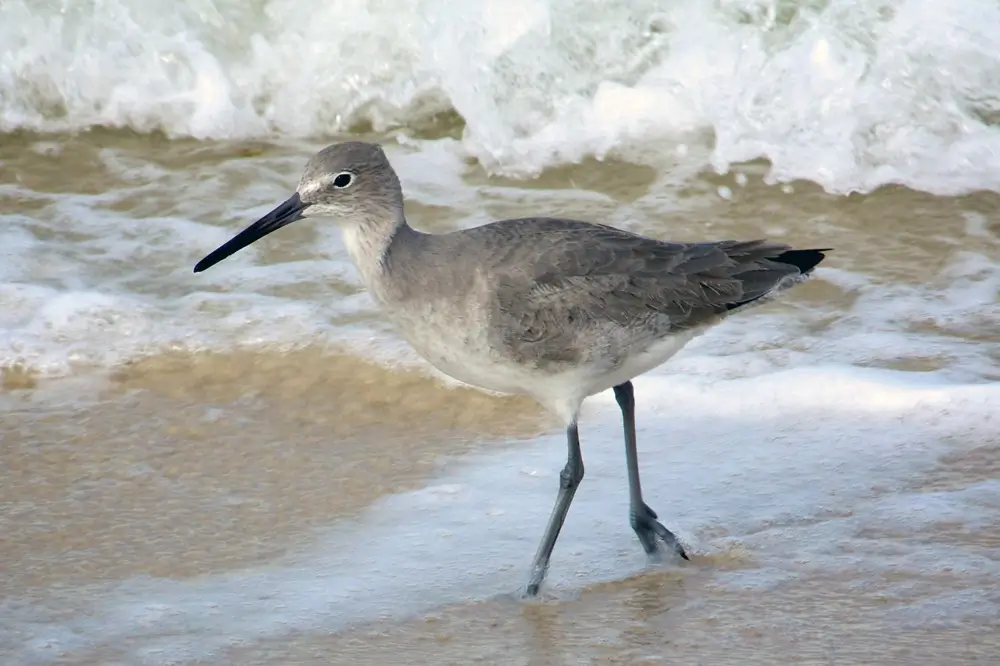
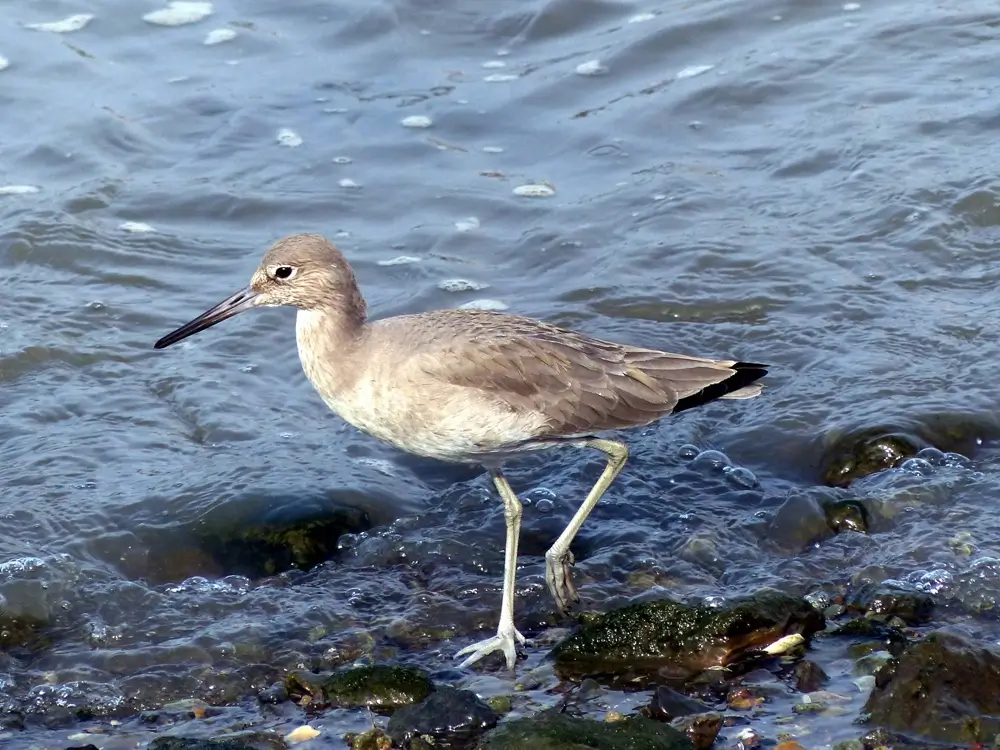
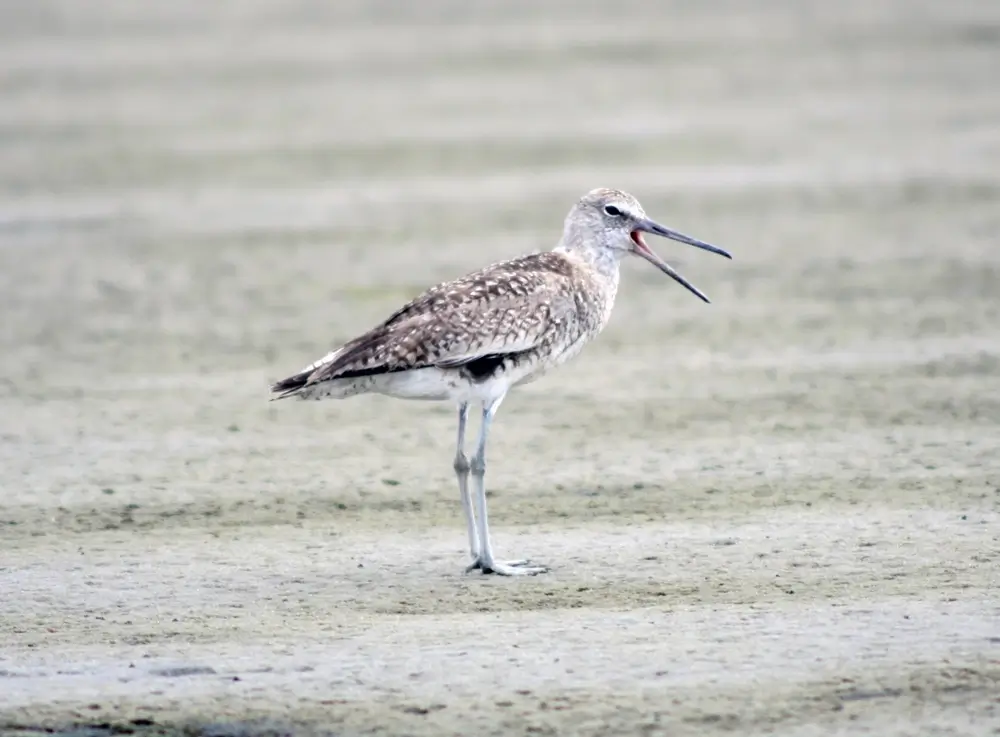
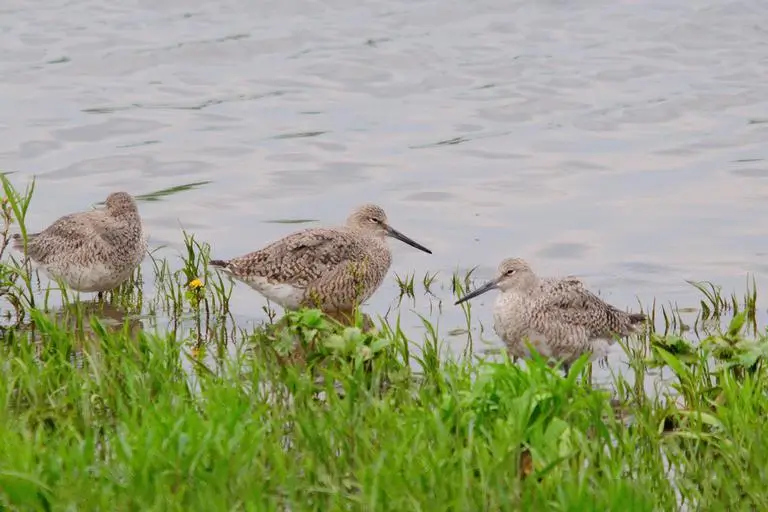
The willet is a large shorebird that is a member of the sandpiper family. It is about 13-15 inches (33-38 cm) in length.
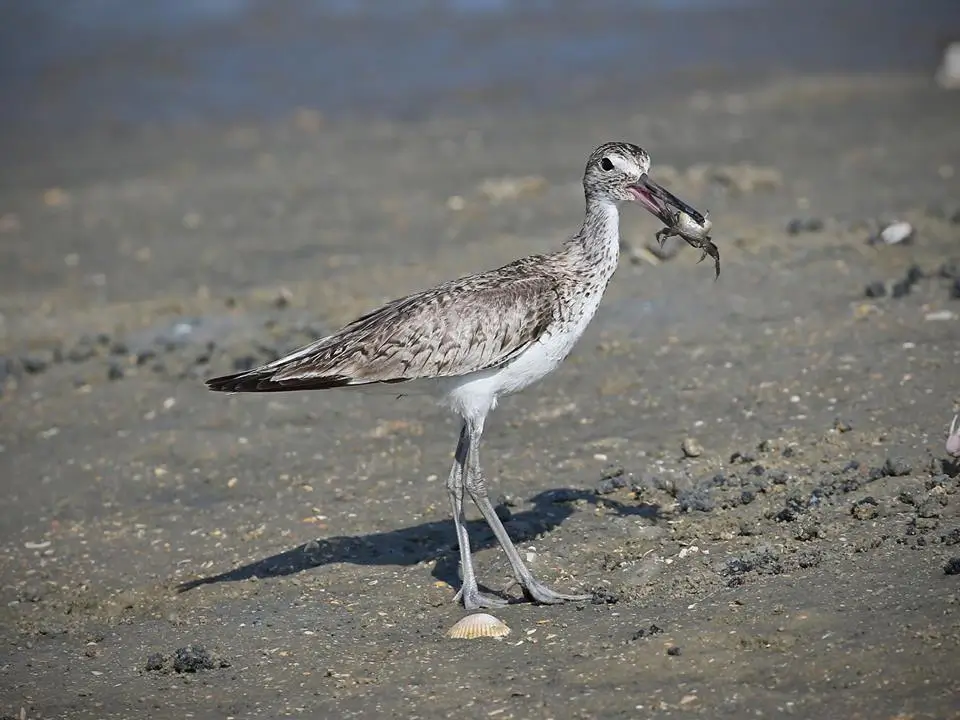
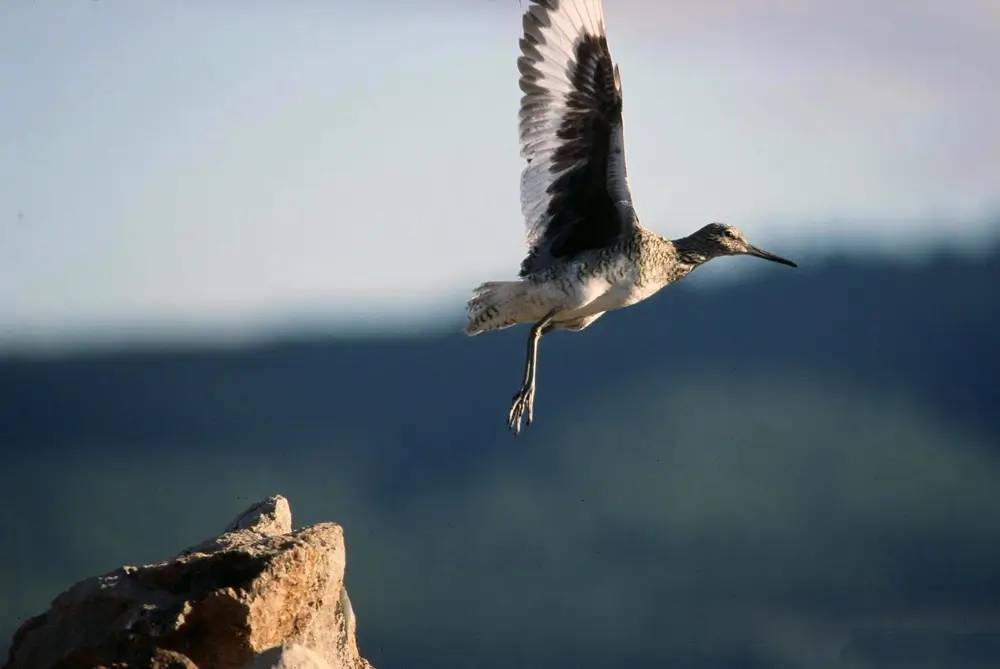
It has a grayish-brown head, back, and wings; a white belly; a long, straight black bill; long grayish-blue legs; and black and white bands on its wings that are visible when it is in flight.
Males and females look alike, but the female is a little larger.
Habitat
The willet lives on coastal beaches, freshwater and salt marshes, lakes, mudflats, and wet prairies.
Diet
The willet forages in mudflats, intertidal areas, and shallow marsh waters. It snatches up food from the surface of the water, or it probes in the mud with its long bill. It often wades up to its belly in the water searching for food.
It eats aquatic insects, marine worms, small crabs, small mollusks, and fish. Its diet also includes plant matter like grass and seeds.
Life Cycle
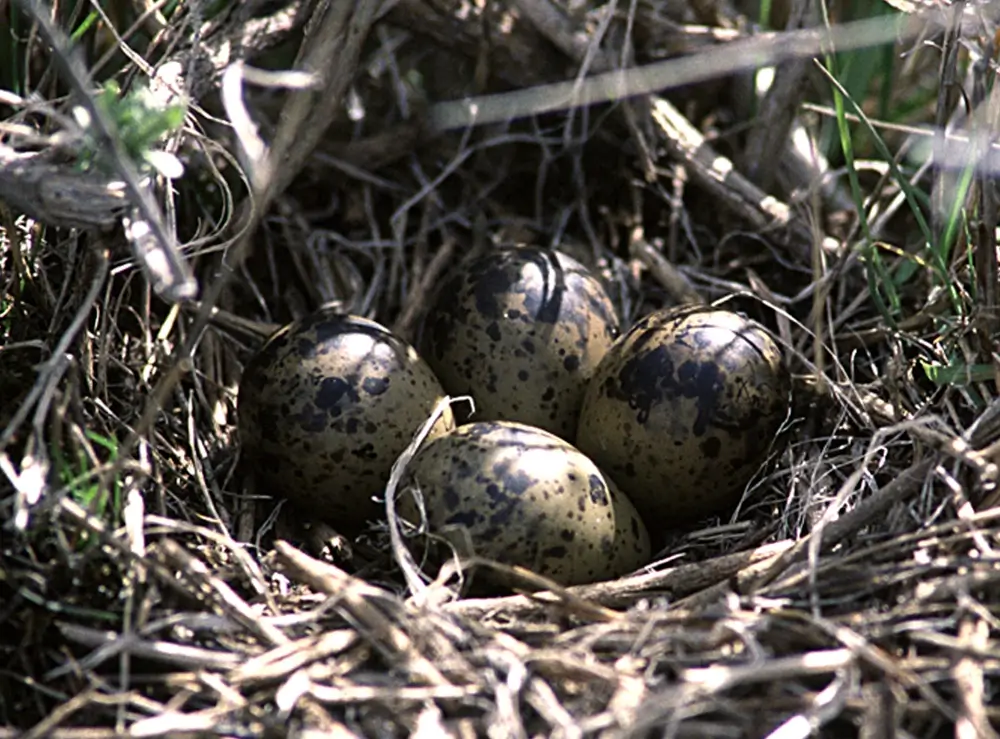
The willet often nests in colonies. The female chooses a nesting site in a well-hidden location. She lays four eggs in April or May in a depression in the ground or in a clump of grass that is lined with weeds or pieces of shell.
Both parents incubate the eggs for 22-29 days. The chicks are precocial and feed themselves shortly after birth. Both parents care for the chicks.
The female leaves when the chicks are 2-3 weeks old. The male stays with the chicks until they fledge, when they are about four weeks old.
The willet can live for up to 10 years in the wild.
Behavior
Willets are very territorial and aggressively defend their nesting and feeding territory. The willet is a very noisy bird and calls out with a “pill-will-willet pill-will-willet” when disturbed. It will fly overhead and continue calling out until the threat goes away. It often perches on bushes, trees, fenceposts, or rocks.
Did You Know?
Support for NatureWorks Redesign is provided by:
The Willet in NH
The willet breeds in the coastal region of New Hampshire.
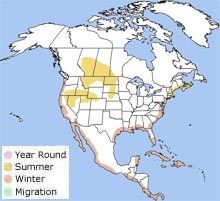
The willet breeds from central Canada to northeastern California and Nevada, along the Atlantic Coast from Nova Scotia, Canada, to Florida and the Gulf Coast.
It winters along the Pacific Coast from Oregon south and along the Atlantic Coast from North Carolina southward to northern South America.