The wood duck is 18-21 inches (45.7-53.3 cm) in length with a wingspan of 26-29 inches (66-73.6 cm).
It has a long tail, a small bill, a blue-green patch bordered with a white line on its wings, and a crest on its head. It is also one of only a few duck species with small claws on its feet that help it cling to the branches of trees.
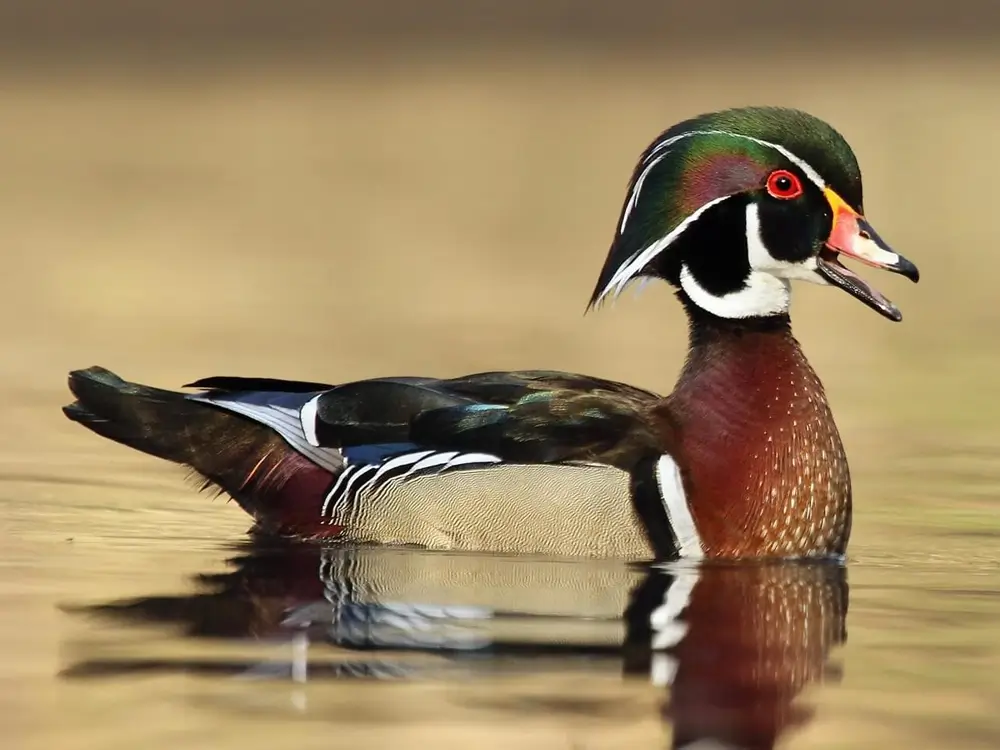
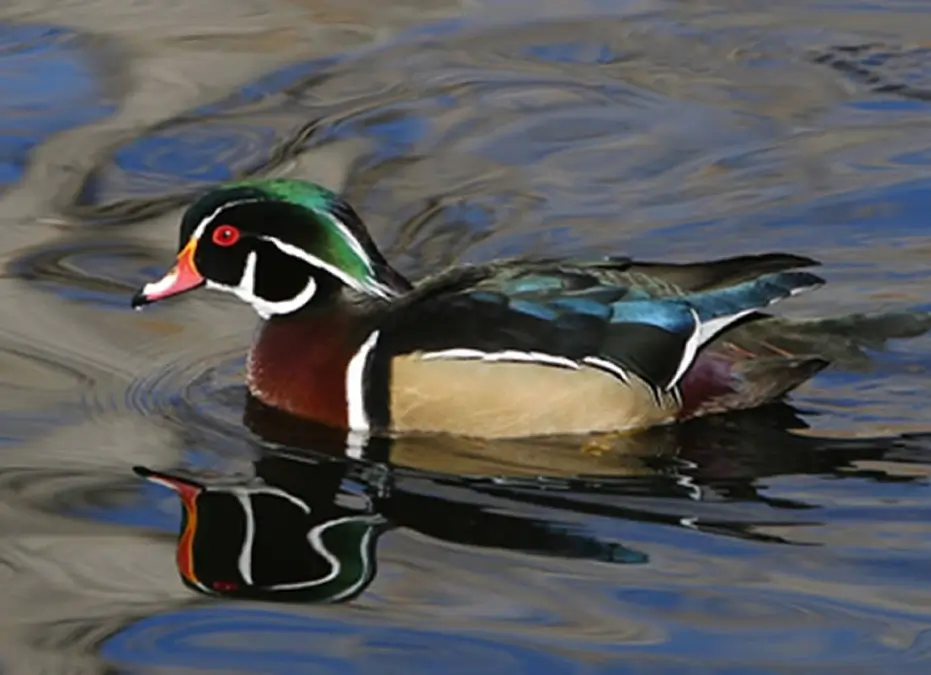
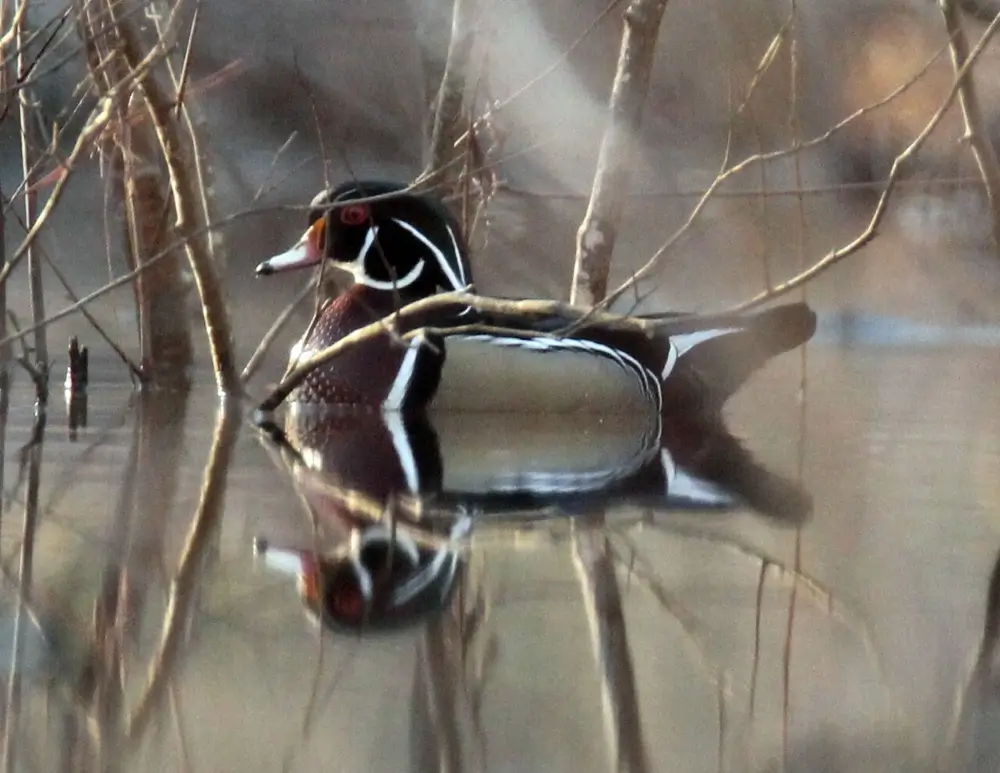
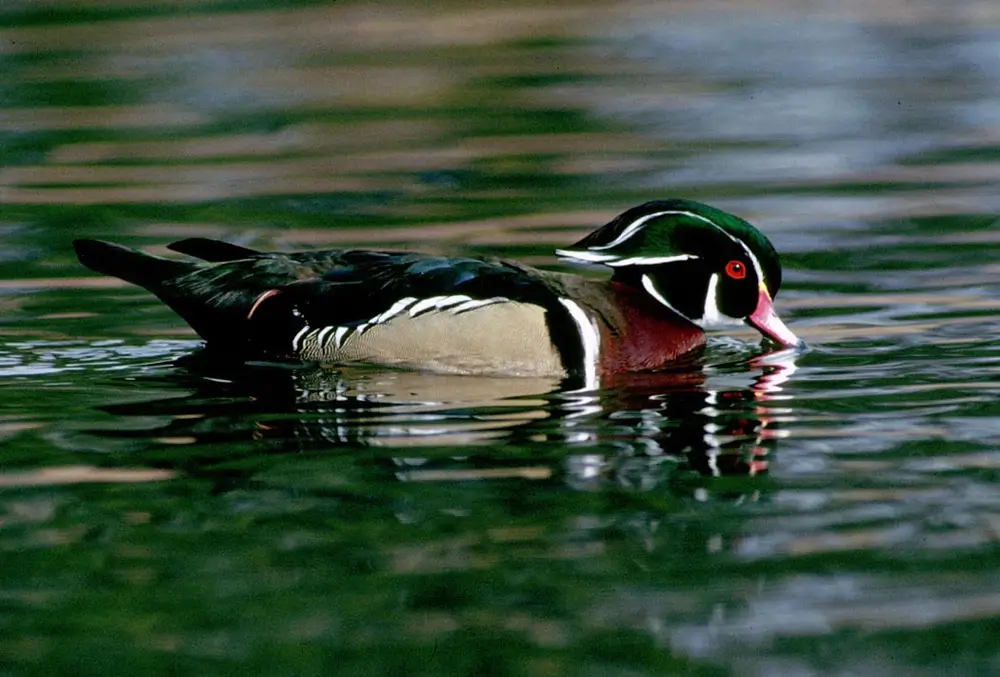
The male has an iridescent green, blue, and purple head with a long crest that runs down the back of his head like a helmet. A white line runs from the side of his head to the back of his crest.
He has a white throat and a white chin strap. His bill is bright red and has a yellow base and a dark tip. He has a brownish-red chest, grayish-yellow sides surrounded by a white line, a black back and tail, and a white belly.
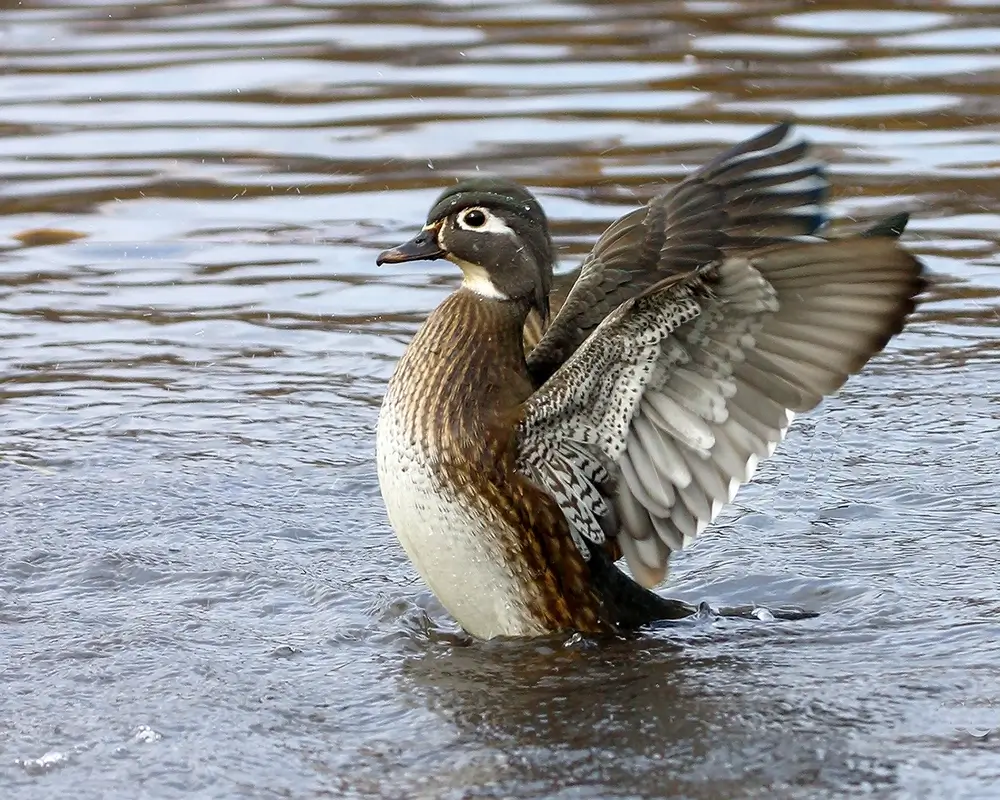
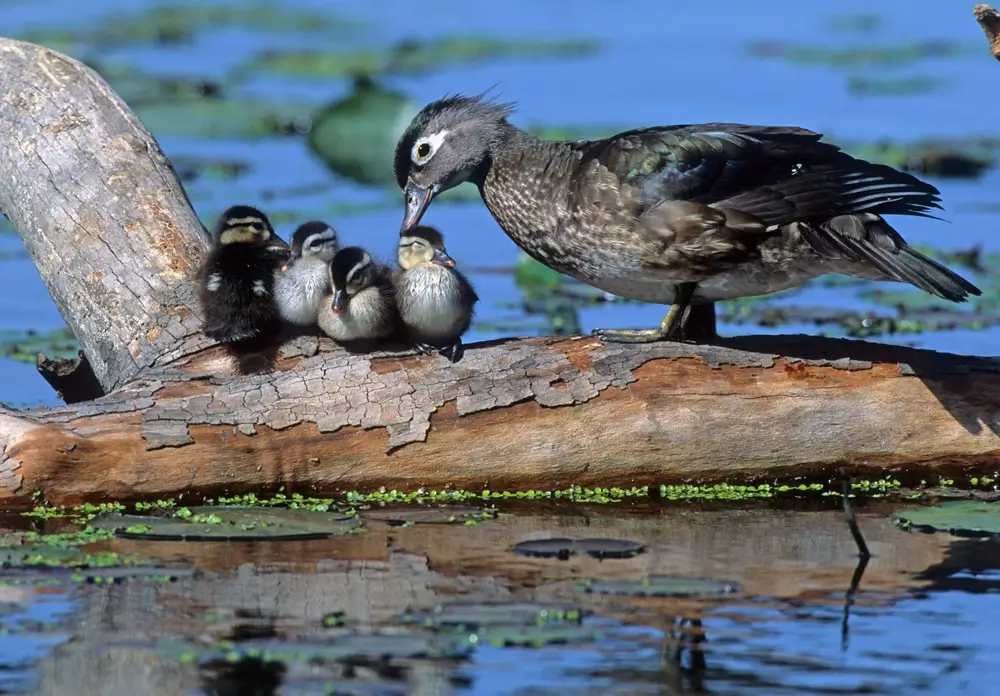
The female has a smoky gray head, a white chin and throat, a grayish-brown chest, brown sides, and a white belly. She has white circles around her eyes, bluish wings, and a black tail.
The wood duck is a dabbling duck. Dabbling ducks feed in shallow water by flipping tail-up and filtering plants, seeds, and invertebrates with their bills from the surface of the water.
The wood duck eats seeds, acorns, and other small nuts, along with grains, fruits, and algae. It also eats aquatic plants like pondweeds, cypress seeds, sedges, grasses, and duckweed. It will also eat aquatic insects and other invertebrates.
Male and female pairs form in the winter before the wood ducks reach their breeding grounds. The female lays 6-15 eggs in a tree cavity or nest box near water. The nest can be as high as 50 feet (15.2 m)above the ground.
The female lines the nest with down from her breast. She incubates the eggs for about 30 days. Some female wood ducks will lay their eggs in the nest of another wood duck and then leave their eggs for the other duck to incubate and raise.
The ducklings are precocial (precocial animals can move around and feed themselves shortly after birth). About two days after hatching, the ducklings jump down from the nest and make their way to the water by following their mother’s call.
The ducklings fledge when they are about 56-70 days old. The female may have two broods a year. The male usually mates with only one female each season.
The wood duck has a lifespan of 3-5 years in the wild. In the wild, they can live well into their teens.
Wood ducks are strong fliers and excellent swimmers.
The wood duck was close to extinction in the 1900s due to overhunting. The Migratory Bird Treaty, established in 1916, and the enactment of the Federal Migratory Bird Treaty Act in 1918 helped increase wood duck populations by the 1920s.
In the 1930s, nest boxes came into use, and the wood duck population continues to grow.

Support for NatureWorks Redesign is provided by:
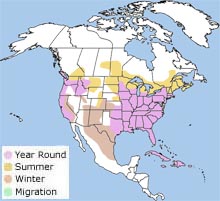
The wood duck breeds across New Hampshire and is a year-round resident in the southern part of the state.
The wood duck breeds from southern Canada throughout the eastern half of the United States and south to Cuba.
In the west, the wood duck breeds from British Columbia southward along the Pacific Coast to southern California. It winters in the southern part of its breeding range and in Mexico.
NHPBS inspires one million Granite Staters each month with engaging and trusted local and national programs on-air, online, in classrooms and in communities.