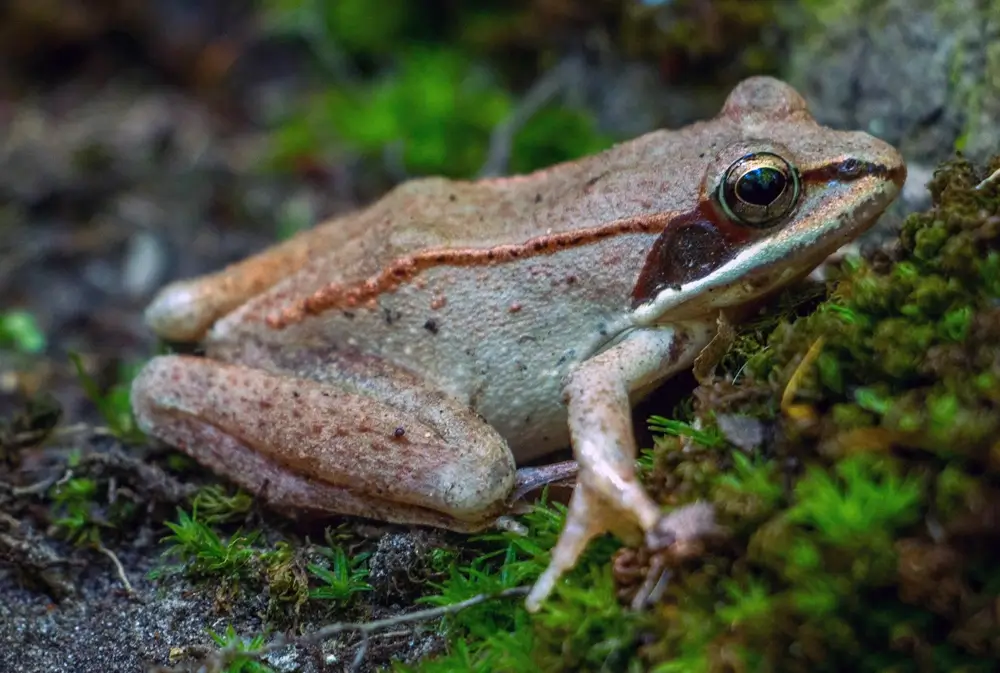
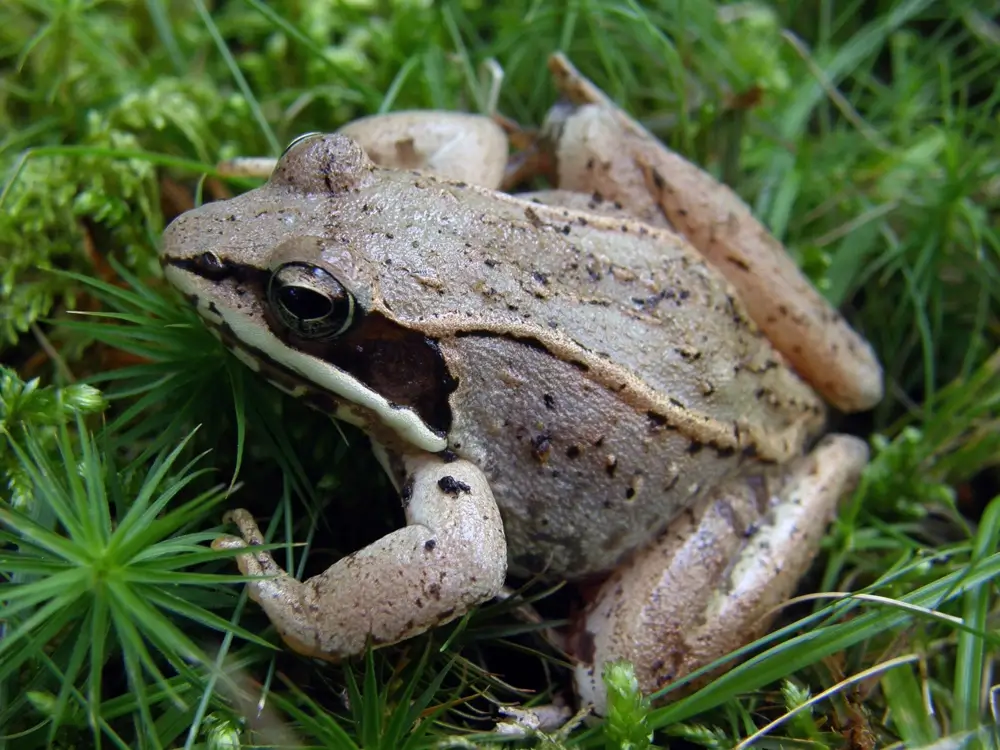
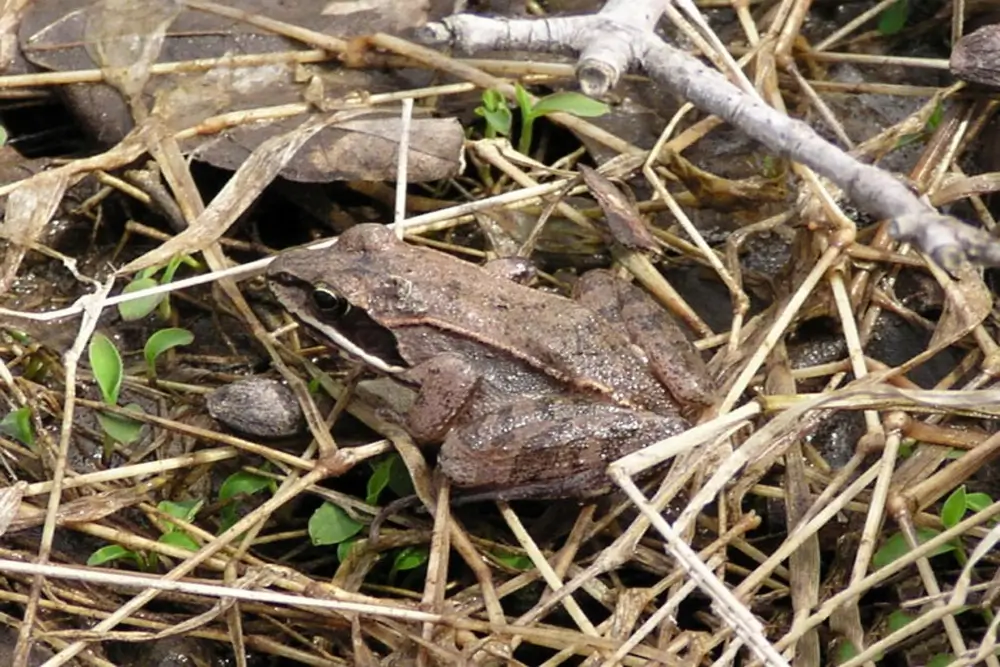
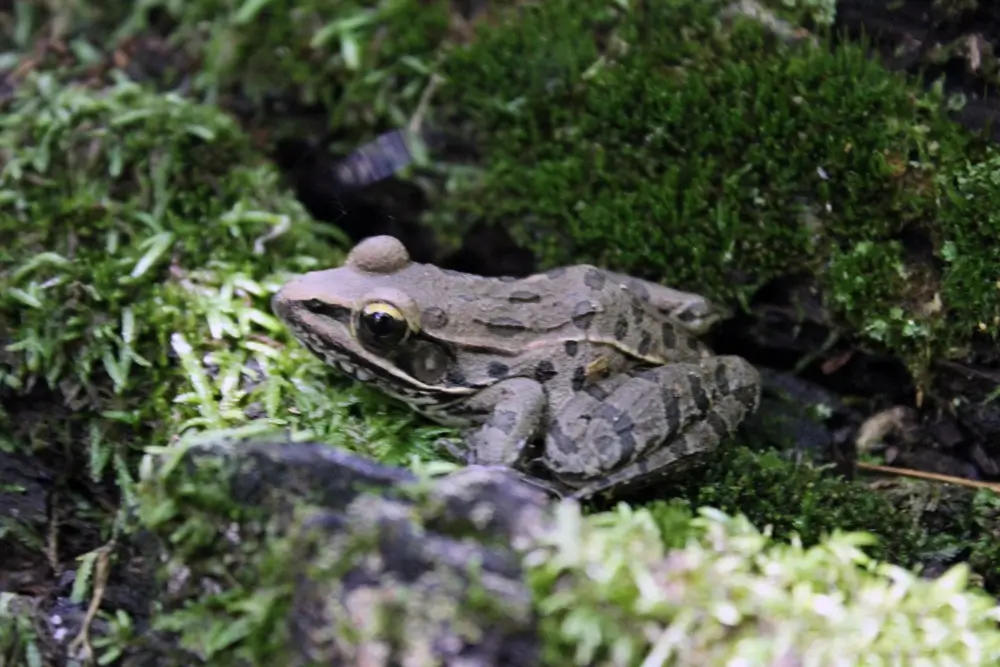
The wood frog is around 3 inches (7.6 cm) in length. It is brown, rusty red, gray, or tan, and it has bumpy skin. Its most recognizable feature is the black mask on its face, which is often called a “robber’s mask.”
It has a yellow-to-greenish-white belly and a light stripe on its upper lip. It has two folds of skin called dorsolateral folds that run from the back of its eyes down along the sides of its back. Its front feet are not webbed.
Habitat
The wood frog is found in deciduous, coniferous, and mixed forests; marshes; meadows; and swamps. The wood frog spends most of its time on the ground in woody areas except during mating season, when it is found in breeding pools.
Diet
The wood frog eats beetles, spiders, snails, worms, millipedes, slugs, and other small invertebrates. The wood frog tadpole eats algae and plant matter.
Life Cycle
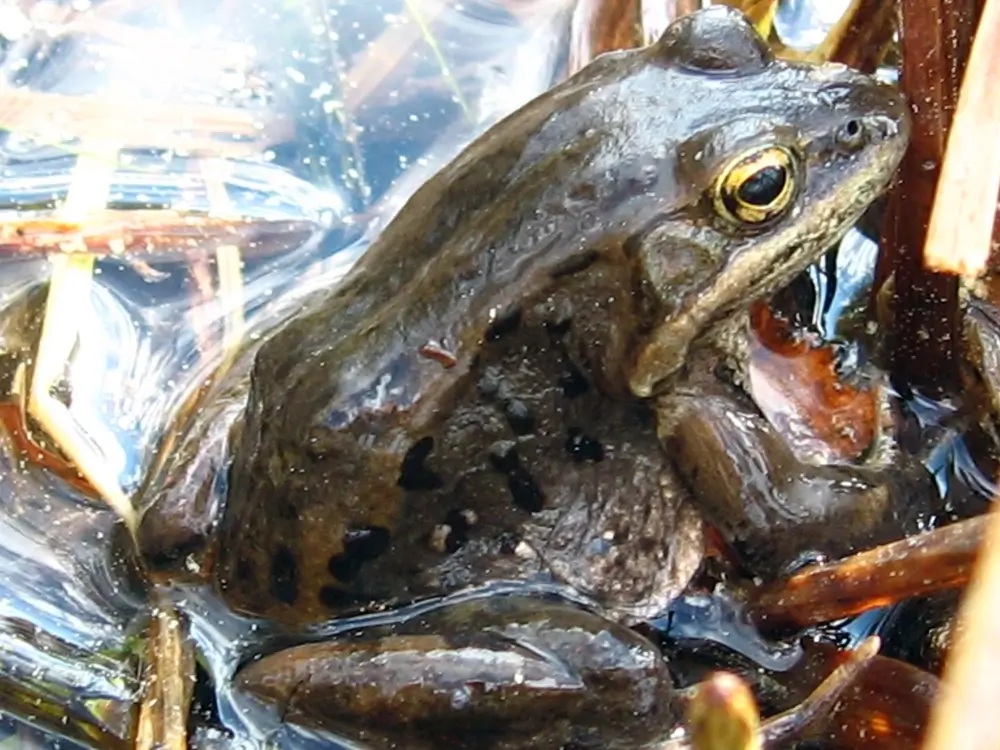
Wood frogs are one of the first species of frog to begin mating in the early spring; they may even begin breeding in early March before all of the ice has melted on their breeding ponds. Male wood frogs call out from the water to females with a quacking sound and then go out in search of a mate. Males cannot identify females by sight or smell; they have to hug another wood frog and feel if it is the right size to be a female. Females are fatter than males because they carry eggs.
The female lays an egg mass of as many as 1,000 eggs in the breeding pond or pool. The egg mass is usually attached to a plant stem or stick. In about a week, the egg mass floats to the surface of the water, and the gooey gel that surrounds the egg mass turns green, which helps camouflage the eggs. The green color comes from algae. The egg masses from many females float on the top of the water and look like pond scum.
The tadpoles change into frogs in about two months and mate when they are two years old.
Behavior
In the winter, wood frogs hibernate under logs, stumps, or leaf litter. Their bodies freeze in the winter, and their heart and breathing stop. As much as 65% of the water in the wood frog’s body turns to ice. When spring comes around, the wood frog thaws out and hops over to a breeding pond.
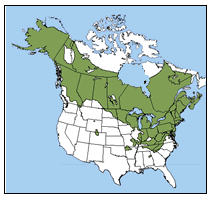
The wood frog is found in much of Canada and Alaska, as well as in New England and the Great Lakes region, and south along the Appalachian Mountains into Tennessee, Kentucky, and northern Georgia.