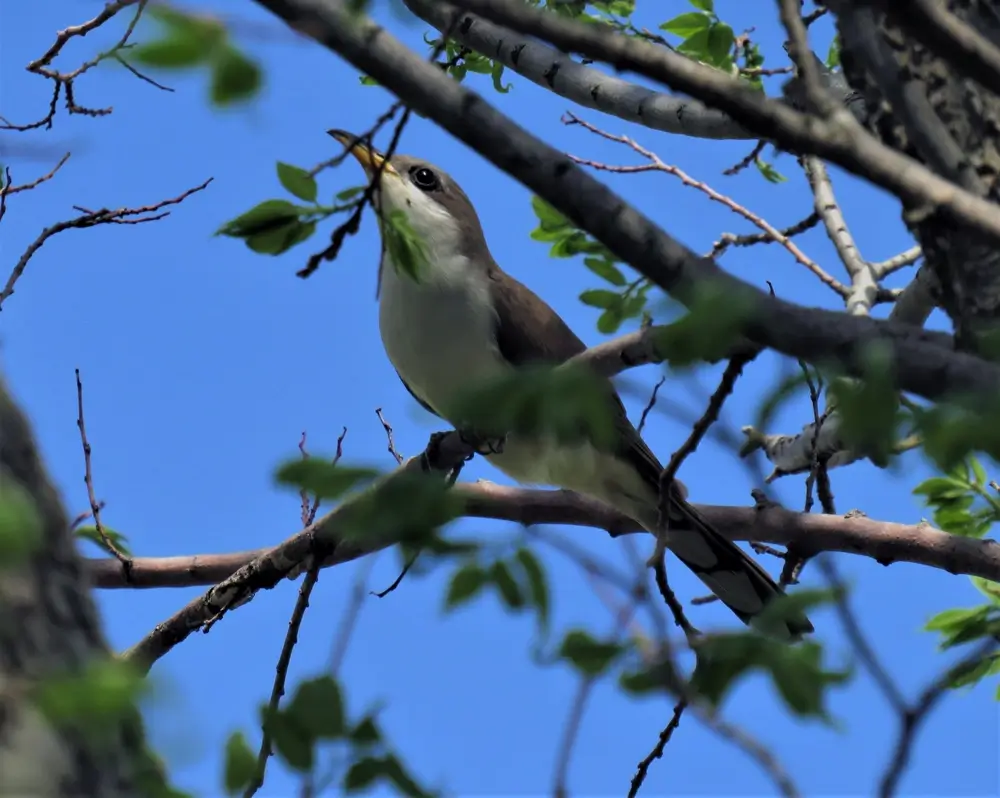
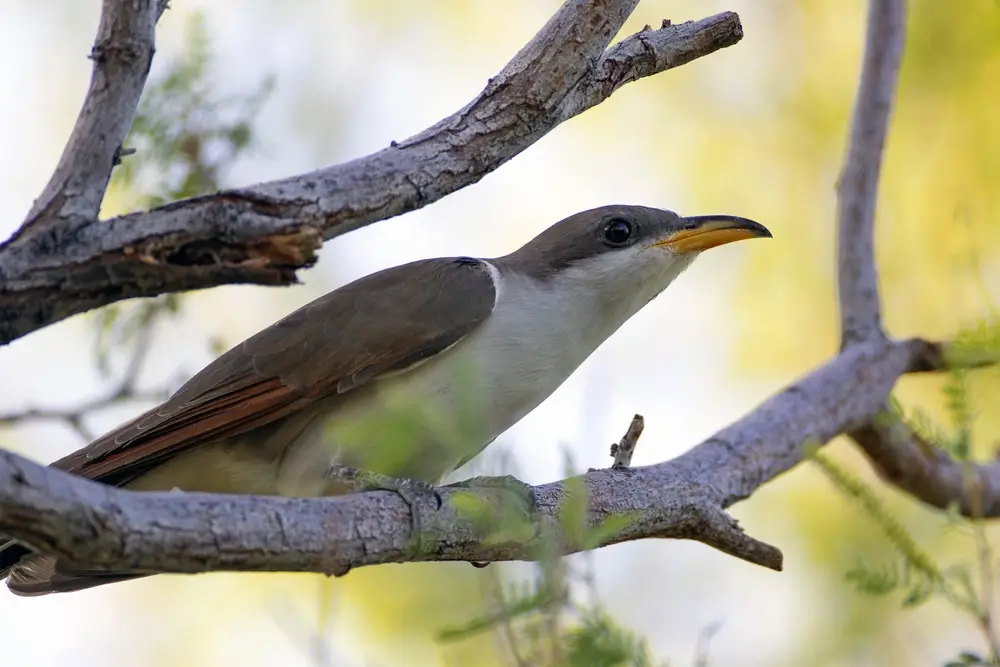
The yellow-billed cuckoo is a slender bird, 10.2-11.8 inches (26-30 cm) in length with a wingspan of 15-17 inches (38.1-43.2 cm).
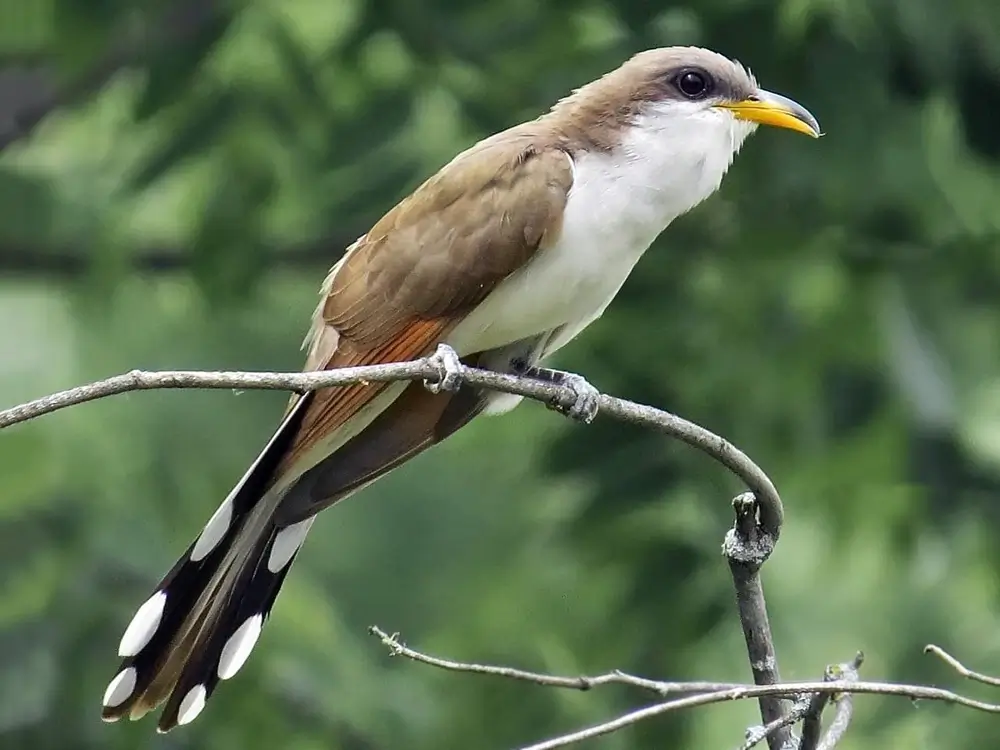
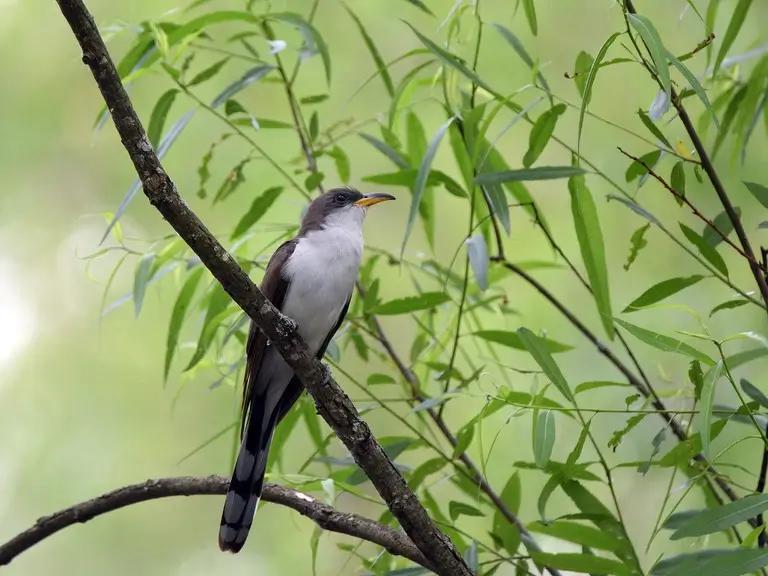
It has a long, grayish-brown tail. The underside of its tail is dark brown and has two rows of large white spots. It has a down-curved bill that is black on the top and yellow on the bottom, and a ring of gray skin around its eyes.
It is grayish-brown on its head and back with a rusty-red patch on its wings. It has a dull white breast and belly. Males and females look alike, but females are a little larger.
Habitat
The yellow-billed cuckoo is found in open woodlands and forested streams with dense, low vegetation. It is often found in orchards, overgrown pastures, abandoned agricultural fields, shrublands, and thickets*.
*A thicket is a dense group of bushes, shrubs, or small trees that grow very close together.
Diet
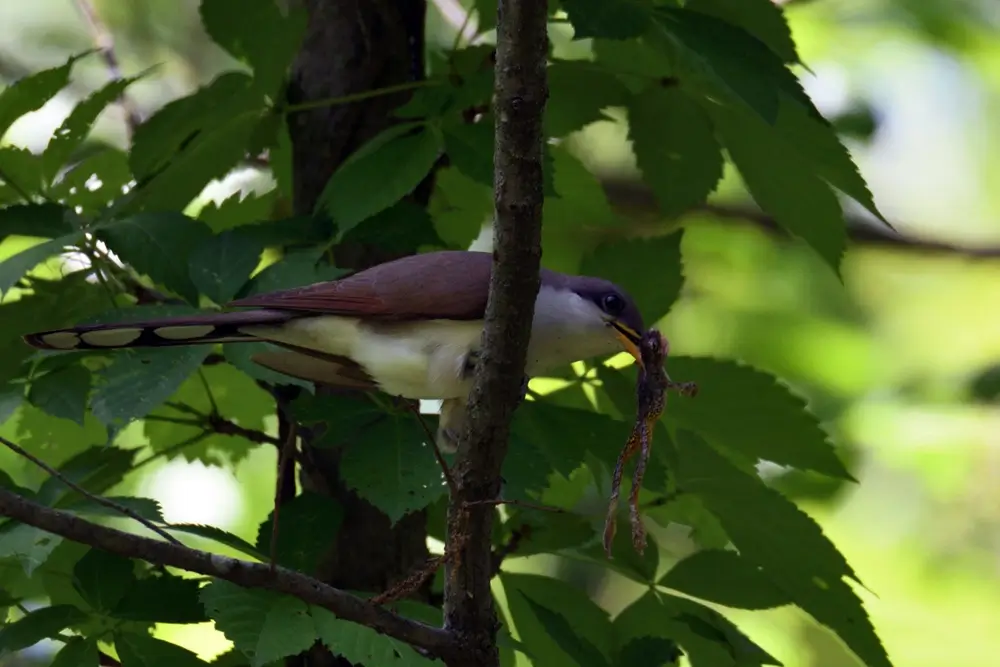
Caterpillars make up a large part of the yellow-billed cuckoo’s diet. It also eats other large insects, bird eggs, berries, fruits, small amphibians, and seeds.
Life Cycle
Both the male and the female yellow-billed cuckoo build a nest of twigs, roots, leaves, grass, and pine needles low in a tree or bush. The female lays 2-4 eggs, and both parents incubate the eggs for 10-13 days.
Both parents feed and care for the chicks. The chicks leave the nest in 7-9 days and fly when they are 21 days old. The female yellow-billed cuckoo sometimes lays her eggs in the nest of another bird.
The yellow-billed cuckoo has a lifespan of 4-6 years in the wild.
Behavior
The yellow-billed cuckoo is one of only a few bird species that eat hairy caterpillars. In the east, the caterpillar of the eastern tent moth (Malacosoma americanum) is a favorite meal.
Did You Know?
Some people think the yellow-billed cuckoo calls out more on rainy days, so it is sometimes called the “rain crow.”
Support for NatureWorks is provided by:
The Yellow-Billed Cuckoo in NH
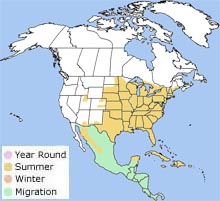
The yellow-billed cuckoo breeds in New Hampshire and migrates to South America in the fall.