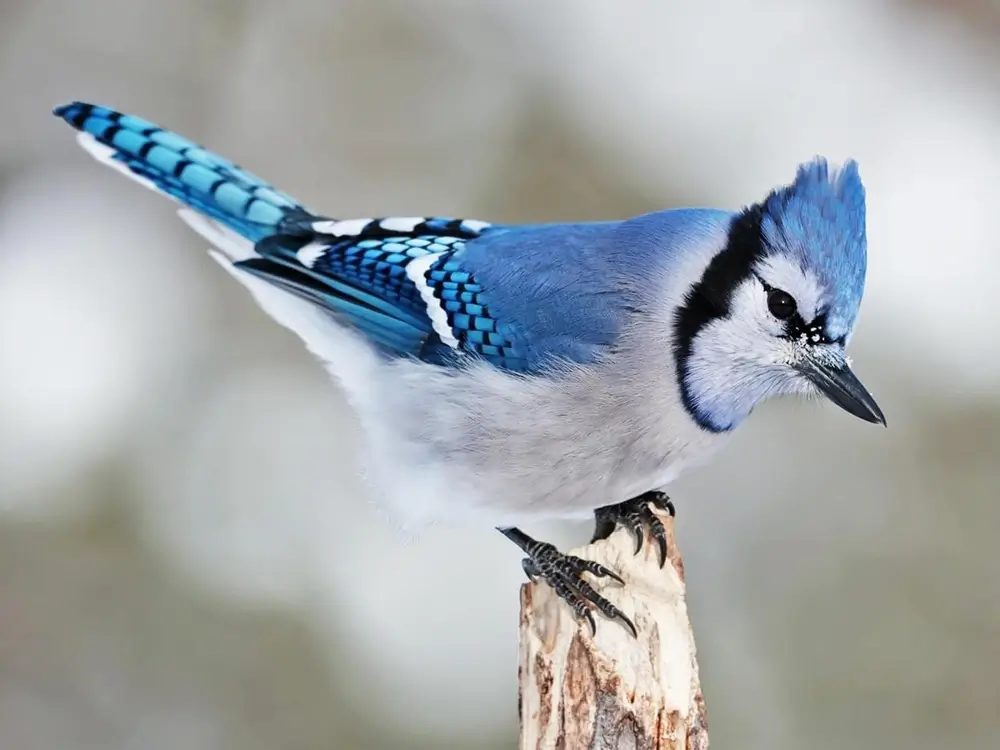
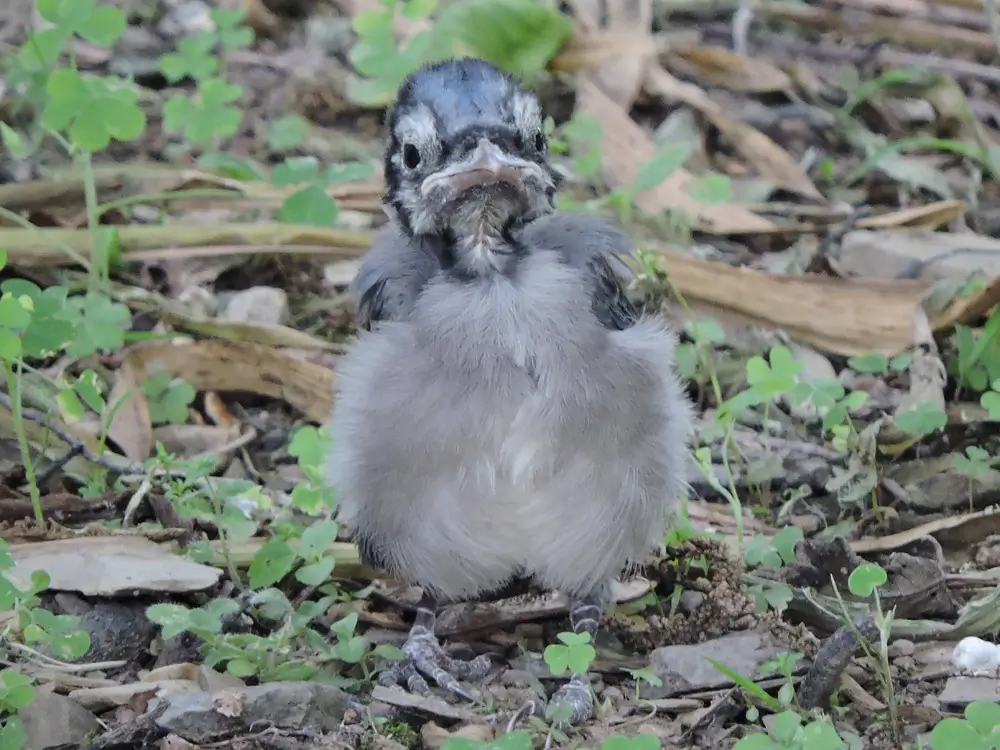
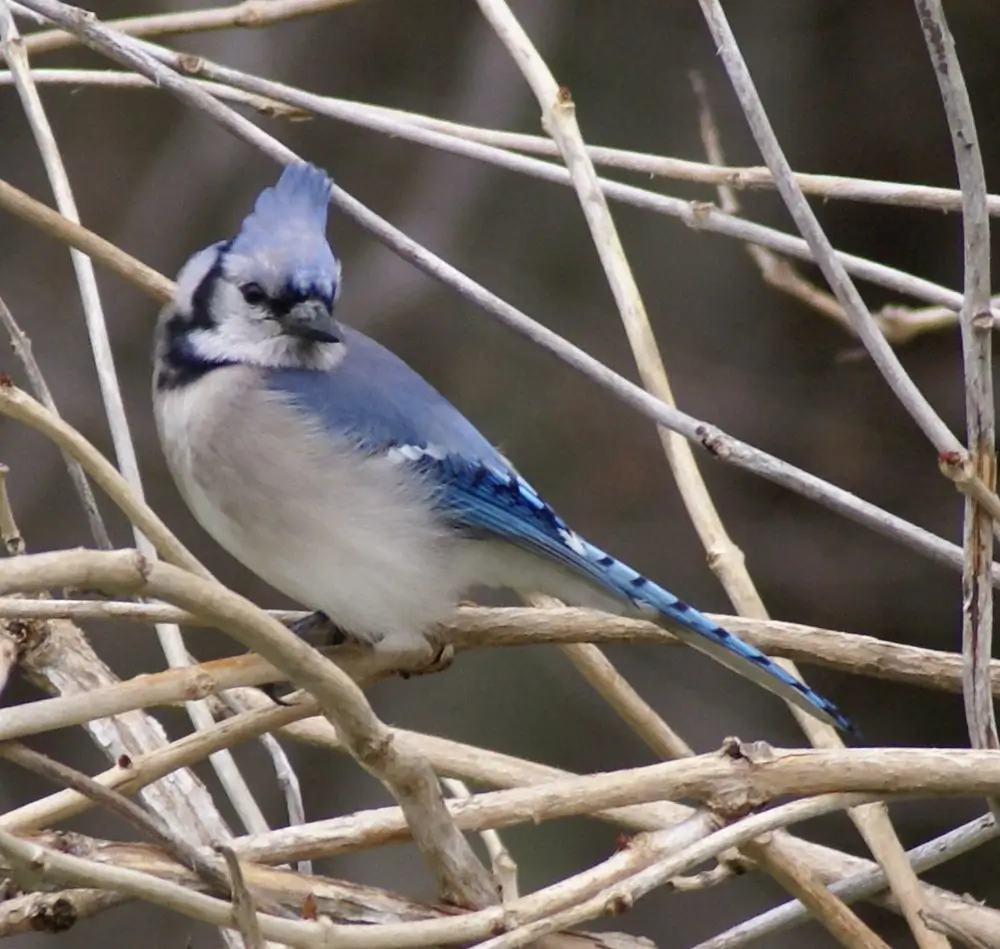
The blue jay is 9.8-11.8 inches (25-30 cm) in length with a wingspan of 13.4-16.9 inches (34-43 cm).
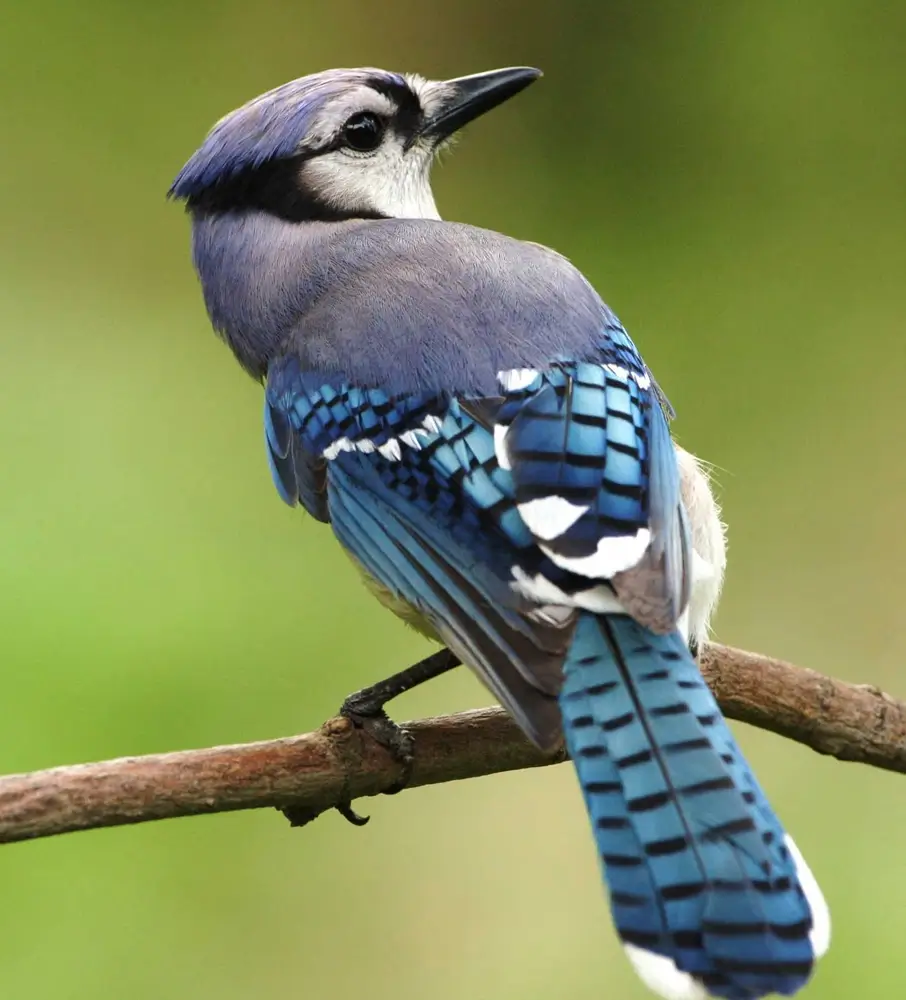
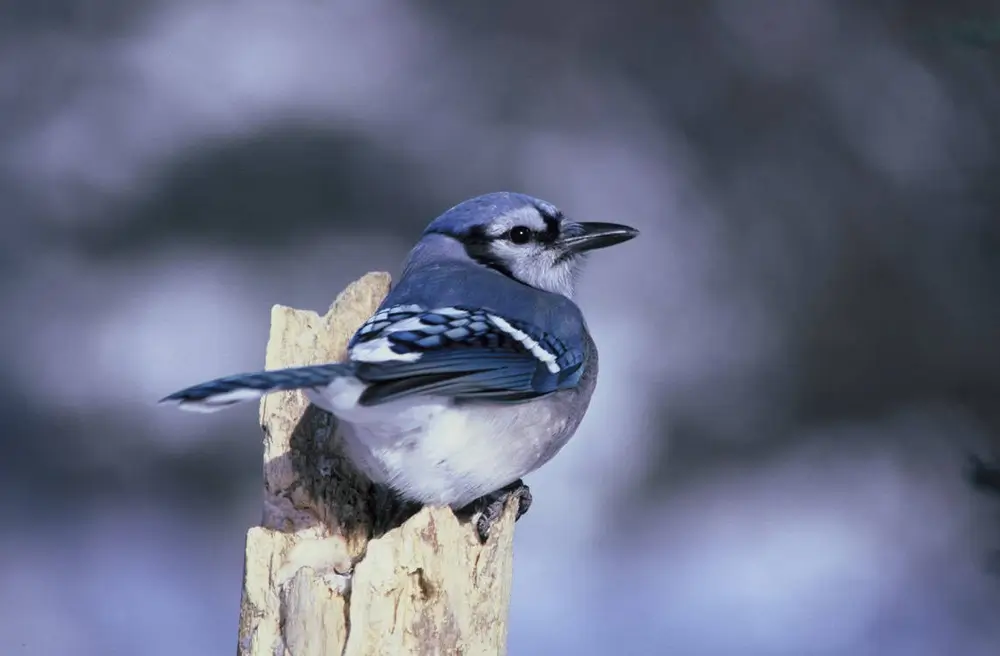
It is bright blue on top and white to gray on its throat, chest, and belly. It has a gray-blue crest on its head and black and white bars on its wings and tail. Its bill, legs, and feet are black. It also has a black “necklace” on its lower throat.
Habitat
The blue jay is common in deciduous forests. It is also found in residential areas and is a frequent visitor to bird feeders.
Diet
The blue jay is omnivorous. It eats fruits, acorns, seeds, nuts, insects, mice, and frogs. Sometimes a blue jay raids a nest for eggs and young birds.
When a blue jay eats nuts, it holds the nut with its feet and cracks it open with its bill.
The blue jay is a seed spreader. It often buries food to eat later. Some seeds and nuts are never recovered and grow into trees and other plants.
Life Cycle
The female blue jay lays four to six eggs in a nest made of sticks and twigs and lined with grass. Nests are made in trees and shrubs.
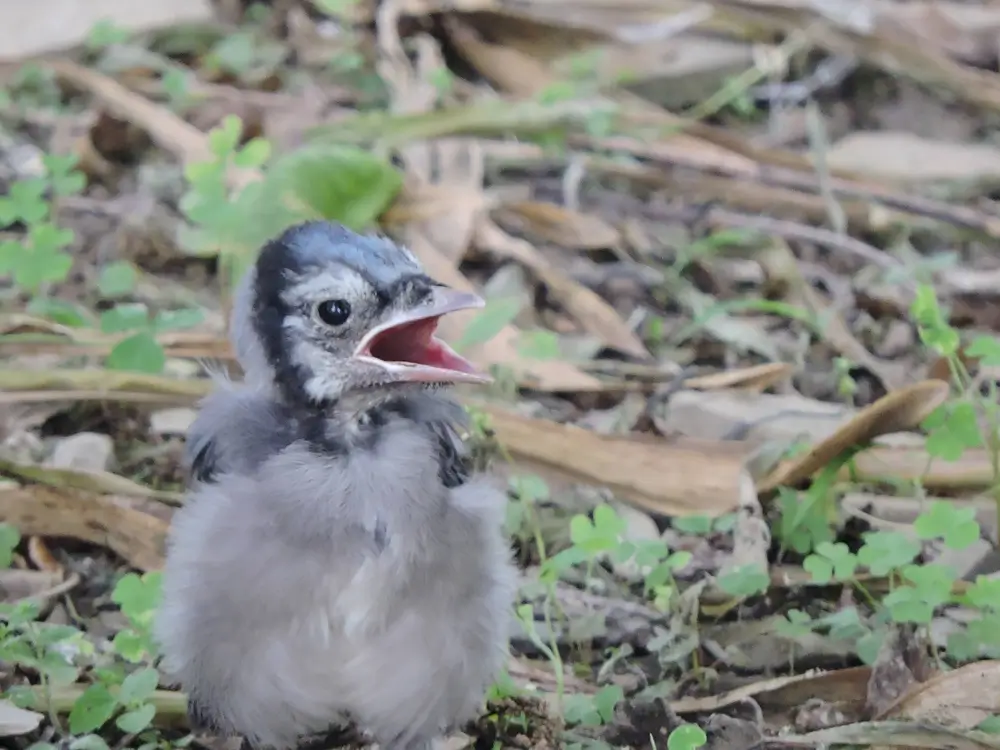
The female incubates the eggs, although sometimes the male helps. The eggs incubate for about 17 days. Both parents bring the chicks food.
The blue jay has a lifespan of around 7 years in the wild. The oldest blue jay on record was 26 years, 11 months old.
Behavior
The blue jay is very aggressive and territorial. Groups of blue jays often attack intruders and predators. They often drive other birds away from bird feeders.
The blue jay is also very vocal. It makes a number of different calls including its distinctive “jay- jay.” It also growls, whistles, and chatters.
Did You Know?
Support for NatureWorks is provided by:
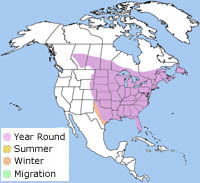
The Blue Jay in NH
The blue jay is a year-round resident in New Hampshire, although some populations may migrate south in the fall. Migration depends on the availability of acorns and other nuts.