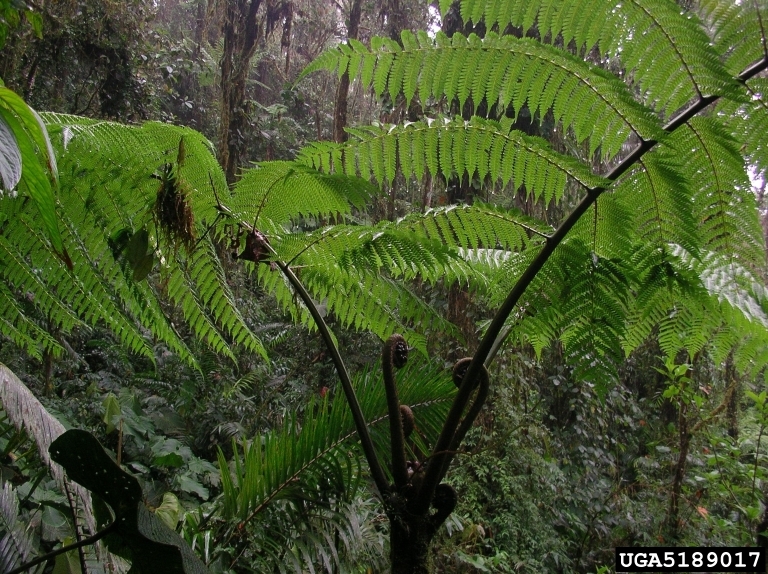
Tree ferns grow in the tropics and subtropics. Their large trunks can supports fronds that can be up to eight feet long!
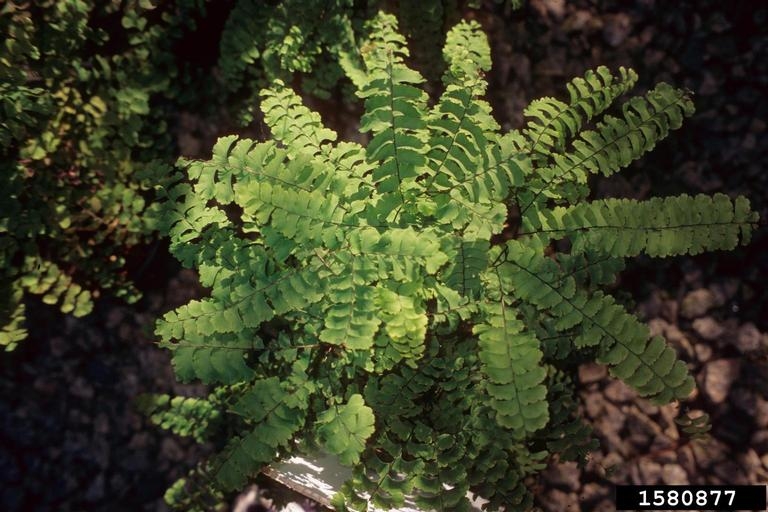
Ferns come in all sizes. Tree ferns grow in the tropics and subtropics. Their large trunks can support fronds up to eight feet long!
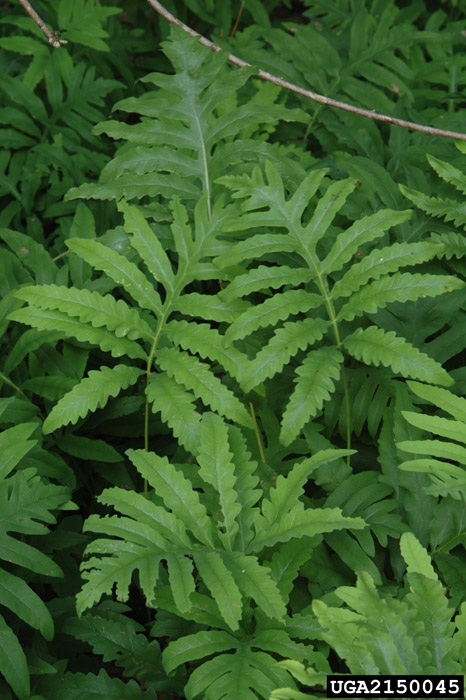
Ferns don't have seeds; they have spores.
Ferns don’t have seeds; they have spores. The spores are usually on the underside of the fronds. To reproduce, the fern releases the spores into the air. The spores don’t grow into new ferns. They grow into something called a prothallus.
This is the gametophyte stage of the fern. The prothallus produces a sperm and an egg cell. The sperm fertilizes the egg. The fertilized egg grows into a new fern, which produces spores and starts the process all over again!