

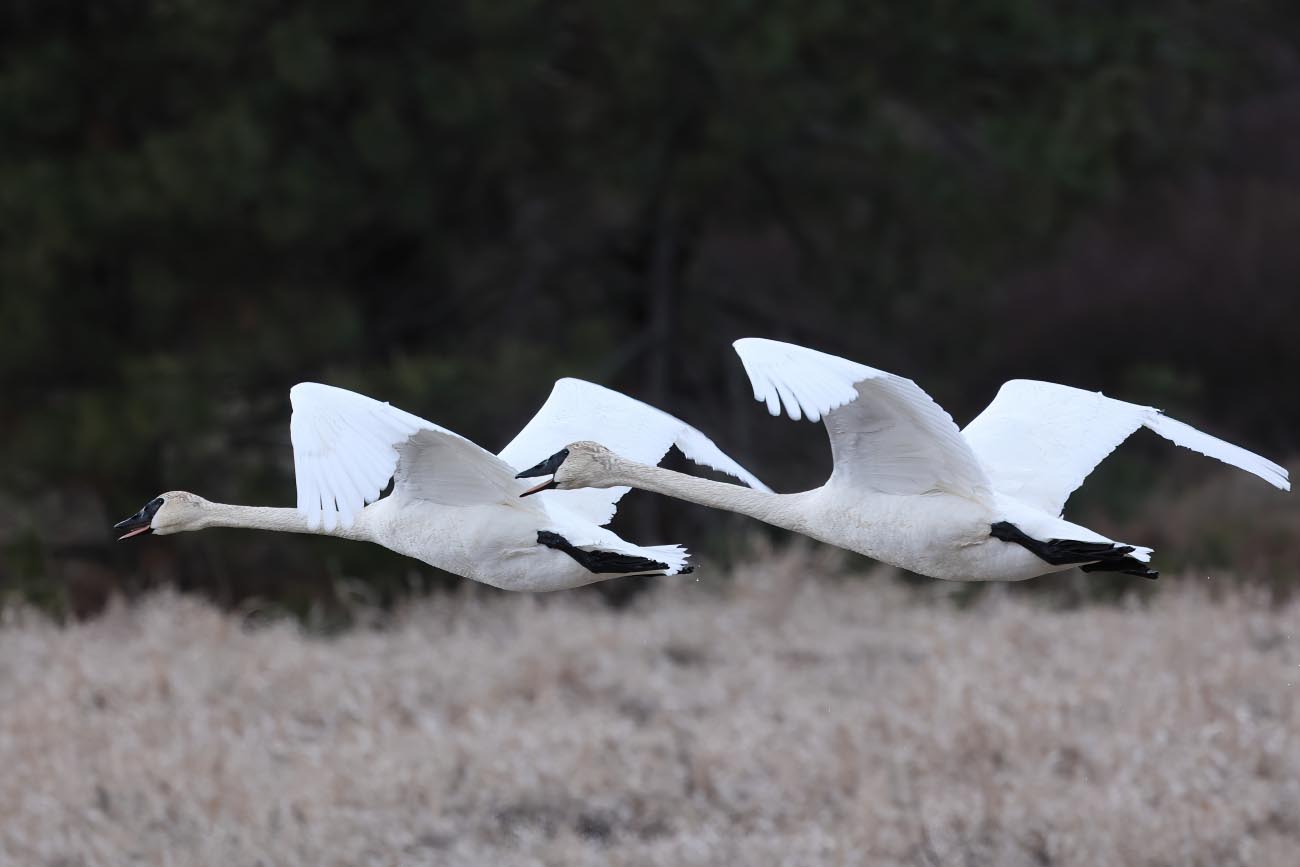
Trumpeter swans migrating.
Animals move for a variety of reasons, including finding food and shelter, caring for their young, finding a mate, and avoiding predators. Some animals also move seasonally from one place to another; this is called migration. In addition, all animals move within their habitat every day. The area an animal regularly uses to meet its daily needs is called its home range.
Tundra swans have a vast migratory home range, breeding on the Arctic tundra of Alaska and northern Canada in summer, then migrating south to spend the winter along the Atlantic and Pacific coasts of the United States.
A home range is important for an animal’s survival. Within it, animals become familiar with where to find food and water, where dangers may be, and where safe hiding places are located. They also learn to notice when something in their environment has changed or been disturbed, or when another animal has invaded their habitat.
Many animals know their home range as well as people know their own neighborhoods. In fact, some animals become so strongly attached to their home ranges that if they are moved away, they may travel many miles to return.
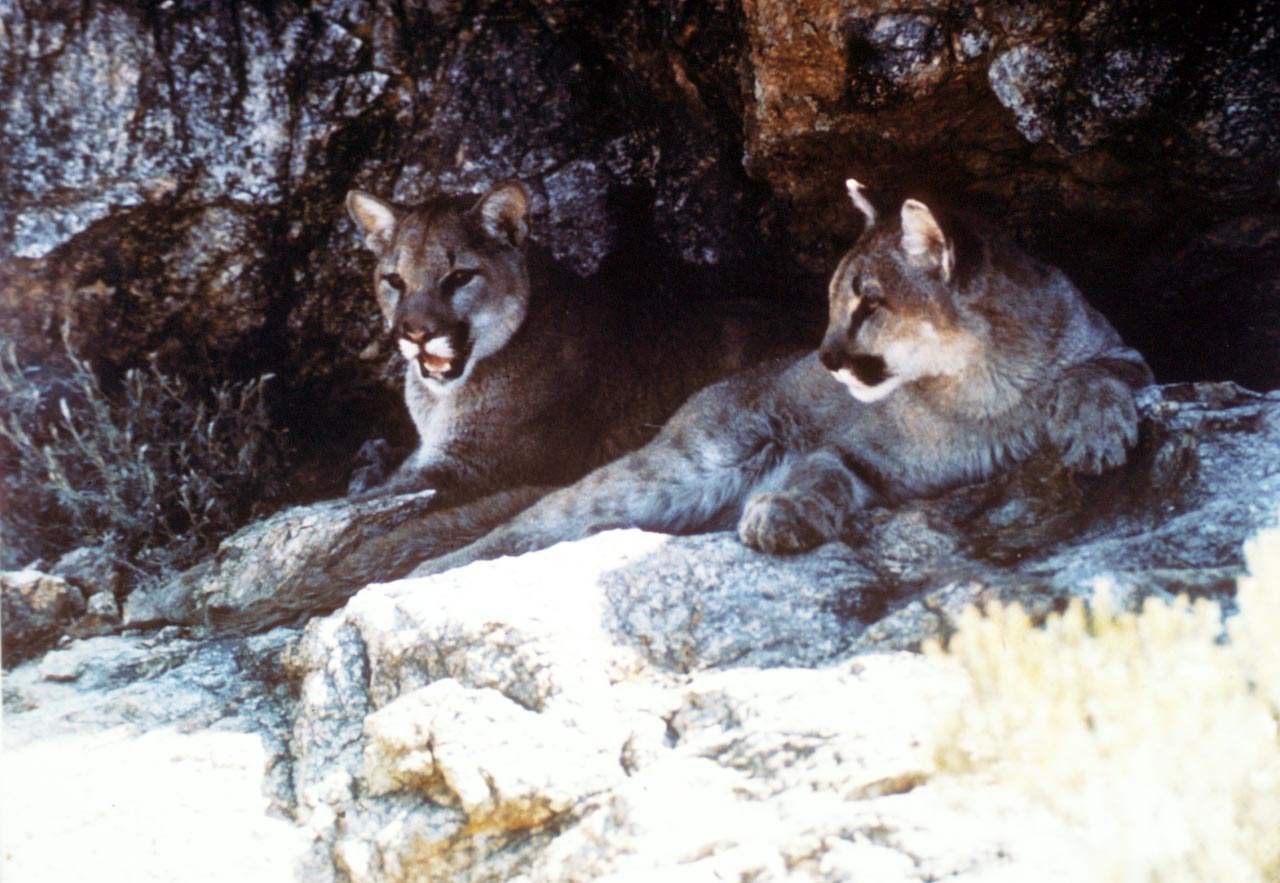
Mountain lions in their den.
Some animals have a single location within their home range—such as a den, burrow, or nest—that serves as their home. They may move throughout their home range during the day or night, but they always return to this one place to sleep and rest. Other animals do not rely on just a single home site. Instead, they rest wherever they find a safe and comfortable spot within their range. Some species even use several regular resting places.
The male mountain lion’s home range can be 100-500 square miles (259-1,295 km²) (about the size of a small city or larger). Females usually have smaller ranges, often 25-100 square miles (64.7-259 km²).
Mountain lions are solitary animals. They live alone except when a mother is raising her cubs. They may travel many miles or kilometers in a single day while hunting or patrolling their territory. Their ranges can overlap, especially between males and females, but males usually keep other males out of their territory.
Mountain lions don’t build nests or permanent homes. Instead, they use dens as safe, hidden spots—especially for raising kittens. A den might be in a cave, thick bushes, a hollow log, or a rocky crevice.
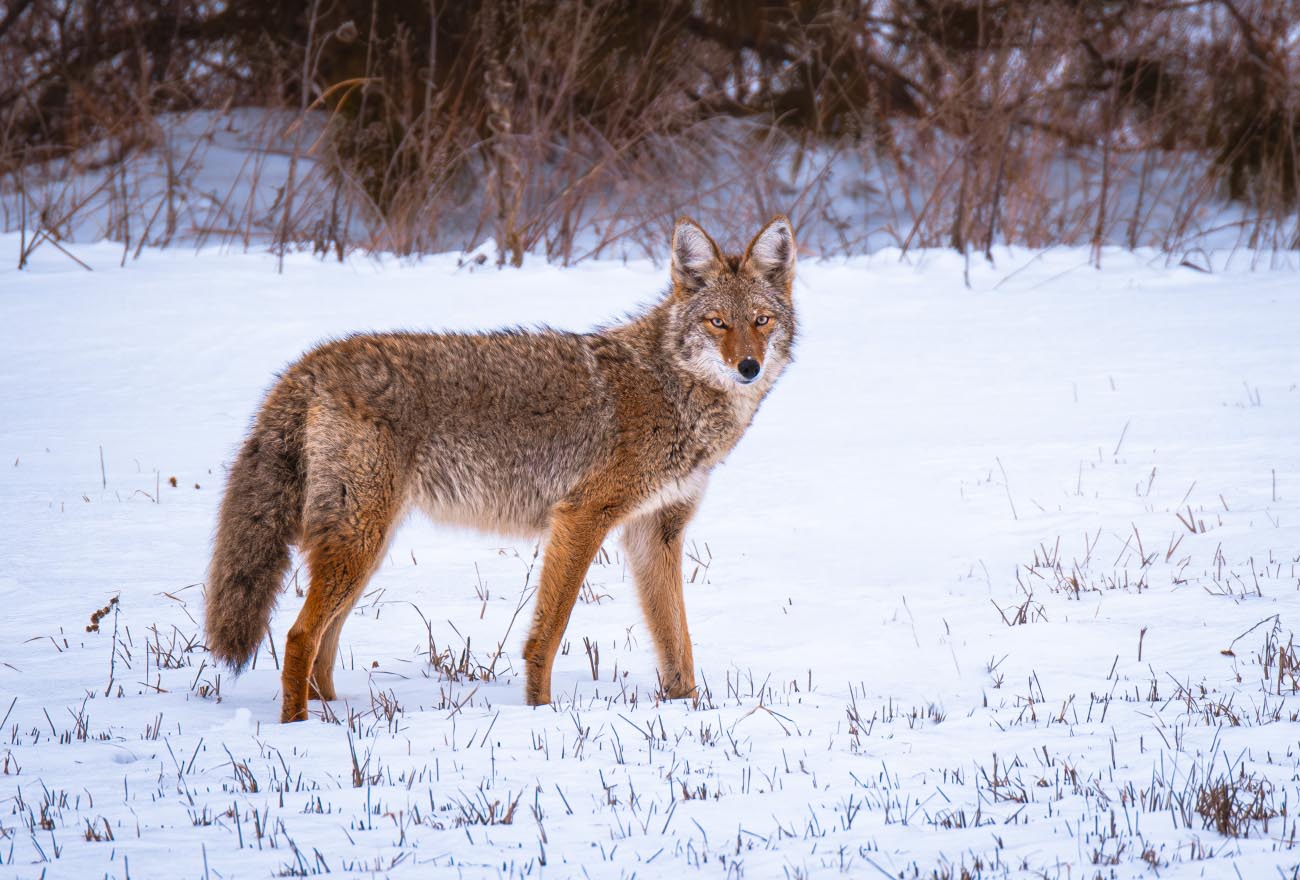
Coyote in his territory.
Many animals, such as coyotes, mark and defend all or part of their home range. When they do this, they have established a territory. A territory is an area an animal actively protects from other animals, usually members of the same species.
In many species, males establish territories and may share them with multiple females. However, they typically defend these areas against other males. This behavior helps ensure that rival males do not gain access to the females within the territory, increasing the original male’s chances of reproduction.
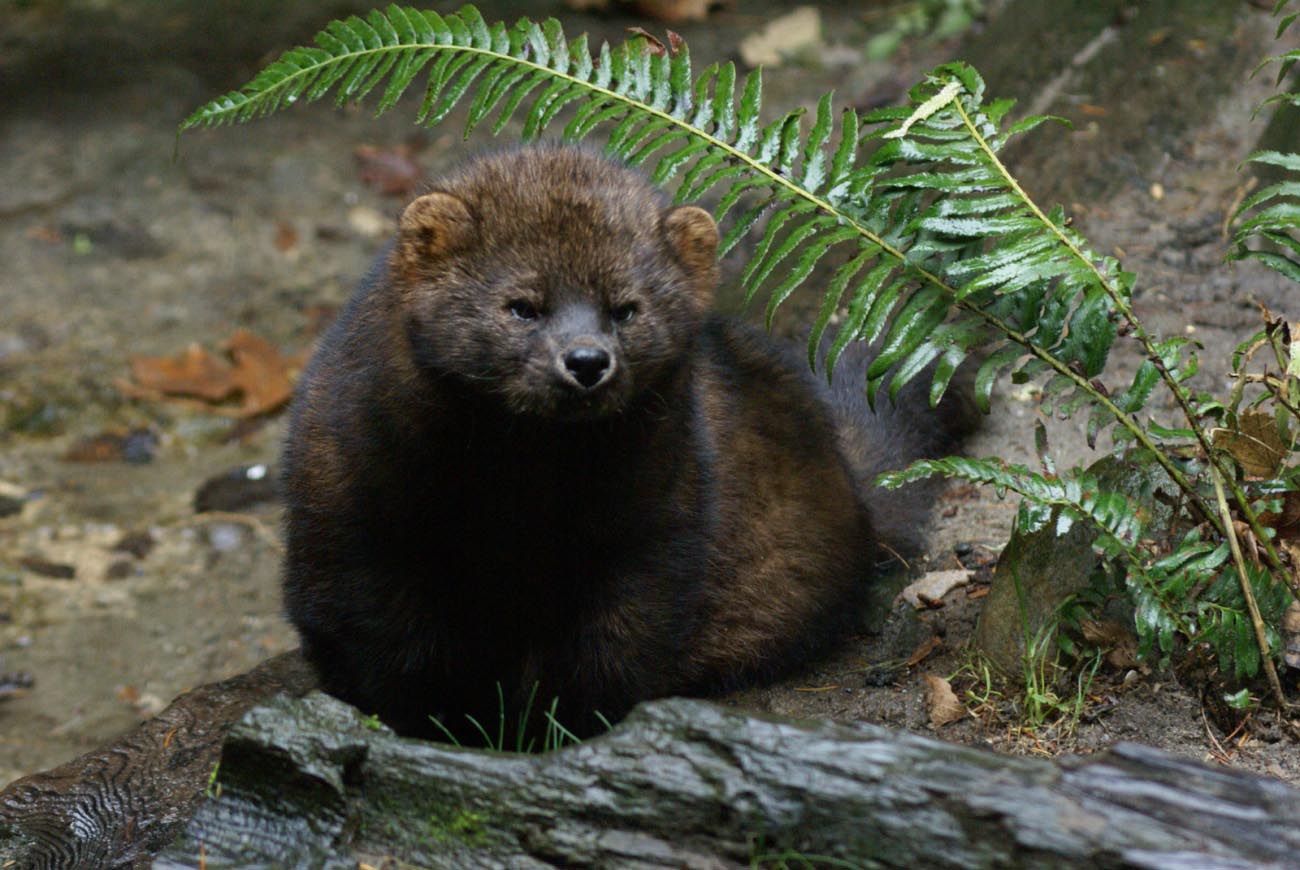
A fisher's home range is usually about ten square miles and may overlap with the home ranges of a number of other fishers.
The fisher is usually nocturnal (active at night). Its home range is typically about 10 square miles (25 km²) and may overlap with home ranges of several other fishers. It uses scent to mark its territory.
A fisher moves frequently throughout its home range, often following well-used trails. It travels both on the ground and through the trees. It makes its den in a variety of sheltered places, including crevices, hollow logs, dense bushes, and trees.
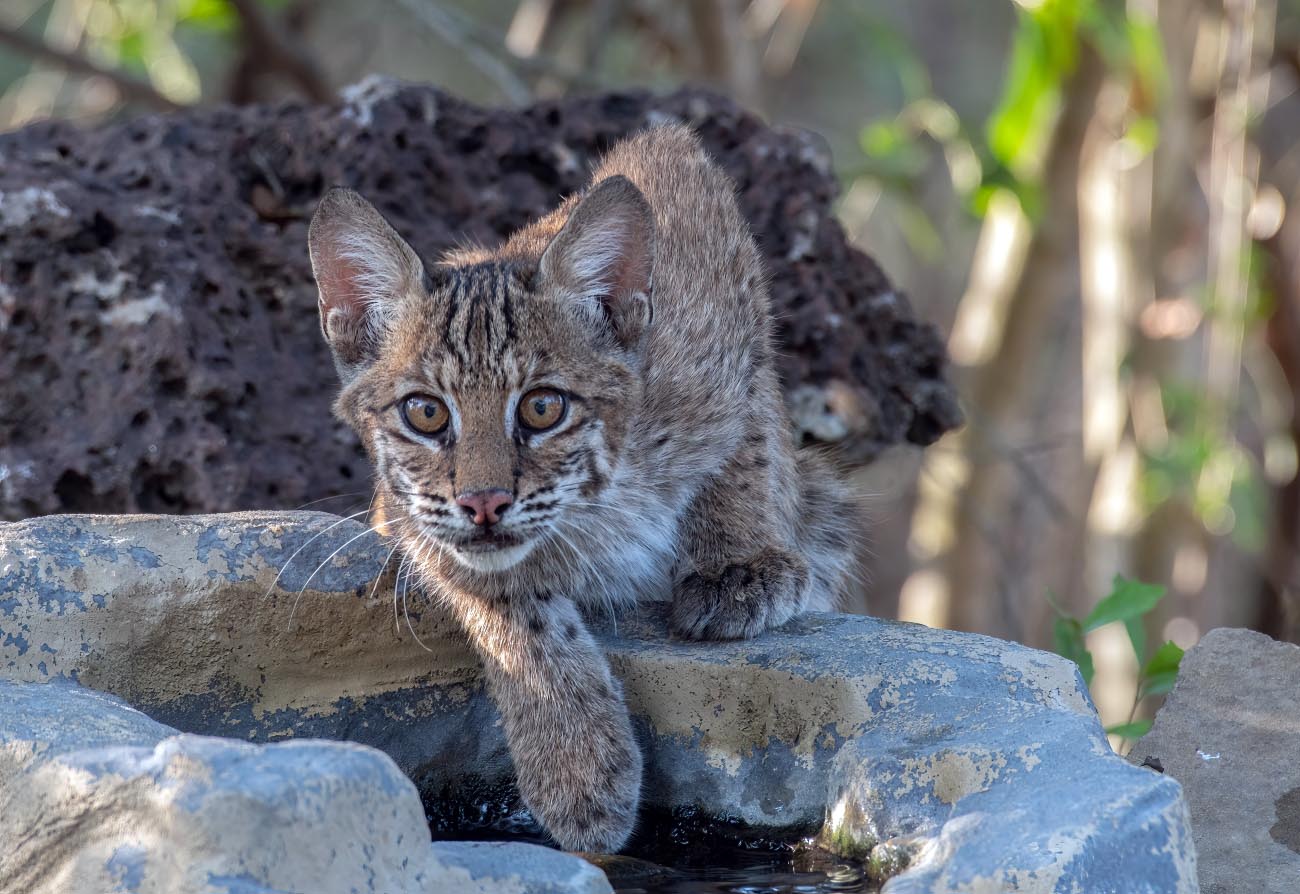
Bobcat on the lookout.
Bobcats are solitary animals except during the mating season. They mark their territory using urine, feces, scent markings, scratches, and scrapes—piles of dirt or debris marked with their scent. A male’s home range may overlap with the ranges of several females and sometimes another male, while females’ home ranges usually do not overlap. Home range size can vary widely, from less than one square mile (or square kilometer) to more than 20 square miles (51 km²), depending on the season and geographic location.
