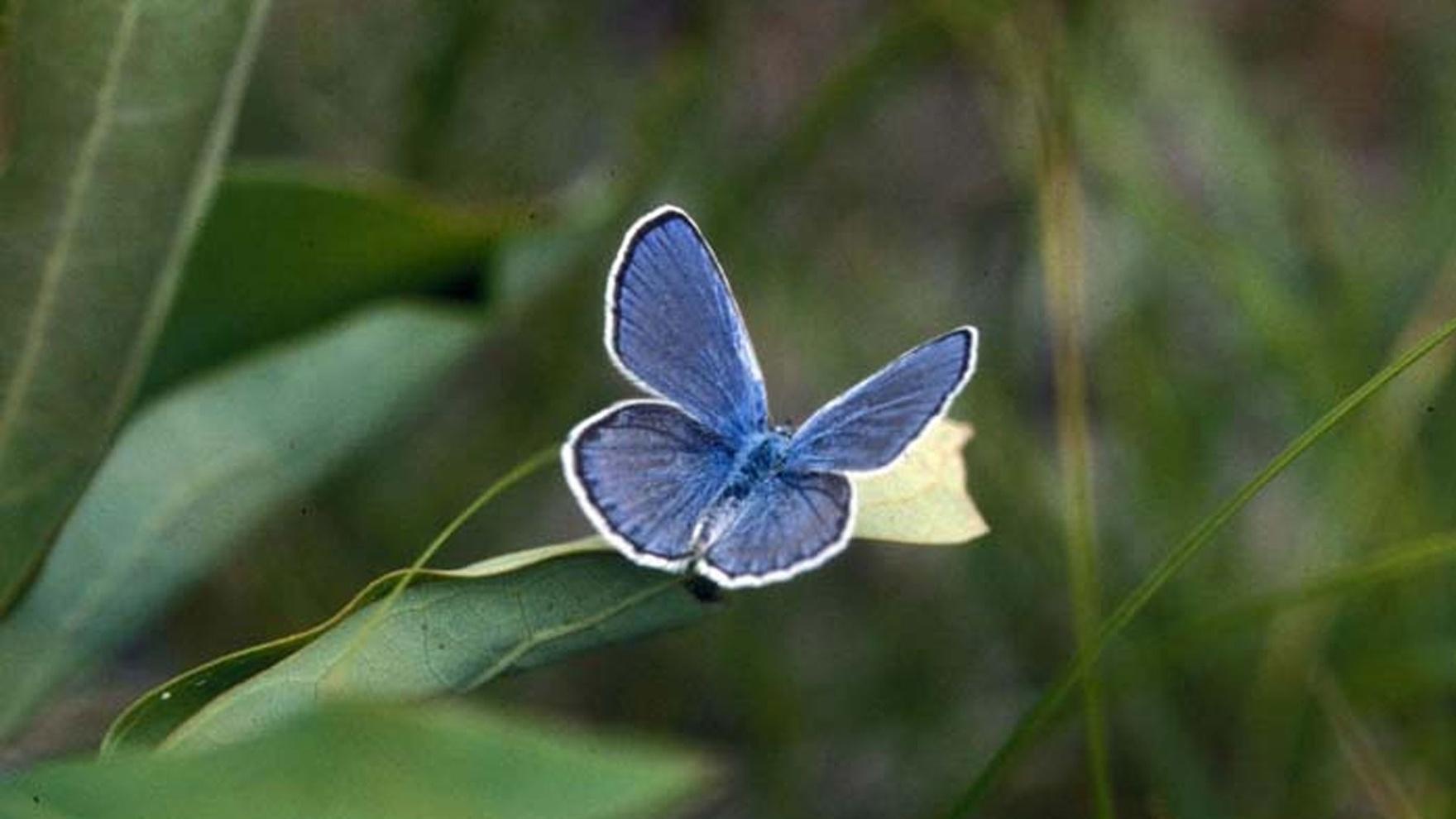
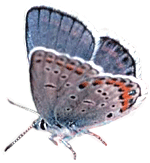
Learn about the state butterfly of New Hampshire and the role one plant, blue lupine, plays in its survival. See how land use plays in the survival of species and discover the role the pine barrens played in New Hampshire history.
Learn about the state butterfly of New Hampshire and the role one plant, blue lupine, plays in its survival. See how land use plays in the survival of species and discover the role the pine barrens played in New Hampshire history.
The Karner blue butterfly is an endangered species in New Hampshire. In the early 1980s, there were 3,000 to 5,000 Karner blue butterflies in the Concord pine barrens. By 1995, there were less than 50 Karner blue butterflies.
The Karner blue butterfly is the state butterfly of New Hampshire, but there are only a few left in the state! Today, the Karner blue butterfly is only found in the pine barrens near the Concord airport.
The Karner blue caterpillar only eats wild blue lupine, and wild blue lupine is found in pine barrens. Over time, pine barren areas have been cut down for development and the Karner blue butterfly population in New Hampshire has slowly dissappeared.
Scientists and others are working very hard to save the Karner blue in New Hampshire, but they face a difficult task! Efforts are underway today to release captive-reared Karner blue butterflies into the pine barrens in Concord. Hopefully these captive-reared butterflies will reproduce and the number of Karner blue butterflies will increase.
… that animals like the Karner blue butterfly caterpillar that are dependent on one species of plant for survival are called specialists. Another example of a specialist is the koala bear of Australia. It is dependent on the eucalyptus.
… Ants often tend to the larvae of the Karner Blue. They rub the larvae with their antennae. This causes the larvae to secrete a sugary fluid that the ants eat. This secretion also protects the larvae from parasites!
What Do You Think?
Click here to test your Saving the Karner Blue Butterfly knowledge.