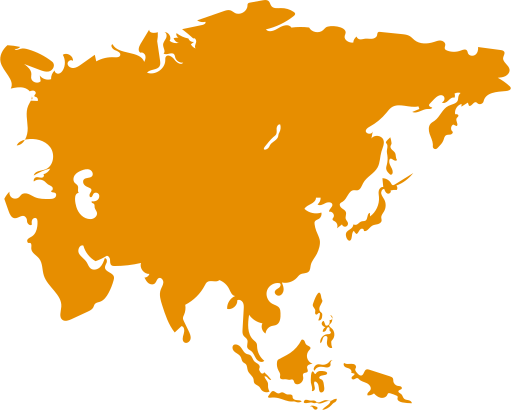
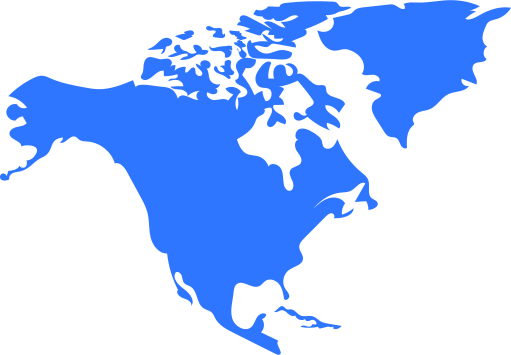
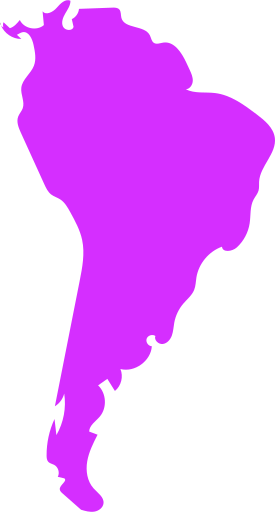
There are three species in the Heliornithidae family. They are found in parts of Africa, Asia, and Central and South America.
These birds live in marshes, swamps, slow-moving rivers, and other freshwater wetlands. They have long necks, slender bills, long tails, and streamlined, duck-like bodies that are about 12 to 18 inches (30.5 to 45.7 cm) long.
Heliornithids are sometimes called finfoots because their toes have broad, fleshy lobes that spread out in the water, similar to the toes of coots and grebes. These lobes help them swim and dive.
They are excellent swimmers and divers. They eat fish, insects, crustaceans, snails, and other small aquatic animals, along with some plant material. Although they can dive to escape danger or catch prey, they often search for food while swimming on the surface or along the water’s edge.
Finfoots are shy, secretive birds that stay hidden among thick wetland plants, so they are rarely seen.
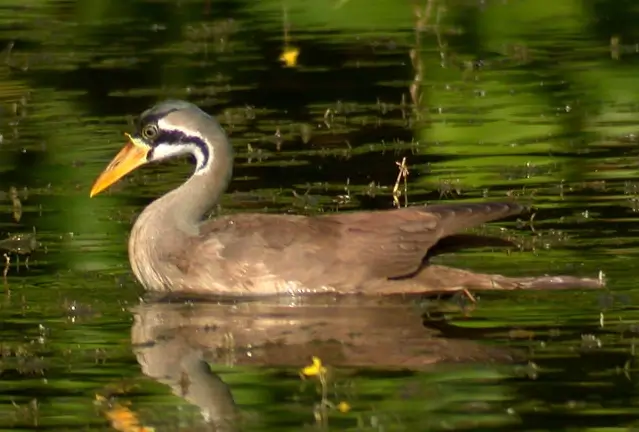
Masked Finfoot (Heliopais personatus)
The Masked Finfoot is found in Bangladesh, Cambodia, India, Indonesia, Laos, Malaysia, Myanmar, Singapore, Thailand, and Vietnam. IUCN Redlist Status: Critically Endangered
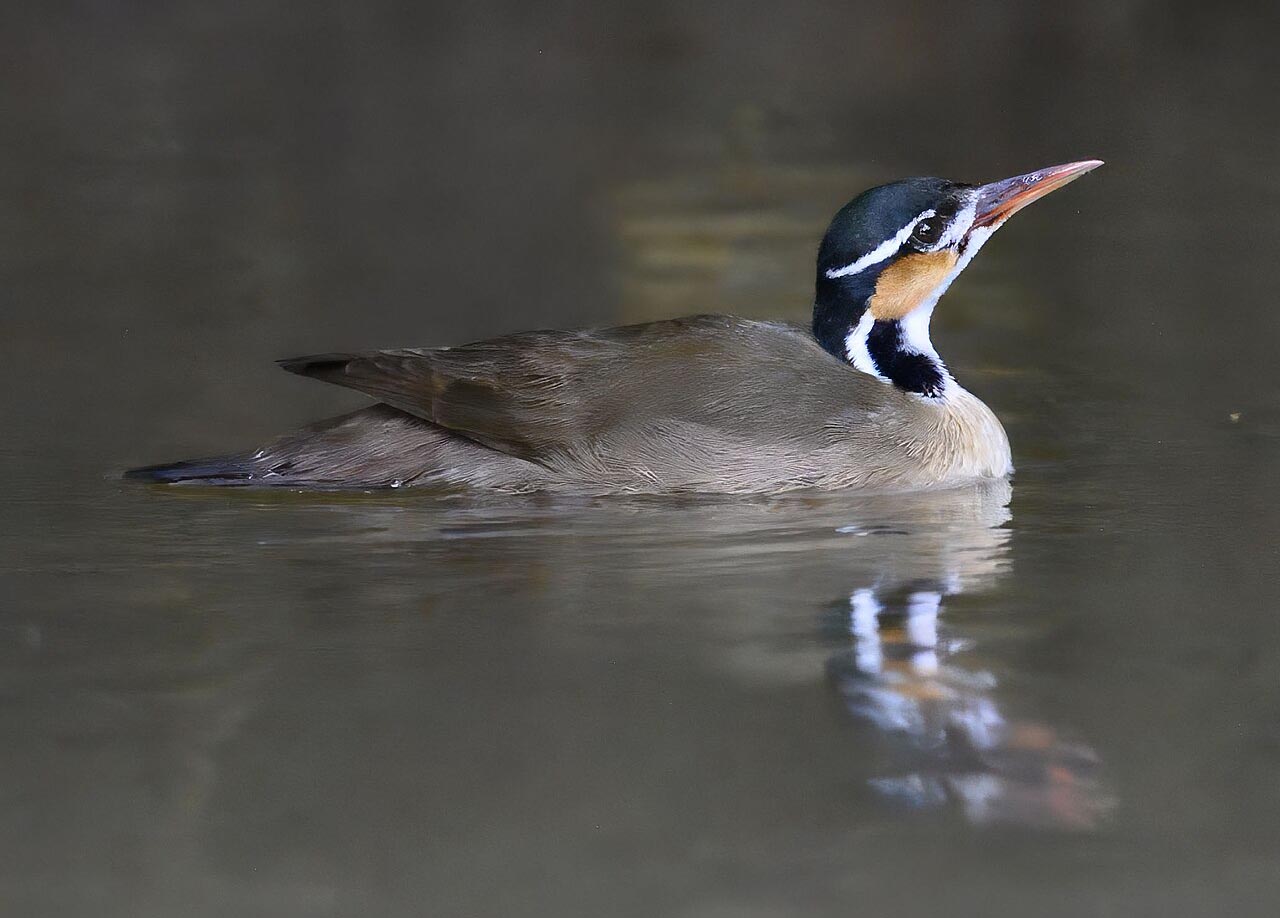
Sungrebe (Heliornis fulica)
The Sungrebe is found in Argentina, Belize, Bolivia, Brazil, Colombia, Costa Rica, Ecuador, French Guiana, Guatemala, Guyana, Honduras, Mexico, Nicaragua, Panama, Paraguay, Peru, Suriname, Trinidad and Tobago, and Venezuela. IUCN Redlist Status: Least Concern
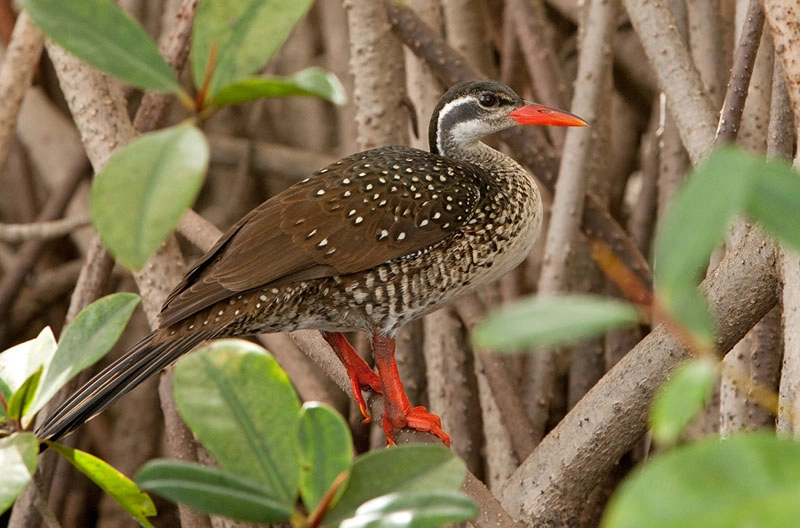
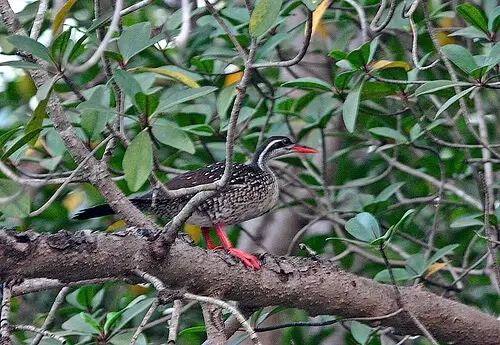
African Finfoot (Podica senegalensis)
The African Finfoot is found in Sub-Saharan Africa. IUCN Redlist Status: Least Concern