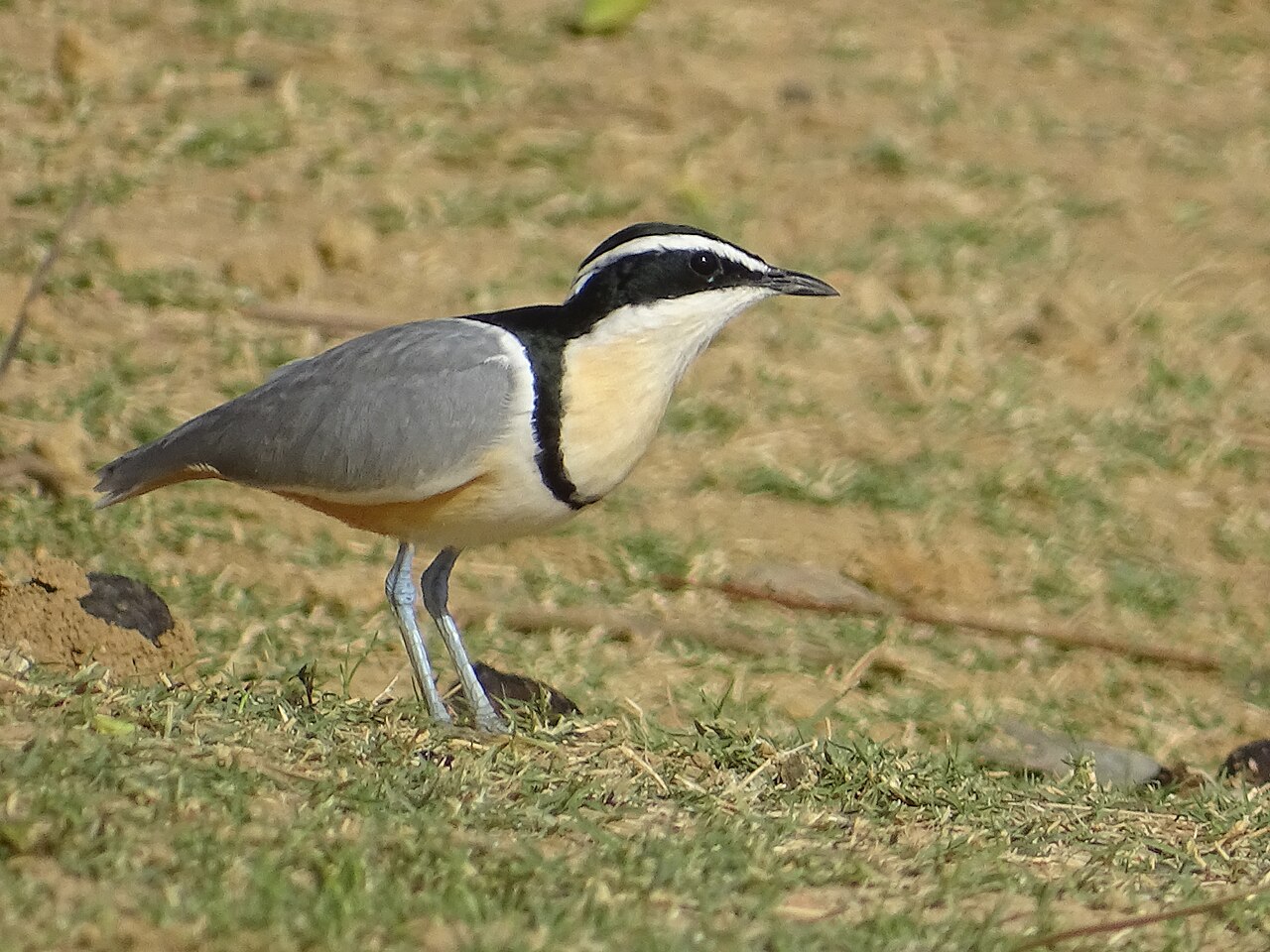
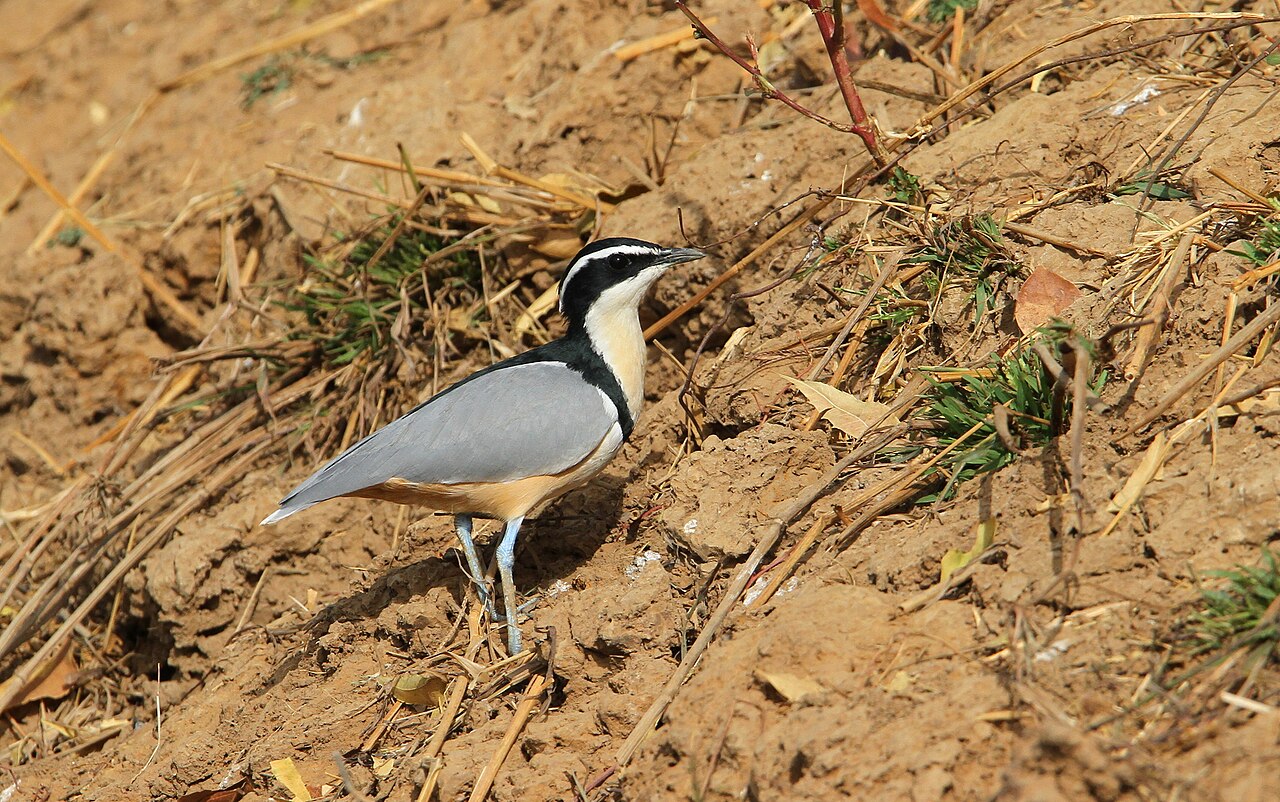
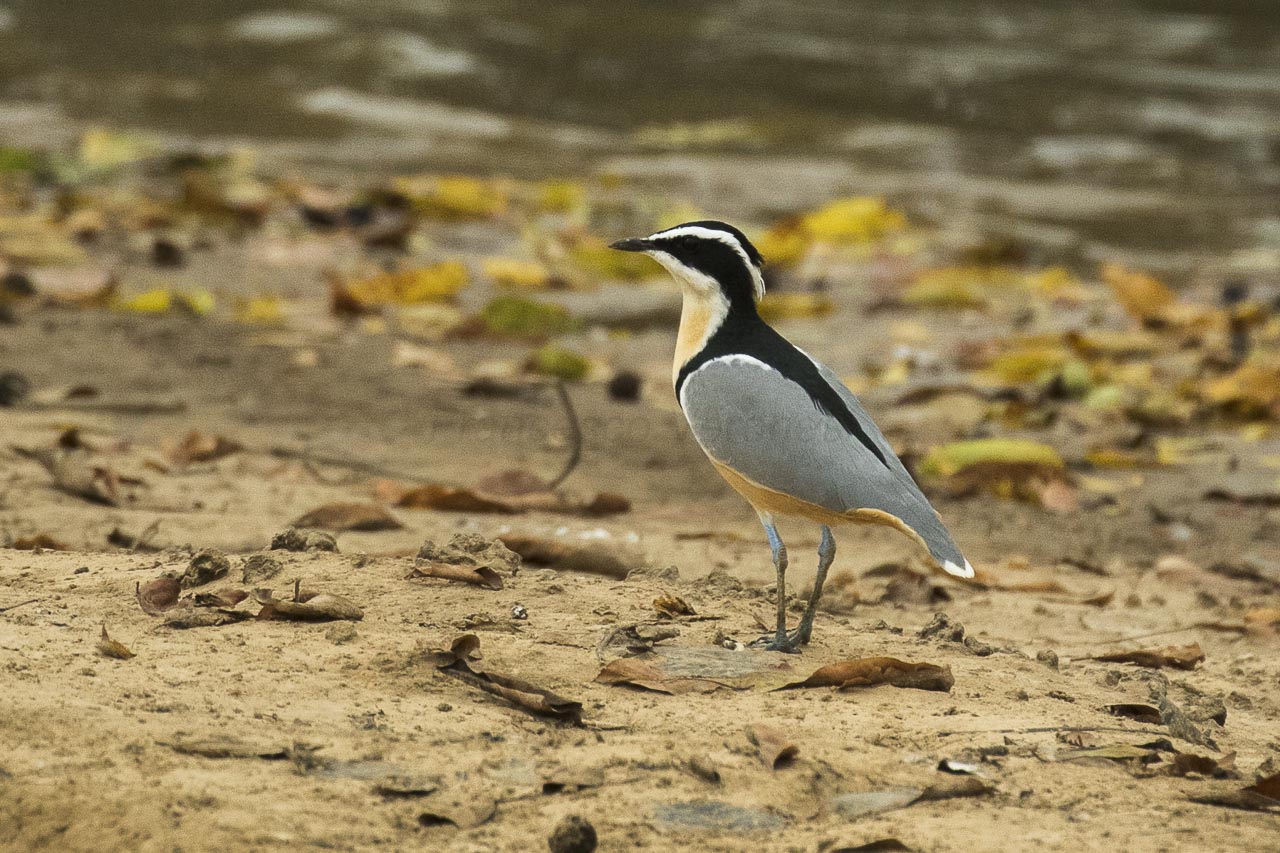
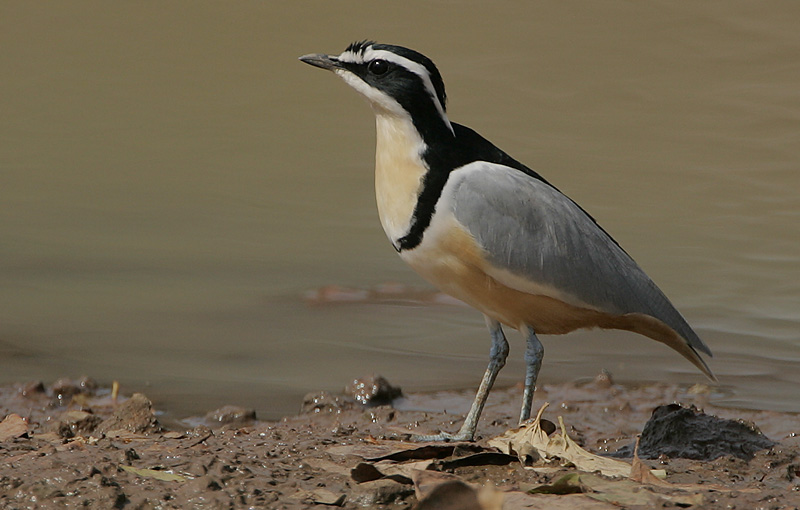
The Pluvianidae family contains only one species, the Egyptian Plover (Pluvianus aegyptius). It is found along large rivers and sandbars in parts of sub-Saharan Africa. Despite its name, it is not found in Egypt.
The Egyptian Plover is a medium-sized shorebird with long legs, a short bill, and striking black, white, chestnut, and blue-gray plumage. A black crown and eye stripe give it a distinctive appearance.
It lives on sandy riverbanks, islands, and shorelines near rivers and wetlands, where open habitats make it easier to find food and watch for predators.
Its diet consists mainly of insects, insect larvae, worms, small crustaceans, and other invertebrates, which it picks from sand and mud along the water’s edge.
Egyptian Plovers are usually seen alone, in pairs, or in small groups. They are active during the day and often run quickly across sandbars and riverbanks while searching for food. These alert birds give warning calls when danger approaches, helping other birds stay safe.
During the breeding season, pairs lay their eggs in a shallow scrape in the sand. To protect the eggs from extreme heat, the parents may cover them with sand and cool them by carrying water in their belly feathers. Both parents incubate the eggs and care for the chicks. The chicks can walk and feed themselves soon after hatching but remain with their parents until they are fully grown.
FUN FACT
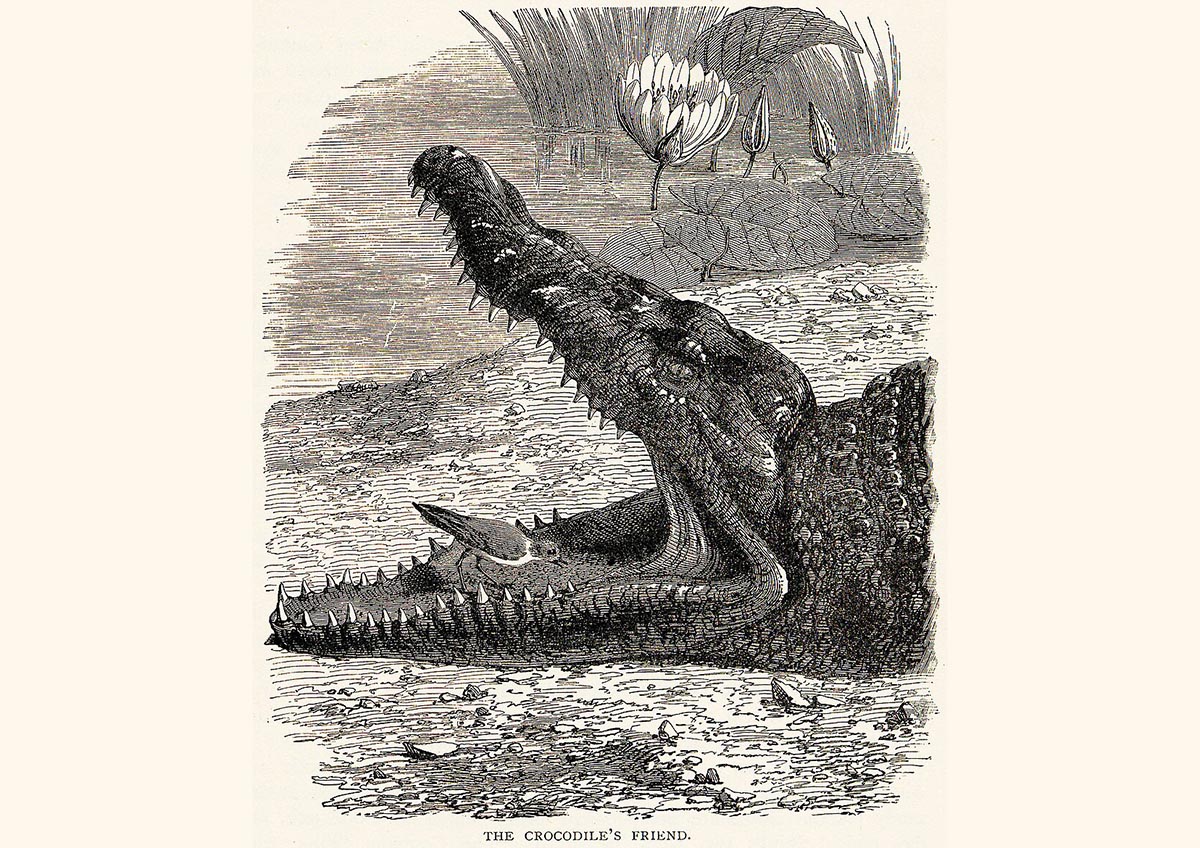
The Egyptian Plover is also known as the Crocodile Bird. Around 440 BCE, the ancient Greek historian Herodotus recorded an observation about a small bird he identified as the Egyptian Plover. He wrote that the bird would enter a crocodile’s open mouth and eat bits of food stuck between its teeth. According to his account, the crocodile benefited from having its mouth cleaned, while the bird received an easy meal.
This story has been repeated for more than 2,000 years, but scientists have never found reliable evidence that Egyptian Plovers regularly behave this way. As a result, most researchers consider it a famous legend rather than a proven fact.