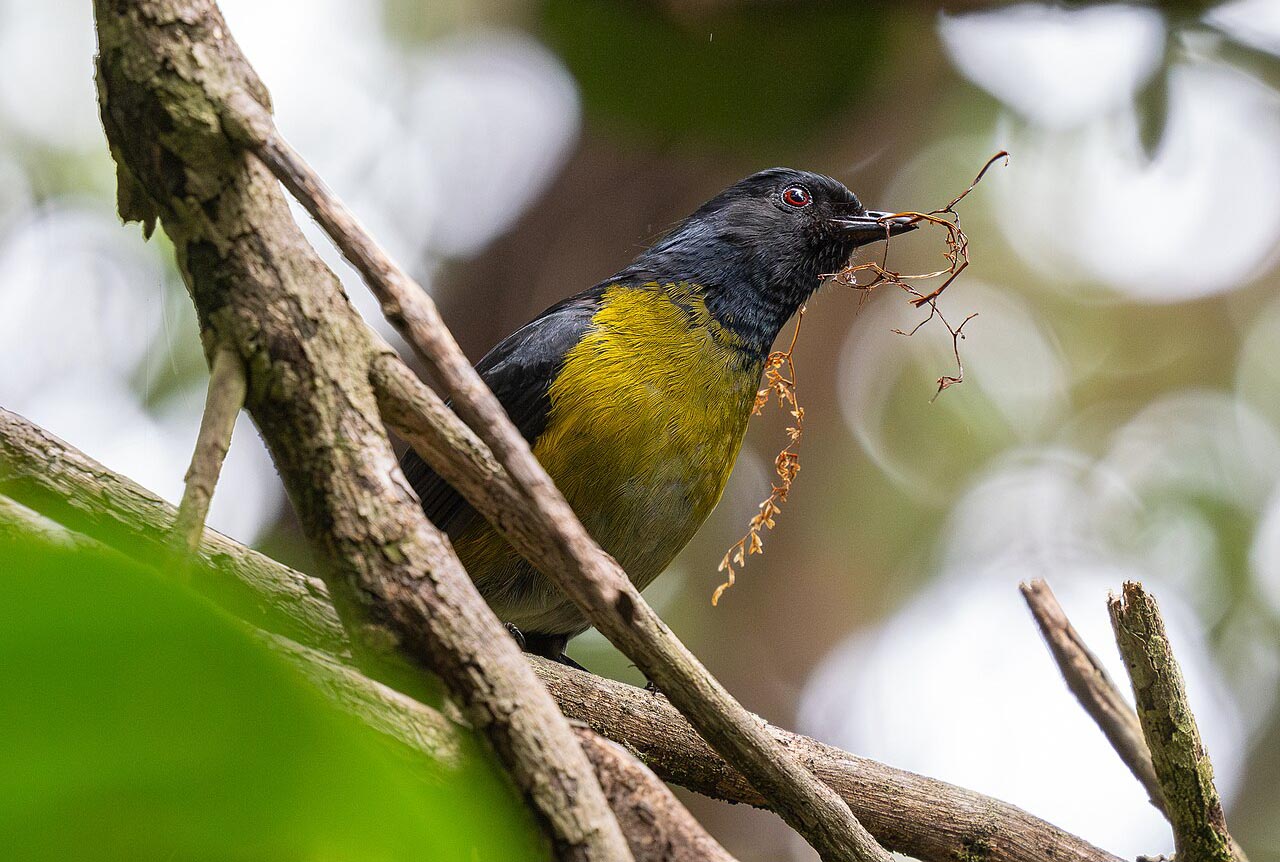
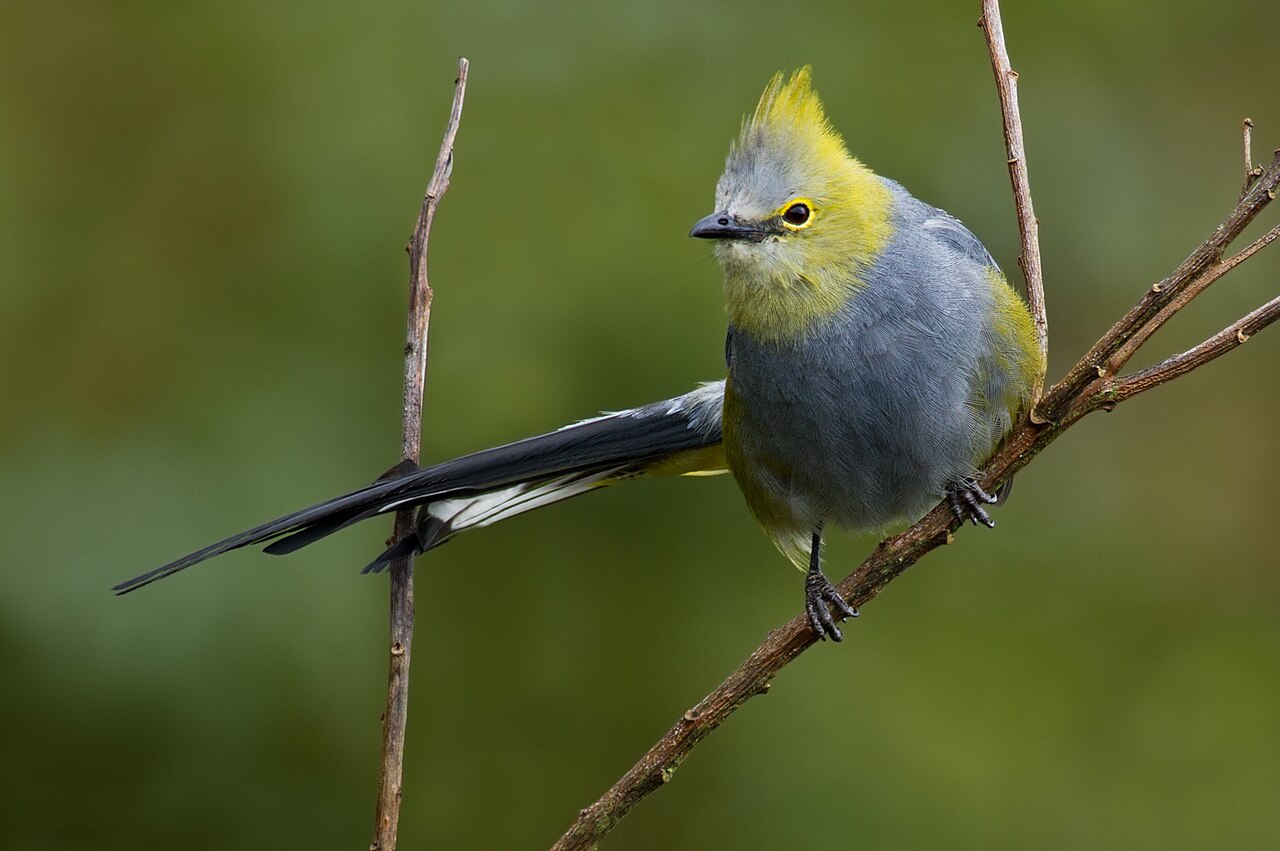
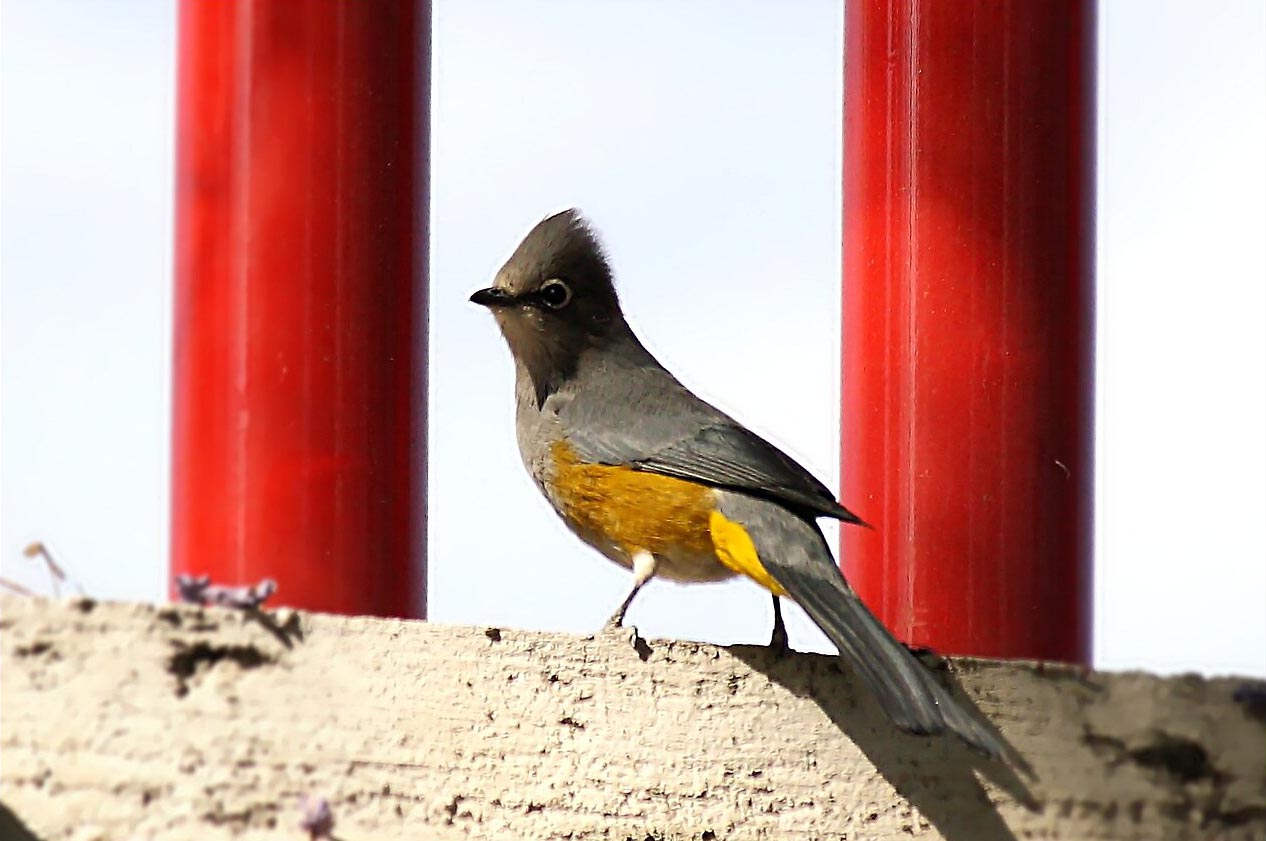
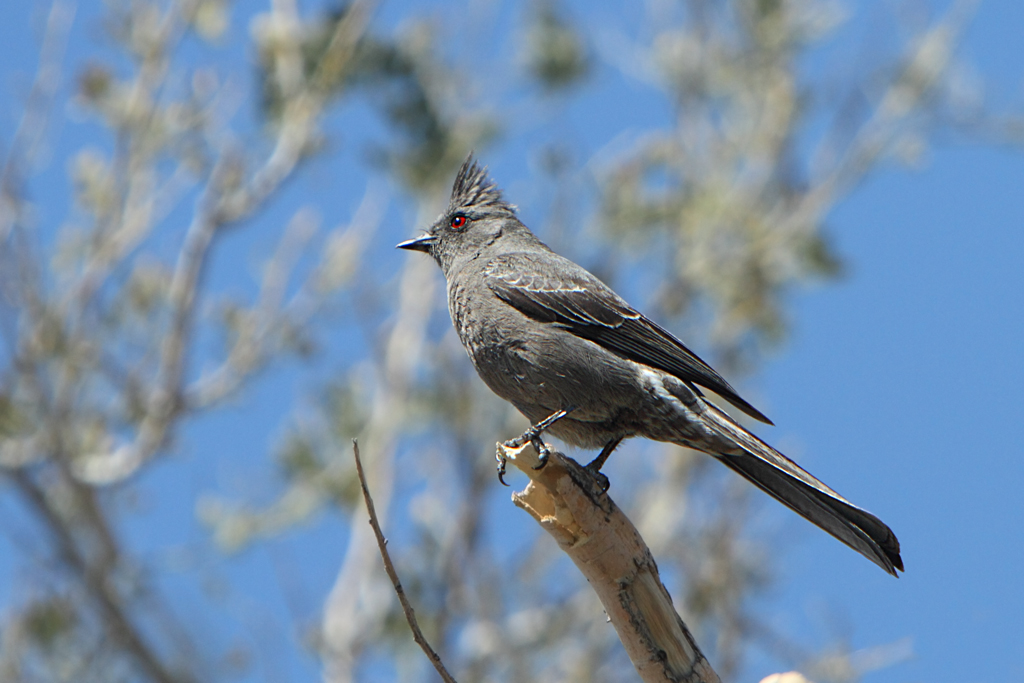
There are four species of birds in the Ptiliogonatidae family, commonly known as silky flycatchers. These small to medium-sized songbirds are named for their soft, silky-looking feathers. They are about 7.1–9.8 inches (18.0–25.0 centimeters) long. They have long tails, short, broad bills, and pointed wings. Most species have crests on their heads, and males and females often have different-colored feathers.
Silky flycatchers are found mainly in Mexico and Central America, with one species, the Phainopepla, also found in the southwestern United States. They live in a variety of habitats, including dry woodlands, tropical forests, scrublands, desert washes, and mountain forests. Several species live in high-elevation forests.
Silky flycatchers eat fruit, berries, and insects. They often catch flying insects in the air, a behavior called aerial hawking. Fruit is an especially important part of the diet of some species.
During the breeding season, silky flycatchers build cup-shaped nests in trees or shrubs. Nesting behavior varies among species. Some species nest alone, while Phainopeplas may nest in loose groups, with several pairs nesting in the same tree in some habitats. Both parents help care for the young.
PHAINOPEPLA
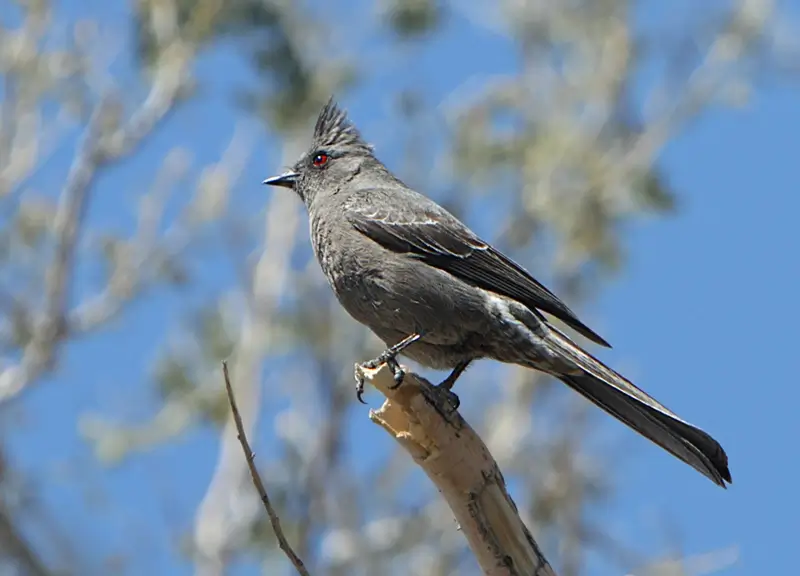
The Phainopepla (Phainopepla nitens) is the only member of this family found regularly in the United States. It lives in desert washes, scrublands, and open woodlands from the southwestern United States south into Mexico. Like waxwings, it has a crest on its head and soft, silky feathers. Males are glossy black with white patches on their wings that are easy to see when they fly, while females are gray.
The Phainopepla eats large amounts of mistletoe berries, along with other fruits and insects. It is especially well adapted to eating mistletoe fruit and can eat hundreds of berries in a day. It often catches insects in the air from high perches.