There are seven species in the Stercorariidae family of seabirds. They are found across the world’s oceans, especially in cold and temperate regions.
Skuas and jaegers are medium- to large-sized seabirds that look a bit like gulls. In North America, the smaller species are usually called jaegers, while the larger species are known as skuas.
Most skuas and jaegers are brown, gray, or blackish with white markings on their wings. They have strong bodies, pointed wings, hooked bills, and large webbed feet with sharp claws.
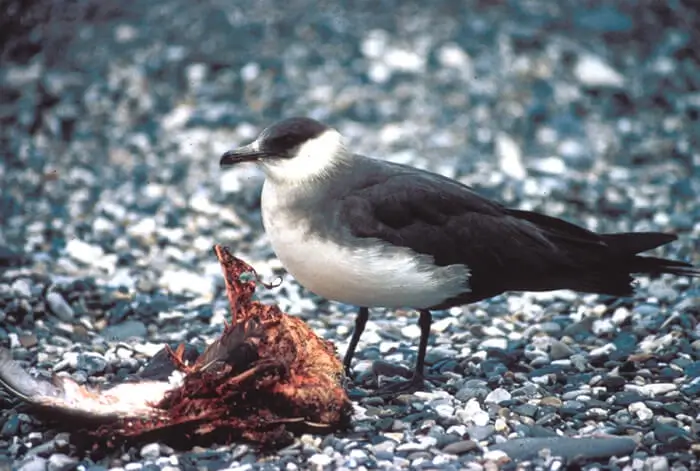
These birds are famous for a behavior called kleptoparasitism, which means stealing food from other animals. They often chase gulls, terns, puffins, and other seabirds until the frightened bird drops or regurgitates its food. The skua or jaeger then quickly catches the meal, sometimes before it reaches the water.
Although stealing food is important for many species, skuas and jaegers also hunt for their food. During the breeding season, they eat fish, insects, eggs, chicks, and small mammals such as lemmings. Some species rely heavily on these foods and use kleptoparasitism less often.
Most species breed in the Arctic or subarctic regions and spend the rest of the year at sea, often traveling long distances across the oceans.
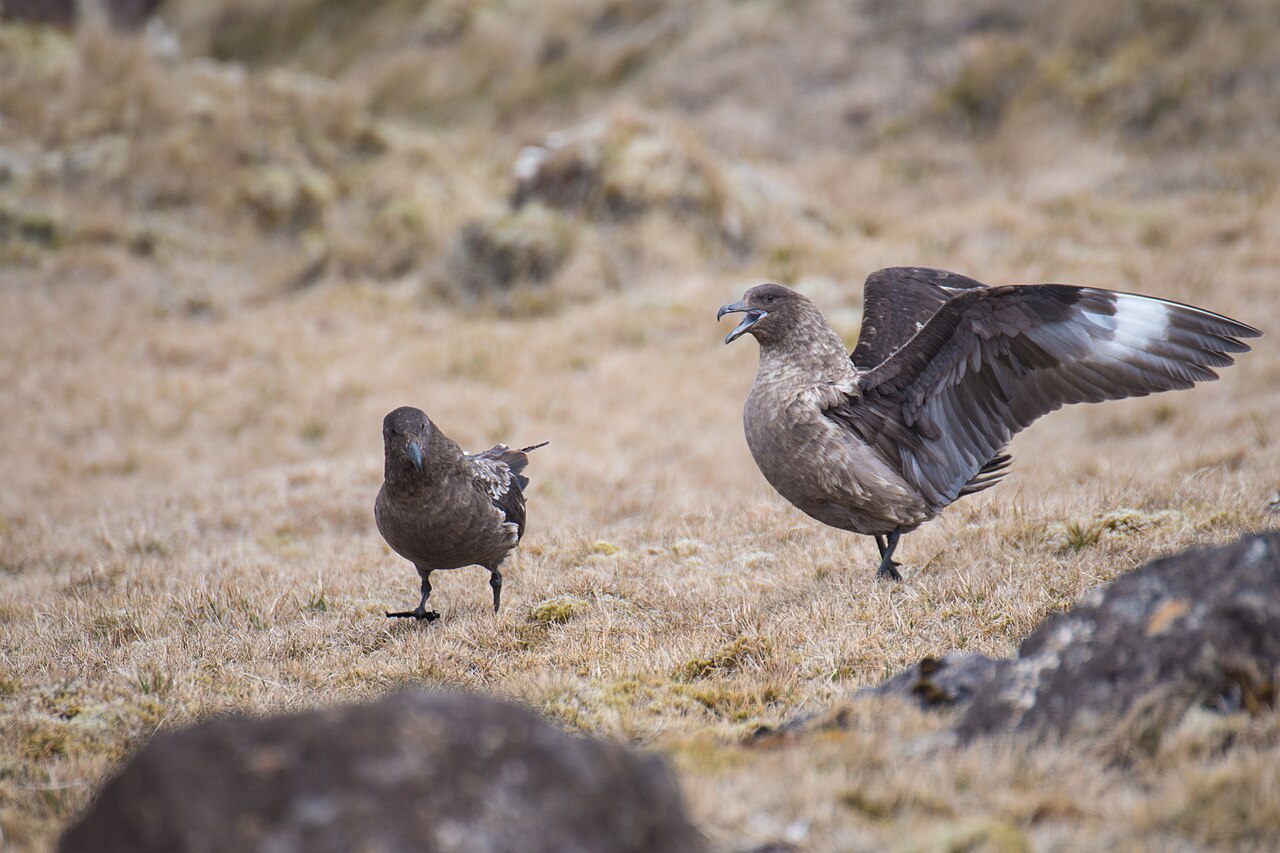
Brown Skua (Catharacta antarctica)
Brown Skuas breed on islands and coasts around Antarctica and in the subantarctic region, including the Falkland Islands and South Georgia. IUCN Redlist Status: Least Concern
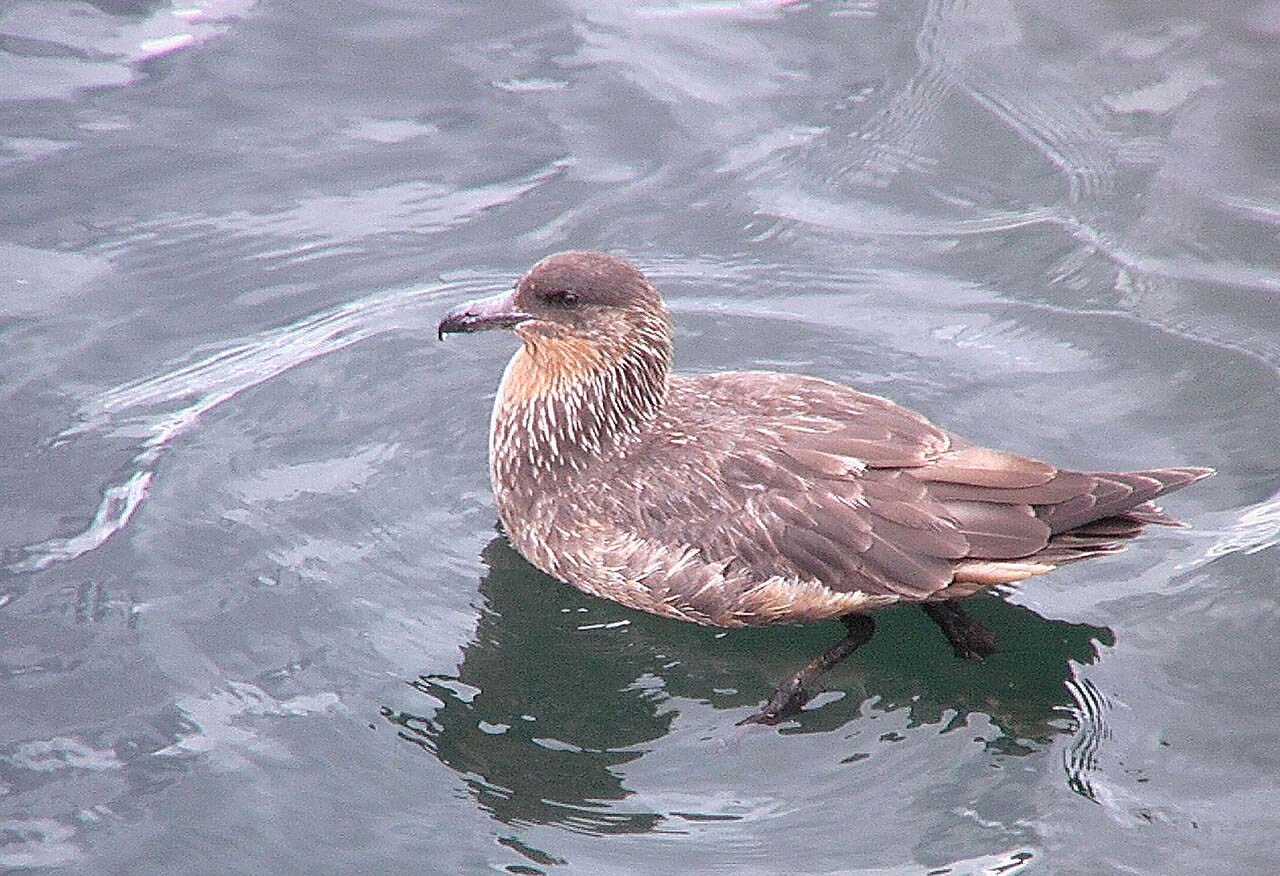
Chilean Skua (Catharacta chilensis)
The Chilean Skua is found in Argentina, Chile, and Peru. IUCN Redlist Status: Least Concern
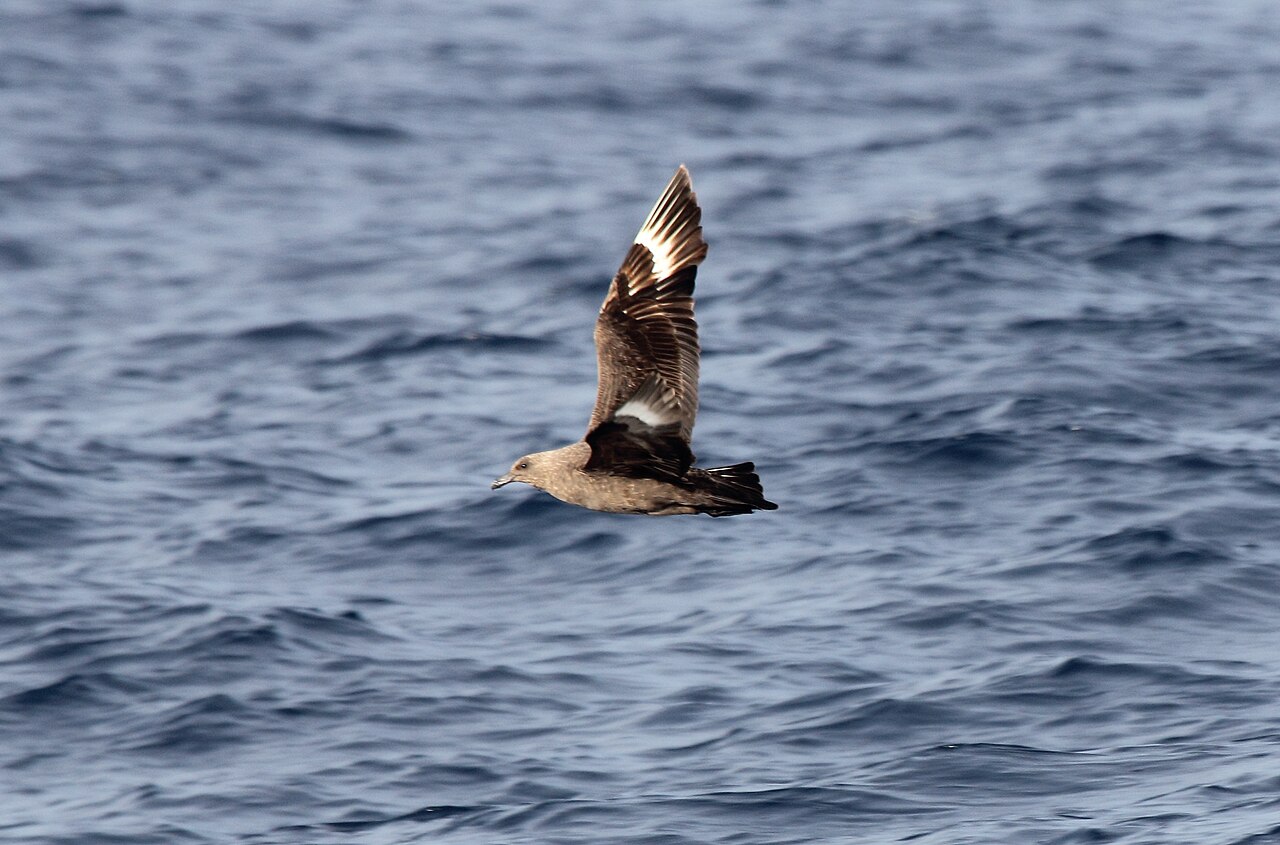
South Polar Skua (Catharacta maccormicki)
The South Polar Skua breeds in Antarctica. Sometimes younger skua migrate into the Atlantic and Pacific ocean areas of the Northern Hemisphere during the Southern Hemisphere's winter season. IUCN Redlist Status: Least Concern
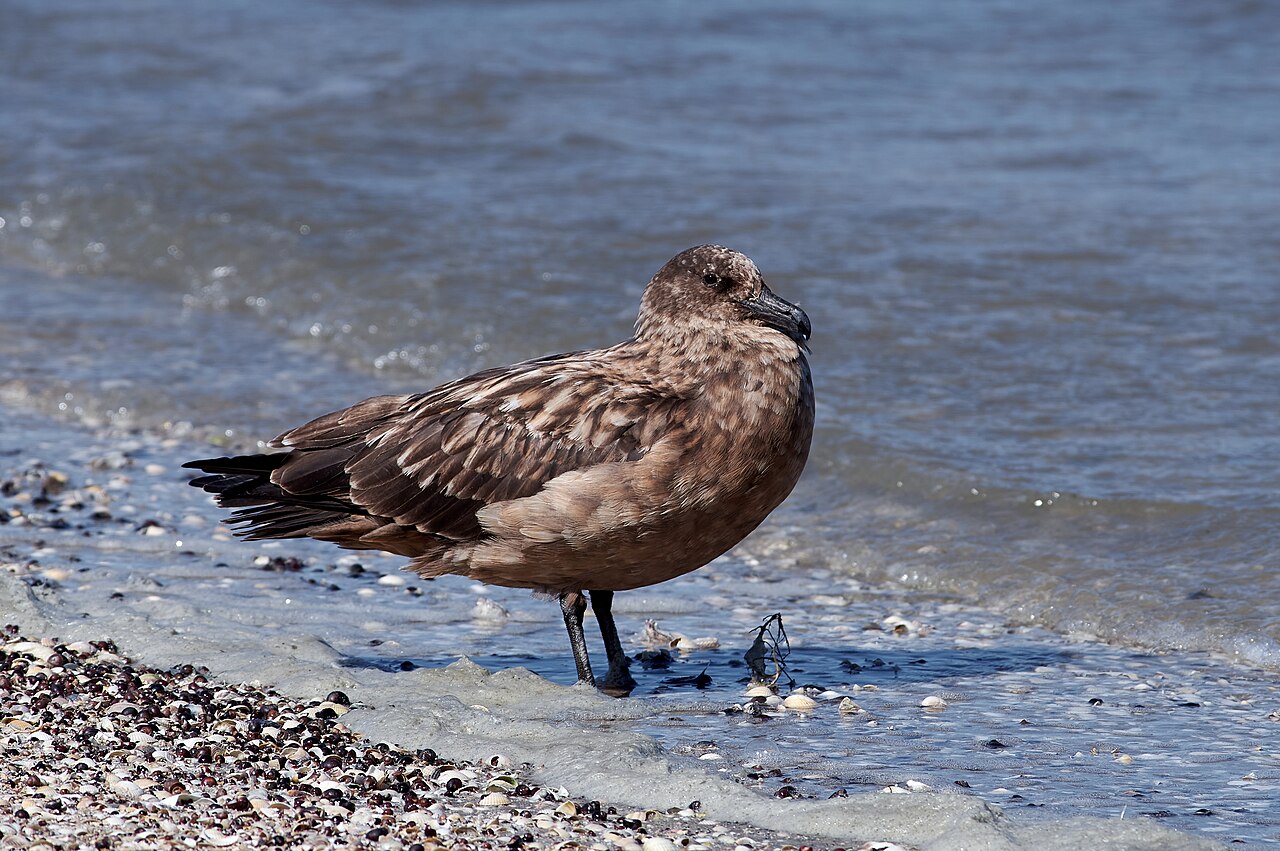
Great Skua (Catharacta skua)
The Great Skua breeds on islands and coasts of the North Atlantic, including Iceland, Scotland, Norway, and the Faroe Islands. In winter, it ranges widely across the North Atlantic Ocean from North America to northwestern Africa. IUCN Redlist Status: Least Concern
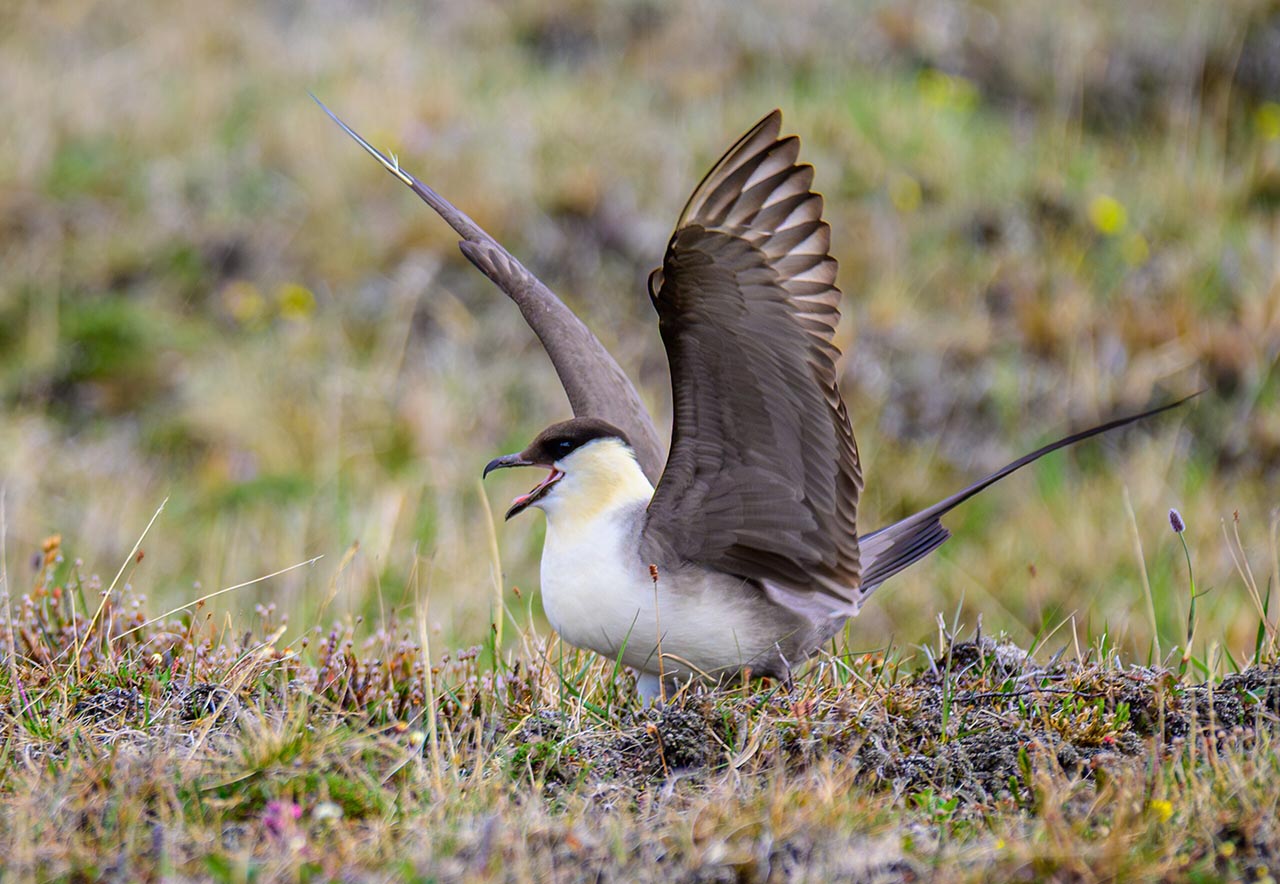
Long-tailed Jaeger (Stercorarius longicaudus)
The Long-tailed Jaeger is found in northern Alaska and northern Canada during the breeding season. During migration, it is found on shores and estuaries. It winters on offshore waters on the Atlantic and Pacific Oceans. IUCN Redlist Status: Least Concern
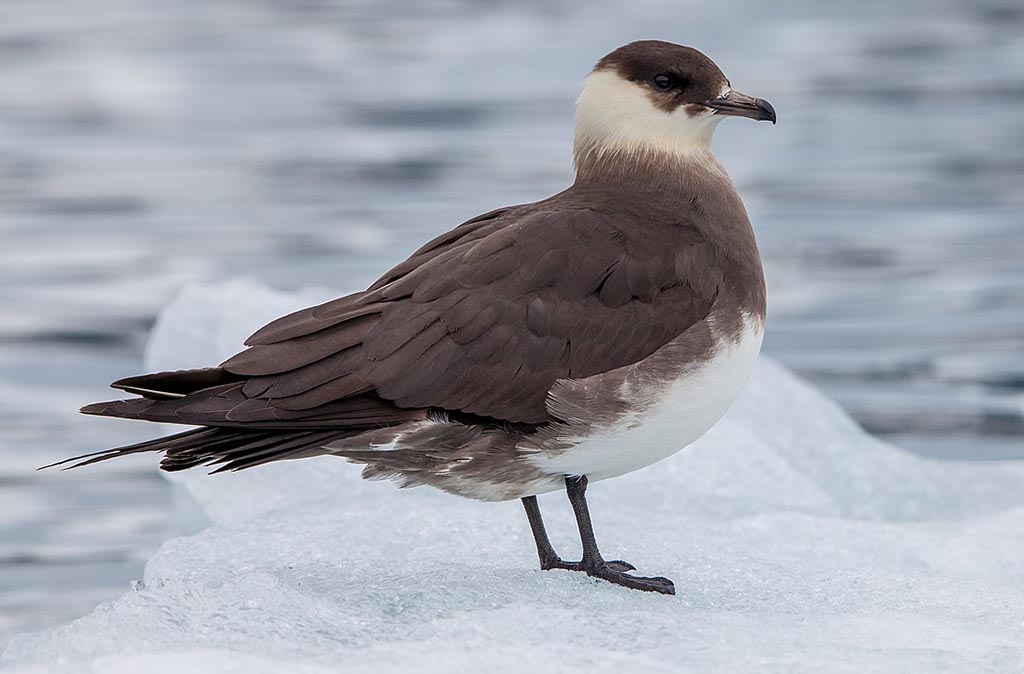
Parasitic Jaeger (Stercorarius parasiticus)
The Parasitic Jaeger is found in northern Alaska and northern Canada during the breeding season. During migration, it is found on shores and estuaries. It winters on offshore waters south to South America. It is also found in northern Europe and Asia. During migration, it is found in New Hampshire. IUCN Redlist Status: Least Concern
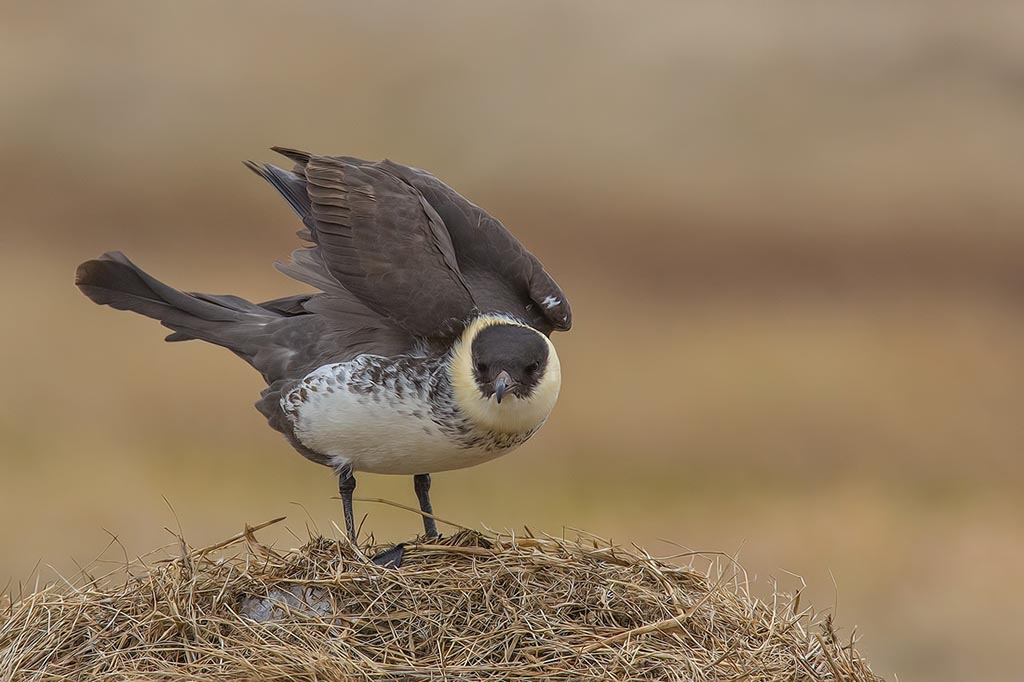
Pomarine Jaeger (Stercorarius pomarinus)
The Pomarine Jaeger breeds on Arctic tundra in northern North America and Russia and winters at sea across tropical and subtropical oceans worldwide. IUCN Redlist Status: Least Concern