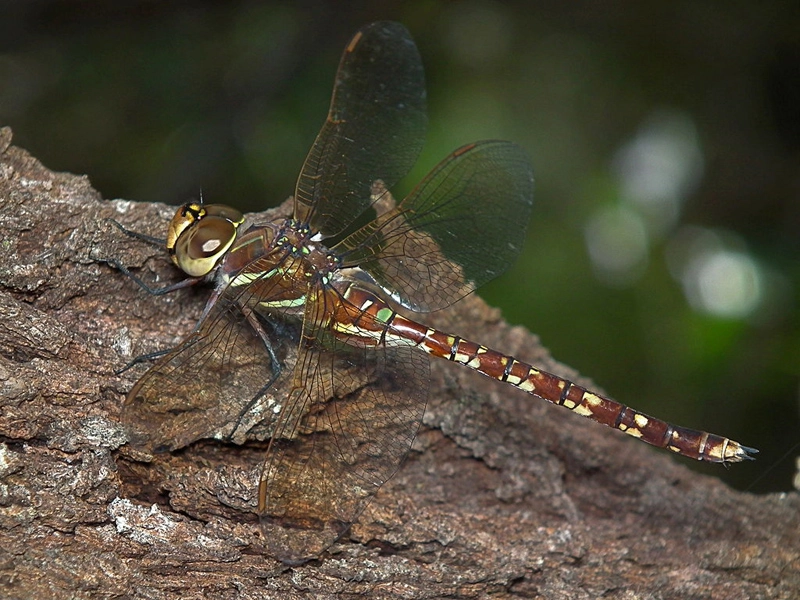
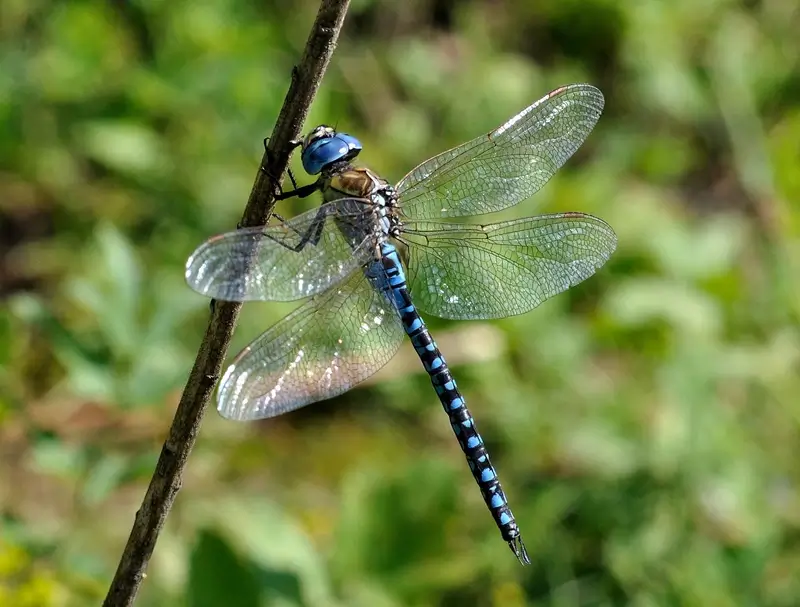
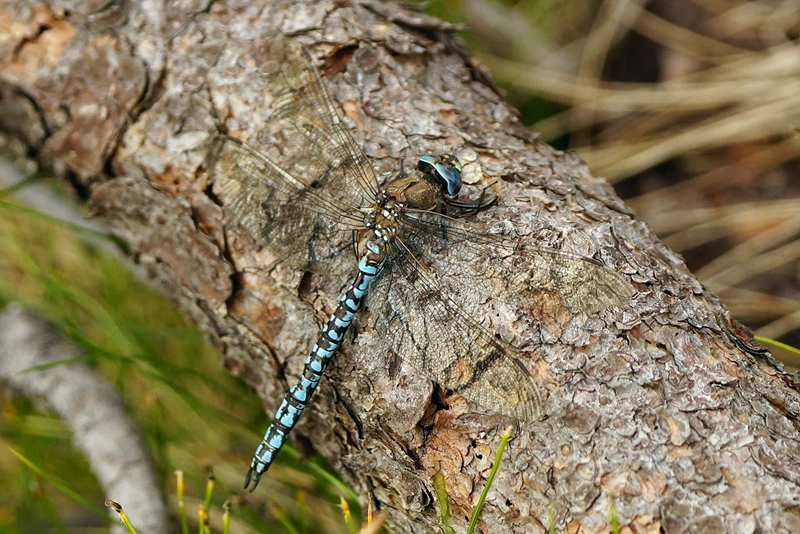
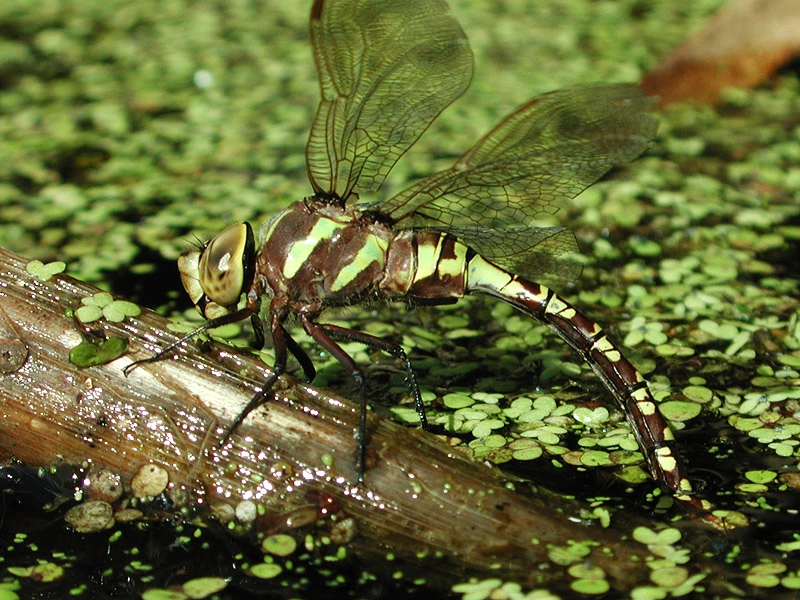
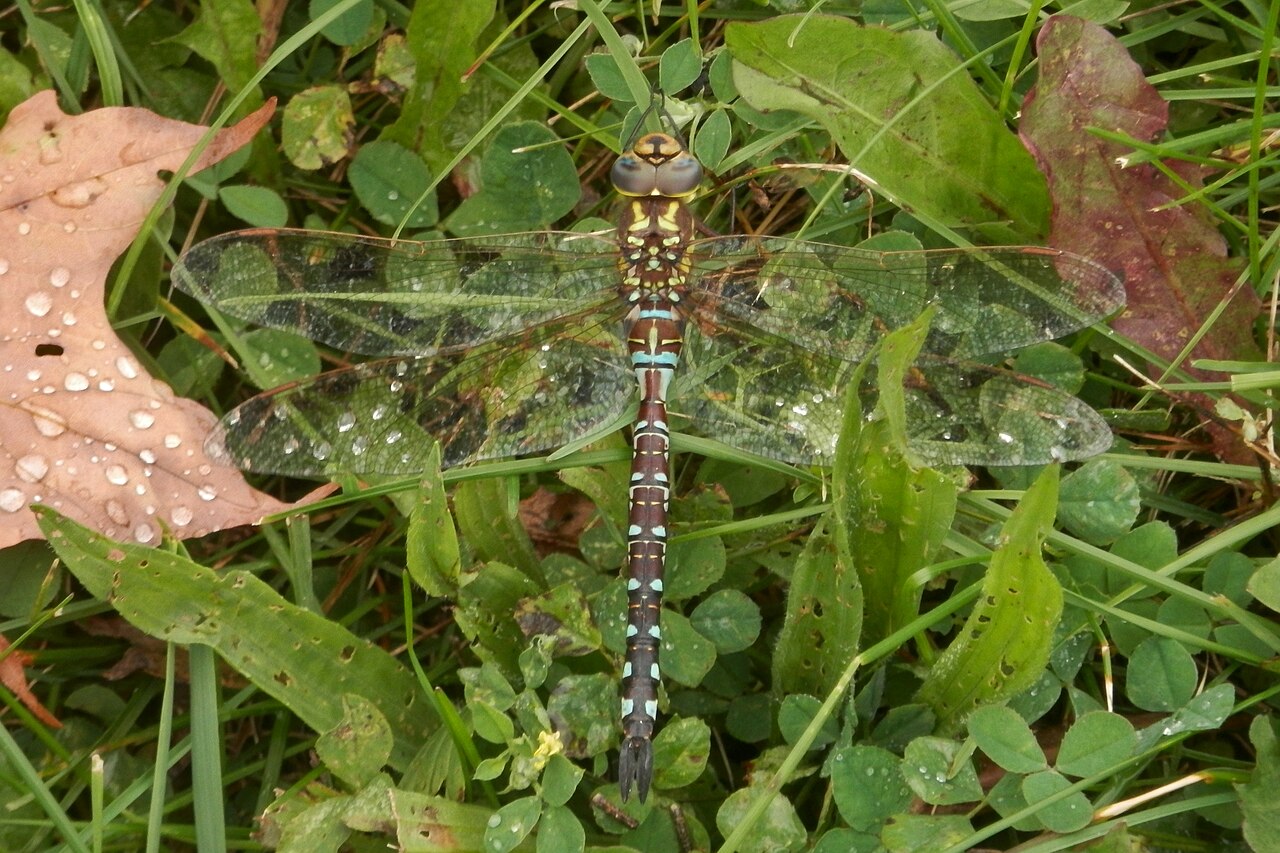
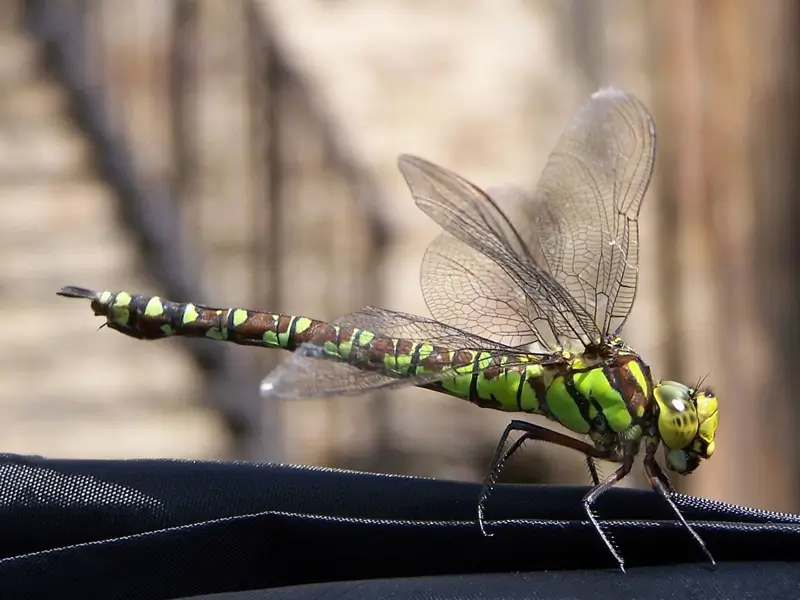
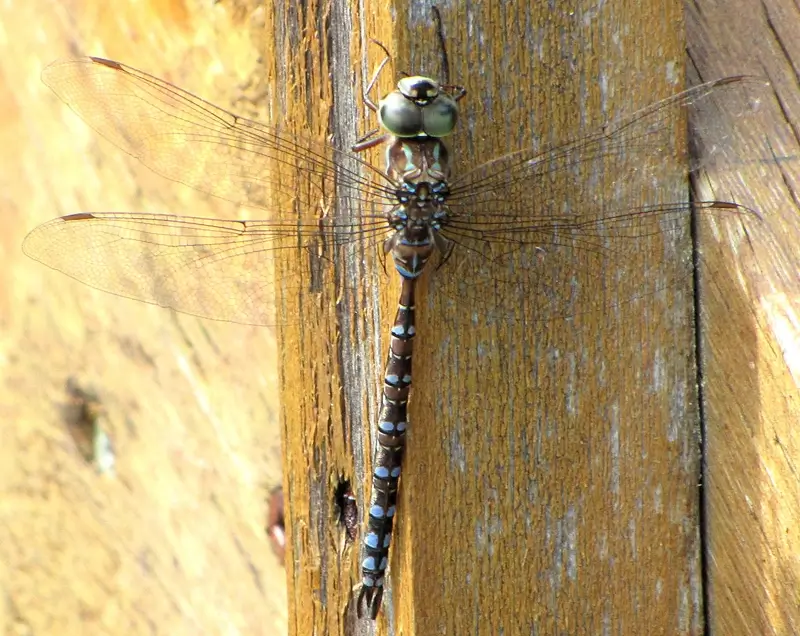
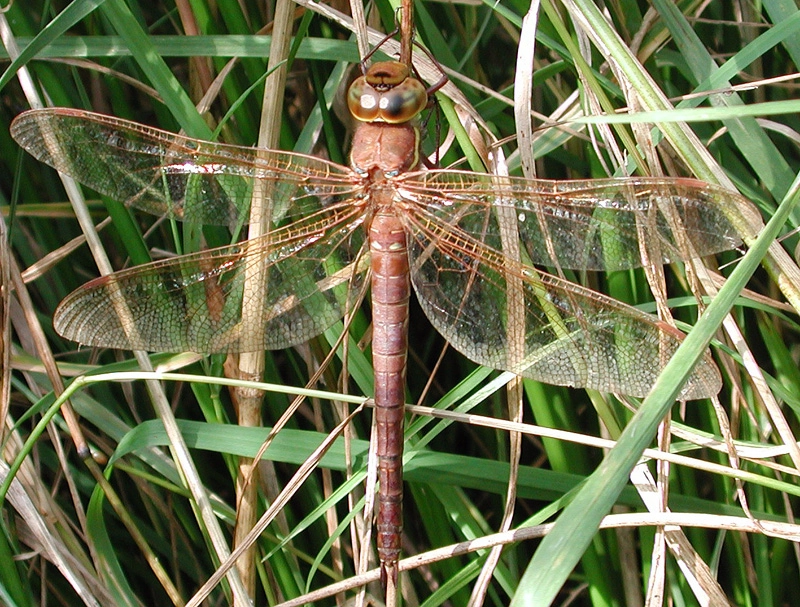
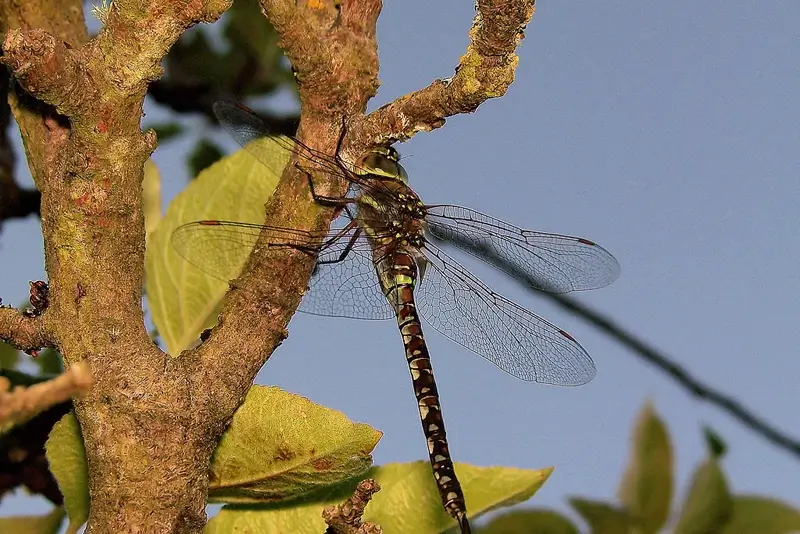
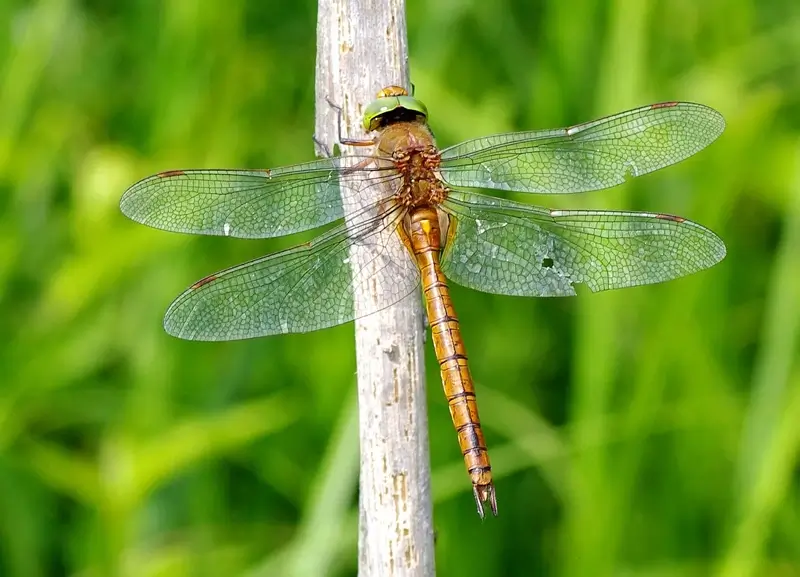
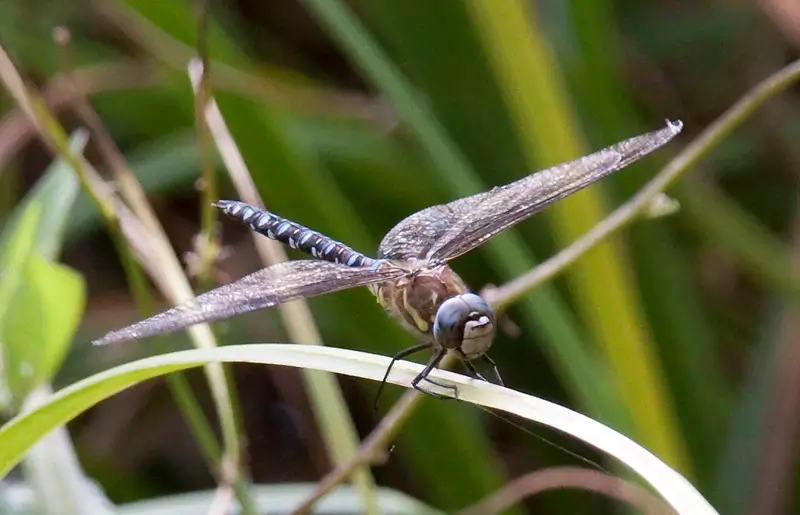
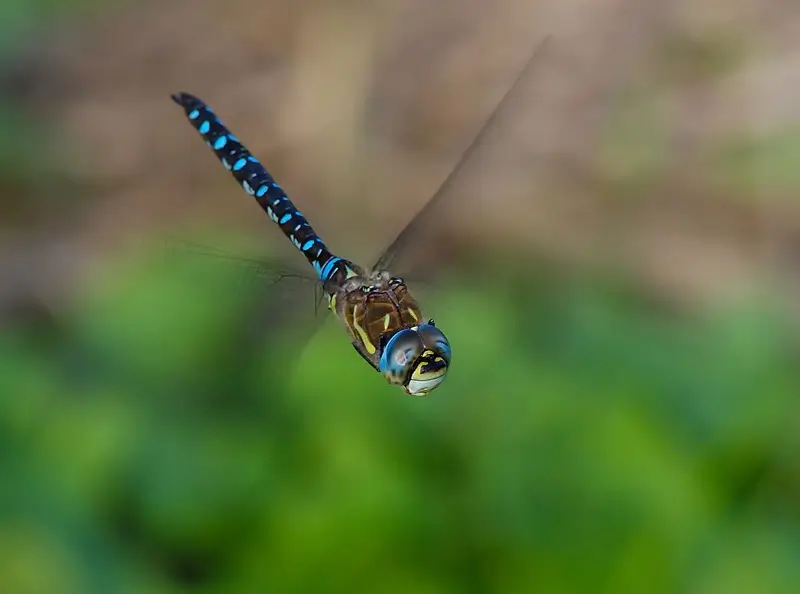
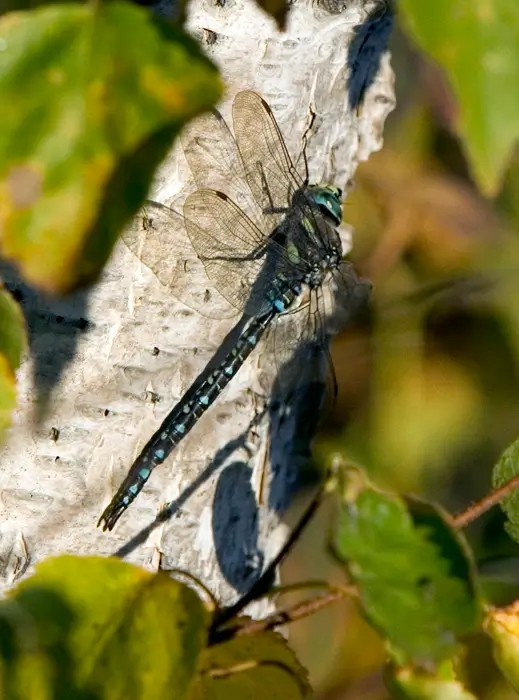
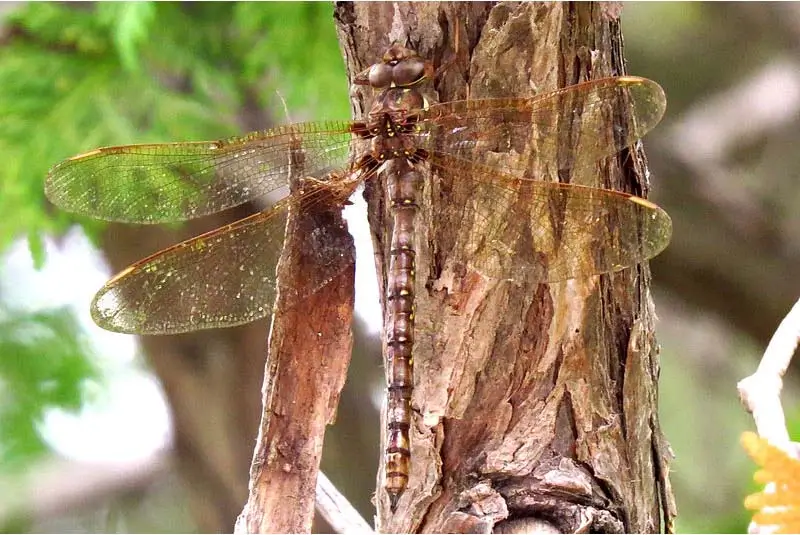
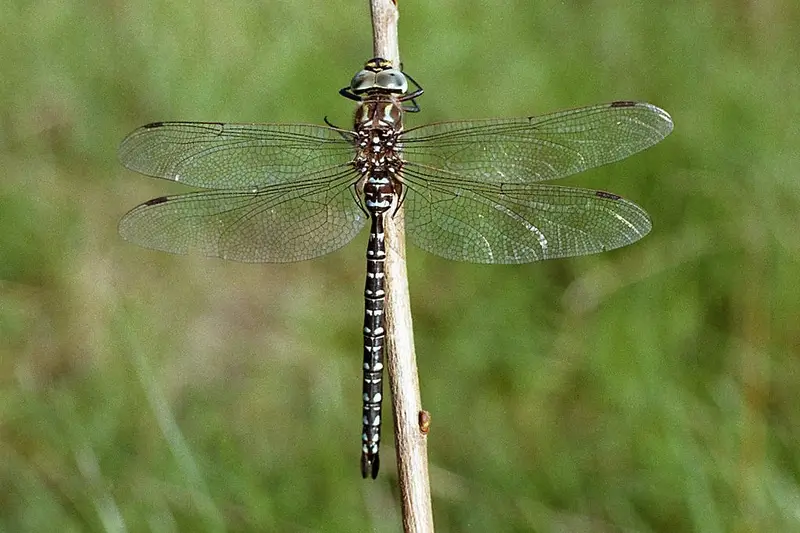
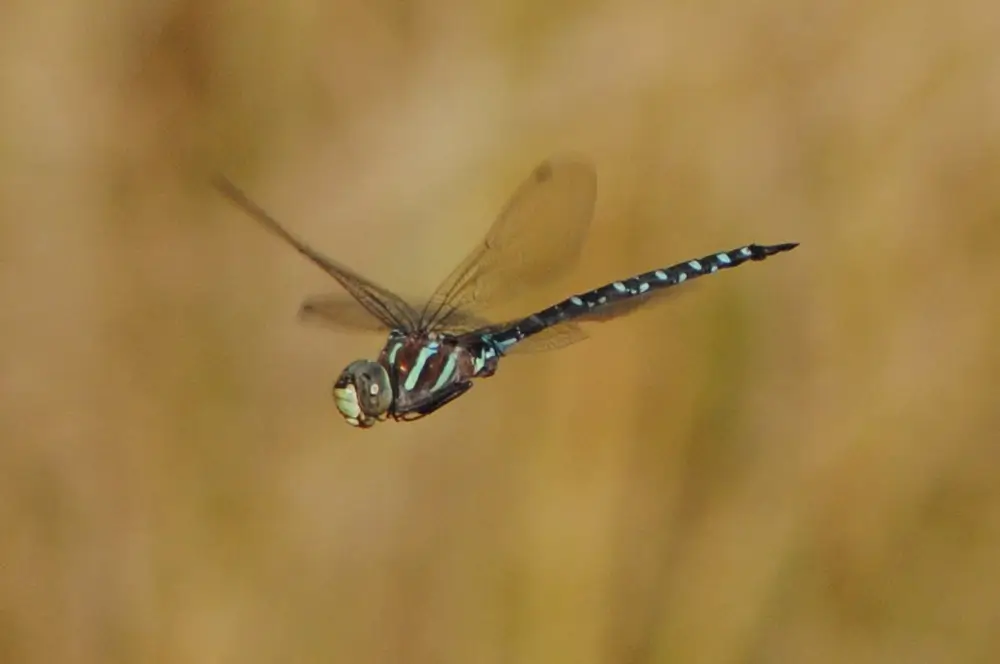
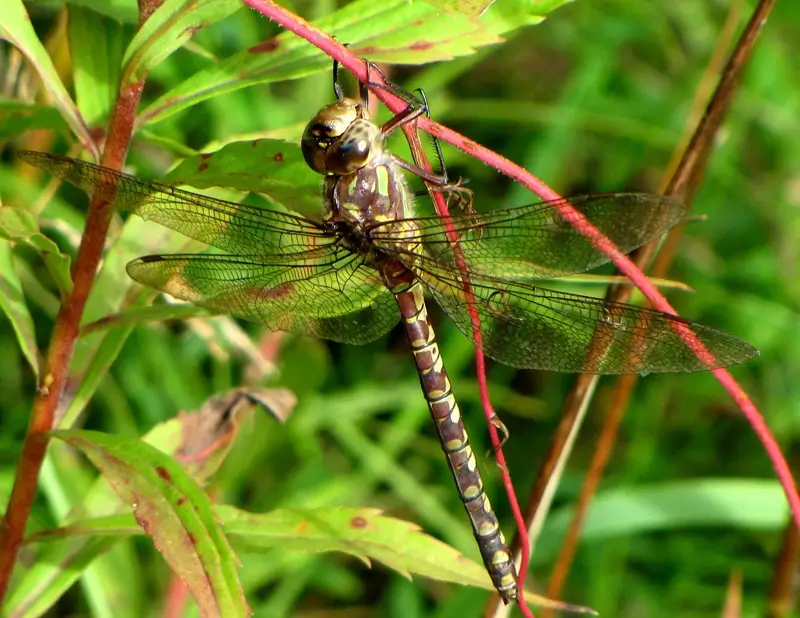
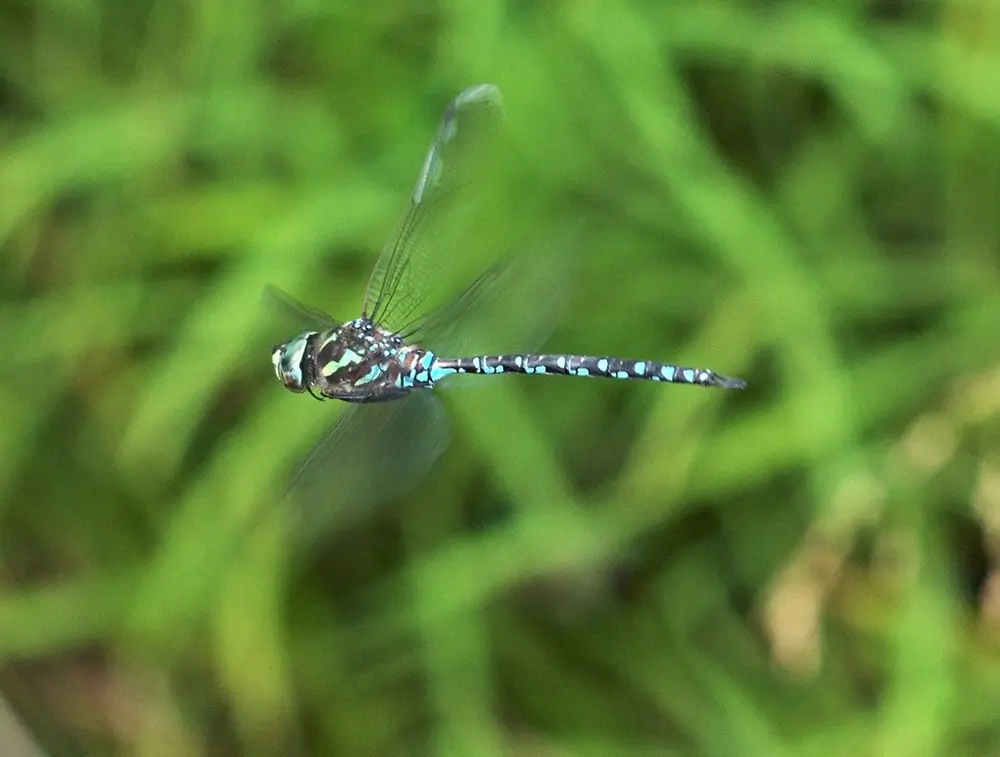
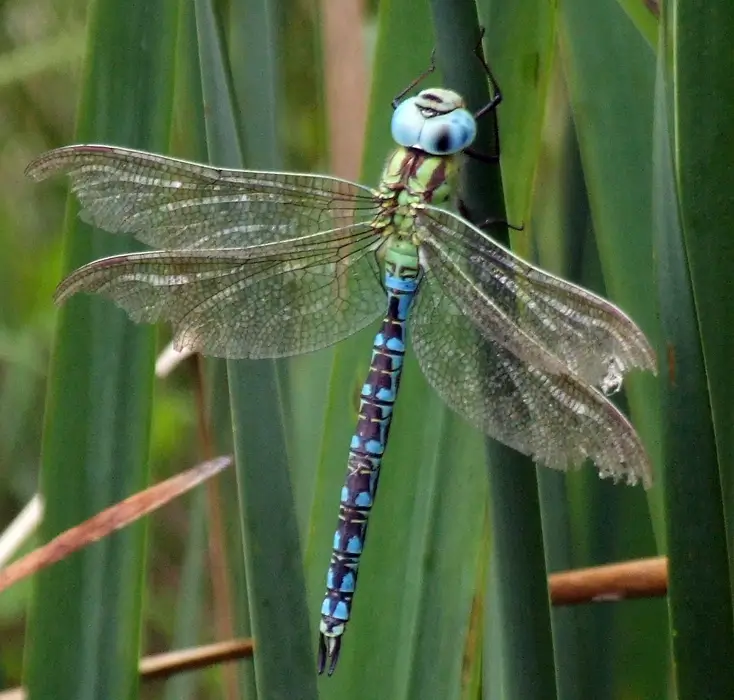
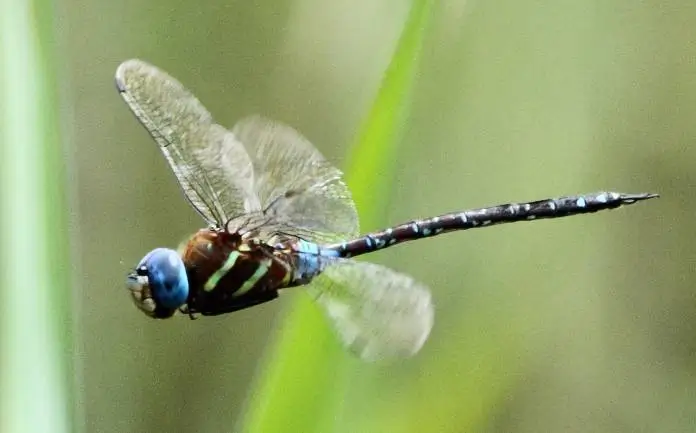
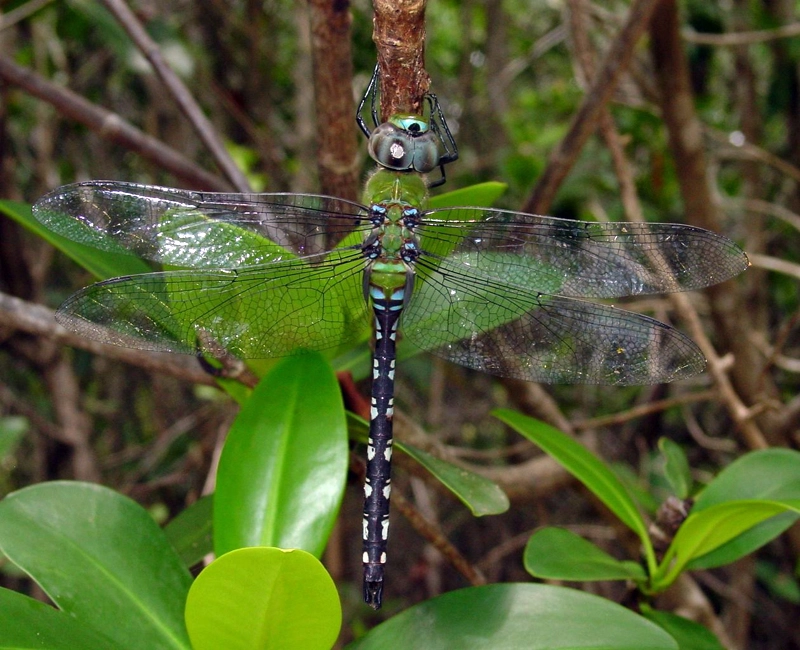
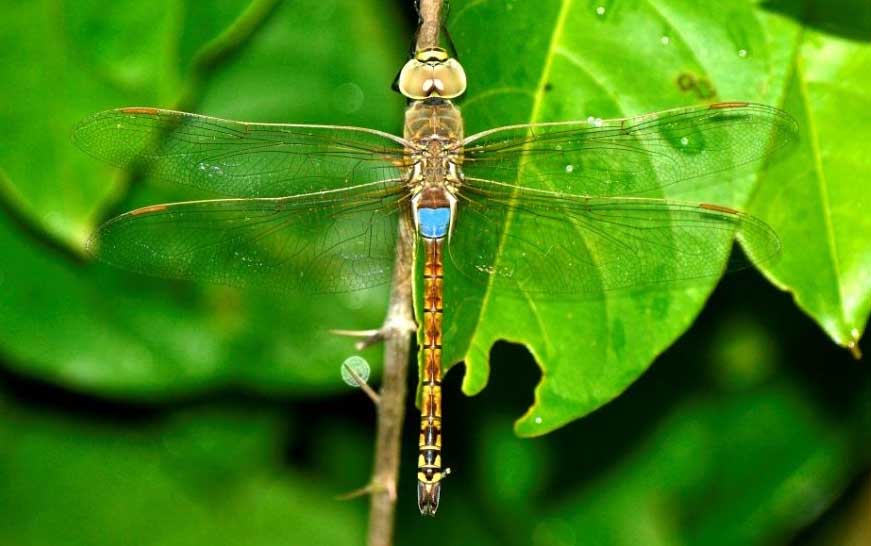
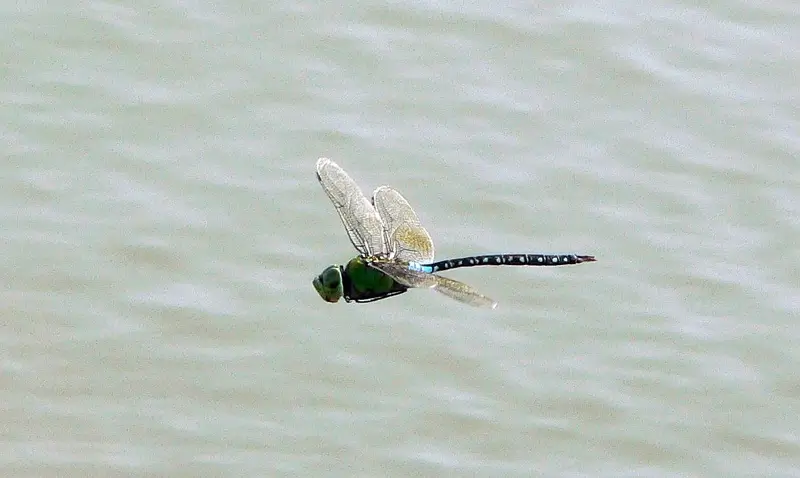
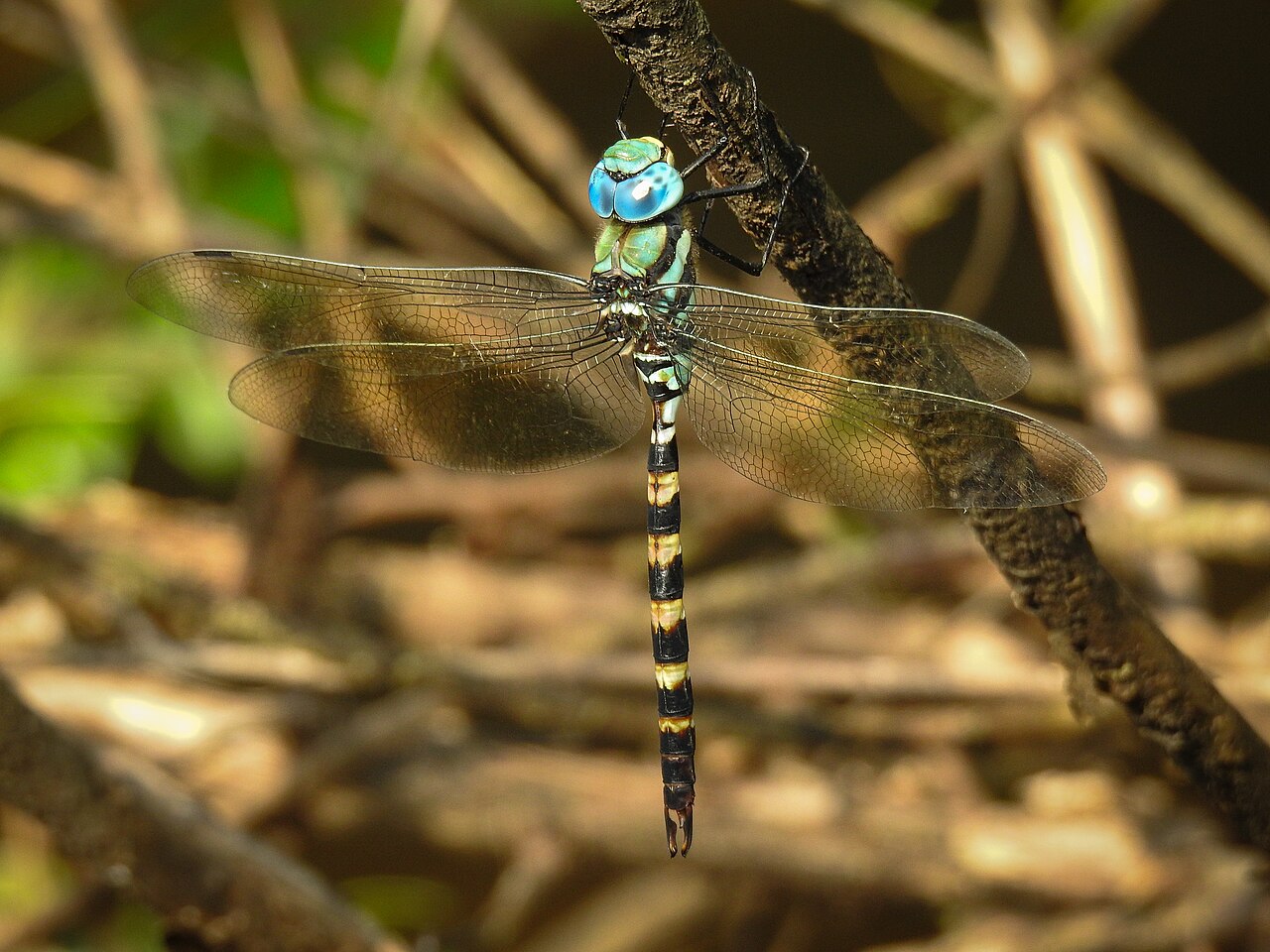
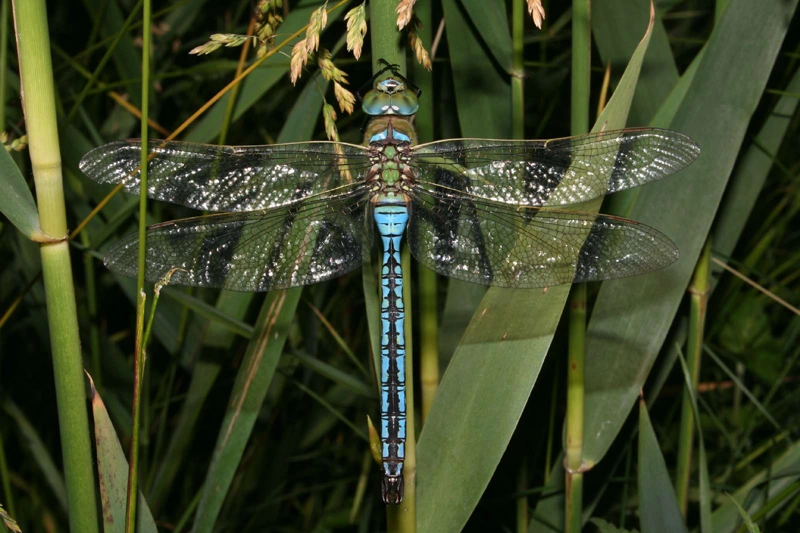
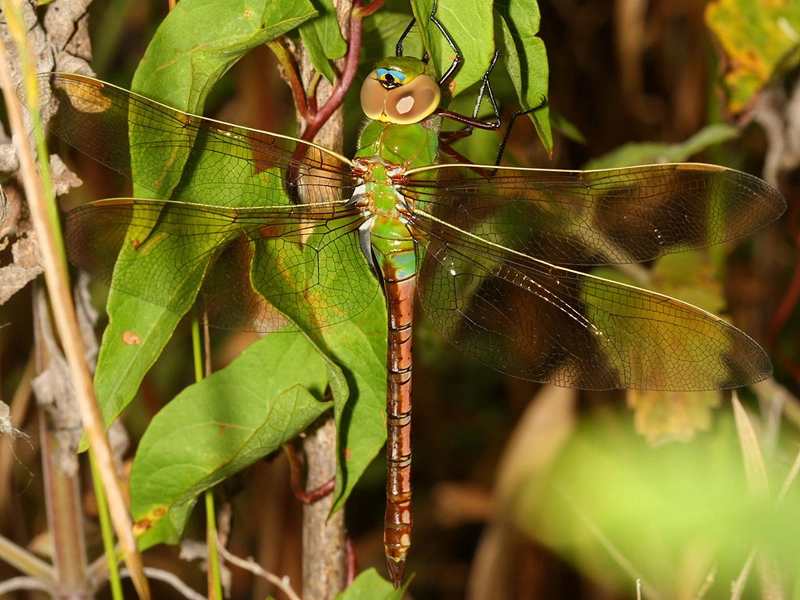
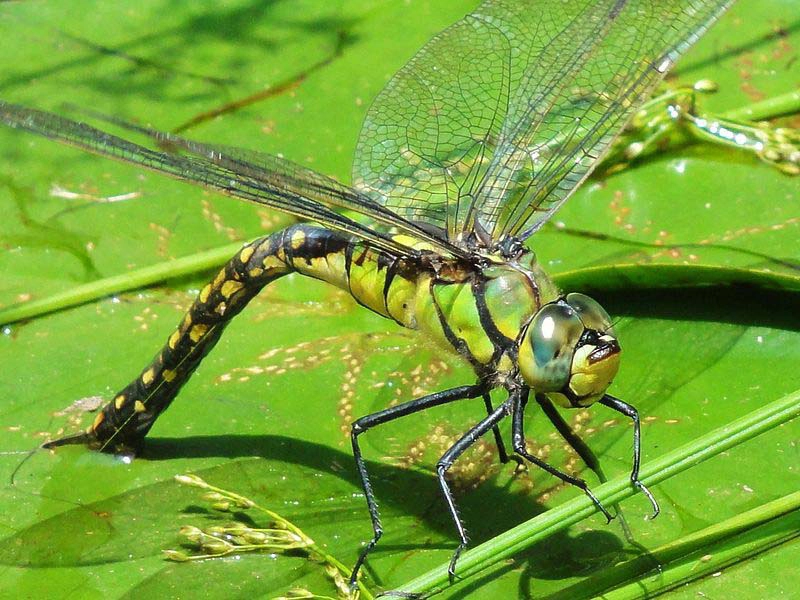
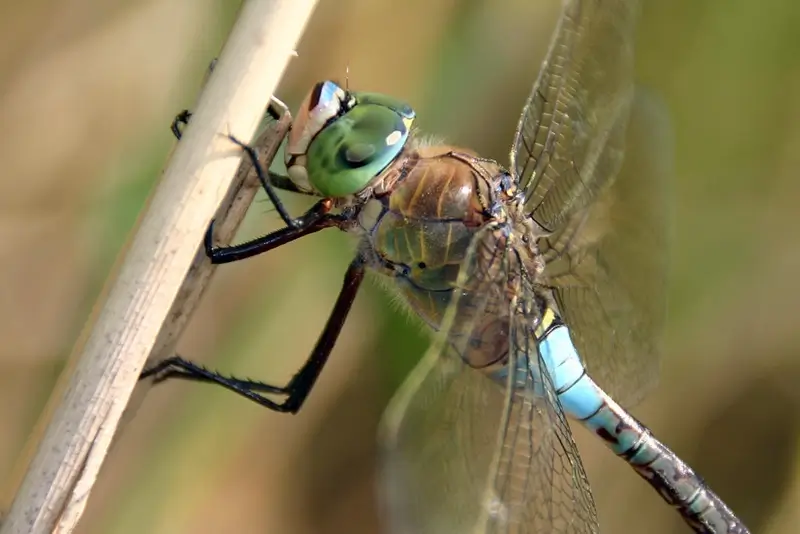
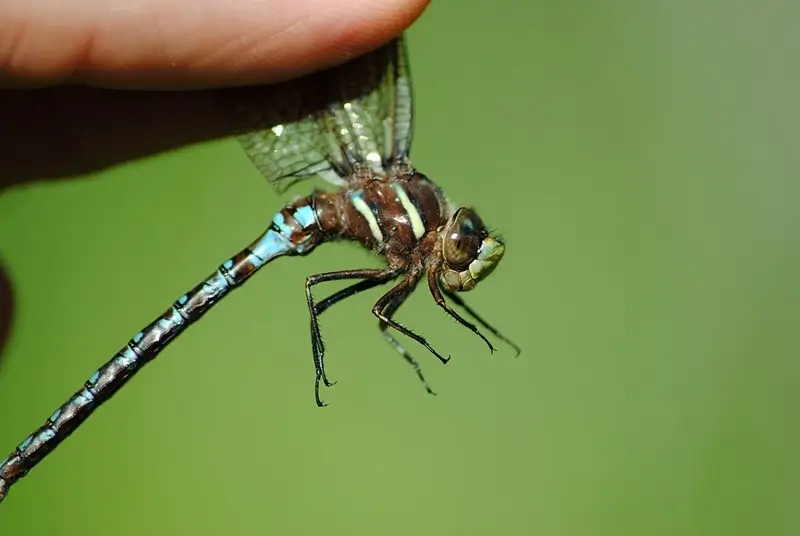
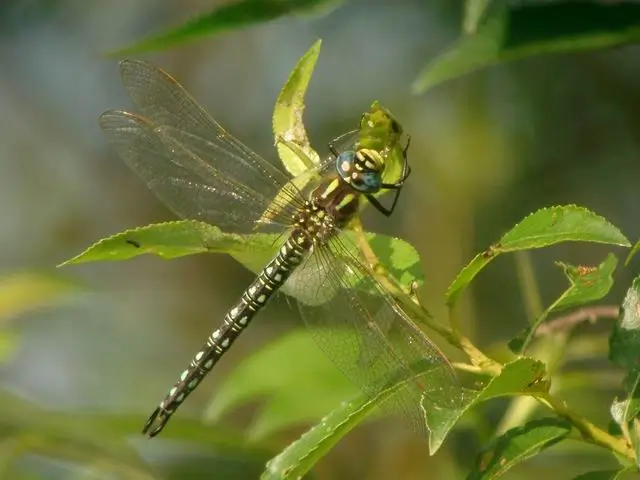
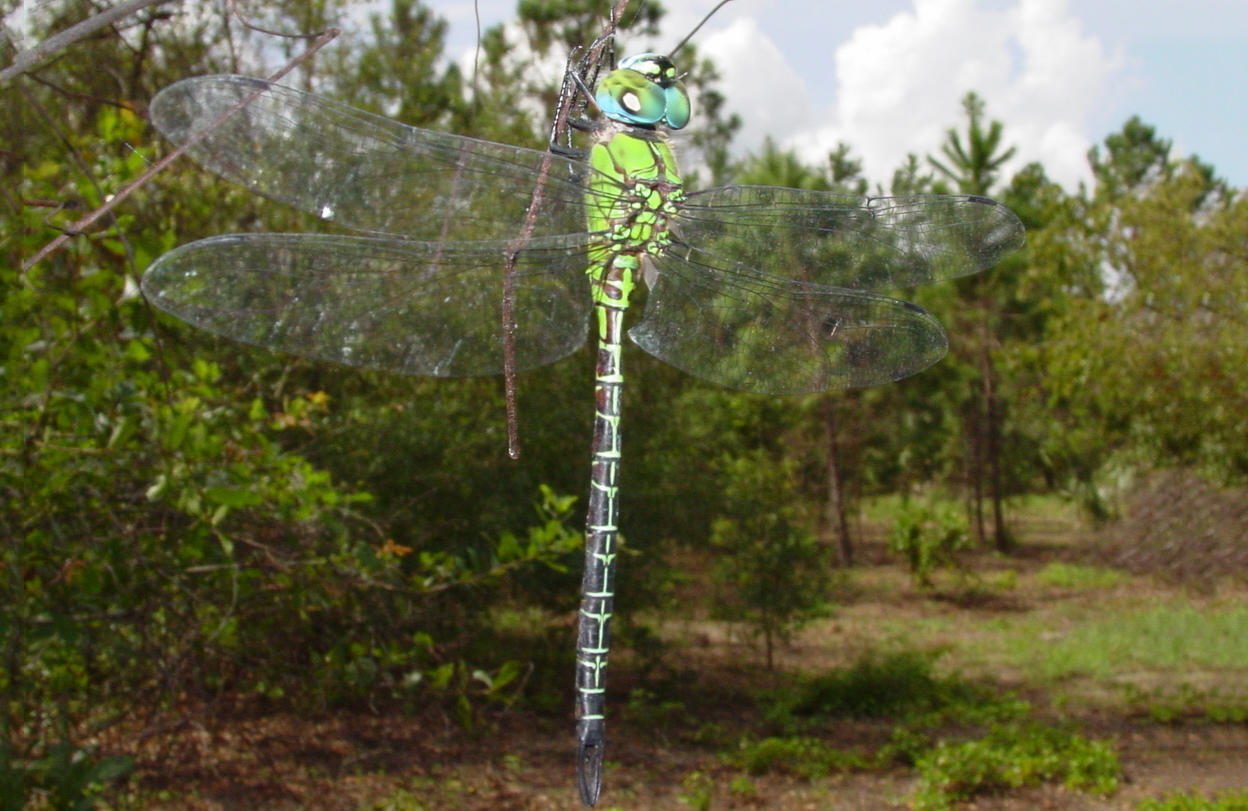
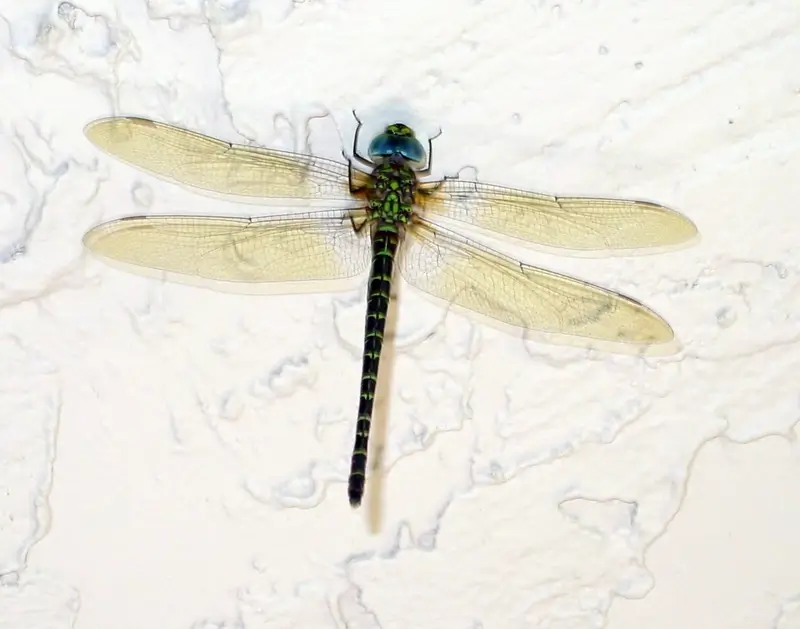
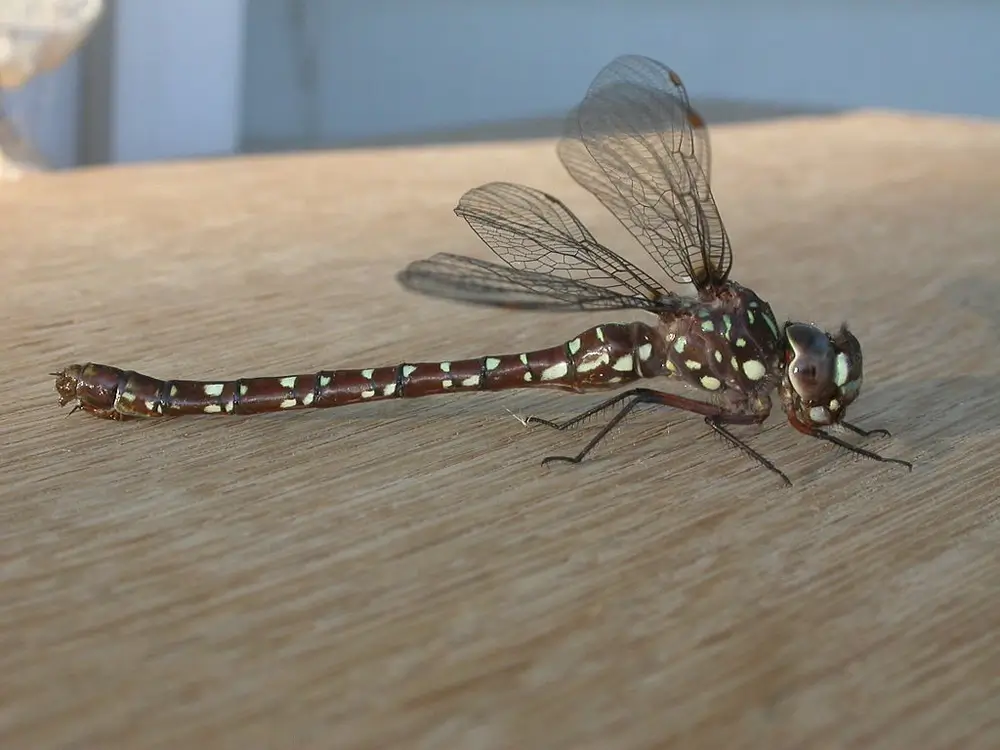
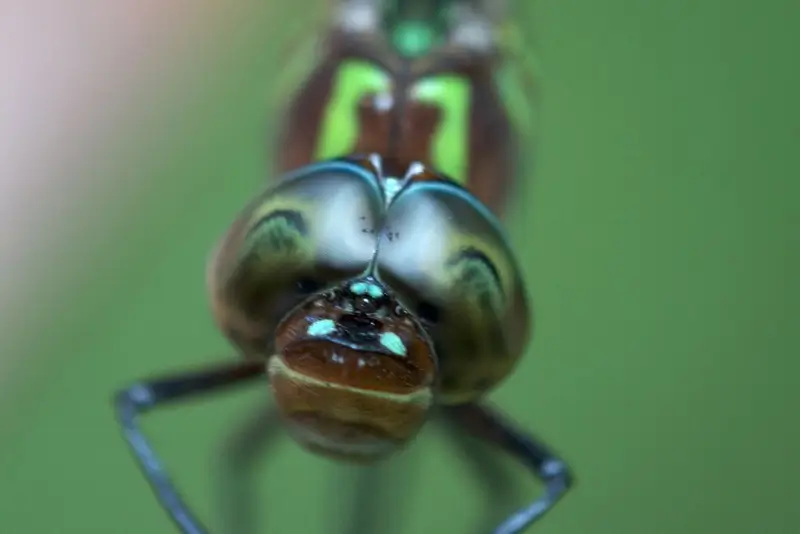
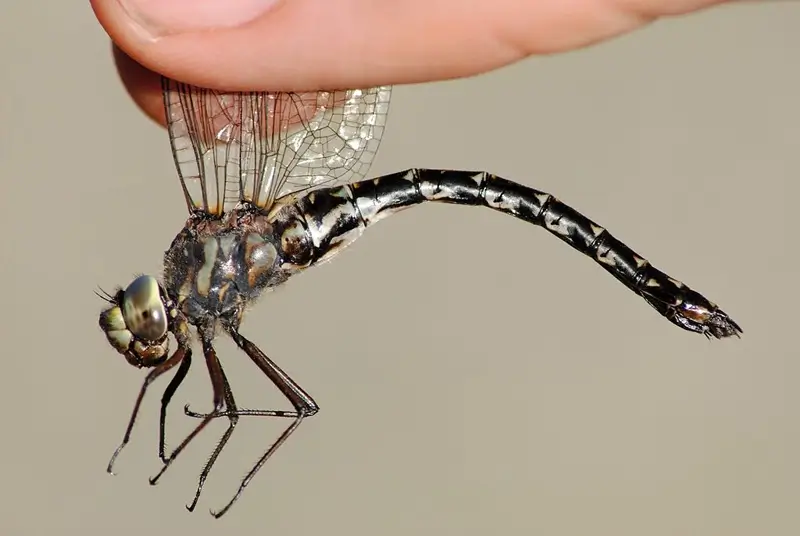
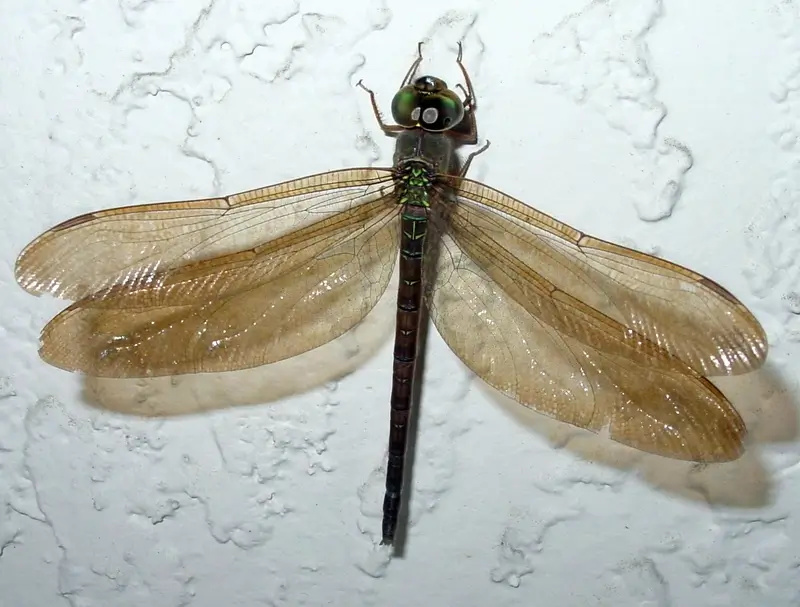
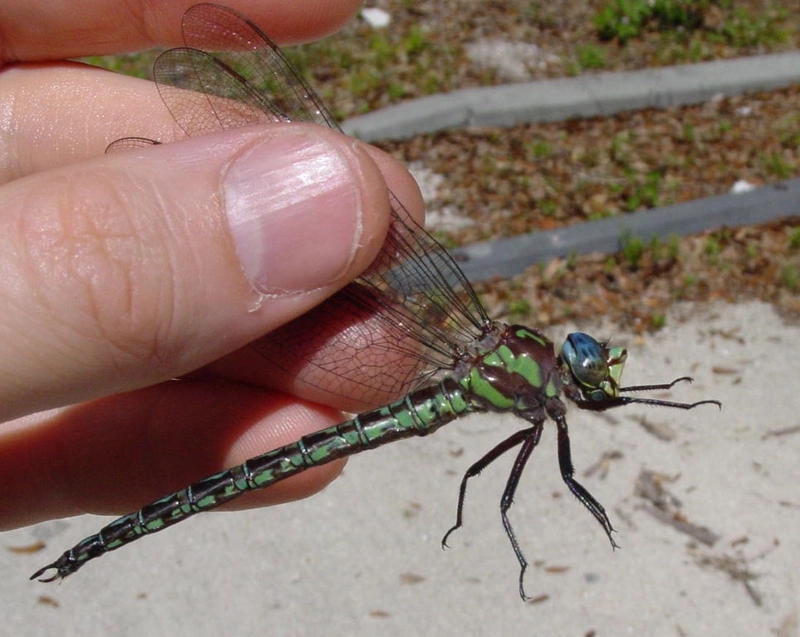
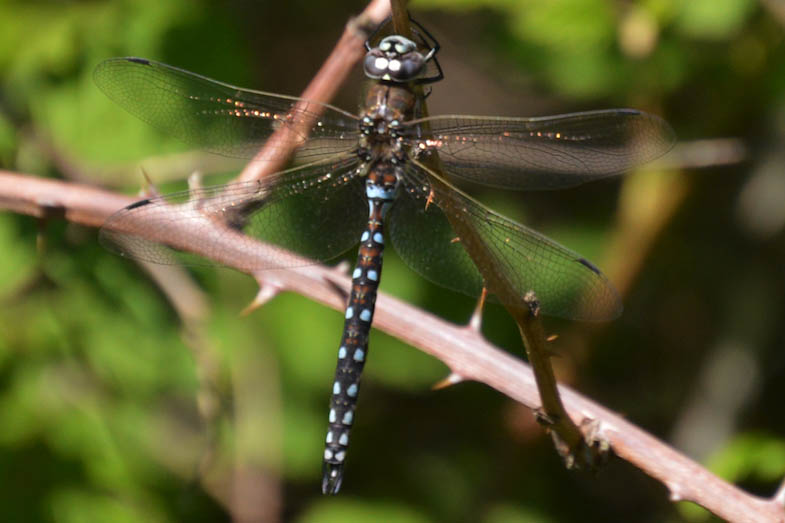
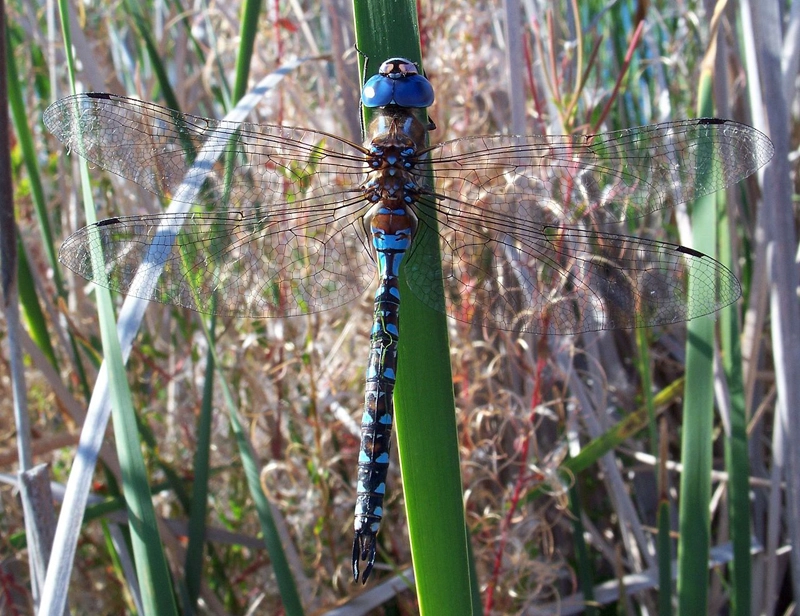
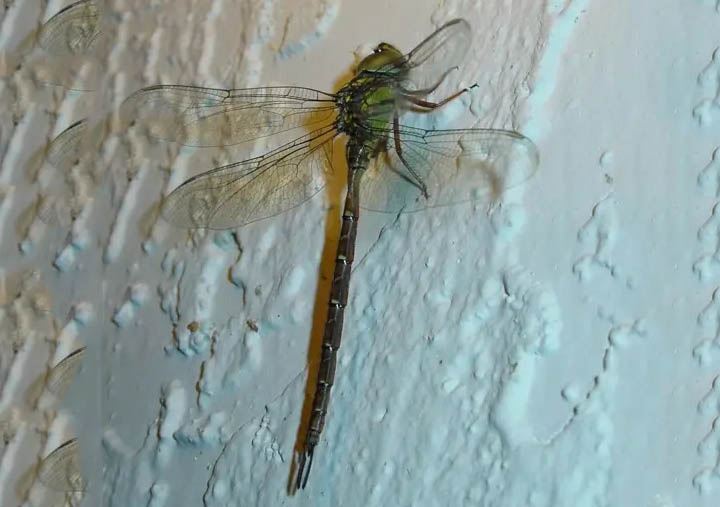
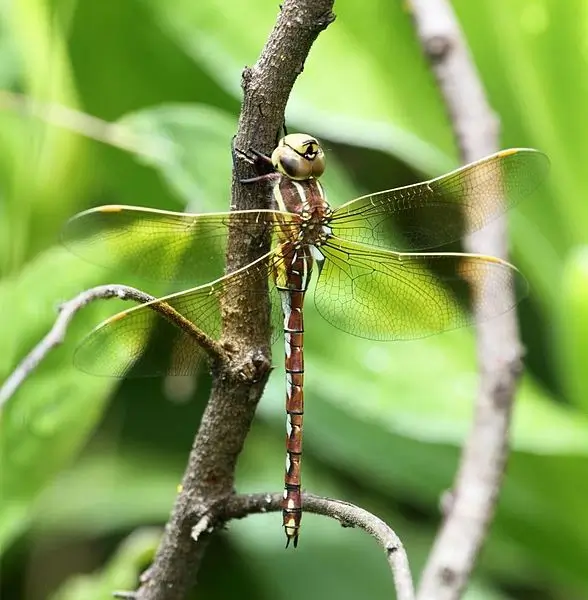
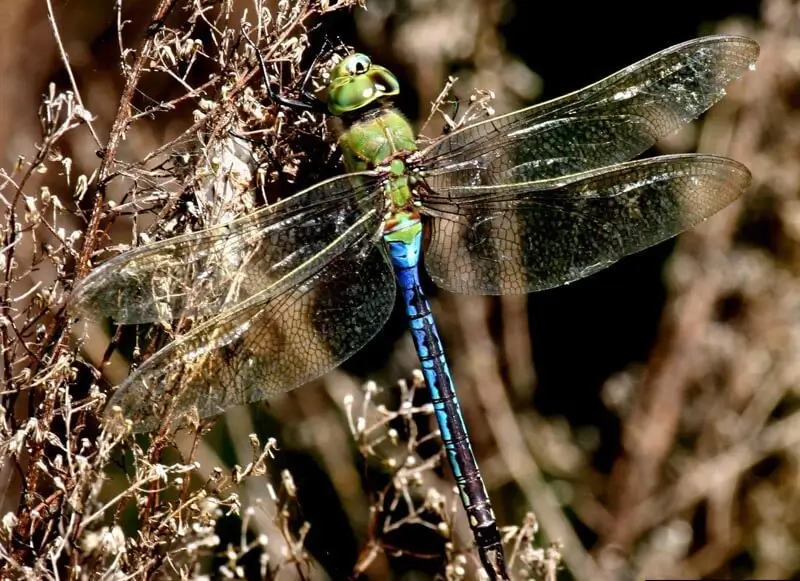
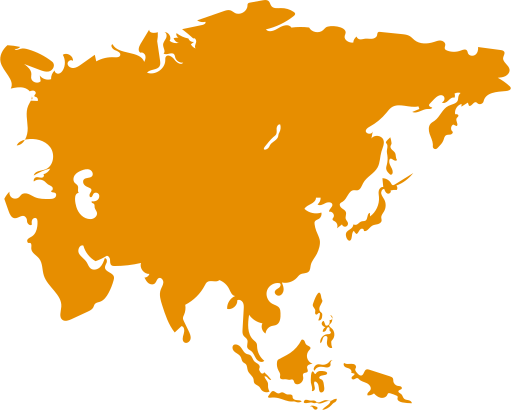
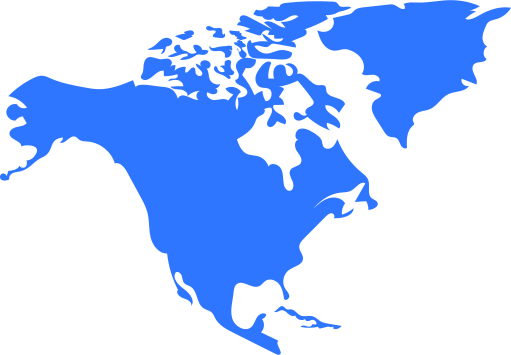
This family includes the largest species of dragonflies found in North America and Europe.
They range in size from 2-5 inches in length. Most species are around 3 inches in length. They are known as darners in North America because the female’s abdomen looks like a sewing needle when she cuts into plant stems to lay her eggs.
Darners have long, thin abdomens; four transparent wings; and large, round, compound eyes that meet at the top of their head. Most species are blue or green, or a combination of blue and green.
Darners hunt and eat other insects. They spend most of their time during the day flying and looking for prey. Males can be very territorial and will chase away other males. The dragonflies in this family are very fast fliers and can fly backwards and forwards, and can hover in the air like a helicopter.
Darner naiads (immature dragonflies) are long and slender. They move through the water by squirting water out of their abdomens. They climb over submerged vegetation, hunting for food. They eat mosquito larvae, damselfly and dragonfly nymphs, tadpoles, and small fish.
When a naiad is the right size, it crawls up on a plant stem, its skin splits, and a dragonfly emerges. To avoid predators, naiads usually do this at night.
Blue-Spotted Hawker (Adversaeschna brevistyla)
The blue-spotted hawker, also known as the lancer dragonfly, is found in Australia. IUCN Redlist: Least Concern
Southern Migrant Hawker (Aeshna affinis)
The southern migrant hawker, also known as the blue-eyed hawker, is found in Armenia, Azerbaijan, Bulgaria, Cyprus, Czech Republic, France, Georgia, Germany, Greece, Hungary, Iran, Israel, Italy, Kazakhstan, Lithuania, Luxembourg, Macedonia, Montenegro, Poland, Portugal, Romania, Russia, Serbia, Slovakia, Slovenia, Spain, Tajikistan, Tunisia, Türkiye, and Ukraine. IUCN Redlist: Least Concern
Azure Hawker (Aeshna caerulea)
The azure hawker is found in Austria, Belarus, Estonia, Finland, Georgia, Germany, Italy, Latvia, Norway, Russia, Sweden, Switzerland, and the United Kingdom. IUCN Redlist: Least Concern
Canada Darner (Aeshna canadensis)
The Canada darner is found in much of the U.S. and Canada. The Canada darner is found in New Hampshire. IUCN Redlist: Least Concern
Lance-Tipped Darner (Aeshna constricta)
The lance-tipped darner is found from southern Canada southward to northern Arkansas and New Mexico. It is found in New Hampshire. IUCN Redlist: Least Concern
Southern Hawker (Aeshna cyanea)
The southern hawker, also known as he blue hawker, is found in central and southern Europe and parts of northern Africa. IUCN Redlist: Least Concern
Lake Darner (Aeshna eremita)
The lake darner is found from Alaska across Canada and the northern U.S. It is found in New Hampshire. IUCN Redlist: Least Concern
Brown Hawker (Aeshna grandis)
The brown hawker is found in Andorra, Austria, Belarus, Belgium, Croatia, Czech Republic, Denmark, Estonia, Finland, France, Germany, Ireland, Italy, Kazakhstan, Latvia, Liechtenstein, Lithuania, Luxembourg, Montenegro, Netherlands, Norway, Poland, Romania, Russia, Serbia, Slovakia, Slovenia, Spain, Sweden, Switzerland, Ukraine, and the UK. IUCN Redlist: Least Concern
Variable Darner (Aeshna interrupta)
The variable darner is found from Alaska east to Newfoundland and south to California, Arizona, New Mexico, Michigan, and New Hampshire. IUCN Redlist: Least Concern
Green-Eyed Hawker (Aeshna isoceles)
The green-eyed hawker is found in Albania, Algeria, Armenia, Austria, Azerbaijan, Belarus, Belgium, Bosnia & Herzegovina, Bulgaria, Croatia, Czech Republic, Denmark, France, Georgia, Germany, Greece, Italy, Latvia, Macedonia, Malta, Morocco, Netherlands, Poland, Portugal, Romania, Russia, Slovakia, Slovenia, Spain, Sweden, Switzerland, Tunisia, Türkiye, Ukraine, and the UK. IUCN Redlist: Least Concern
Sedge Darner (Aeshna juncea)
The sedge darner, also known as the common hawker or moorland hawker, is found throughout Canada and the northern U.S. It is also found in Europe and Asia. It is found in New Hampshire. IUCN Redlist: Least Concern
Migrant Hawker (Aeshna mixta)
The migrant hawker is found from Europe to the north of Asia and eastwards to Japan. IUCN Redlist: Least Concern
Paddle-Tailed Darner (Aeshna palmata)
The paddle-tailed darner is found in western North America from Alaska south and west to Nebraska and New Mexico. IUCN Redlist: Least Concern
Zig Zag Darner (Aeshna sitchensis)
The zigzag darner is found from Alaska east to the Hudson Bay and south to Washington and New Hampshire. IUCN Redlist: Least Concern
Subarctic Darner (Aeshna subarctica)
The subarctic darner is found from Alaska, the Northwest Territories, and Newfoundland south to Oregon, Montana, Wisconsin, and New York. It is found in New Hampshire. It is also found in Europe. IUCN Redlist: Least Concern
Black-Tipped Darner (Aeshna tuberculifera)
The black-tipped darner is found in the northeastern U.S. and southeastern Canada. The black-tipped darner is found in New Hampshire. IUCN Redlist: Least Concern
Shadow Darner (Aeshna umbrosa)
The shadow darner is found throughout much of North America and Canada. It is found in New Hampshire. IUCN Redlist: Least Concern
Green-Striped Darner (Aeshna verticalis)
The green-striped darner is found in the northeastern U.S. and southern Ontario, Quebec, and New Brunswick, Canada. IUCN Redlist: Least Concern
Green Hawker (Aeshna viridis)
The green hawker is found in Austria, Czech Republic, Denmark, Estonia, Finland, Germany, Hungary, Latvia, Lithuania, Montenegro, the Netherlands, Poland, Russia, Serbia, Slovakia, Sweden, and Ukraine. IUCN Redlist: Least Concern
Evening Hawker (Anaciaeschna triangulifera)
The evening hawker is found in Angola, The Democratic Republic of the Congo, Ethiopia, Kenya, Malawi, Mozambique, South Africa, Tanzania, Uganda, Zambia, and Zimbabwe. IUCN Redlist: Least Concern
Amazon Darner (Anax amazili)
The Amazon darner is found from Florida, Louisiana and Texas in the U.S. southward through Mexico to Puerto Rico and Argentina. IUCN Redlist: Least Concern
Vagrant Emperor (Anax ephippiger)
The vagrant emperor is found in Africa, southern Europe, central and south Asia. IUCN Redlist: Least Concern
Lesser Green Emperor (Anax guttatus)
The lesser green emperor is found in Australia, Bangladesh, Brunei Darussalam, China, Cook Islands, Hong Kong, India, Indonesia, Japan, Laos, Malaysia, Marshall Islands, Micronesia, Myanmar, Nepal, Papua New Guinea, Philippines, Seychelles, Singapore, Sri Lanka, Taiwan, Thailand, Timor-Leste, and Vietnam. IUCN Redlist: Least Concern
Magnificent Emperor (Anax immaculifrons)
The magnificent emperor is found in Afghanistan, Bangladesh, China, Cyprus, Greece, Hong Kong, India, Iran, Nepal, Pakistan, Sri Lanka, Thailand, Türkiye, and Vietnam. IUCN Redlist: Least Concern
Blue Emperor (Anax imperator)
The blue emperor is also known as the emperor dragonfly. It is found from the British Isles across Europe to central Asia, and south to north and central Africa. IUCN Redlist: Least Concern
Common Green Darner (Anax junius)
The common green darner is found from British Columbia through Nova Scotia and south through most of the U.S. and into Mexico and the Caribbean. It is found in New Hampshire. IUCN Redlist: Least Concern
Blue-Spotted Emperor (Anax nigrofasciatus)
The blue-spotted emperor is found in Bhutan, China, Hong Kong, India, Japan North and South Korea, Nepal, Taiwan, and Thailand. IUCN Redlist: Least Concern
Lesser Emperor (Anax parthenope)
The lesser emperor is found in southern Europe, northern Africa, and Asia. IUCN Redlist: Least Concern
Springtime Darner (Basiaeschna janata)
The springtime darner is found in the eastern U.S. and Canada west to Oklahoma and Texas. It is found in New Hampshire. IUCN Redlist: Least Concern
Fawn Darner (Boyeria vinosa)
The fawn darner is found from Ontario east to Prince Edward Island and south to Texas and Florida. It is found in New Hampshire. IUCN Redlist: Least Concern
Hairy Hawker (Brachytron pratense)
The hairy hawker is found in Europe. It is also known as the hairy dragonfly. IUCN Redlist: Least Concern
Blue-Faced Darner (Coryphaeschna adnexa)
The blue-faced darner is found in Florida, south Texas, and Mexico south to Brazil. It is also found in the Caribbean. IUCN Redlist: Least Concern
Regal Darner (Coryphaeschna ingens)
The regal darner is found in the southeastern U.S., Cuba, and the Bahamas. IUCN Redlist: Least Concern
Wide-Faced Darner (Dendroaeschna conspersa)
The wide-faced darner is found in Australia. IUCN Redlist: Least Concern
Swamp Darner (Epiaeschna heros)
The swamp darner is found in the eastern U.S. and Canada west to central Oklahoma and Texas. It is found in New Hampshire. IUCN Redlist: Least Concern
Harlequin Darner (Gomphaeschna furcillata)
The harlequin darner is found in the eastern U.S. from Ontario south to Florida and west to Texas and Wisconsin. It is found in New Hampshire. IUCN Redlist: Least Concern
Twilight Darner (Gynacantha nervosa)
The twilight darner is found in Alabama, Florida, Georgia, Oklahoma in the U.S. It is also found in Mexico south through Central America and South America and in the West Indies. IUCN Redlist: Least Concern
Cyrano Darner (Nasiaeschna pentacantha)
The Cyrano darner is found across much of the eastern U.S. and in southeastern Canada. It is found in New Hampshire. IUCN Redlist: Least Concern
California Darner (Rhionaeschna californica)
In the U.S., the California darner is found in Wyoming, Washington, Utah, South Dakota, California, Colorado, Idaho, Montana, Nebraska, Nevada, and Oregon. It is also found in Canada and Mexico. IUCN Redlist: Least Concern
Blue-Eyed Darner (Rhionaeschna multicolor)
The blue-eyed darner is found in central and western North America from southern Alberta and British Columbia to Texas and California south to Mexico. IUCN Redlist: Least Concern
Phantom Darner (Triacanthagyna trifida)
In the U.S., the phantom darner is found in Florida, Georgia, and North Carolina. It is also found in the Caribbean. IUCN Redlist: Least Concern
Friendly Hawker (Zosteraeschna minuscula)
The friendly hawker is found in Namibia, and South Africa. IUCN Redlist: Least Concern