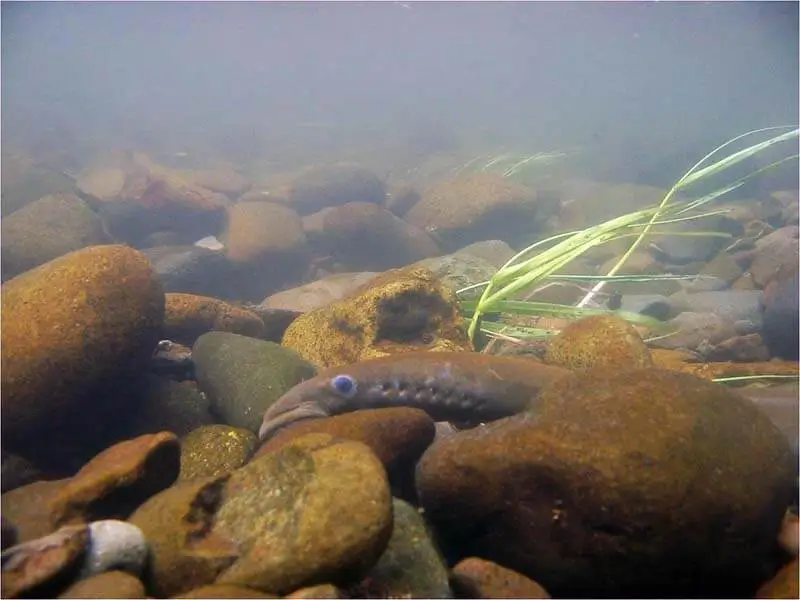
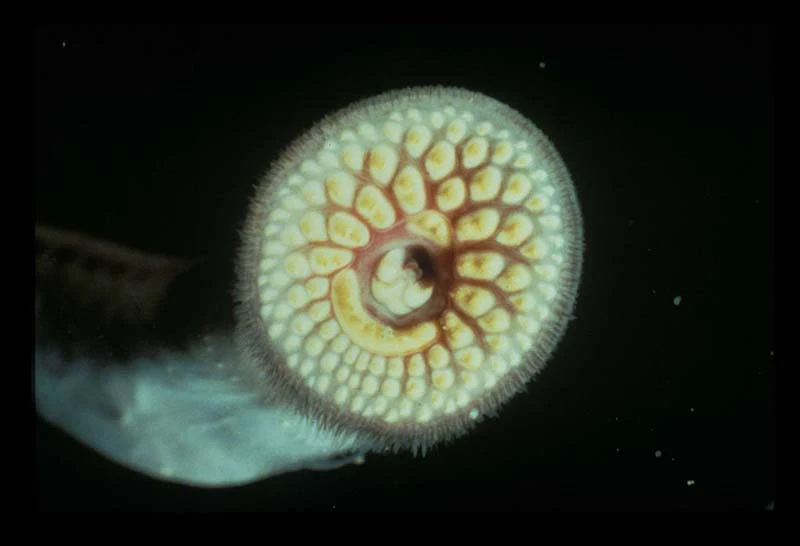
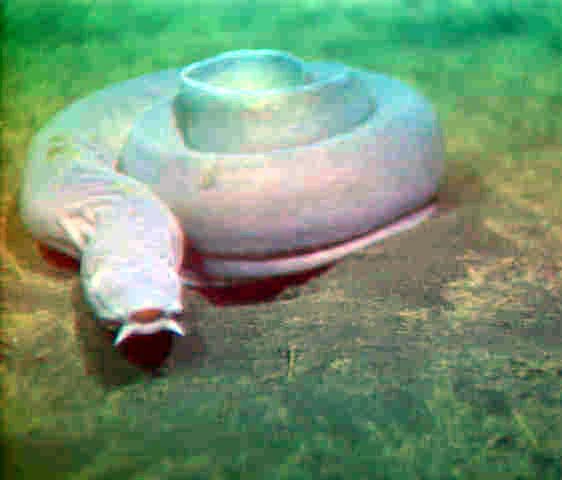
Agnatha are jawless fish. Lampreys and hagfish are in this class. Members of the agnatha class are probably the earliest vertebrates. Scientists have found fossils of agnathan species from the late Cambrian Period that occurred 500 million years ago.
Members of this class of fish don’t have paired fins or a stomach. Adults and larvae have a notochord. A notochord is a flexible rod-like cord of cells that provides the main support for the body of an organism during its embryonic stage. A notochord is found in all chordates.
Most agnathans have a skeleton made of cartilage and seven or more paired gill pockets. They have a light sensitive pineal eye. A pineal eye is a third eye in front of the pineal gland. Fertilization of eggs takes place outside the body.