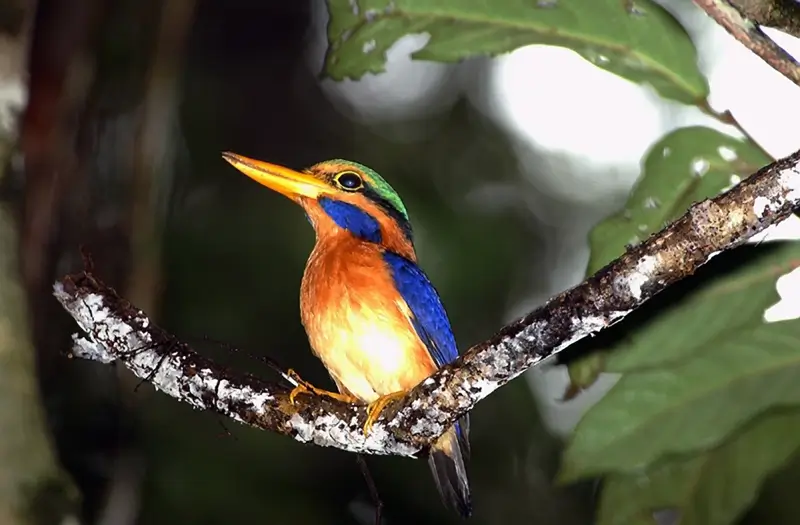
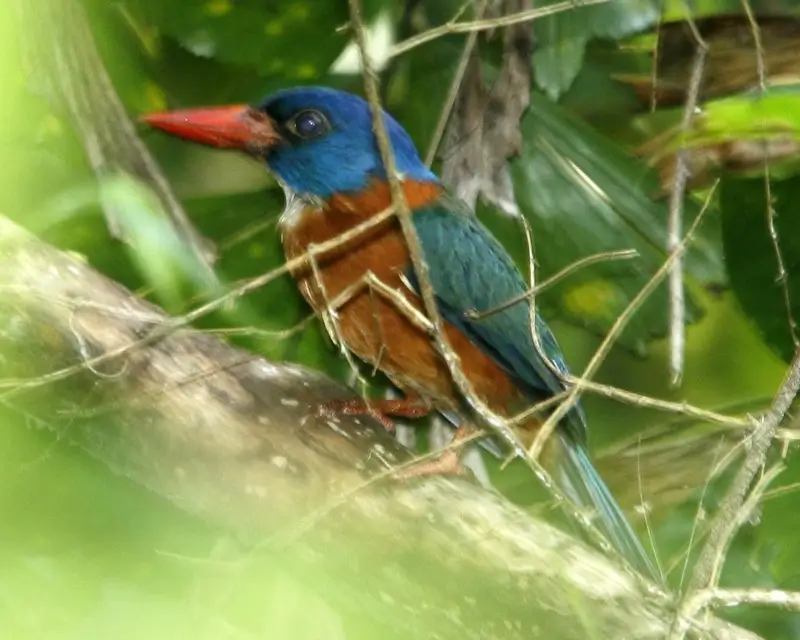
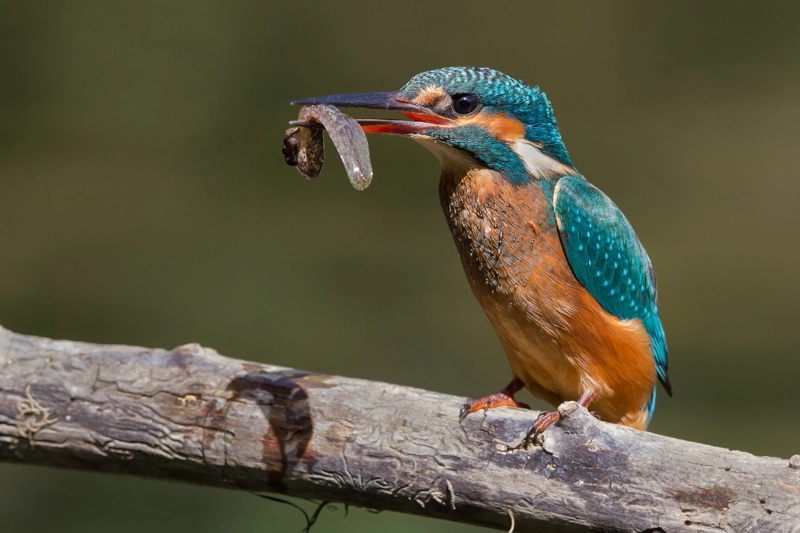
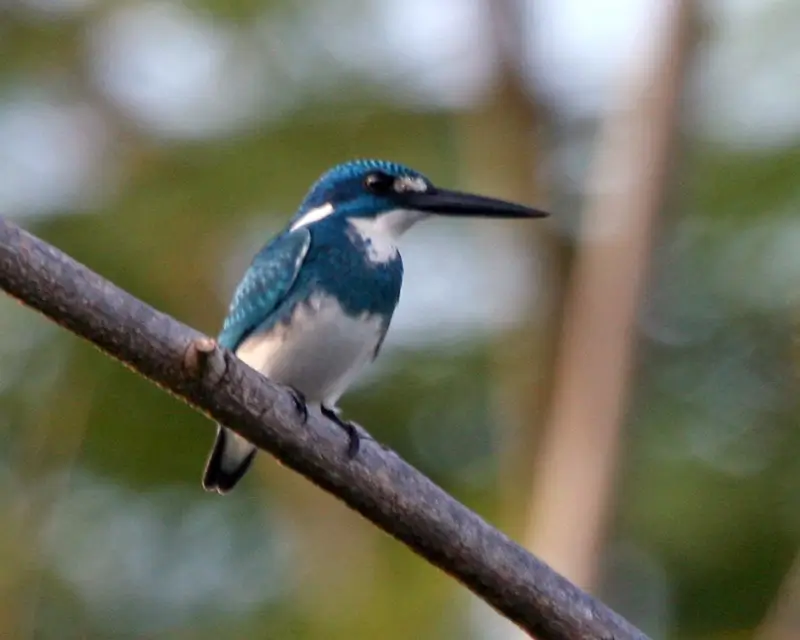
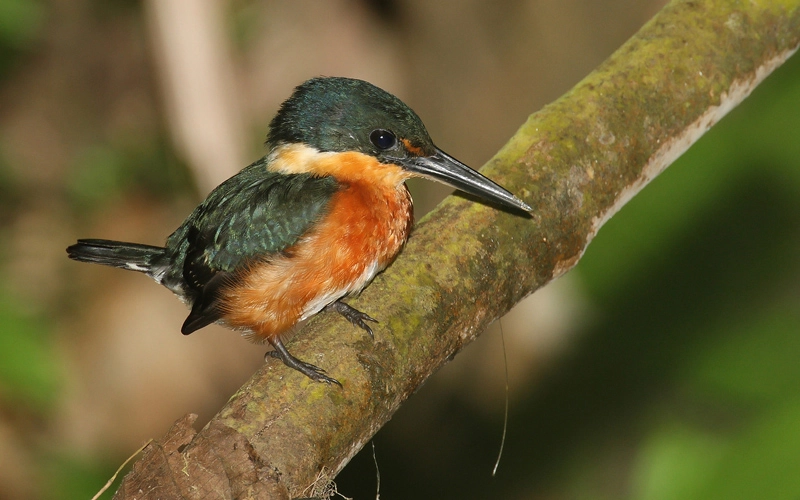
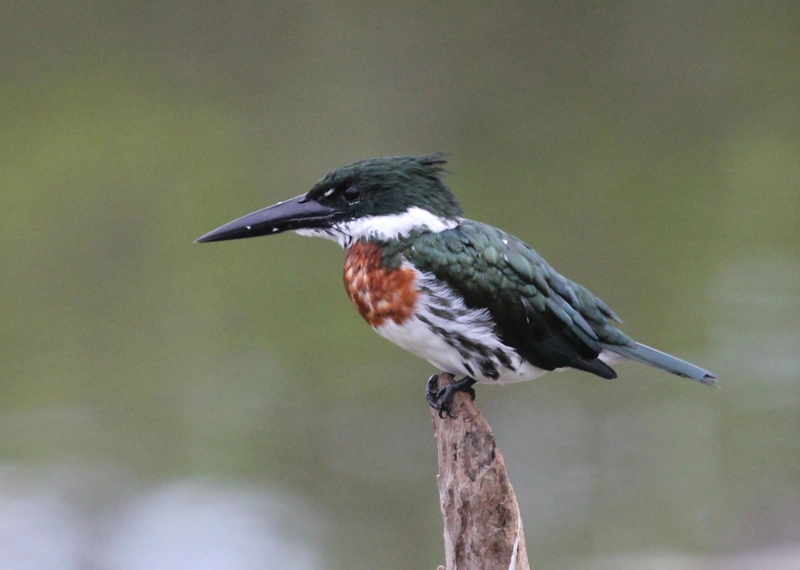
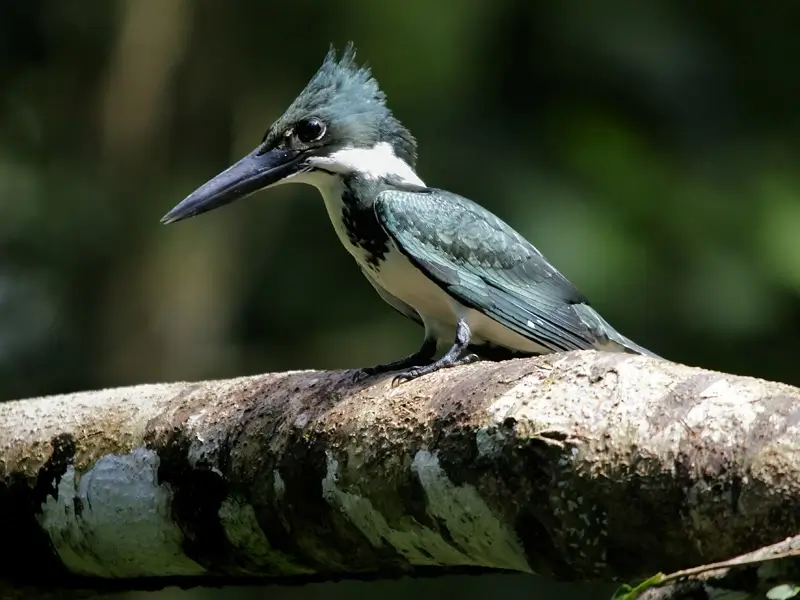
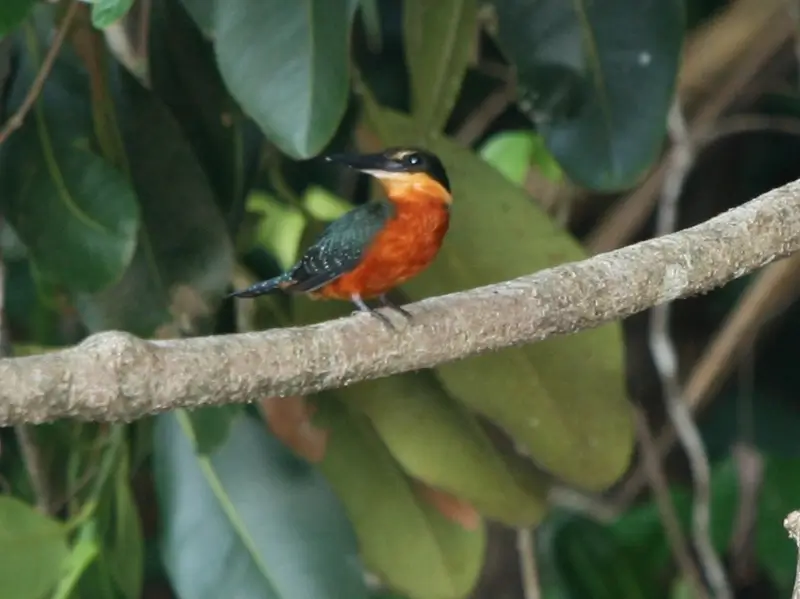
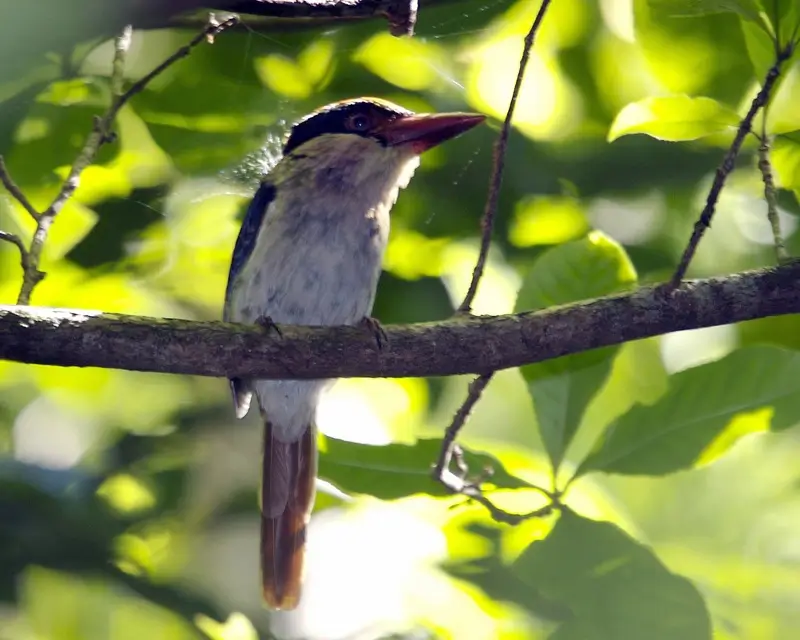
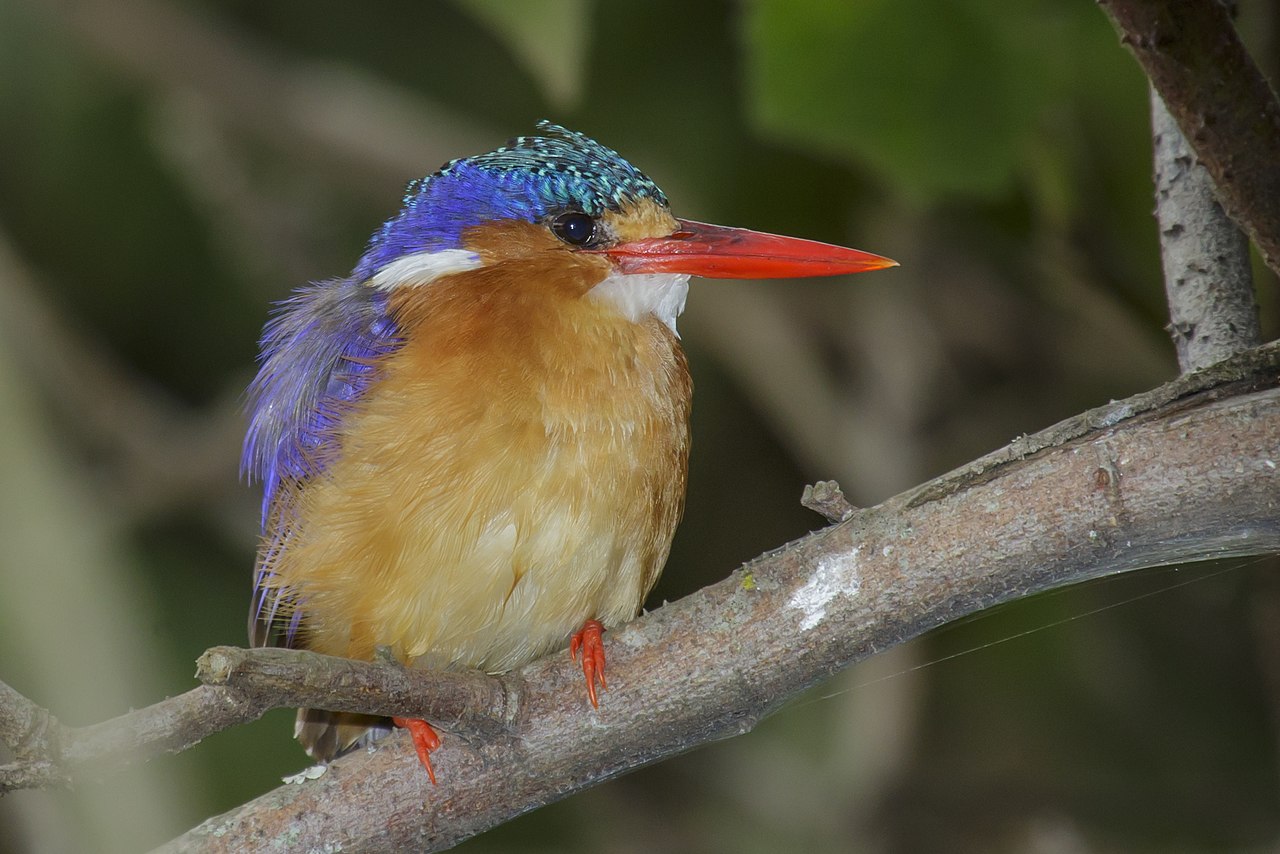
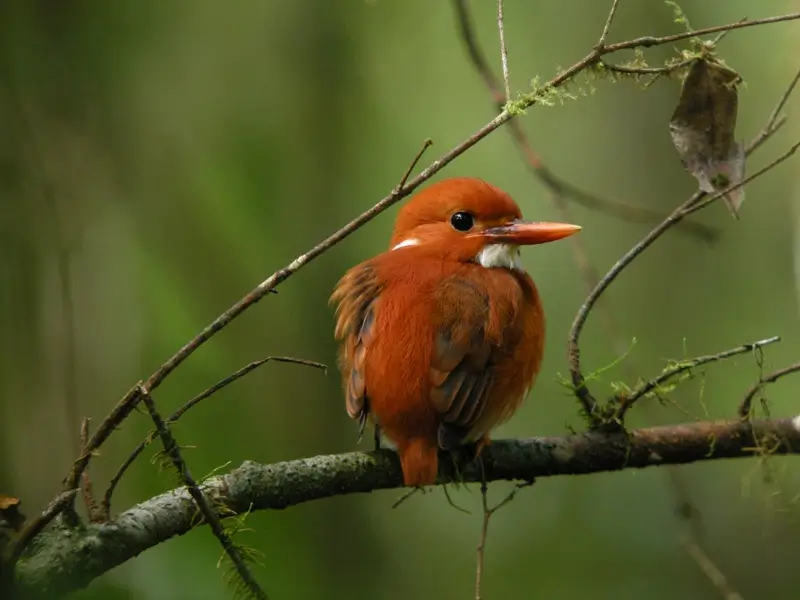
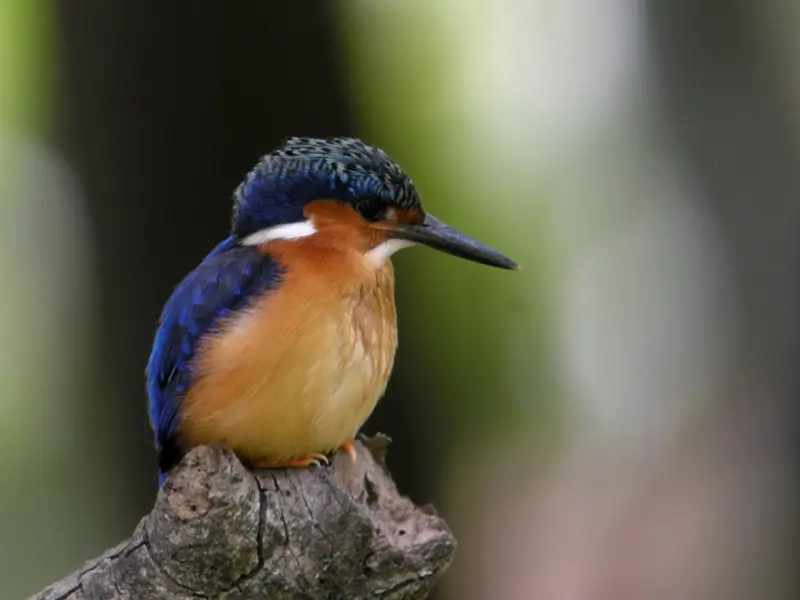
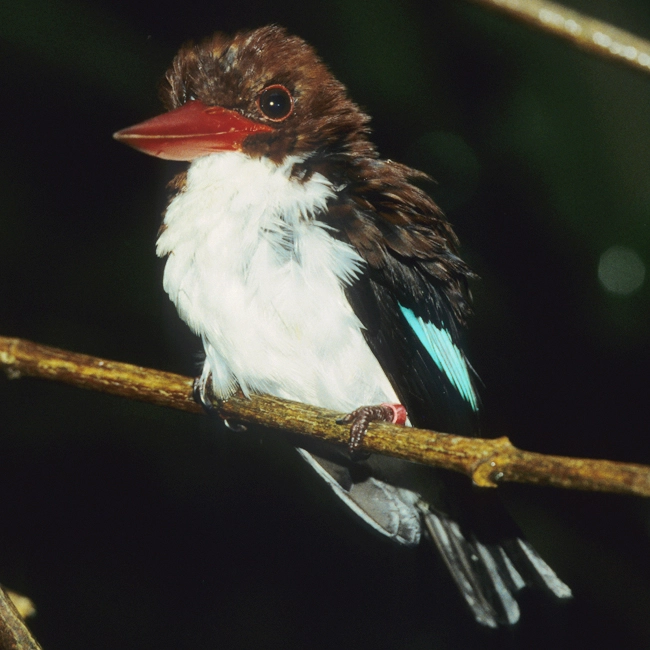
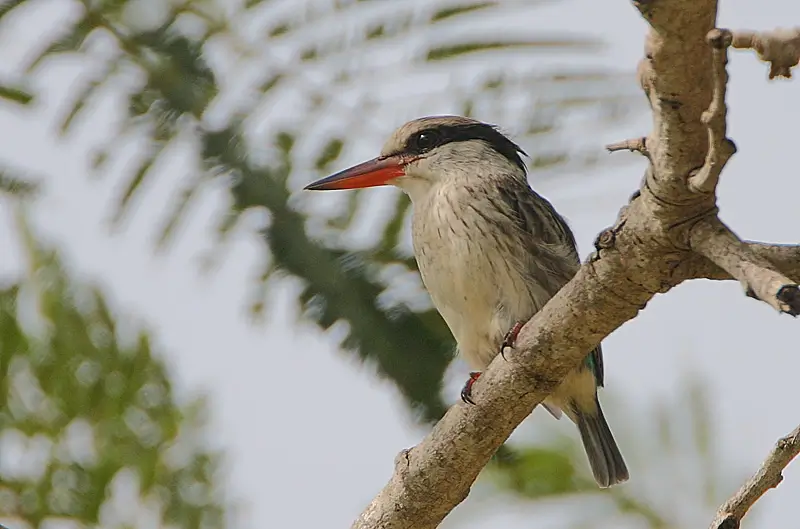
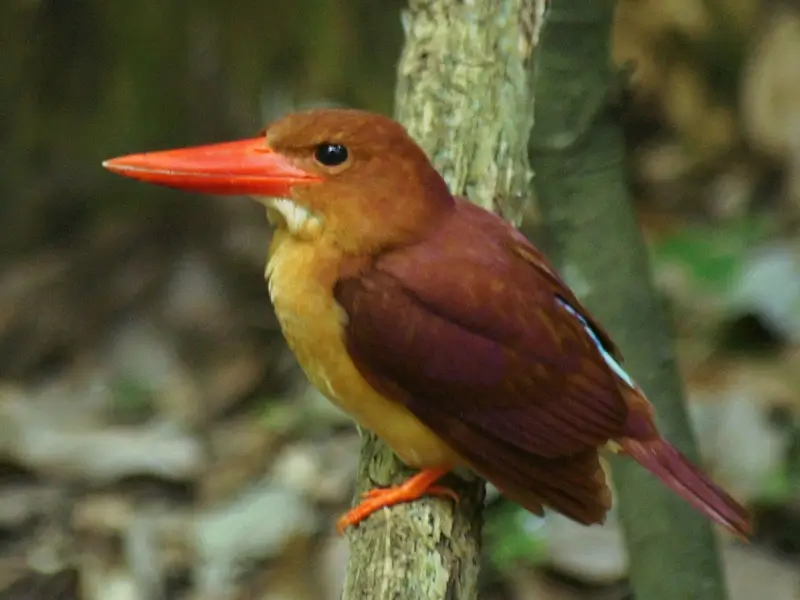
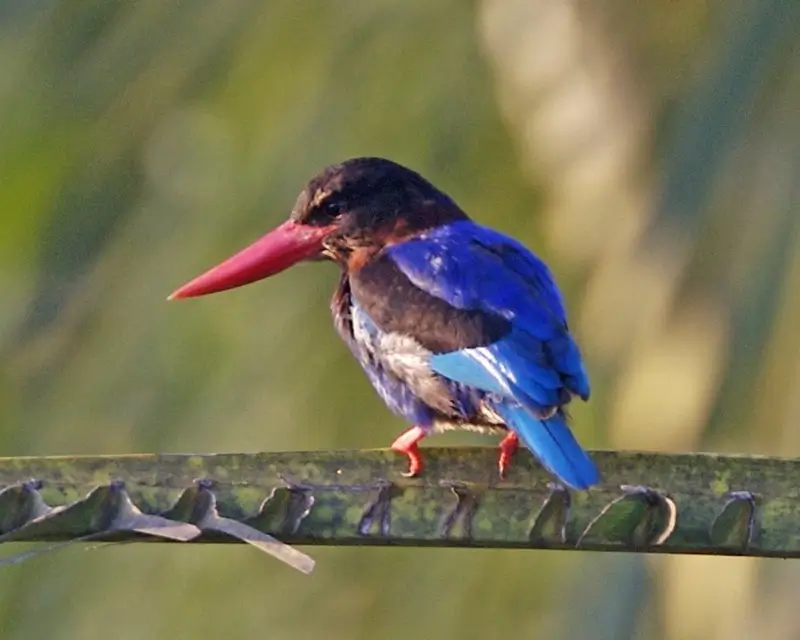
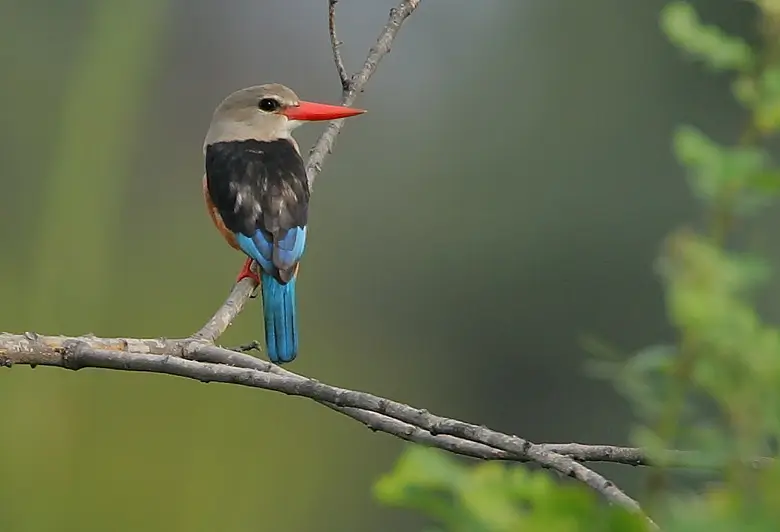
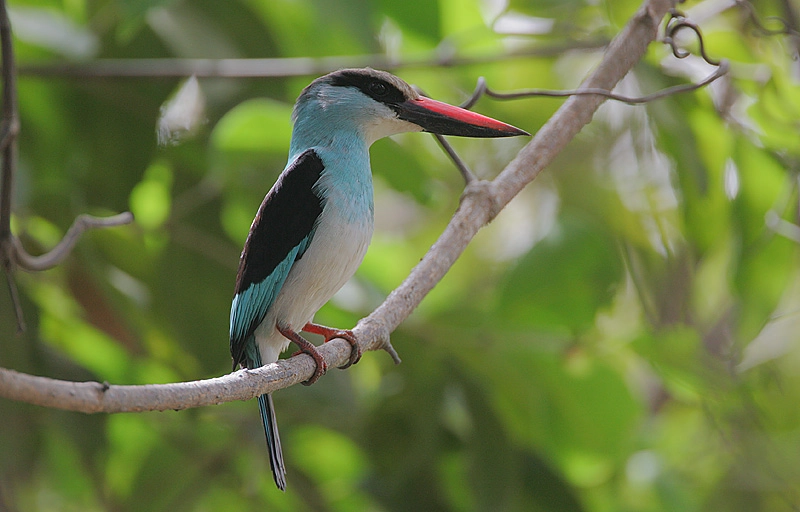
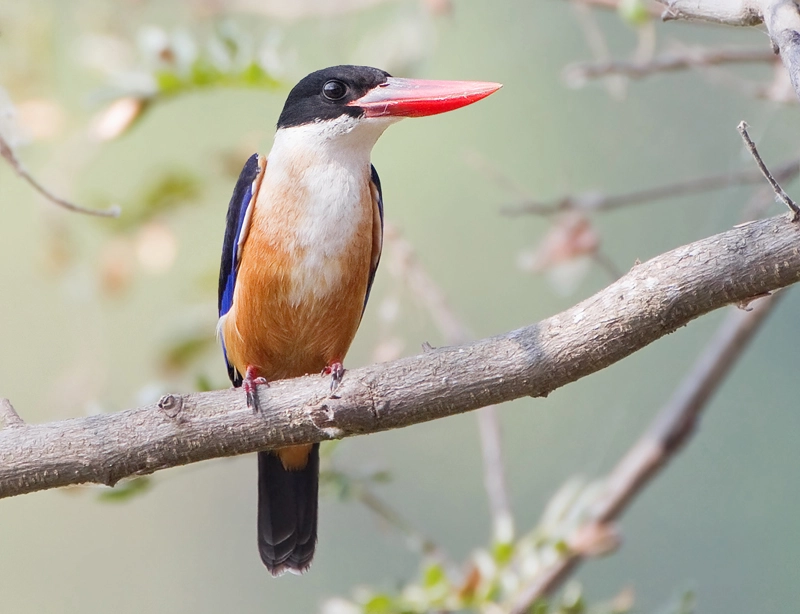
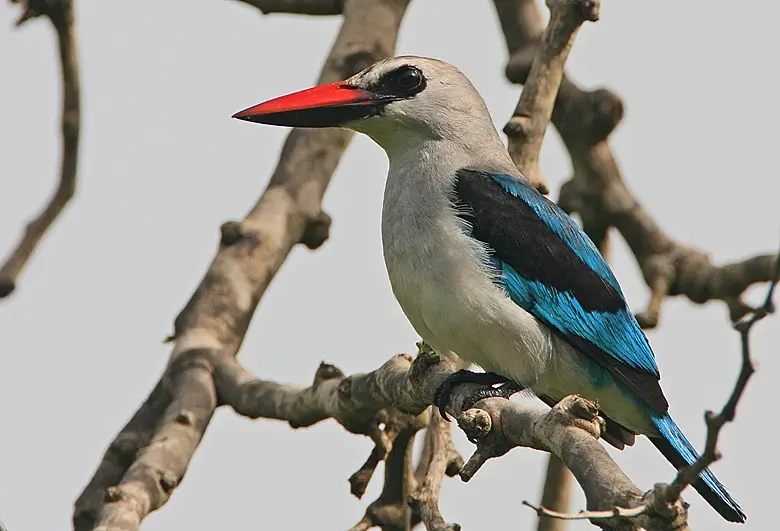
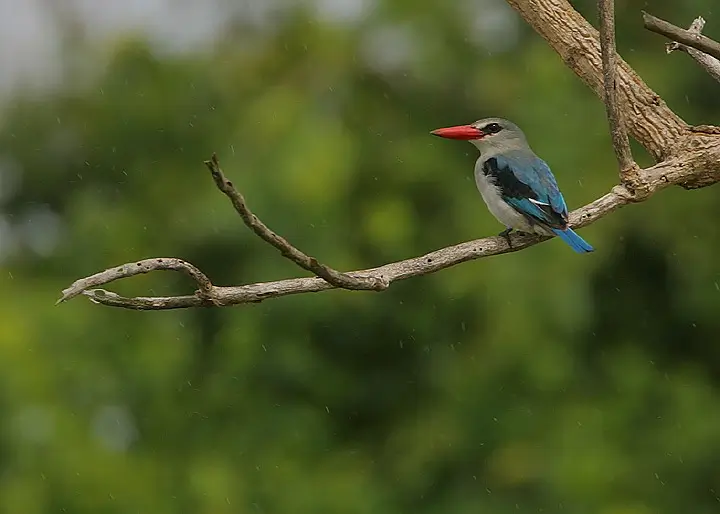
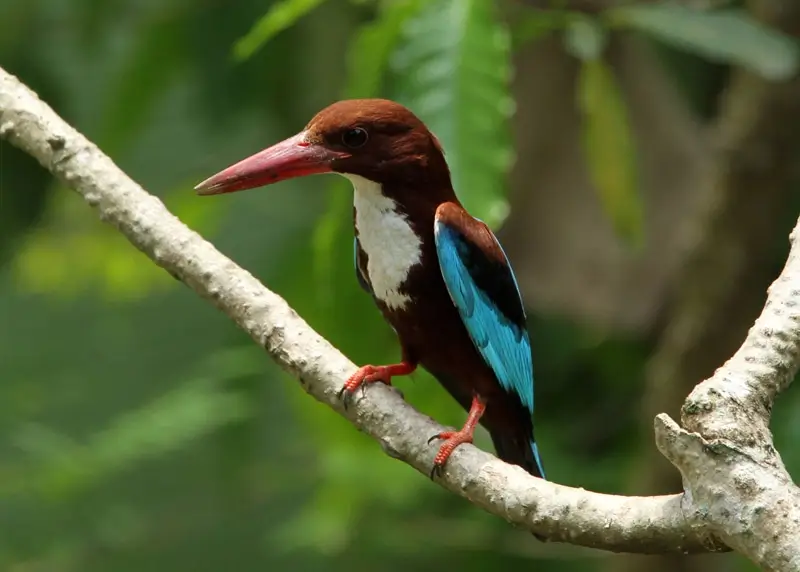
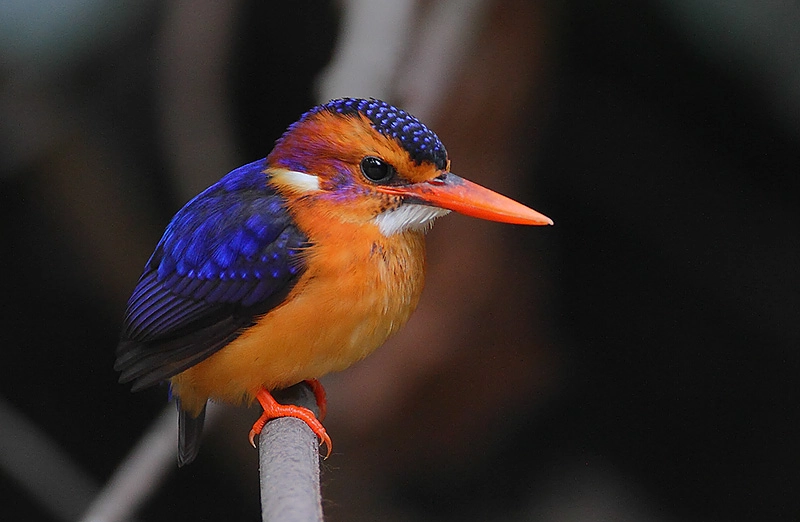
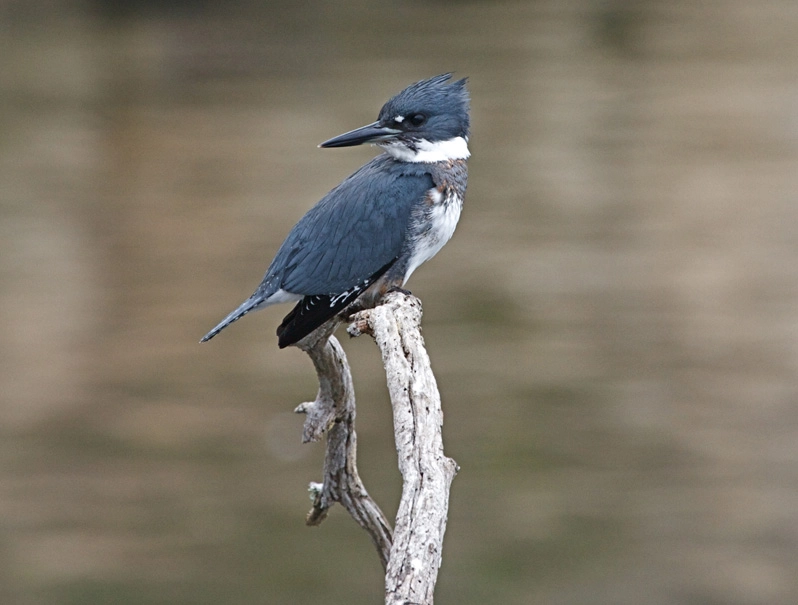
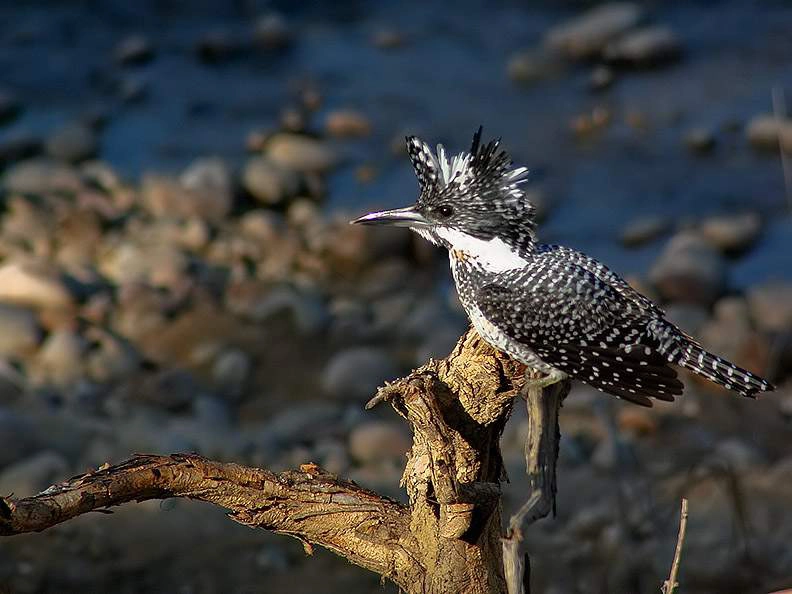
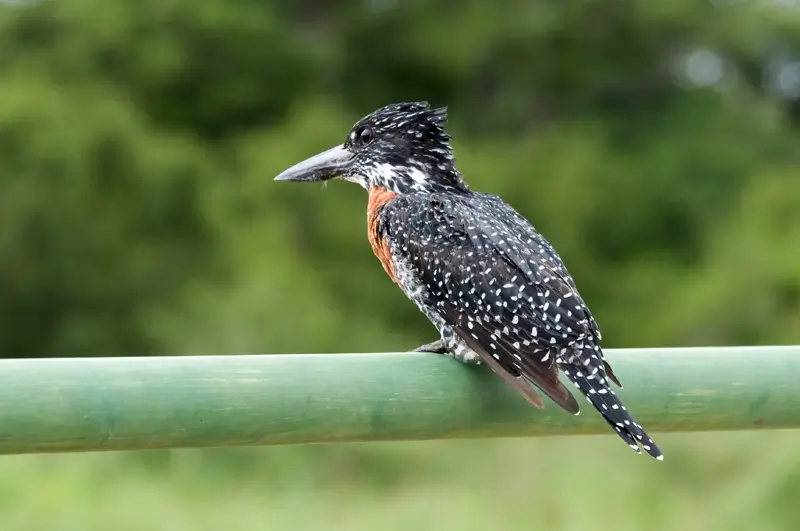
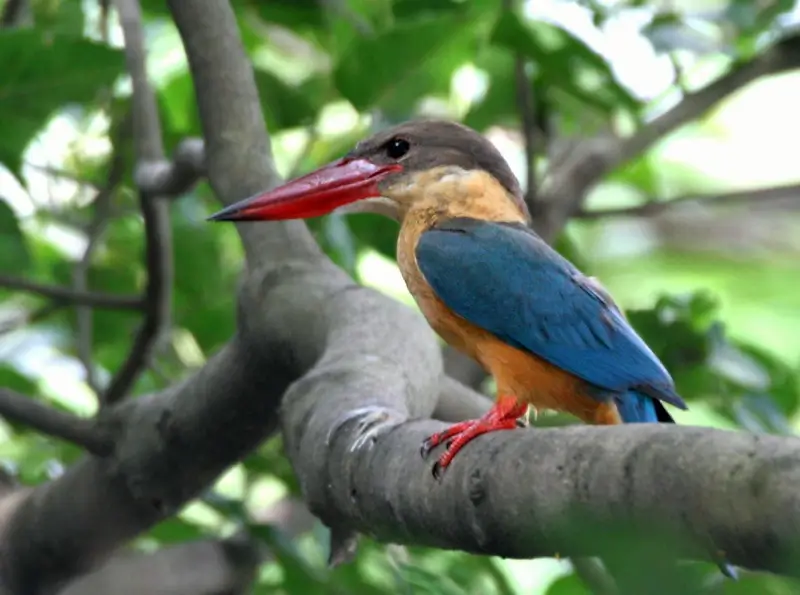
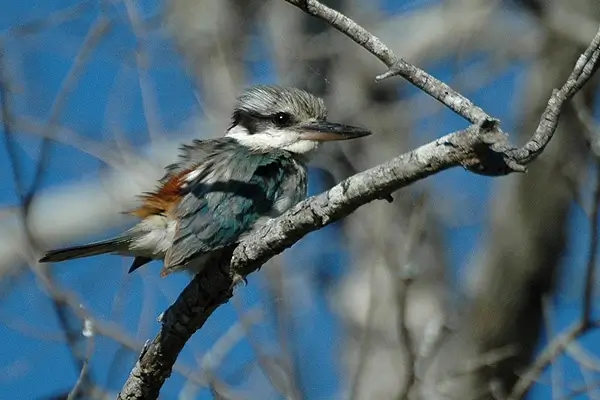
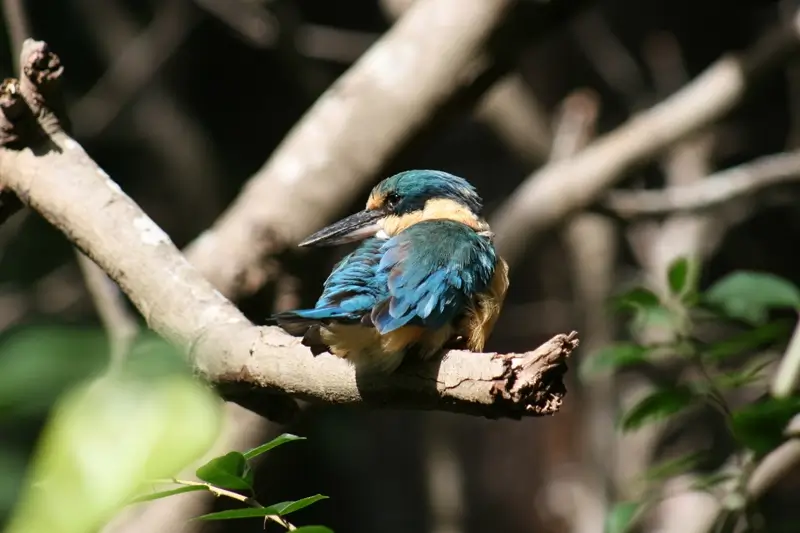
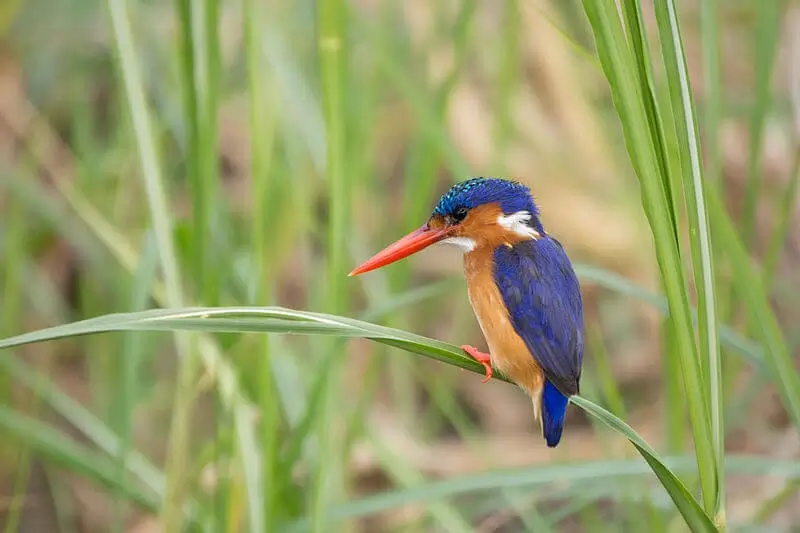
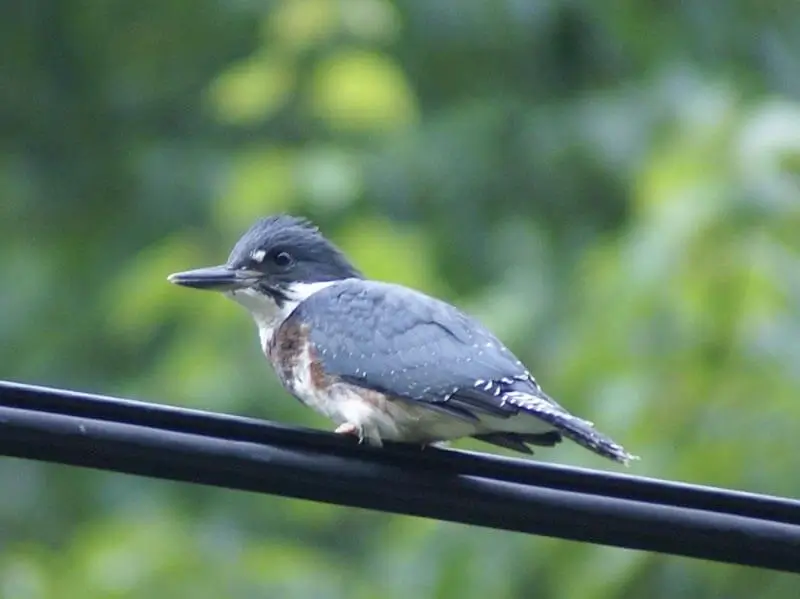
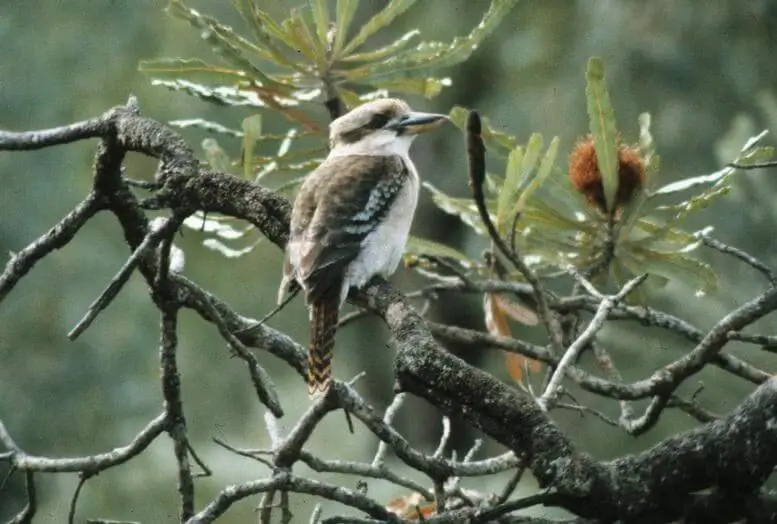
There are around 120 species of kingfishers found all around the world, except for the polar regions. Most species of kingfisher are found in Australia, Asia, and Africa in wooded tropical areas near water. Six species are found in the New World.
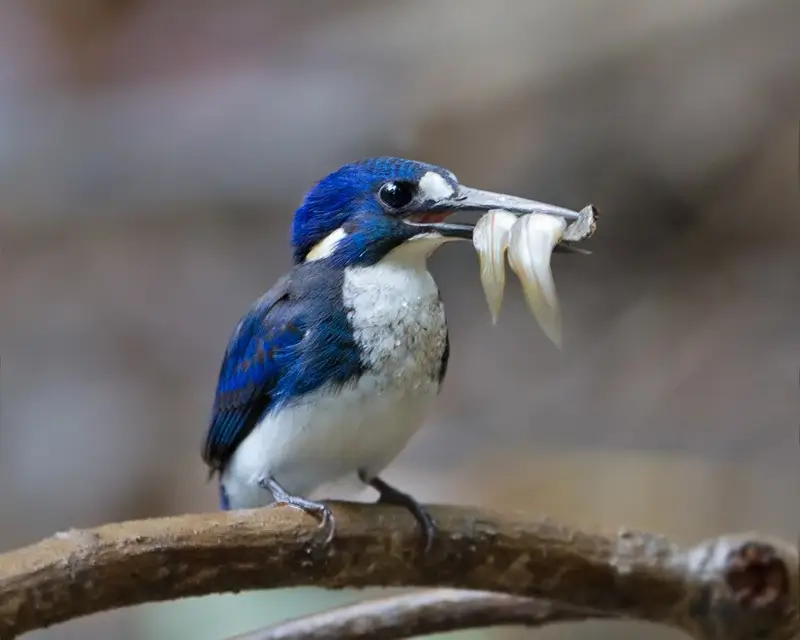
Kingfishers are omnivores, but insects make up a large part of their diet. Some species also eat fish. Most species perch near the water when they are hunting for food.
Except for one species, kingfishers are diurnal (active in the day). The one nocturnal species is the hook-billed kingfisher.
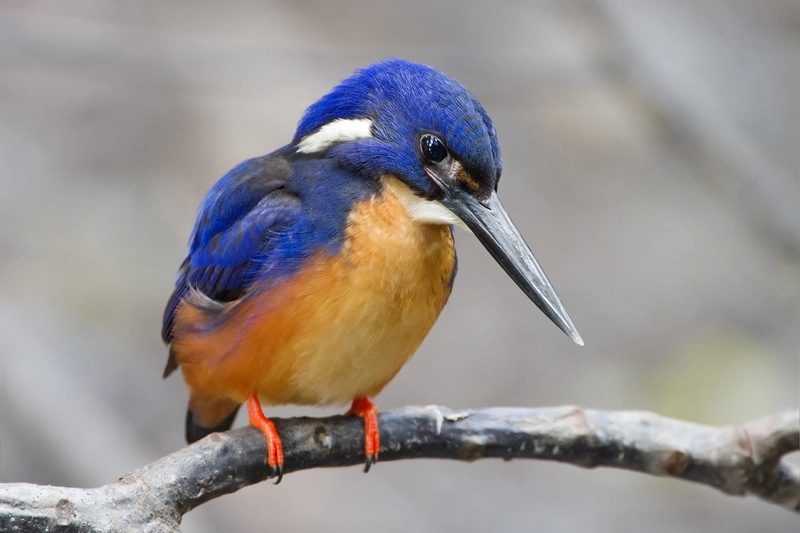
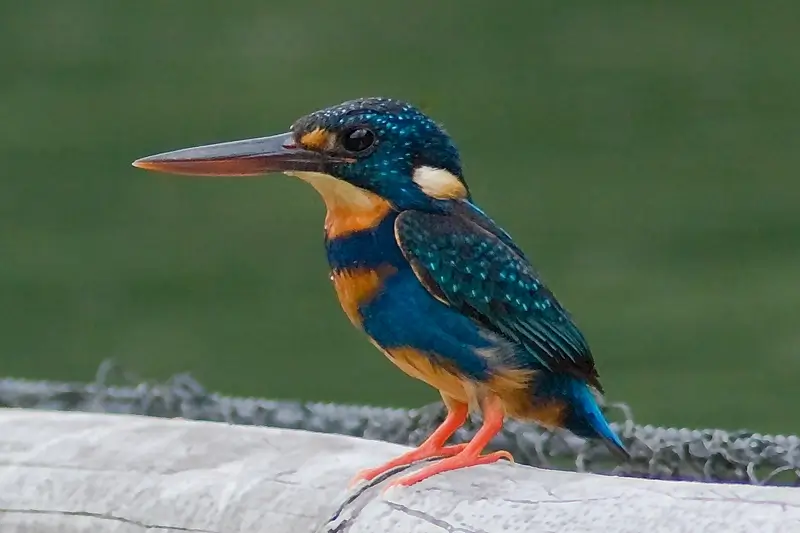
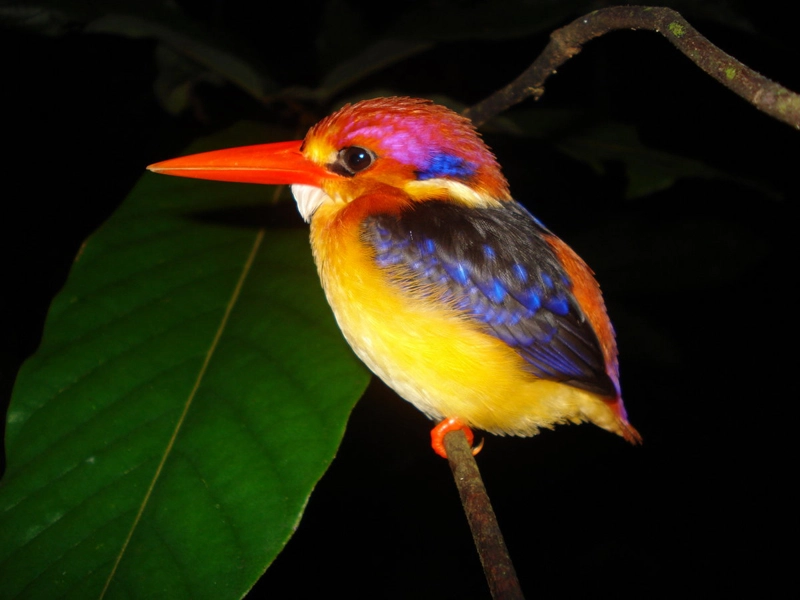
Kingfishers are small to medium-sized birds. They have big, squarish heads; short necks; short legs; and long, thick bills. They have small four-toed feet that are syndactyl. That means the three front toes are joined together for at least part of their length.
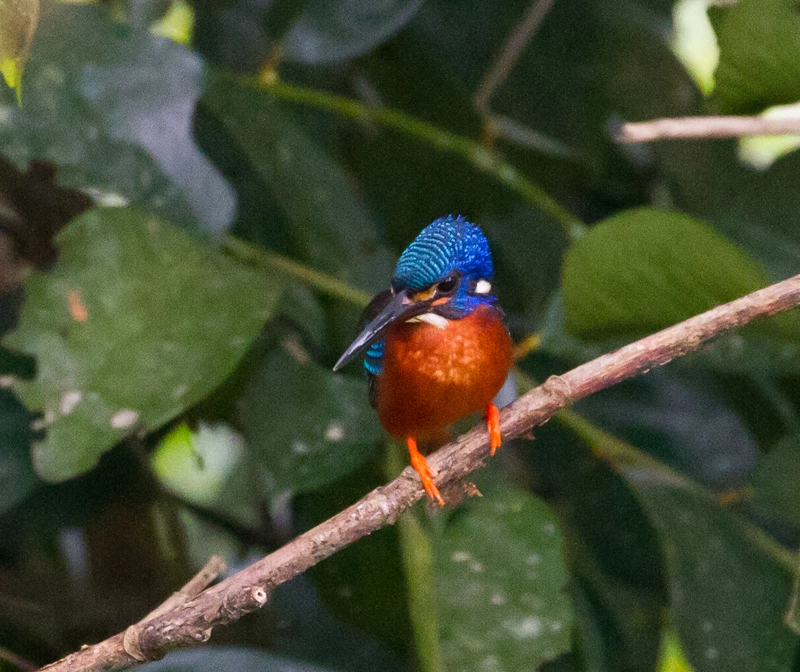
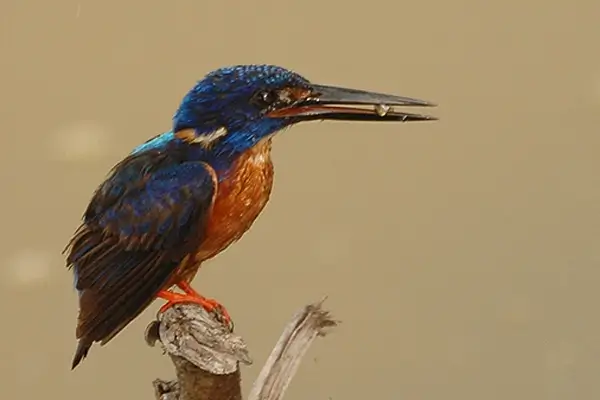
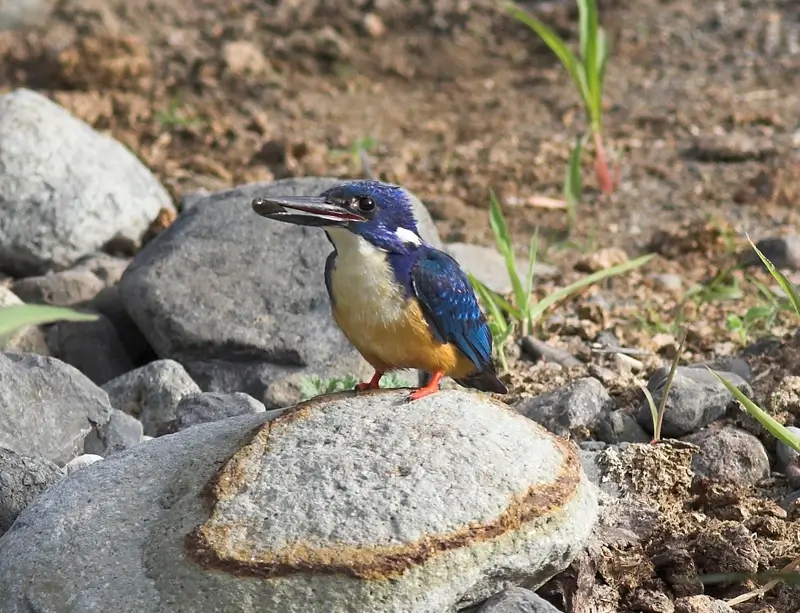
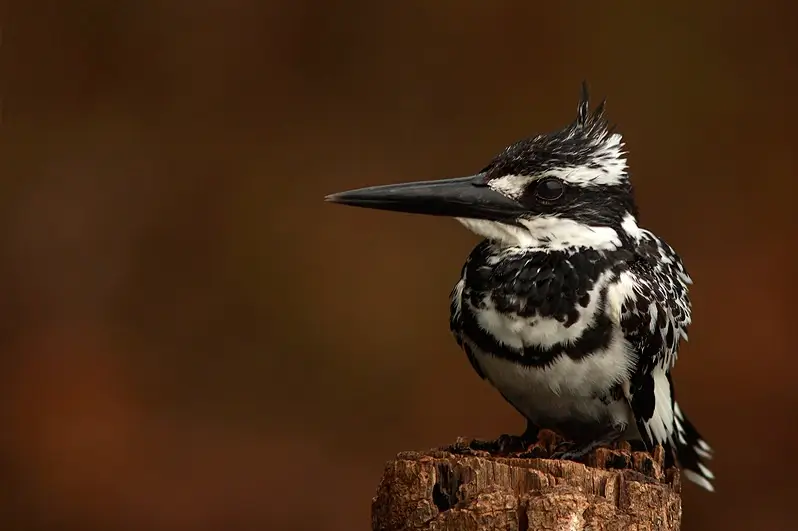
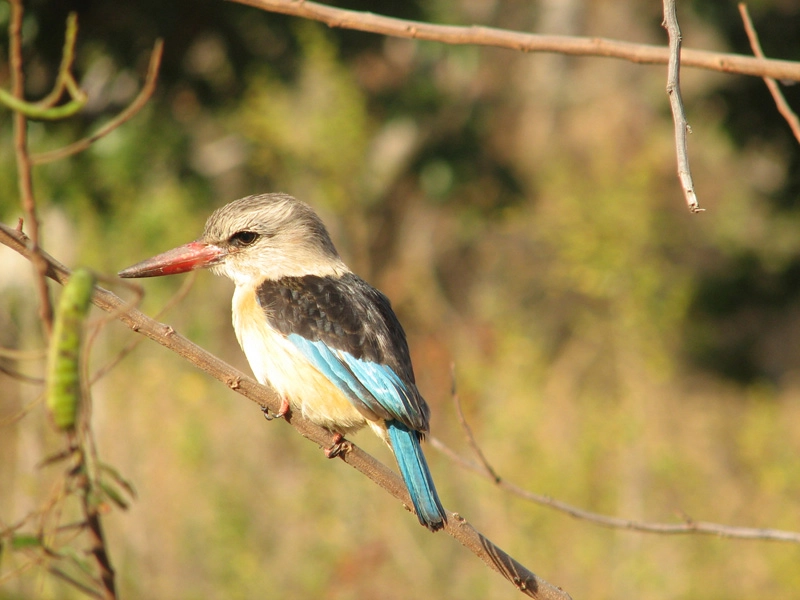
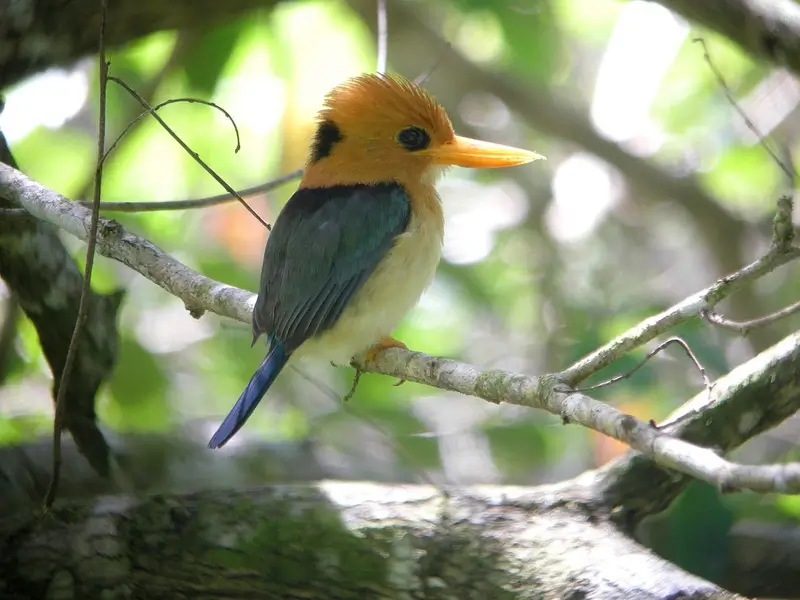
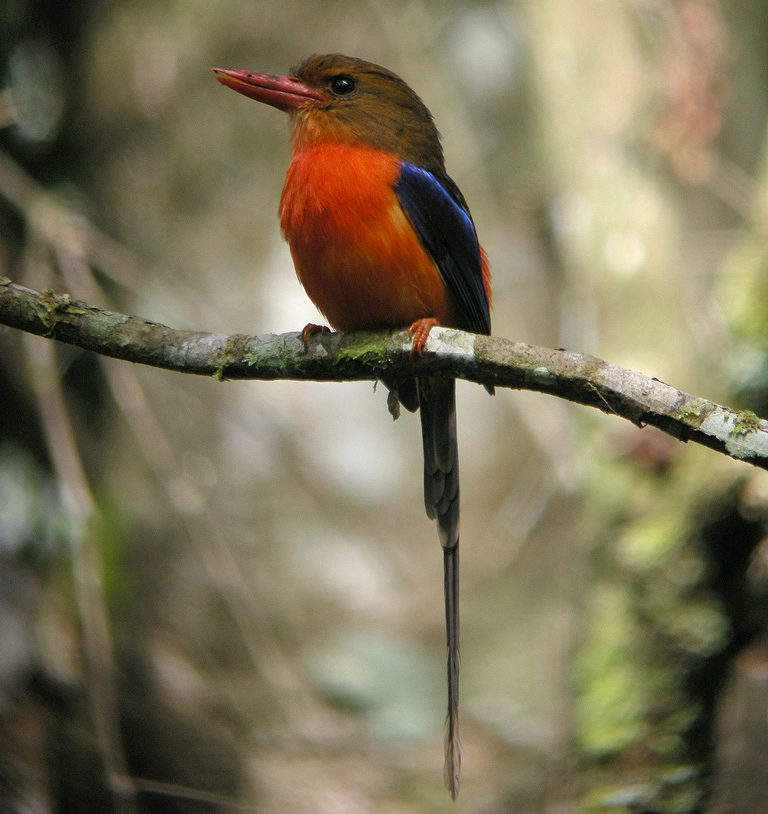
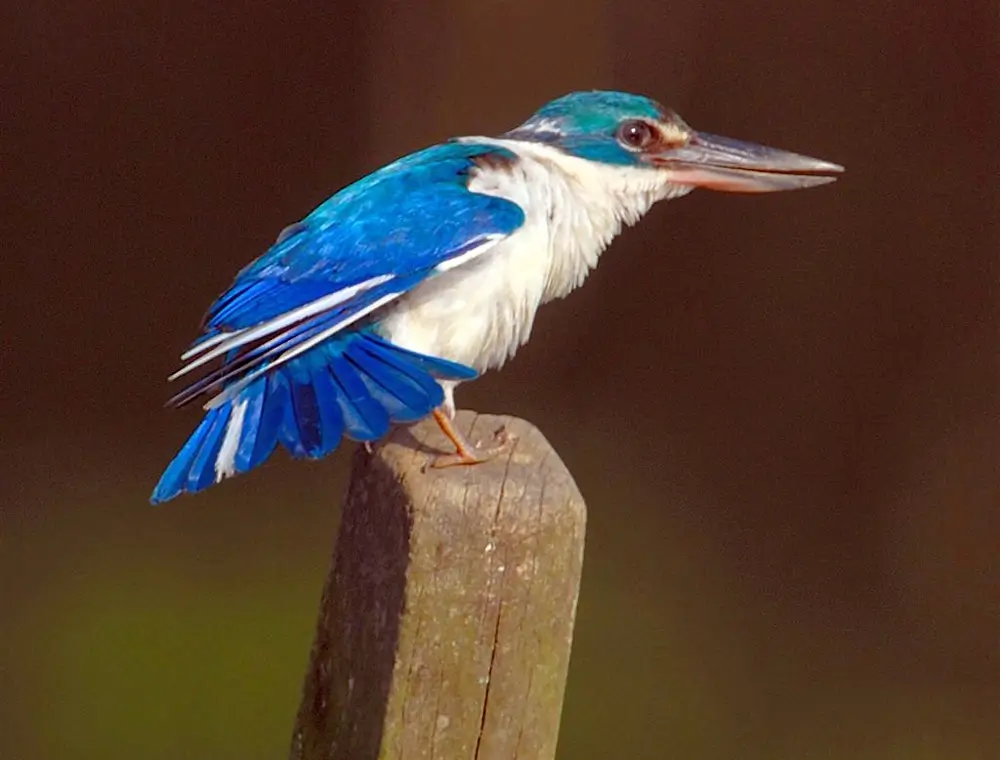
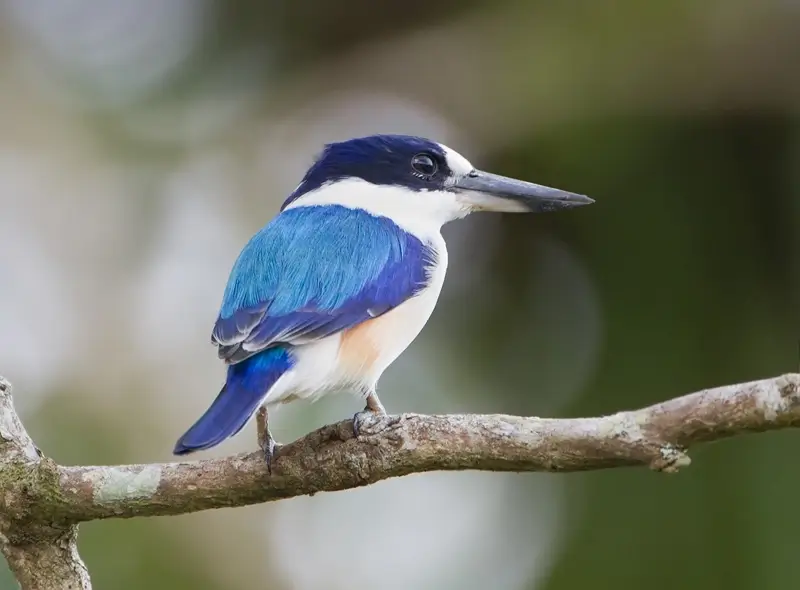
The bills of kingfishers are usually black, orange, red, or yellow. Many species are brightly colored and have distinctive markings.
Many species of kingfisher mate for life, and male/female pairs live alone. All kingfisher species are very territorial. Both the male and the female incubate eggs and care for the young.
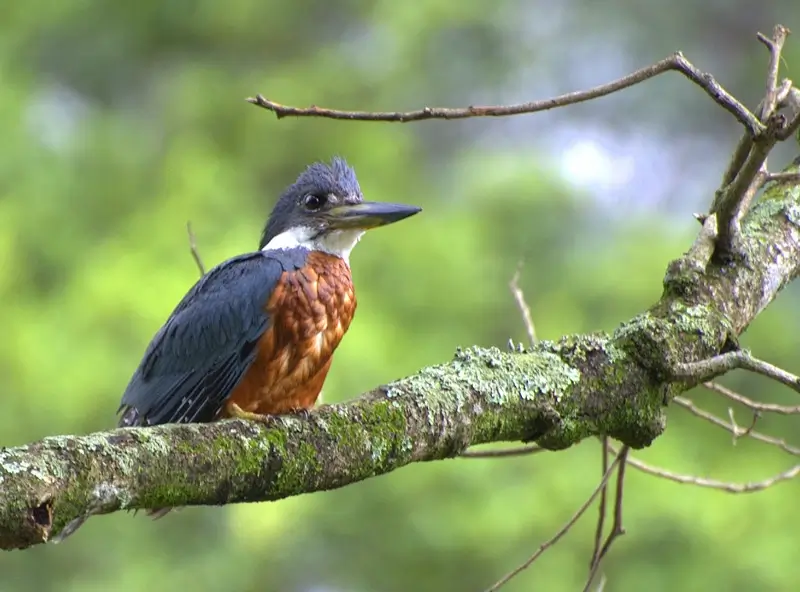
There are three species of kingfisher found in the United States – the belted kingfisher, the green kingfisher, and the ringed kingfisher. The belted kingfisher is found across most of the U.S. It is also found in Canada and Mexico. The green kingfisher and the ringed kingfisher are found from southern Texas south to Argentina.
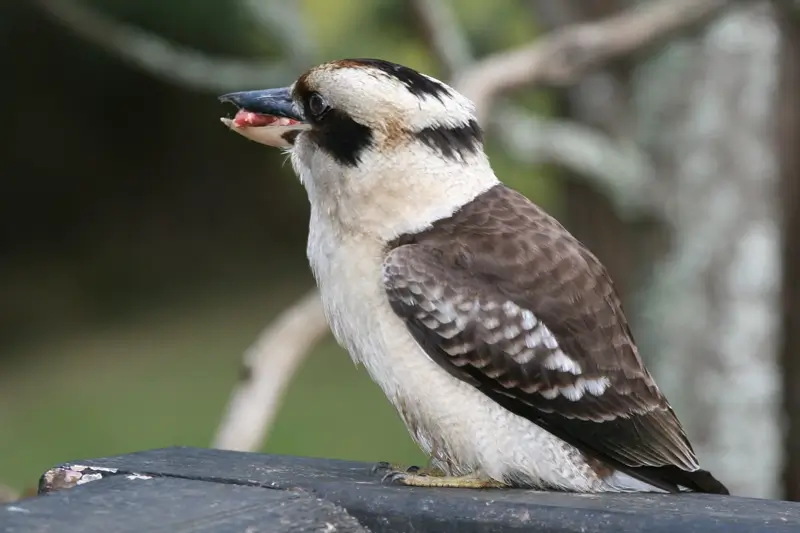
The laughing kookaburra of Australia is the largest species of kingfisher. It is about 16 inches in length and has a distinctive cackling, laughing call. It has brownish wings and face and a white belly. Laughing kookaburras live in woodland areas.
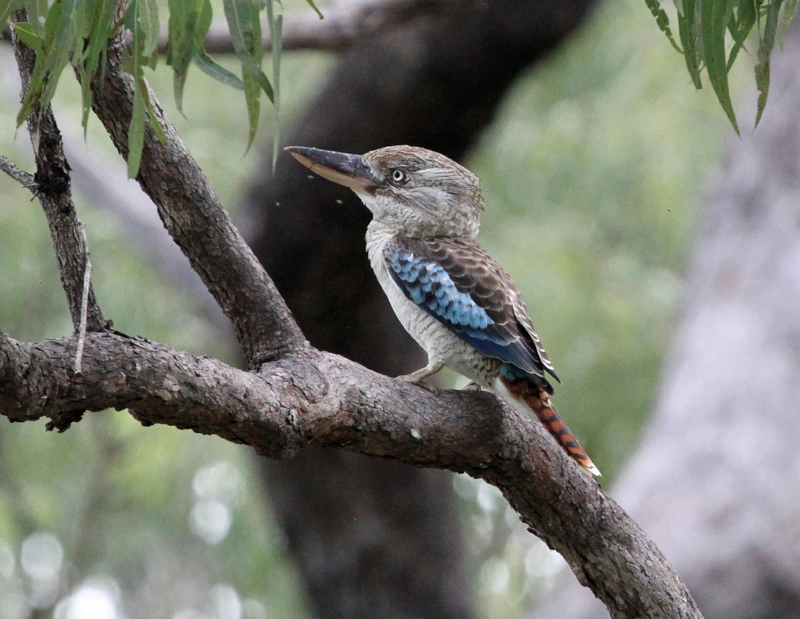
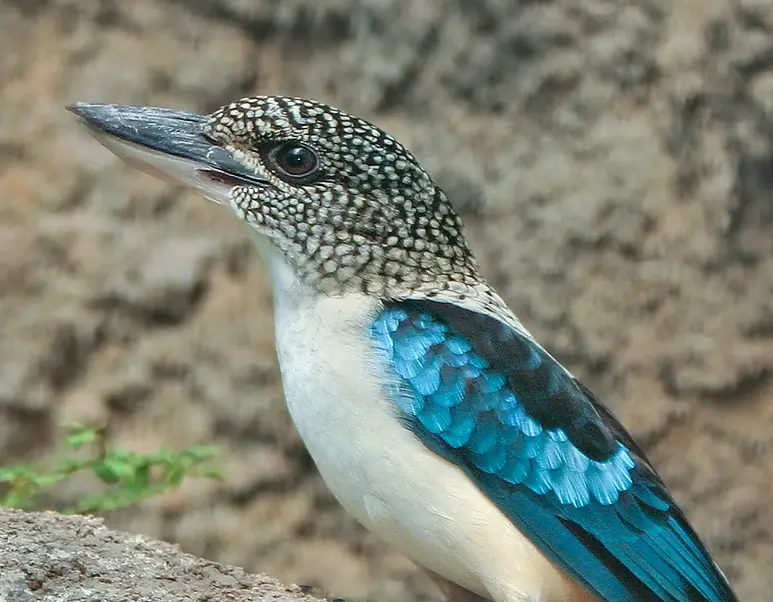
There are three other species of kookaburras. The blue-winged kookaburra is found in Australia and New Guinea. It is a little smaller than the laughing kookaburra and is brown with blue-edged wings. The rufous-bellied kookaburra is found in the rainforests of New Guinea. It has a white bill, a reddish belly and tail, and bluish wings. The spangled kookaburra is found on the Aru Islands and New Guinea. It has a white chest and belly, bright blue wings and tail, and a black head with white spots.