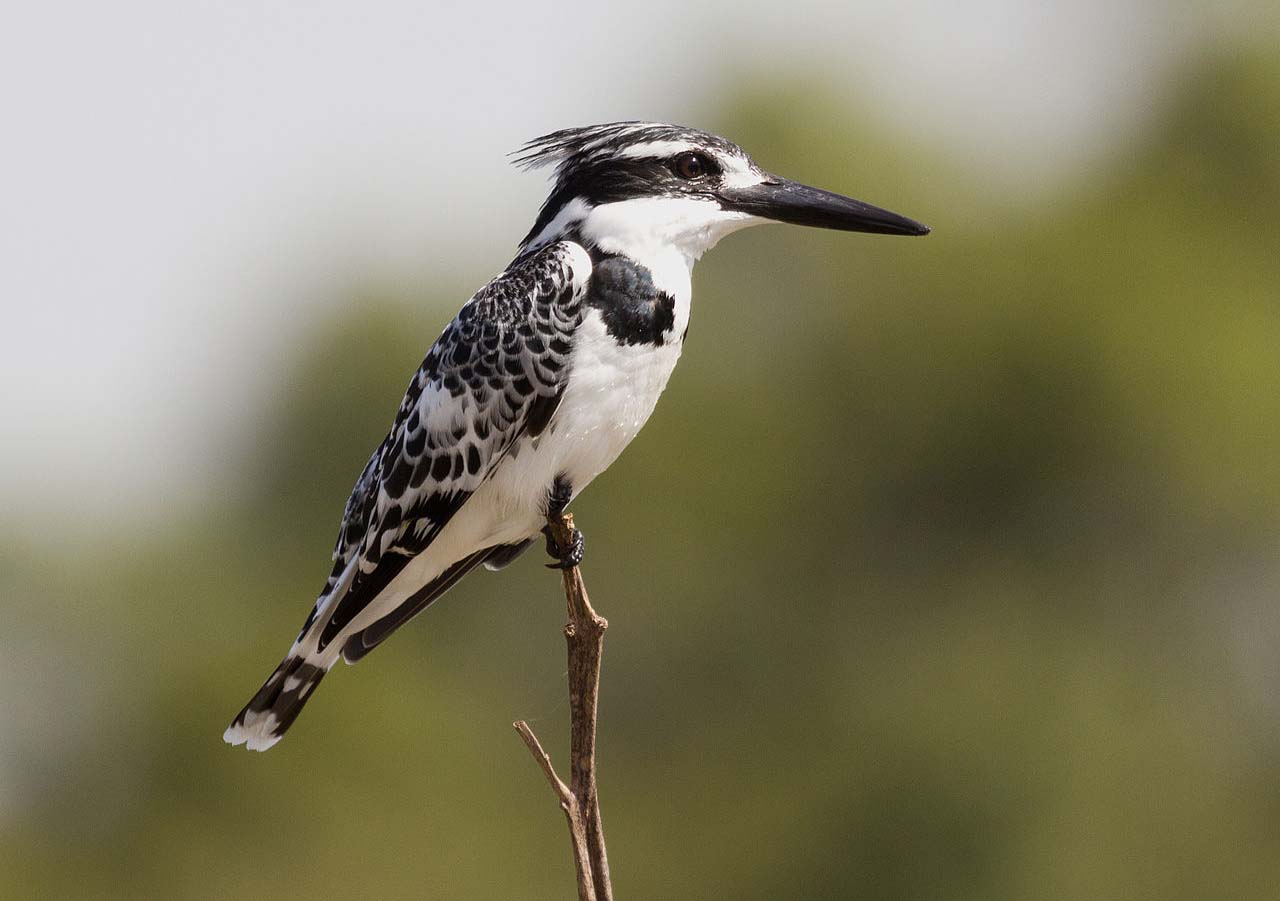
This order includes about 190 species of birds in six families.
Coraciiformes are found throughout much of the world, but they are most diverse in Africa, Asia, Australia, and Europe. Fewer species occur in North America, Central America, South America, and the Caribbean.
These birds range in size from small to medium and are known for their large heads, short legs, and small feet. Most species have three front toes that are partly joined together, a feature called syndactyly.
Many Coraciiformes are brightly colored, with brilliant shades of blue, green, turquoise, chestnut, and yellow. Their bills vary in shape depending on their diet, but they are generally strong and well-suited for catching prey.
Most species nest in tree cavities, termite mounds, or burrows dug into the ground or riverbanks. Many form long-term pair bonds, and males and females often remain together for more than one breeding season.
Their diet varies by species and may include insects, spiders, worms, small reptiles, fish, frogs, fruits, and other small animals.
FAMILIES
Alcedinidae (kingfishers, kookaburras)
Brachypteraciidae (groundrollers)
Coraciidae (rollers)
Meropidae (bee-eaters)
Momotidae (motmots)
Todidae (todies)