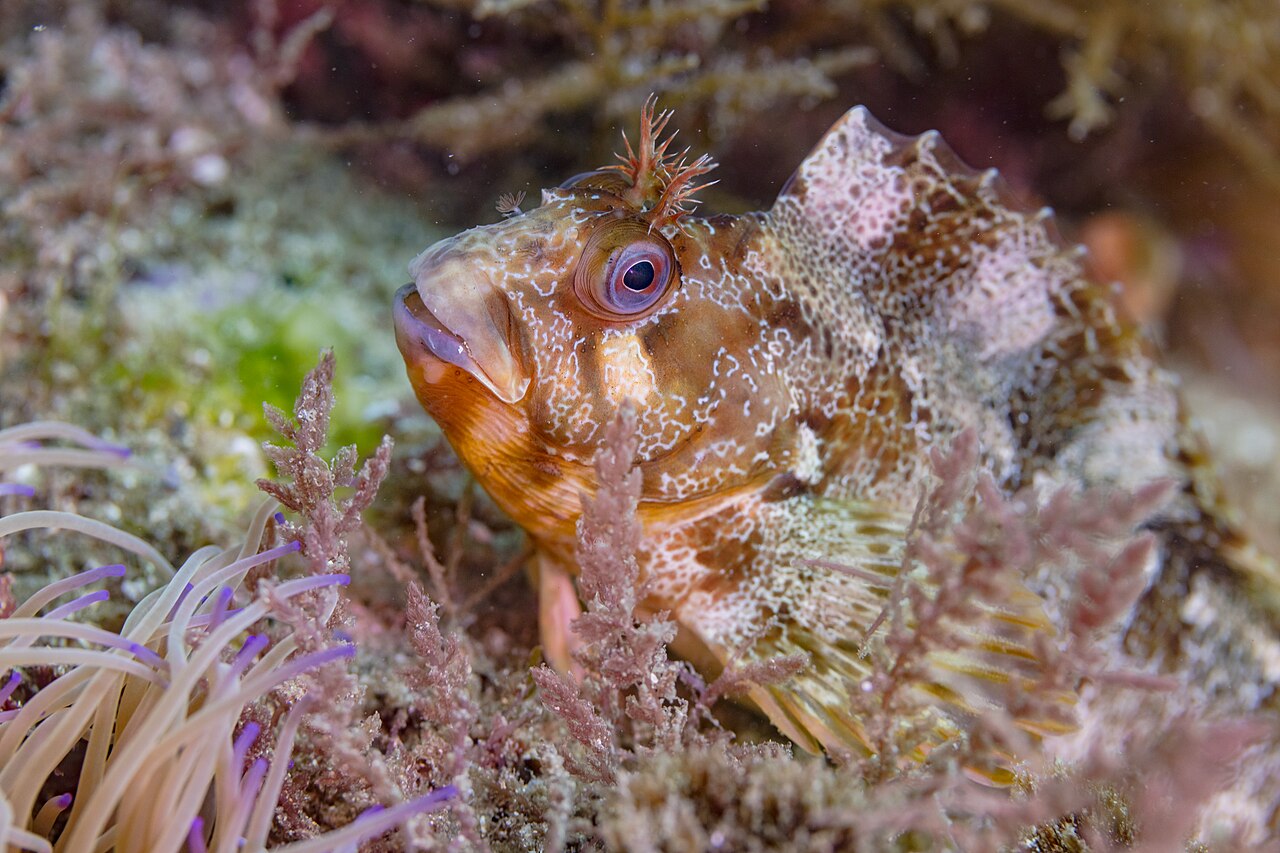
There are about 900 species of small, lively fish in this group, known as blennies, divided into six families. Blennies live in oceans around the world, especially in shallow coastal areas such as tide pools, coral reefs, and rocky shorelines.
Blennies are usually small—often only a few inches or centimeters long—with long, slender bodies and relatively large heads. Many species have cirri, which are tiny, hair-like or tentacle-like structures on top of their heads that can make them look like they have eyebrows. Their colors and patterns help them blend into their surroundings, protecting them from predators.
The name “blenny” comes from the Ancient Greek word blennos, meaning “mucus” or “slime.” This refers to the slimy coating found on many species.
Unlike many fish that swim constantly, blennies often rest on rocks or the seafloor. They use their strong pectoral (side) fins to prop themselves up. When needed, they can move quickly, darting away to escape danger.
Most blennies eat algae, plankton, or small invertebrates. Despite their small size, some species are bold and will defend their territory.
Blennies lay eggs, usually attaching them to surfaces like rocks. In many species, the male guards the eggs until they hatch, helping keep them safe from predators.