The six species in this family are found in two groups. Camels are found in Asia and Africa. Llamas, alpacas, and vicugnas are found in South America.
The species in this family are large, and most of them have been domesticated. They are herbivores and have three-chambered stomachs. Their top lip is split into two, and they can move each part separately. They have long necks and a small head, and long legs with padded feet with two large toes.
They live in small groups of females, their young, and one adult male. Although there are no living species of the camelidae family in North America today, the fossil record shows that the family started and evolved there. Scientists have found preserved remains in the La Brea Tar Pits near Los Angeles.
The members of the camelidae family that were in North America probably resembled llamas. Members of this family migrated to South America and Asia over land bridges. By the end of the last glacial age, they had become extinct in North America.
BACTRIAN CAMEL
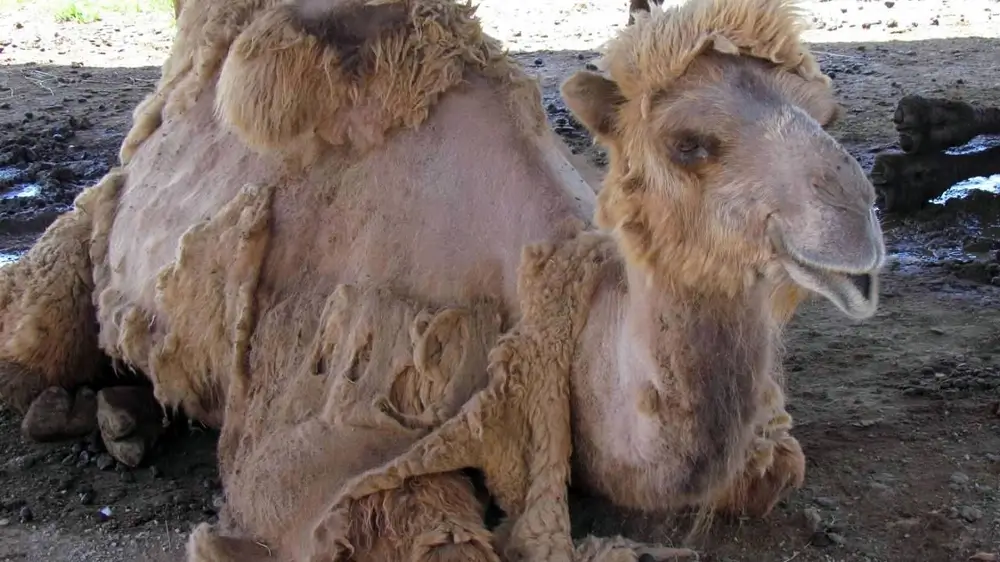
The Bactrian camel is found in the Gobi Desert in Mongolia and China. The Gobi Desert is a cold desert, and the Bactrian camel has many adaptations that help it survive in a cold desert habitat.
It has two humps on its back. The hump is not filled with water; it is filled with fat. The camel uses this stored fat when water and food are scarce. While the bactrian camel doesn’t store water in its humps, it does have a special sac in its stomach that can hold over a gallon of water, and it can go a few days without drinking.
In the winter, it has a thick, shaggy coat that helps keep it warm. Its bushy eyebrows, long double rows of eyelashes, and nostrils and lips that close tightly help keep sand out of its eyes, nose, and mouth.
The Bactrian camel stands as tall as seven feet from its shoulder to its feet and can weigh up to 2,000 pounds. The Bactrian camel is an herbivore and eats grass, leaves, thorns, and bark. It prefers salty plants. It has tough lips that let it eat tough vegetation. Most Bactrian camels are now domesticated, and there are only a few hundred in the wild.
DROMEDARIAN CAMEL
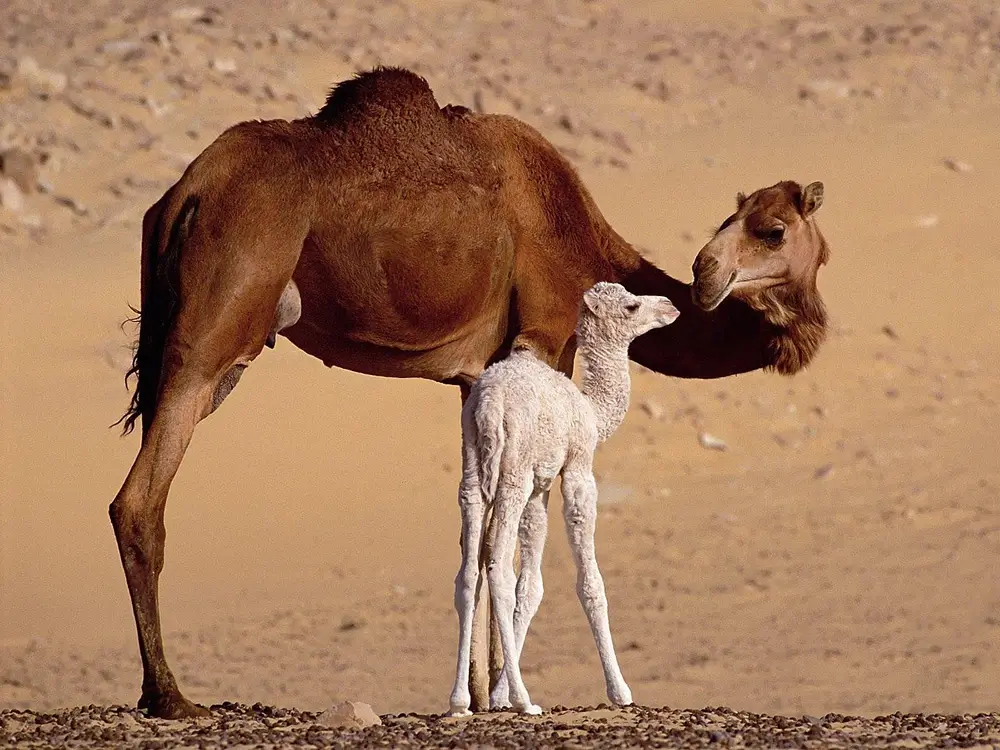
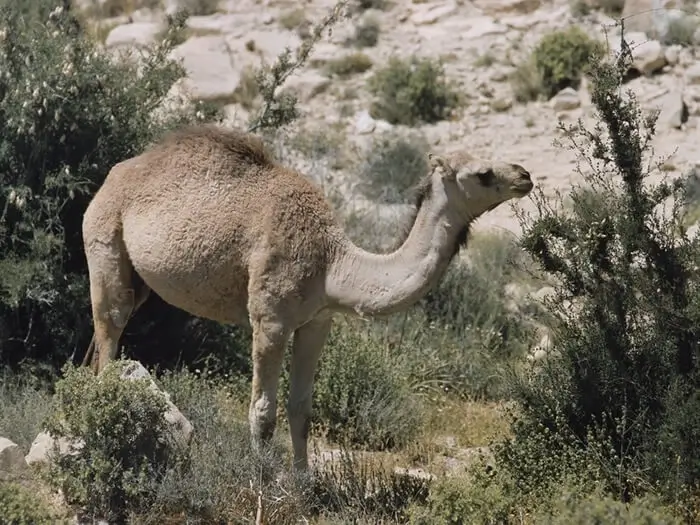
The dromedarian camel is found in the deserts in Africa and the Middle East. It has one hump that stores fat, not water.
It stands 6-7 feet from its shoulder to its feet. It has long legs and padded feet with two toes. It has a long, curved neck and a small head with a long snout, with nostrils that can close. Its upper lip is split into two sections, and it can pull its lips in tightly to keep out sand. It is light brown and has a shorter coat than the Bactrian camel. It eats a wide variety of plants and can eat tough plant parts that other animals can’t chew or digest. It prefers salty plants.
LLAMA, GUANACO, ALPACA
The llama, the guanaco, and the alpaca are all native to the Andes Mountains in South America, and they are all herbivores. The only wild species is the guanaco. The llama and the alpaca are domesticated.
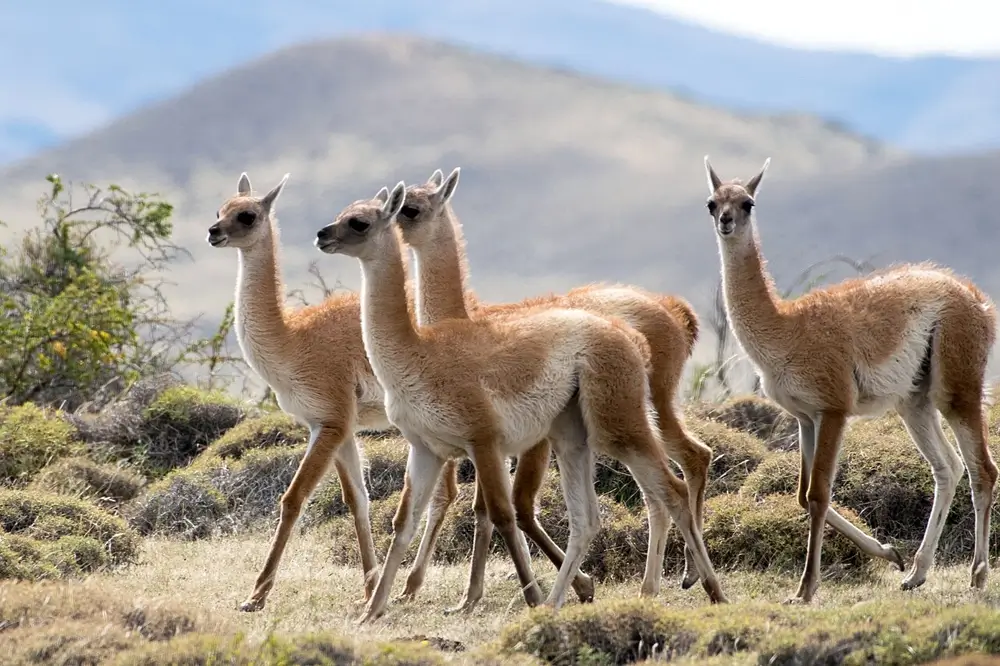
The guanaco is found in the grasslands of the Andes Mountains. It has a small head, long legs, and a long neck. It is about 3.5 feet tall from shoulder to feet. It has a shaggy, reddish-brown coat and is white on its undersides. Like the camels, it has a split upper lip. It eats grasses and shrubs.
The guanaco lives in groups of females and their young, along with one adult male. It can run at speeds of up to 35 miles per hour. The guanaco is a protected species in Chile and Peru.
The llama and the alpaca are descended from the guanaco. The llama was domesticated from the guanaco 4,000-5,000 years ago. Llamas were used as pack animals.
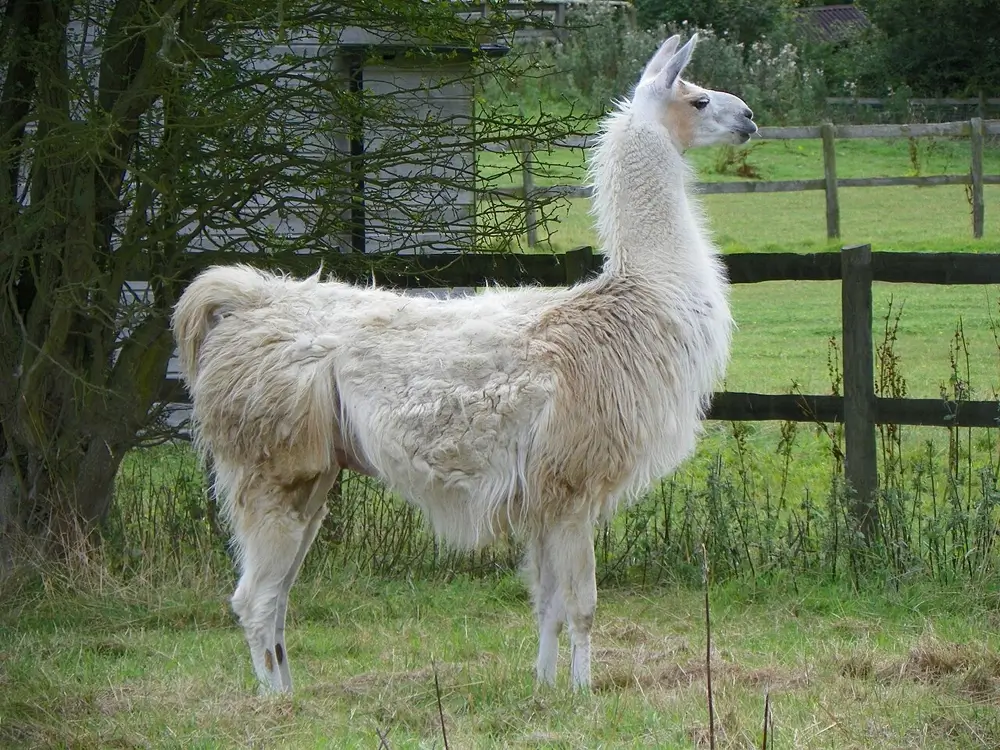
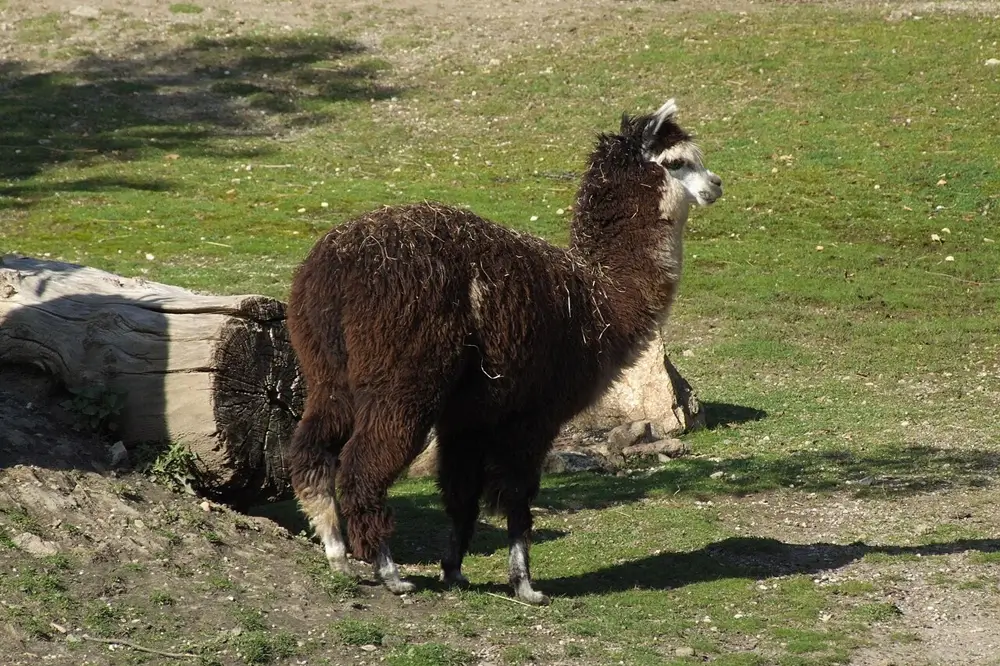
The llama is 5.5-6 feet tall from head to toe. It has two toes on its padded feet and can easily grip the rocky surfaces in its mountain habitat. The llama has long, shaggy fur. Its fur can vary in color from reddish-brown to white, black, brown, or a combination of colors. Llama fur is used to make clothes.
The alpaca was also domesticated from the guanaco. The alpaca is slightly smaller than the llama. It is about 5 feet tall from its head to its toes. It looks like the llama. Unlike the llama, the alpaca is not used as a pack animal, but its soft, shaggy fur is used to make clothing.
VICUGNA
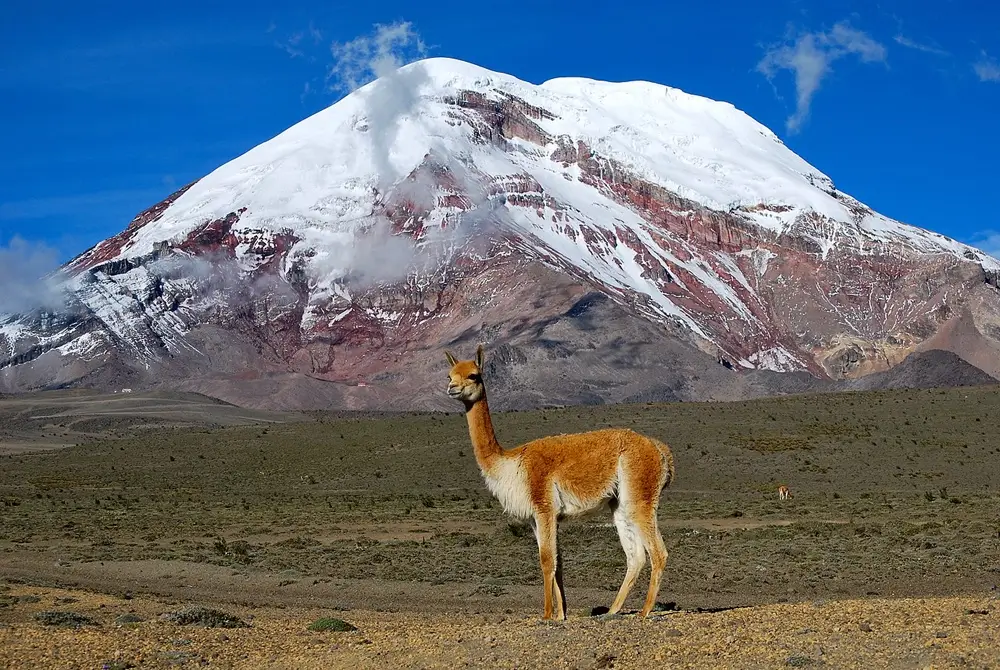
The vicugna is found in the plains and grasslands of the Andes Mountains. It is the smallest member of the Camelidae family. It is three feet tall from shoulder to feet. It has a slender body, a long neck, thin legs, and long, silky fur. It is reddish-brown on its uppersides and white on its undersides. It has a mane of hair on its chest. The vicugna is also known as the vicuña.