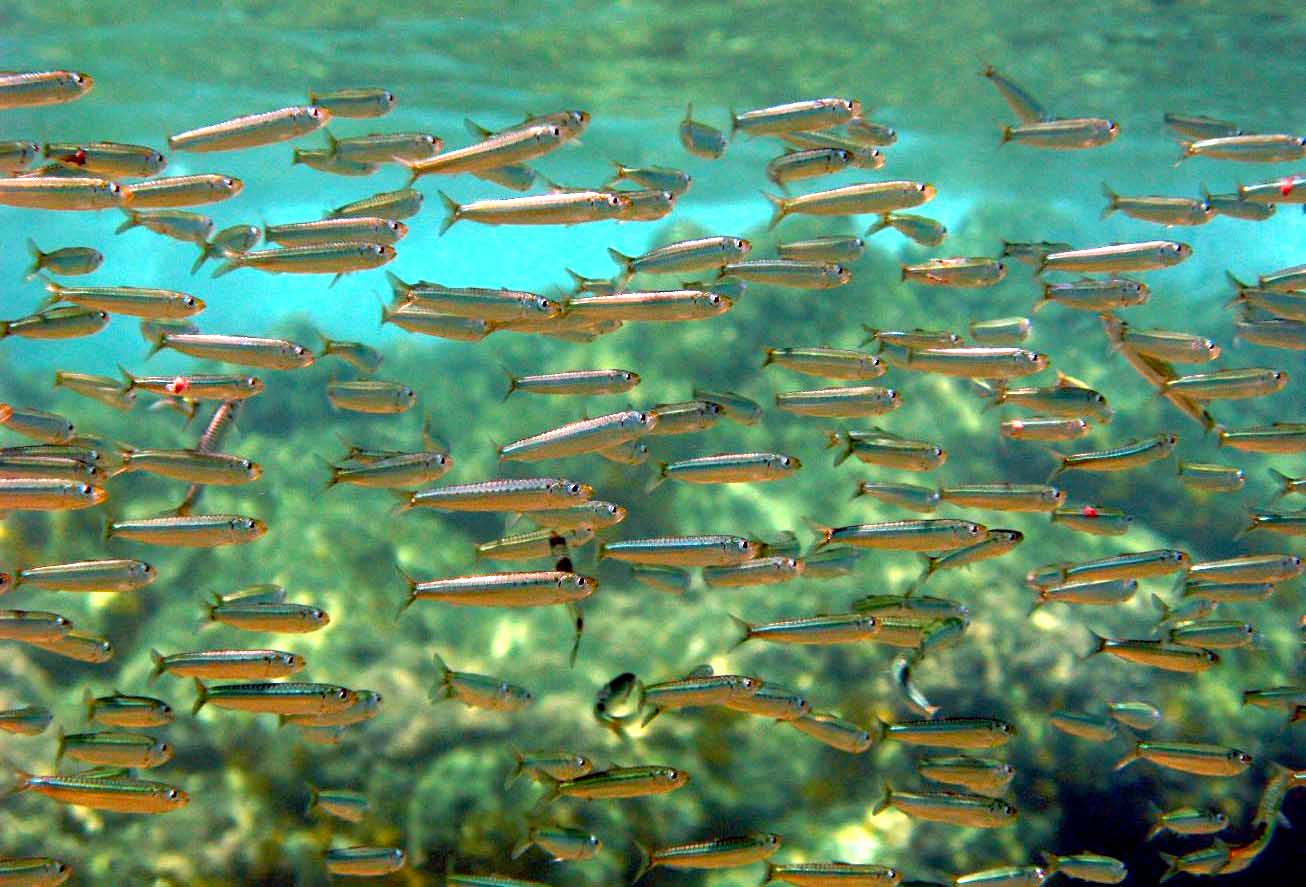
This order of ray-finned fish includes sardines, anchovies, and shads. There are about 405 species in 10 families within this group. These fish are usually small to medium in size and are found in oceans around the world, although some species also live in freshwater.
Fish in this order have streamlined, silvery bodies that help them swim quickly and reflect light, making it harder for predators to see them. Most species have a single dorsal (back) fin and lack a lateral line (a sensory system found in many other fish). Instead, they rely on other senses—such as hearing and detecting vibrations—to stay aware of their surroundings.
One of the most important behaviors of Clupeiformes is schooling. They swim together in large groups, which helps protect them from predators and makes it easier to find food. These fish mainly eat tiny organisms like plankton, which they filter from the water.
Clupeiformes play a major role in ocean ecosystems. They are an important food source for many larger animals, including bigger fish, seabirds, and marine mammals. They are also important to humans—species like sardines and anchovies are widely eaten around the world and support major fishing industries.