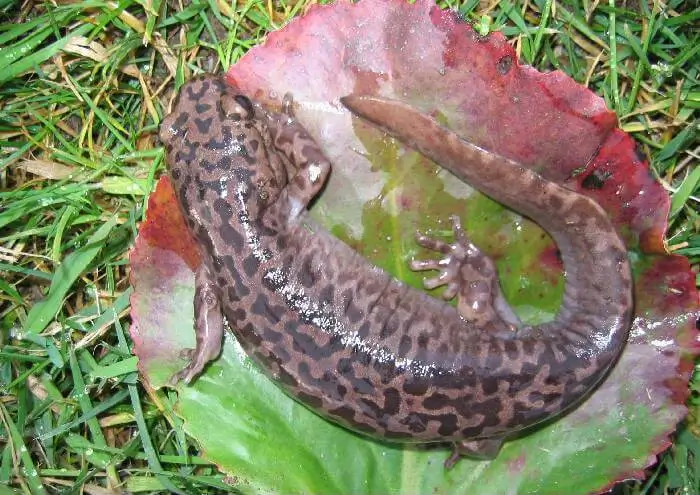
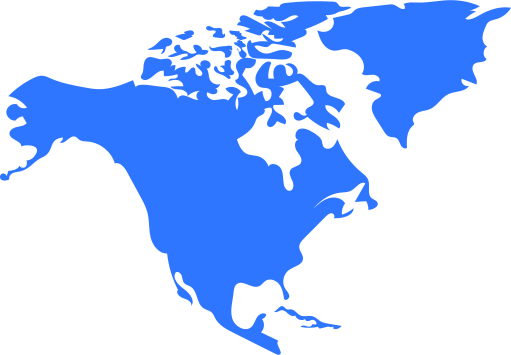
There are four species in this family. They are all found in coniferous forests in northwestern California, Oregon, Washington, Idaho, and British Columbia in Canada. They have flat, stocky bodies; wide heads; bulging eyes; and a long, laterally-flattened tail.
The species in this family are about a foot in length, and most are brown with brown or black spots and splotches. They spend the day under logs or rocks and come out at night, especially after it rains. One species, Cope’s giant salamander, has gills and lives in the water. Another species, the California giant salamander, makes a barking sound when it is disturbed!
The female in this family lays single eggs in streams. She cares for the eggs until they hatch. The larvae have external gills and four pairs of gill slits. The live in the water for 2-5 years.
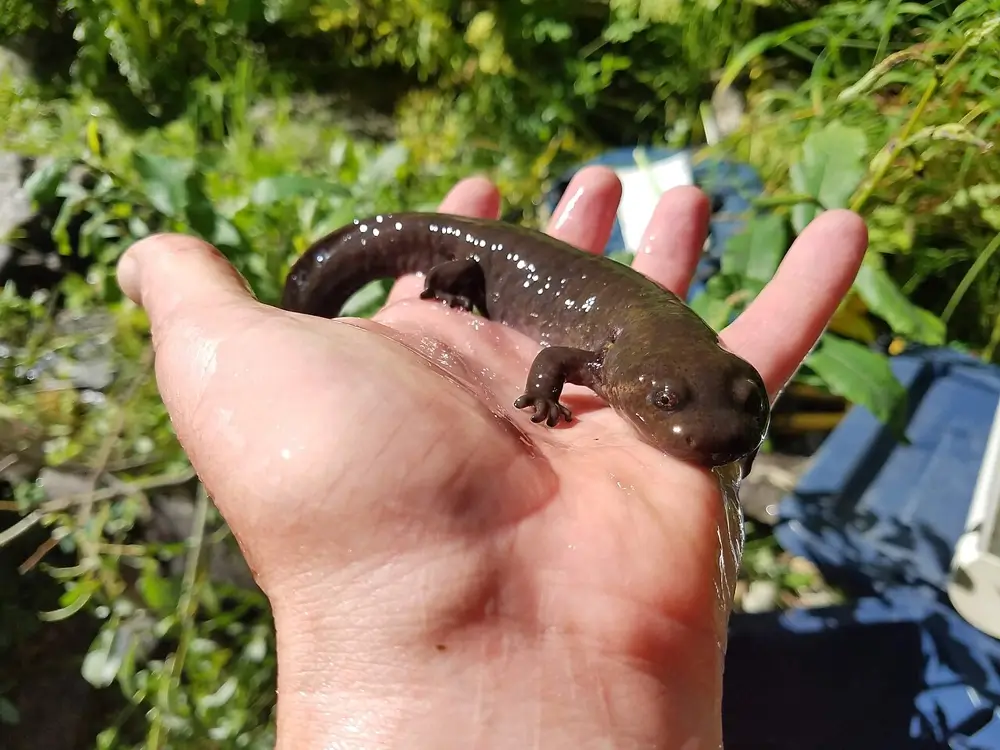
Idaho Giant Salamander (Dicamptodon aterrimus)
The Idaho giant salamander is close to 13 inches in length. It is found in northern Idaho and extreme western Montana. IUCN Redlist Status: Least Concern
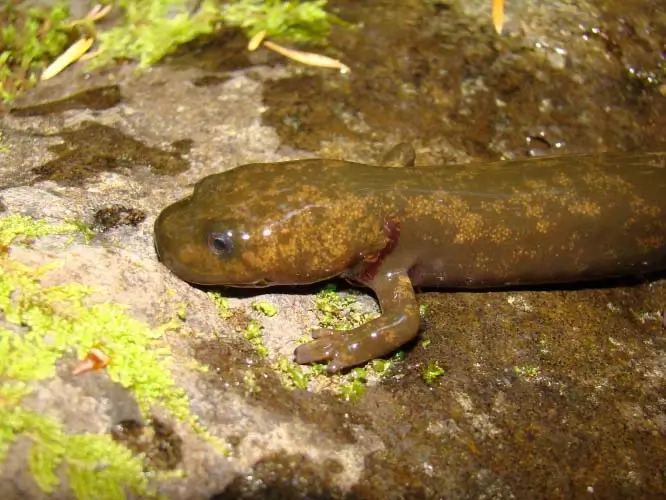
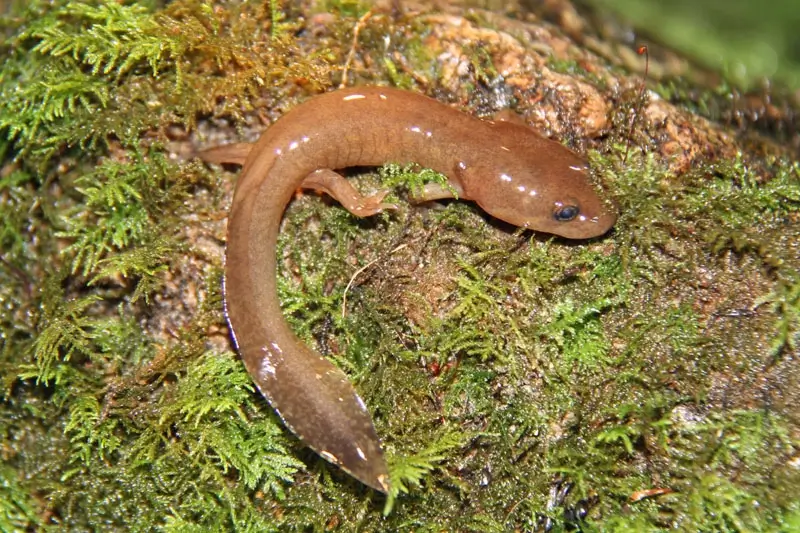
Cope's Giant Salamander (Dicamptodon copei)
Cope's giant salamanders are found in clear, cold mountain streams. from Washington south to northwestern Oregon. It IUCN Redlist Status: Least Concern
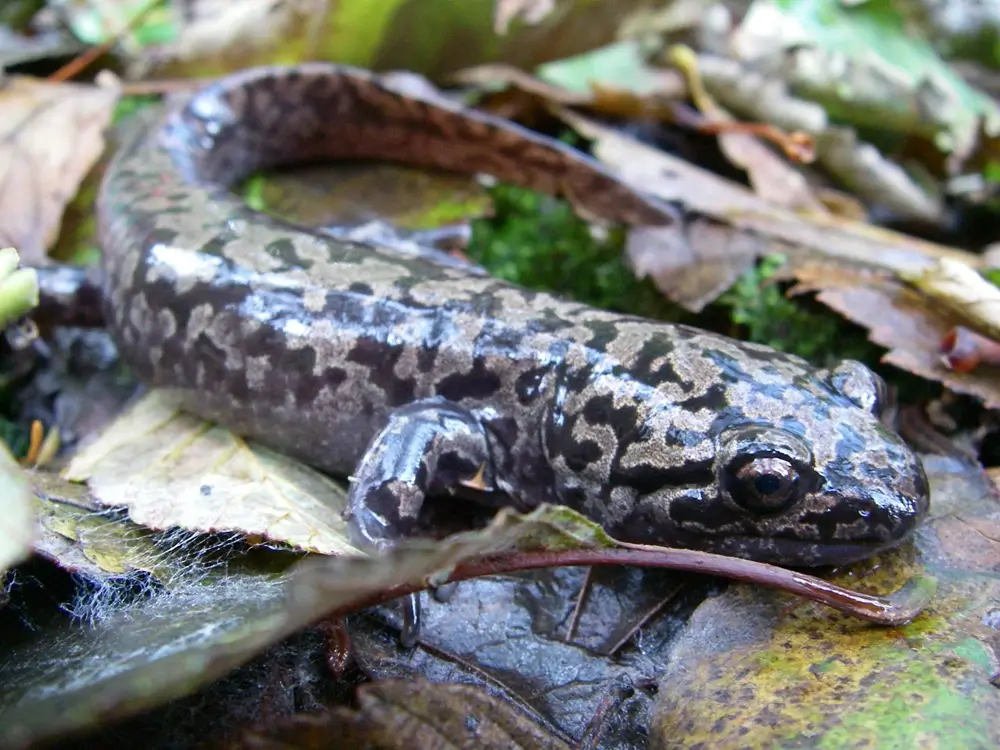
California Giant Salamander (Dicamptodon ensatus)
The California giant salamander is found in California. IUCN Redlist Status: Near Threatened
Coastal Giant Salamander (Dicamptodon tenebrosus)
The coastal giant salamander is found from southern British Columbia south through western Washington and western Oregon to northwestern California. IUCN Redlist Status: Least Concern