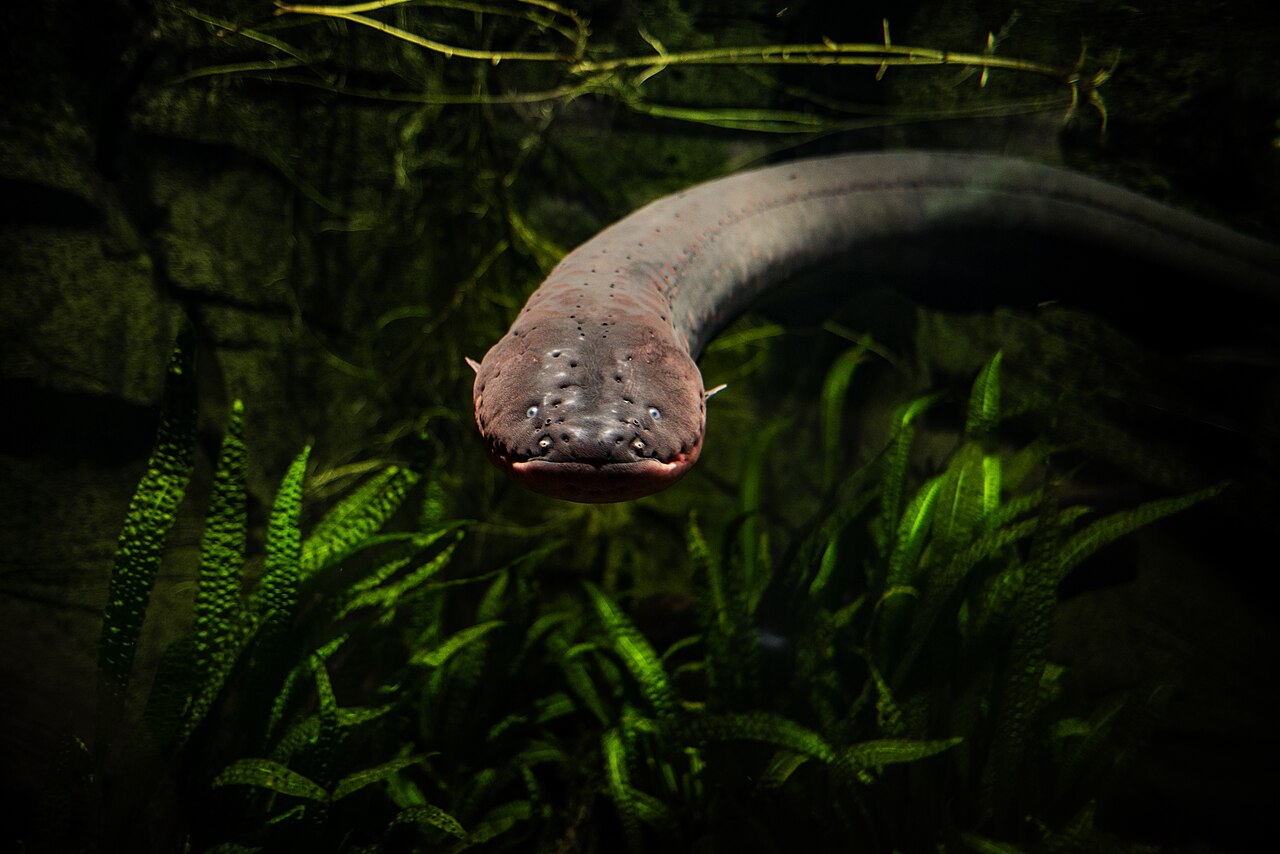
There are about 250 species in this order of freshwater fish, known as electric knifefish, spread across five families. They live in rivers and streams from southern Mexico to northern Argentina.
These fish have long, slender bodies that resemble the blade of a knife. Unlike many other fish, they usually lack a dorsal (top) fin. Instead, they swim by rippling their long anal (bottom) fin, which runs along much of their body. This allows them to glide smoothly forward—or even backward.
What makes Gymnotiformes especially interesting is their ability to produce electric fields. They use these weak electric signals to: