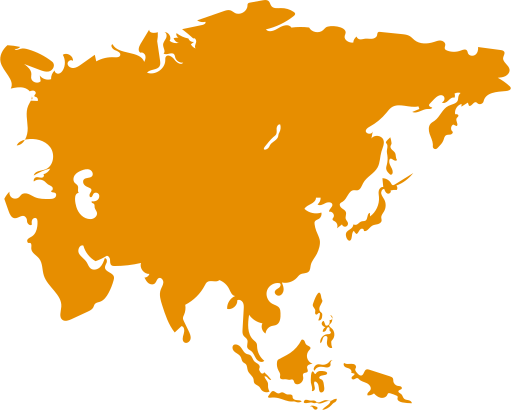
There are 34 species in this family. They are native to Africa and Asia, but they have been introduced around the world.
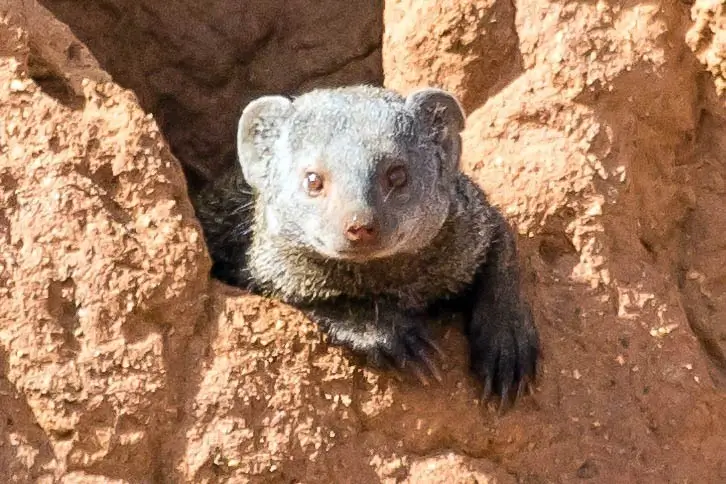
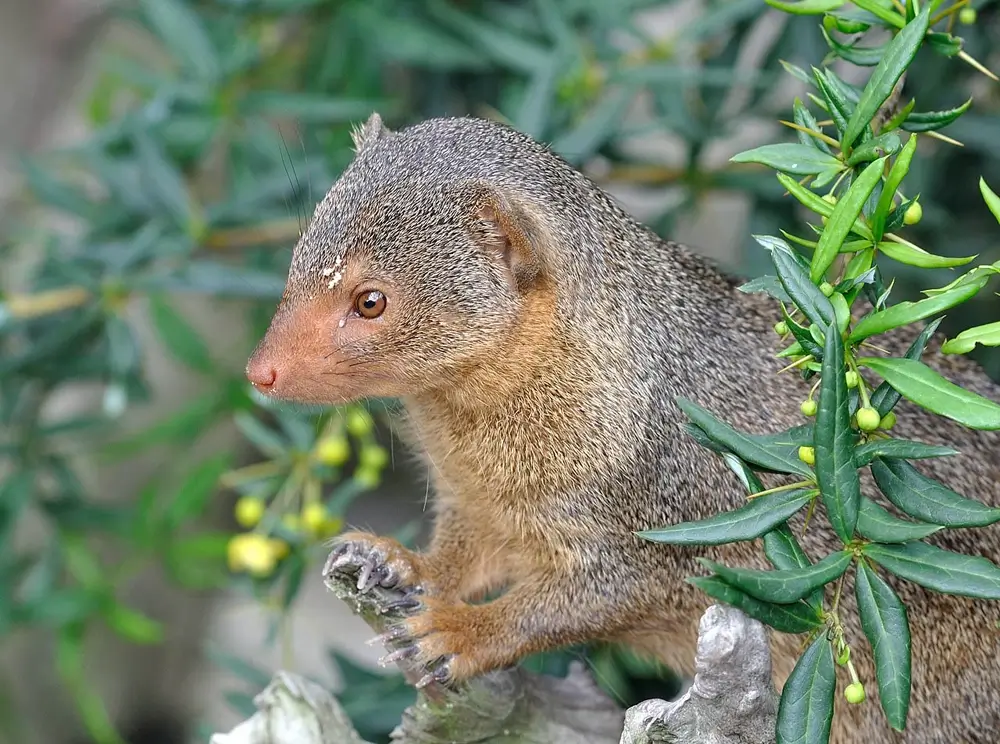
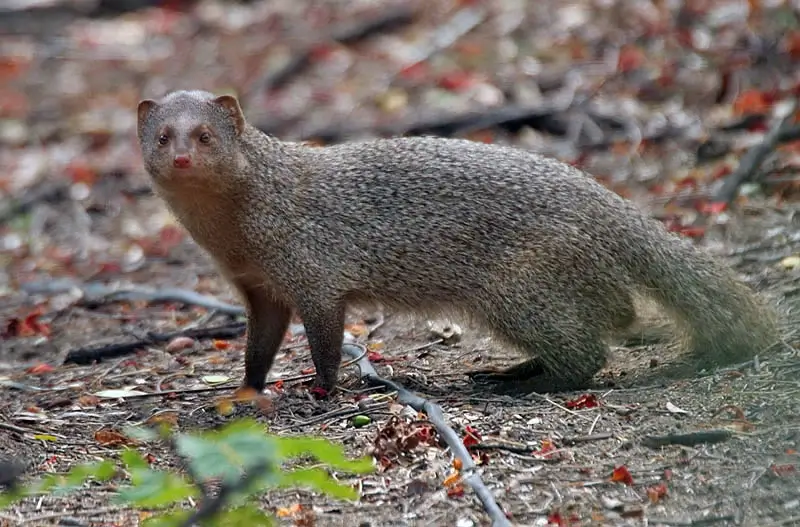
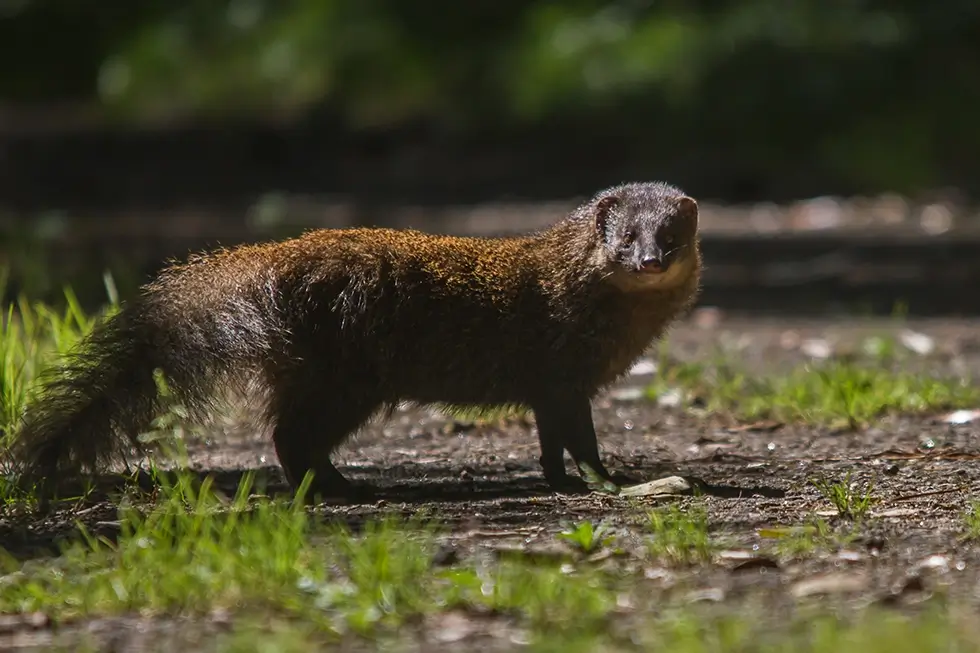
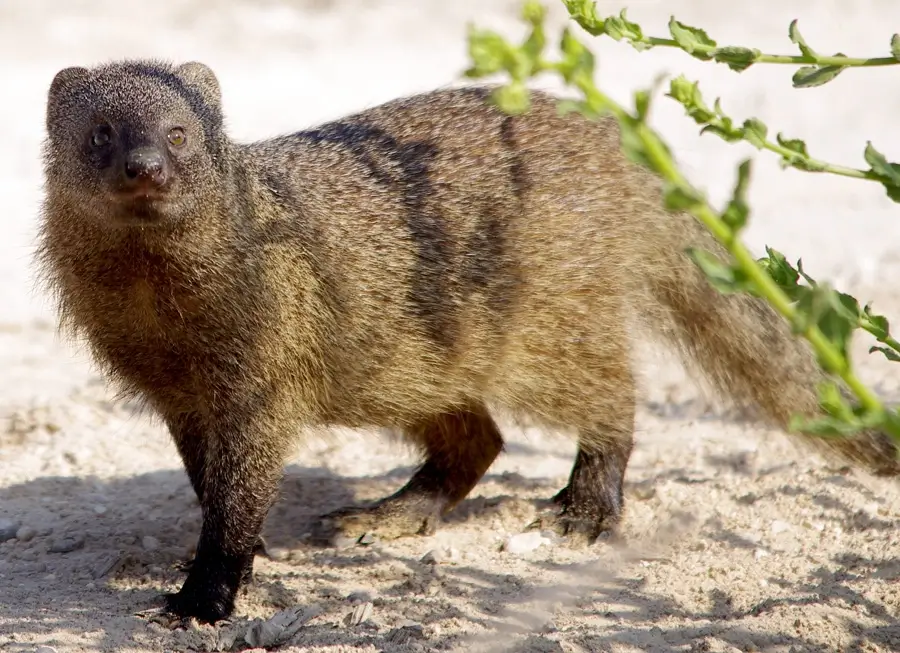
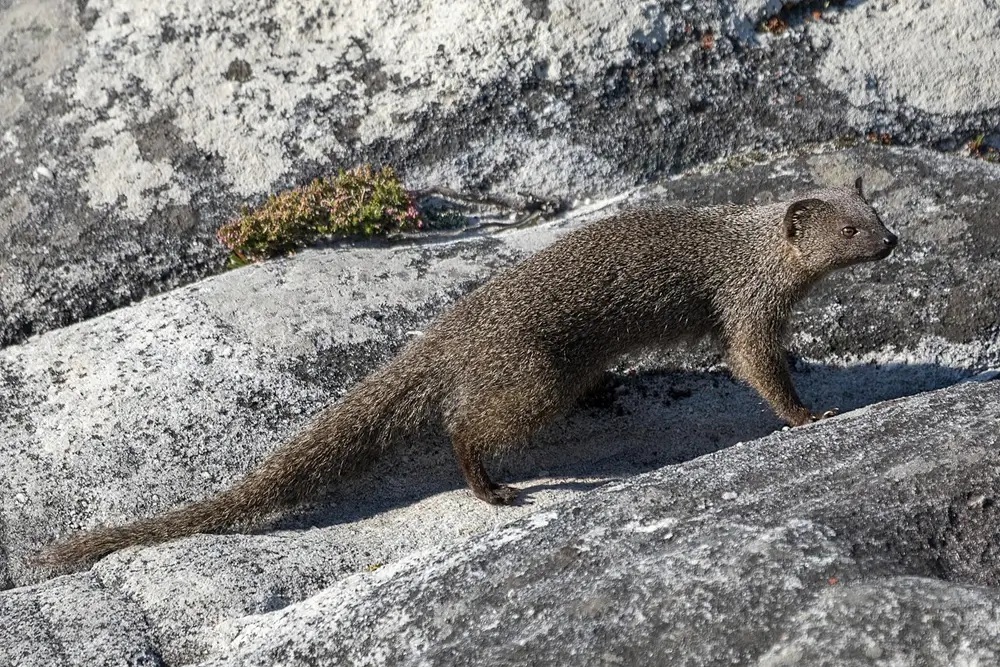
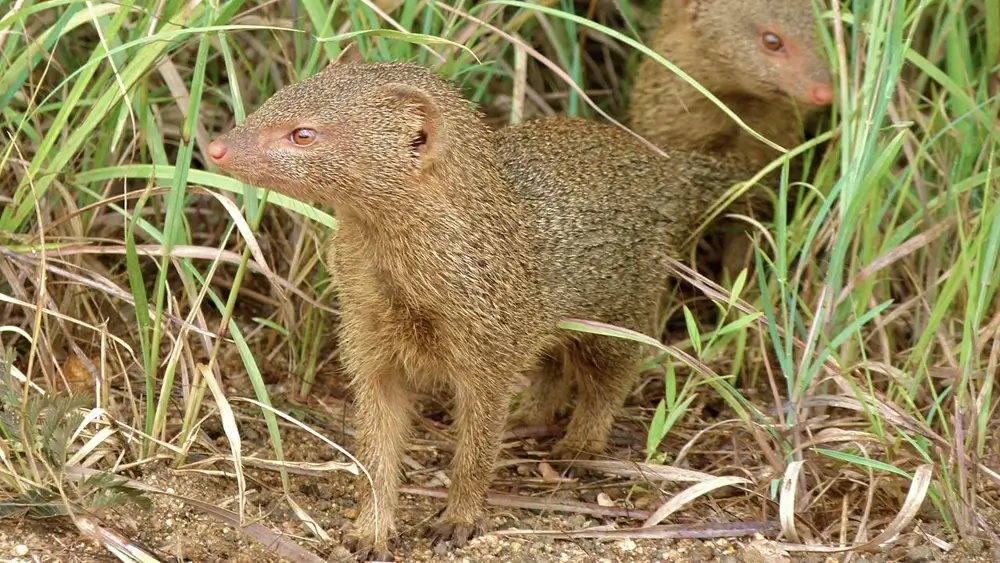
Mongooses have long bodies, small heads, pointed snouts, short, rounded ears, and long tails. Most species are gray or brown.
Most species in this family eat small mammals, birds, reptiles, eggs, and insects. They strike their prey quickly and are well-known for their ability to kill poisonous snakes without getting bitten.
The species in this family are found in a wide variety of habitats, from forests to deserts. Some species live in colonies. Other species are more solitary. Some species in this family are semi-aquatic, and other species are at home in trees.
The Indian mongoose was introduced to Hawaii in 1883 in an attempt to kill the rats that were eating the sugar cane crops. Unfortunately, the Indian mongoose hunts during the day, and the rats come out at night! Today, the Indian mongoose preys on native Hawaiian animals, especially birds.
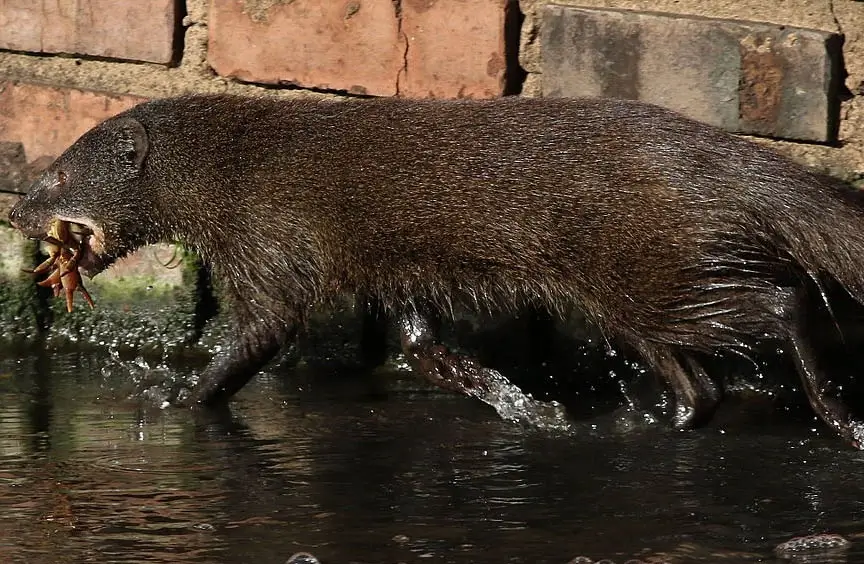
Marsh Mongoose (Atilax paludinosus)
The marsh mongoose is found in southern Africa. IUCN Redlist Status: Least Concern
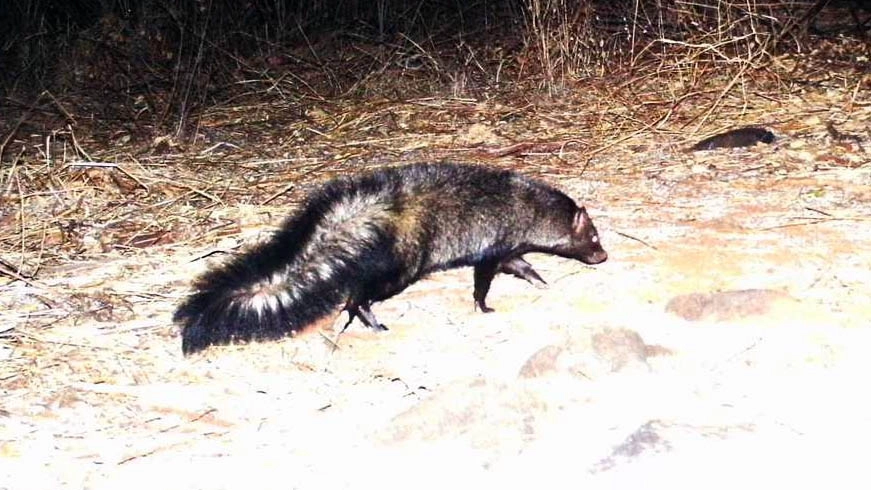
Bushy-Tailed Mongoose (Bdeogale crassicauda)
The bushy-tailed mongoose is found in The Democratic Republic of the Congo, Kenya, Malawi, Mozambique, Tanzania, Zambia, and Zimbabwe. IUCN Redlist Status: Least Concern
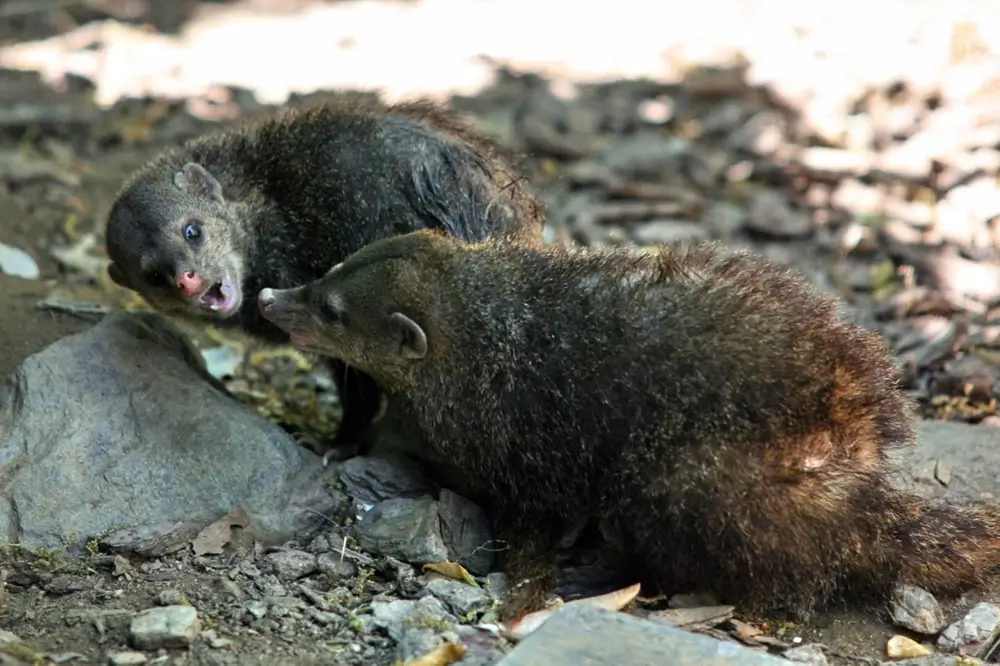
Common Cusimanse (Crossarchus obscurus)
The common cusimanse if found in Côte d'Ivoire, Ghana, Guinea, Liberia, and Sierra Leone. IUCN Redlist Status: Least Concern
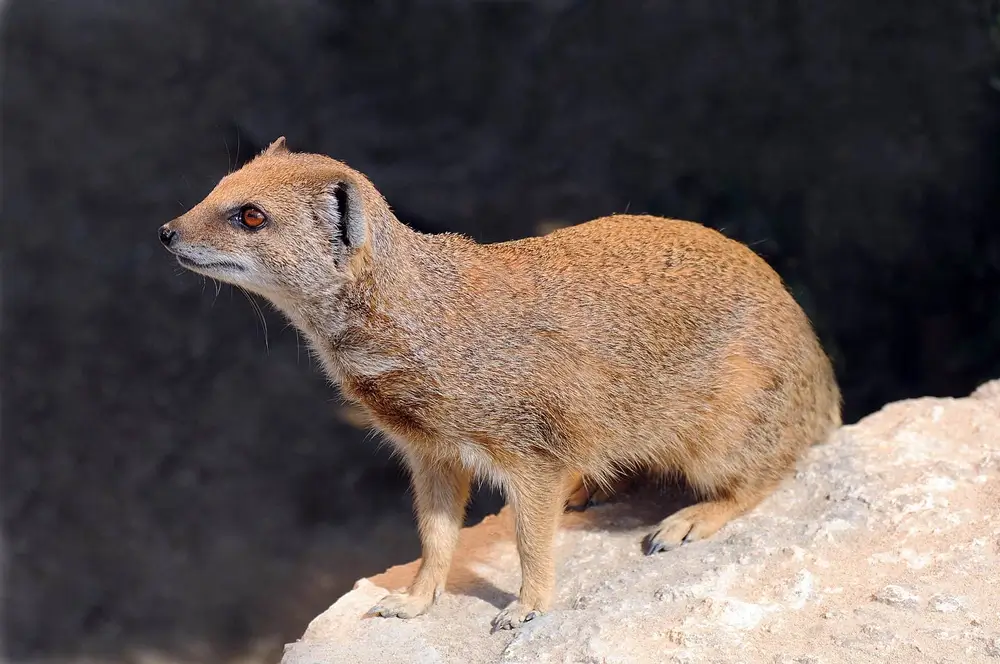
Yellow Mongoose (Cynictis penicillata)
The yellow mongoose is found in Angola, Botswana, Namibia, South Africa, and Zimbabwe. IUCN Redlist Status: Least Concern
Somali Dwarf Mongoose (Helogale hirtula)
The Somali dwarf mongoose is found in Ethiopia, Kenya, and Somalia. IUCN Redlist Status: Least Concern
Common Dwarf Mongoose (Helogale parvula)
The common dwarf mongoose is found in Angola, Botswana, The Democratic Republic of the Congo, Eswatini, Ethiopia, Kenya, Malawi, Mozambique, Namibia, Somalia, South Africa, Sudan, Tanzania, Uganda, and Zambia. IUCN Redlist Status: Least Concern
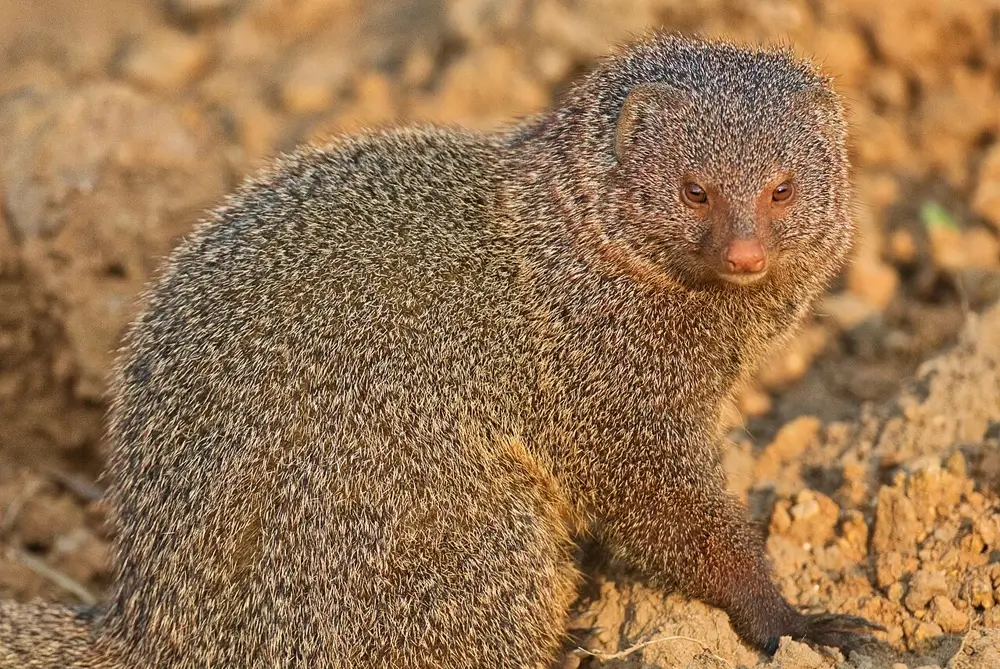
Indian Gray Mongoose (Herpestes edwardsii)
The Indian gray mongoose is found in Afghanistan, Bahrain, Bangladesh, Bhutan, India, Iran, Kuwait, Nepal, Pakistan, Saudi Arabia, Sri Lanka, Türkiye and the United Arab Emirates. IUCN Redlist Status: Least Concern
Indian Brown Mongoose (Herpestes fuscus)
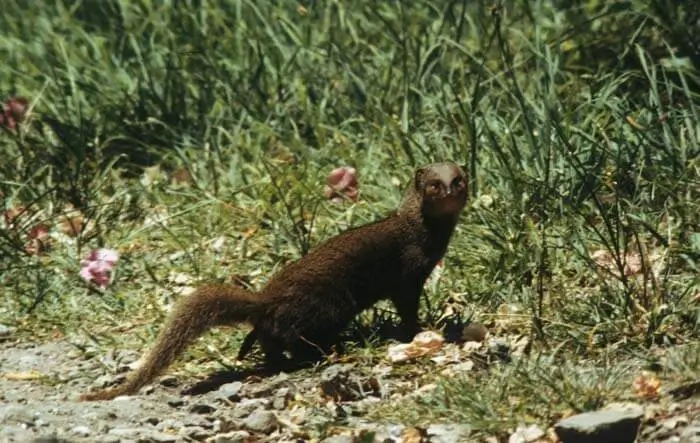
The Indian brown mongoose is found in India and Sri Lanka. IUCN Redlist Status: Least Concern
Egyptian Mongoose (Herpestes ichneumon)
The Egyptian mongoose is found in the parts of Europe, the Middle East and Sub-Saharan Africa. IUCN Redlist Status: Least Concern
Cape Gray Mongoose (Herpestes pulverulentus)
The Cape gray mongoose is found in Lesotho, Namibia, and South Africa. IUCN Redlist Status: Least Concern
Slender Mongoose (Herpestes sanguineus)
The slender mongoose is found in most of Sub-Saharan Africa. IUCN Redlist Status: Least Concern
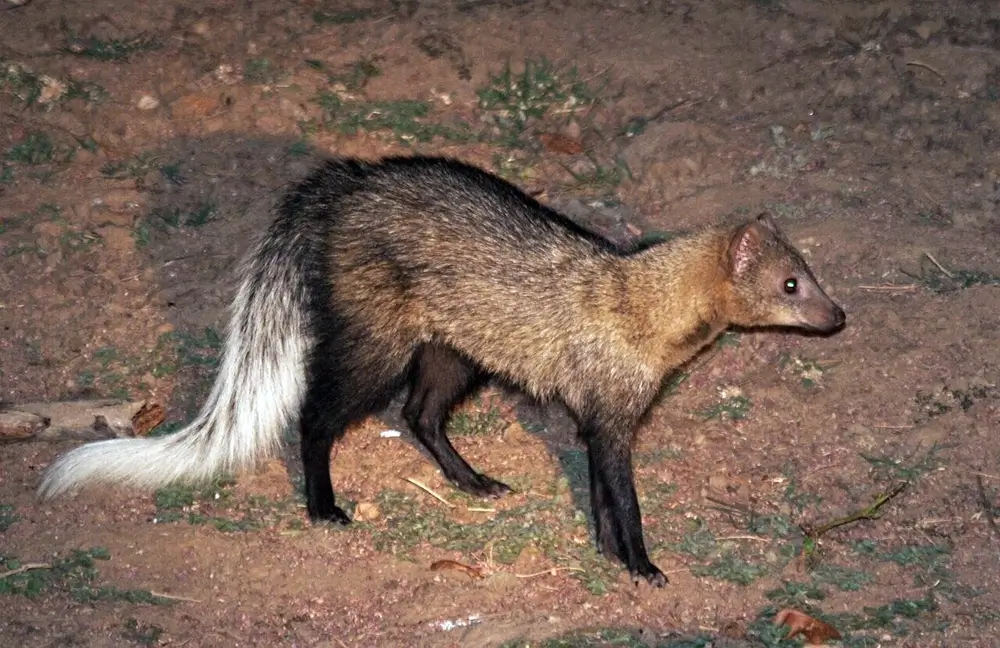
White-Tailed Mongoose (Ichneumia albicauda)
The white-tailed mongoose is found In Sub-Saharan Africa. IUCN Redlist Status: Least Concern
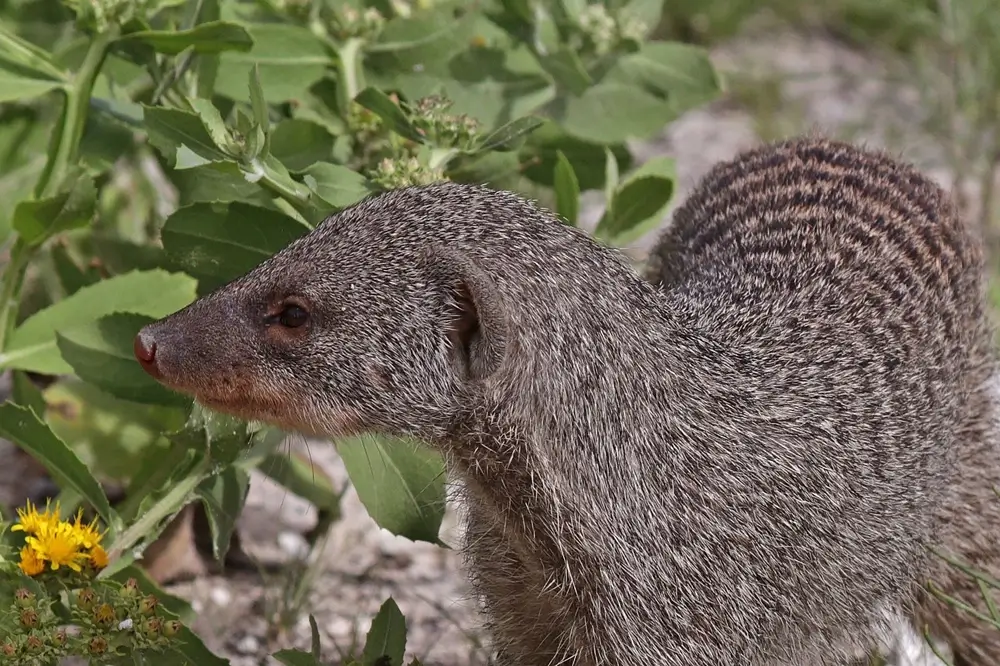
Banded Mongoose (Mungos mungo)
The banded mongoose is found In Sub-Saharan Africa. IUCN Redlist Status: Least Concern
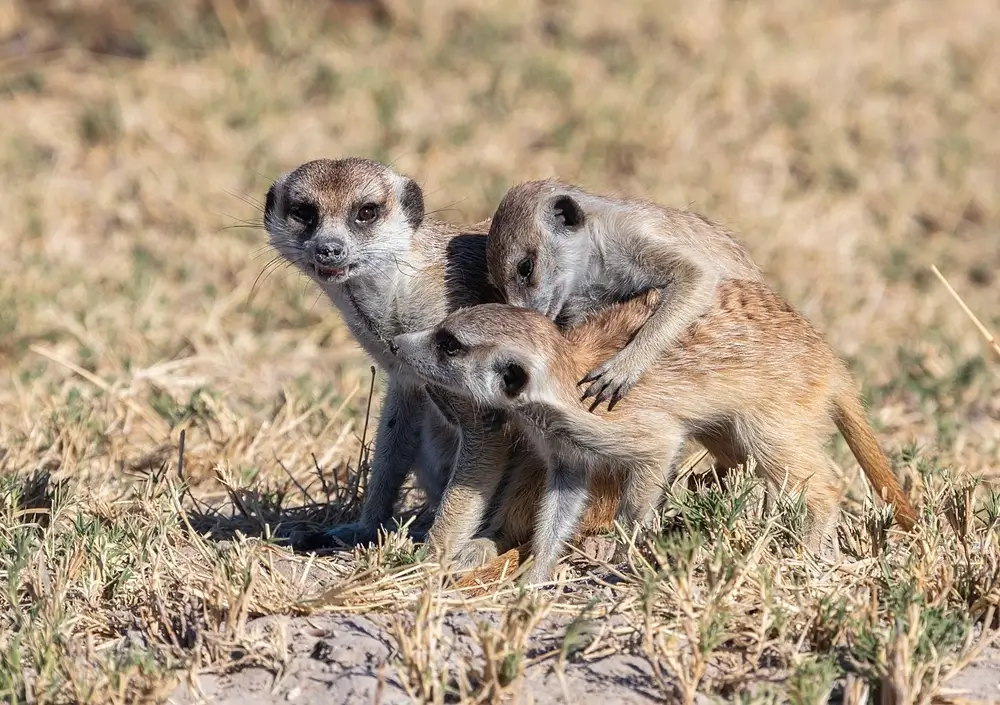
Meerkat (Suricata suricatta)
The meerkat is found in Angola, Botswana, Namibia, and South Africa. They usually live in burrows dug by other animals. IUCN Redlist Status: Least Concern
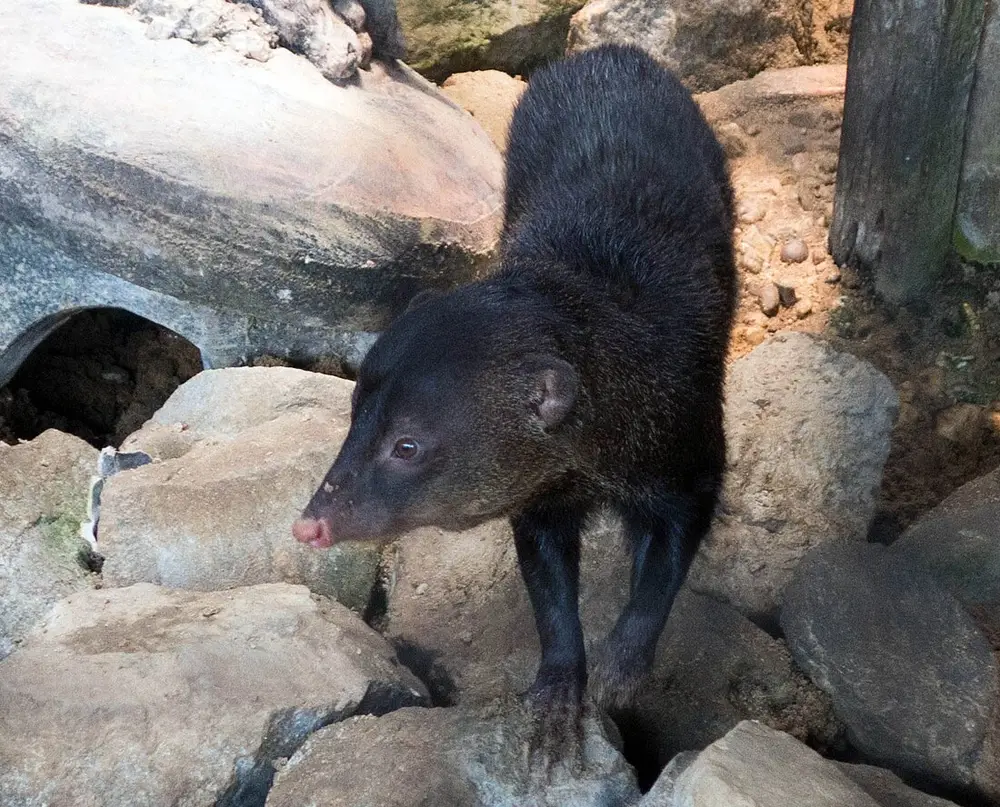
Short-tailed Mongoose (Urva brachyura)
The short-tailed mongoose is found in Brunei Darussalam, Indonesia, and Malaysia. IUCN Redlist Status: Near Threatened
Ruddy Mongoose (Urva smithii)
The ruddy mongoose is found in India, Nepal, and Sri Lanka. IUCN Redlist Status: Least Concern
Crab-eating Mongoose (Urva urva)
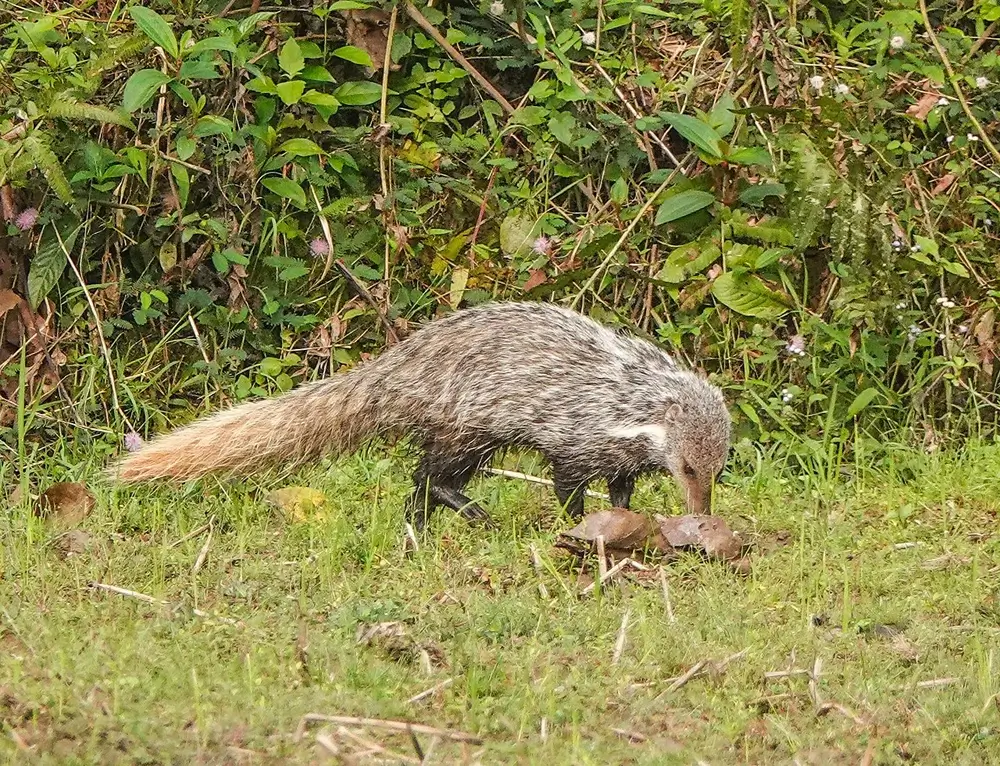
The crab-eating mongoose is found in Bangladesh, Bhutan, Cambodia, China, Hong Kong, India, Laos, Malaysia, Myanmar, Nepal, Taiwan, Thailand, and Vietnam. IUCN Redlist Status: Least Concern
Stripe-necked Mongoose (Urva vitticolla)
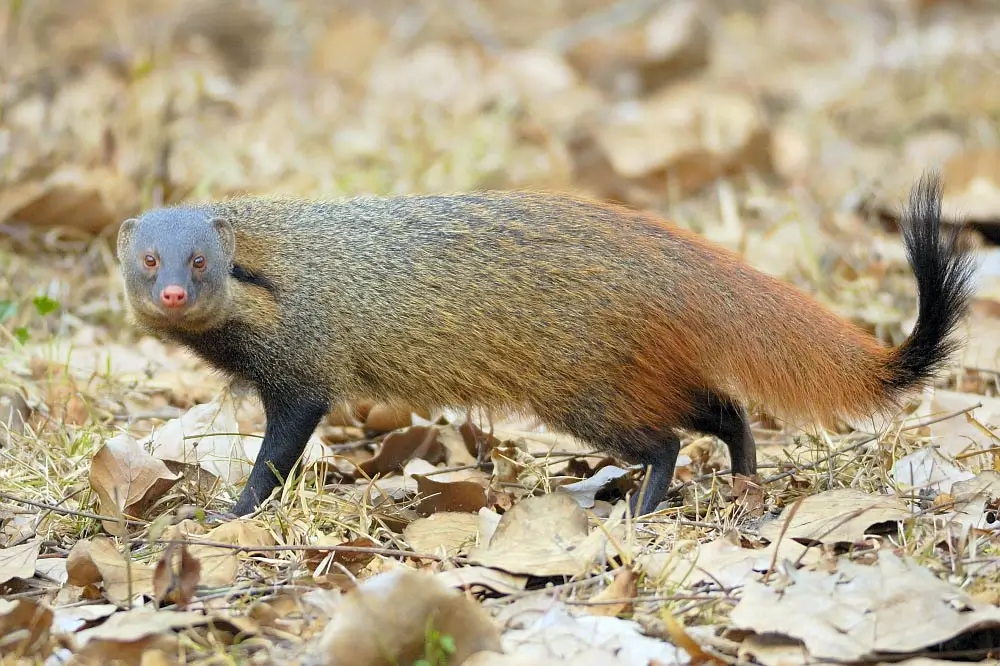
The stripe-necked mongoose is found in India and Sri Lanka. IUCN Redlist Status: Least Concern