There are four species in this family. They are all found in Africa.
They have long, bushy tails; rounded ears; large heads; and powerful jaws. Their front legs are longer than their rear legs.
The females in this family are larger than the males. Three species in this family have stripes or spots.
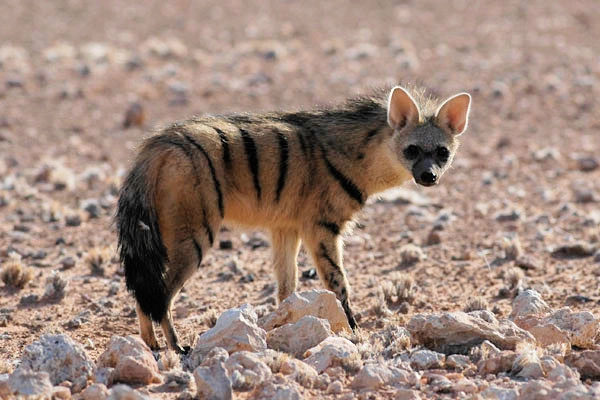
Three of the species in this family hunt and scavenge for food. The fourth species, the aardwolf, eats termites.
The species in this family live in packs that are dominated by a female.
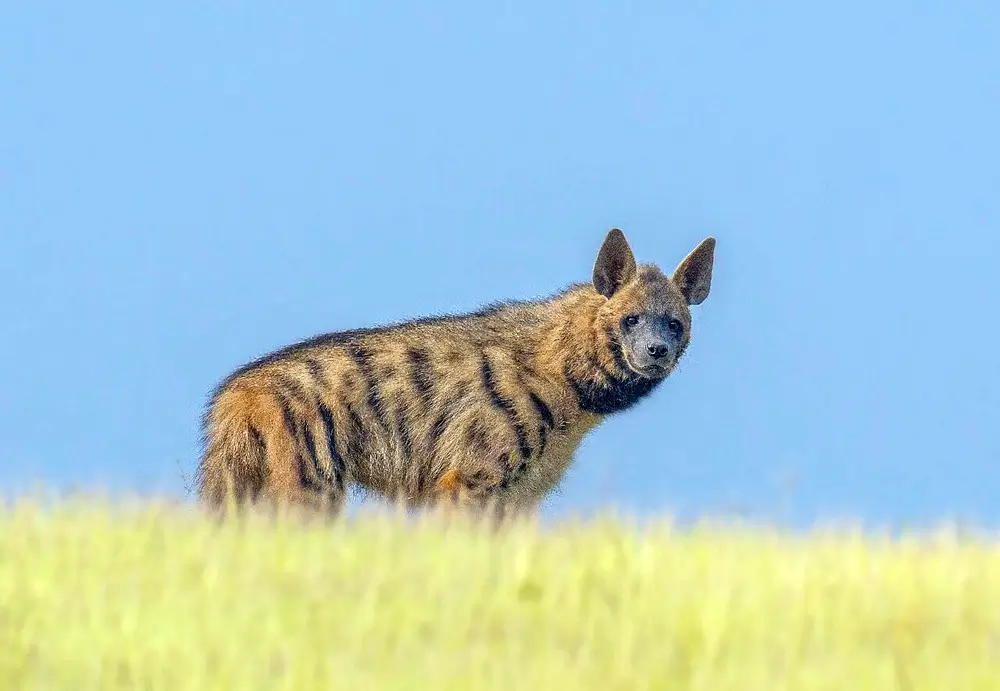
STRIPPED HYENA
The striped hyena is found in northern Africa in dry savannas and rocky deserts. It is smaller than the spotted hyena. It is about 4 feet in length and weighs about 120 pounds.
It has a brownish-gray coat with black stripes. It has a dark crest on its back and black stripes on its legs.
It hunts for food at night, usually alone or in pairs. It eats small mammals, birds, reptiles, and carrion.
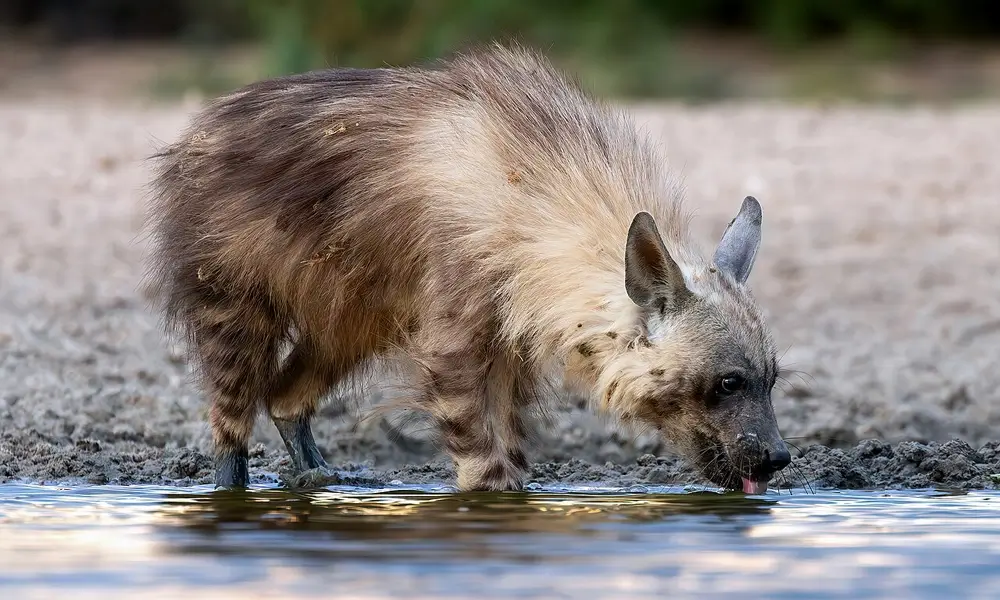
BROWN HYENA
The brown hyena is found in Africa from Angola to Mozambique and south to Northern South Africa.
It lives in the dry savanna. It has striped legs, long brown fur, and a mane of lighter brown fur on its neck and shoulders.
It hunts at night for small mammals, birds, and carrion.
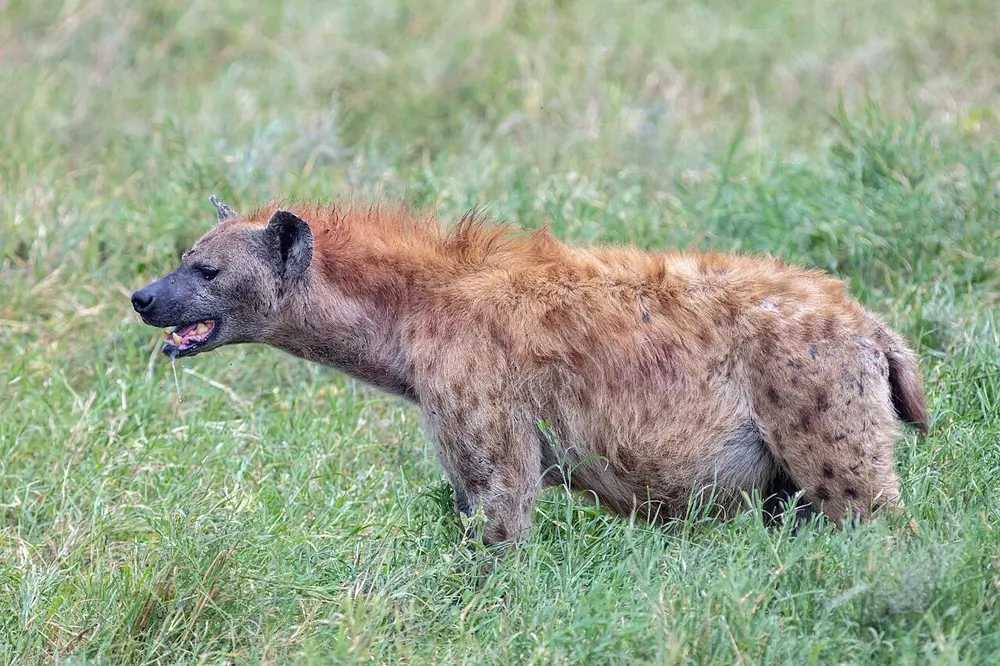
SPOTTED HYENA
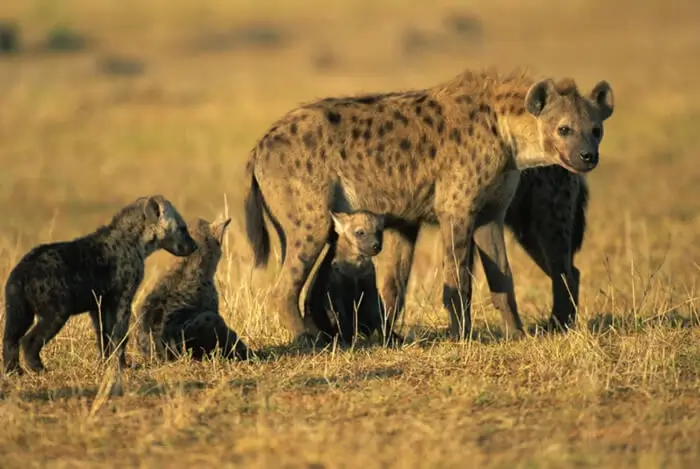
The spotted hyena is the largest member of this family and is known for its laughing call.
It is found in Sub-Saharan Africa. It is usually found in open habitats. It is 2-5 feet in length and is 2-3 feet in height from its shoulder to its feet.
It weighs 120-170 pounds, and females are larger than males.
The spotted hyena usually hunts alone, but it hunts in packs when going after larger prey. It preys on zebras, wildebeest, topi, and gazelles. It also eats carrion. It has powerful jaws and eats the bones of the animals it kills.
The female spotted hyena gives birth to 1-4 pups three months after mating. The pups are born with their eyes open and with teeth. Shortly after birth, pups that are the same sex begin fighting for dominance.