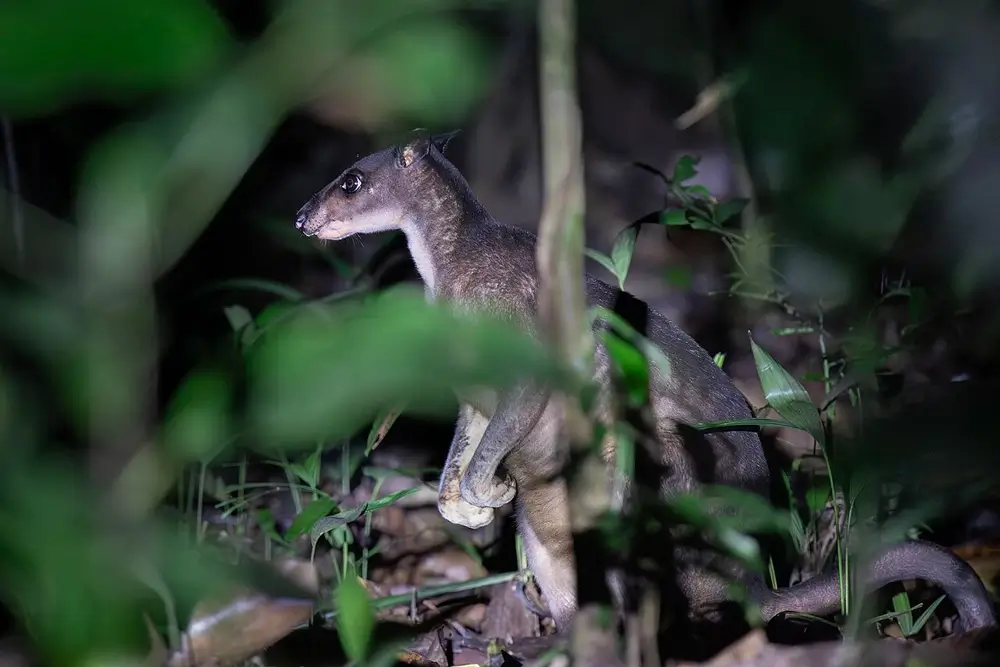
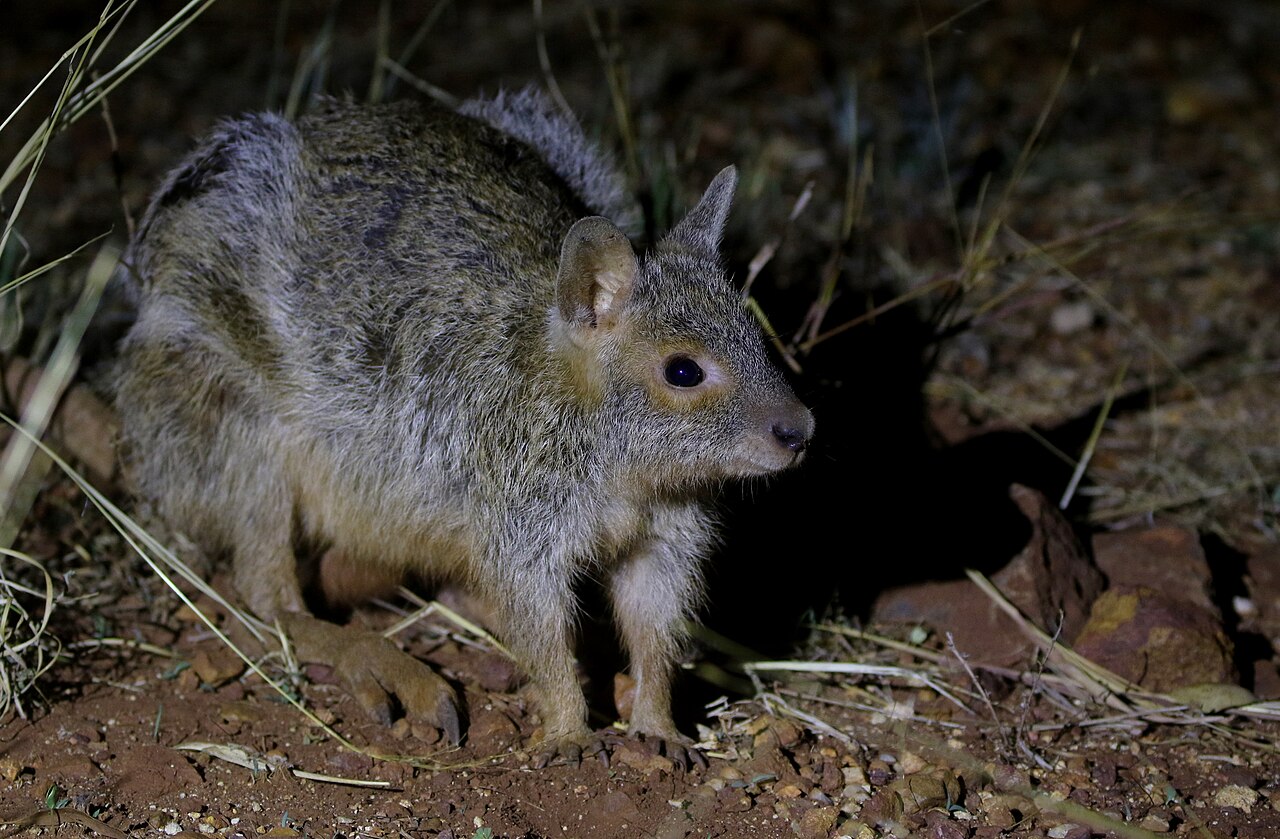
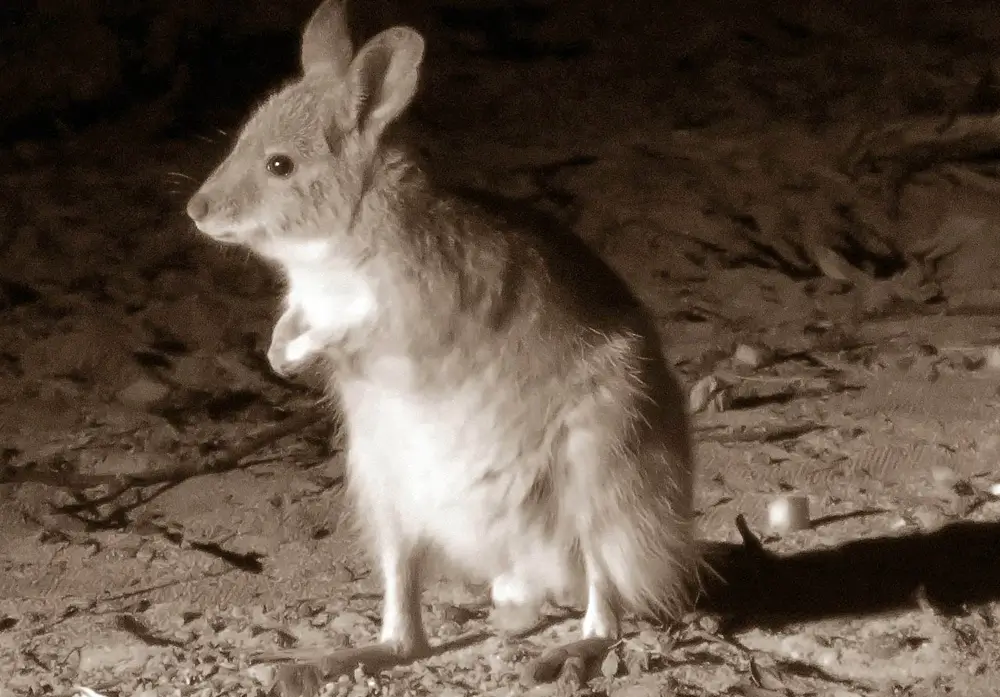
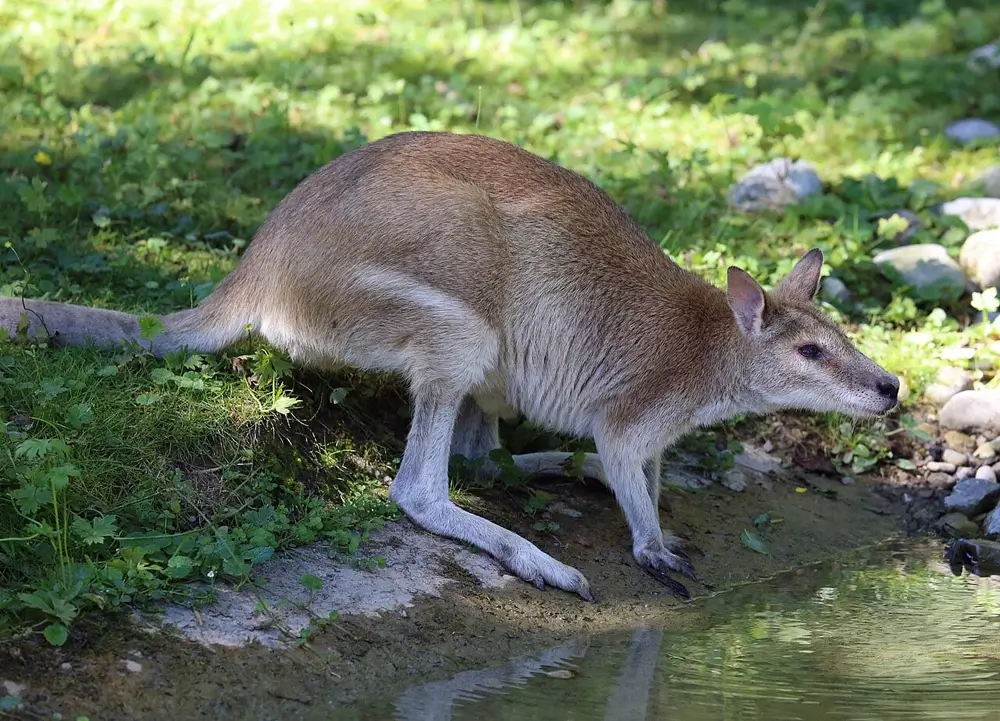
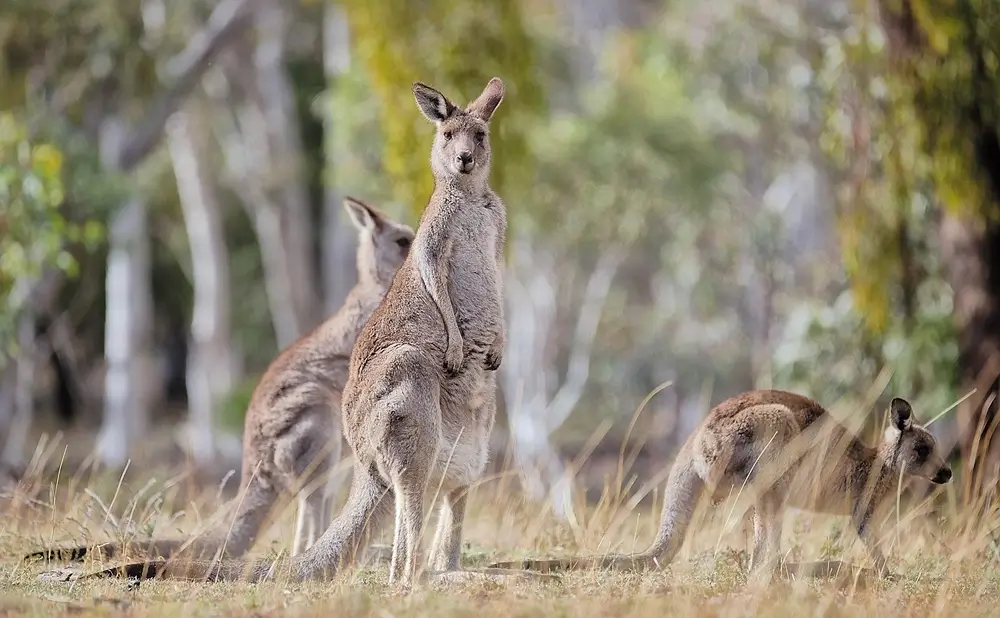
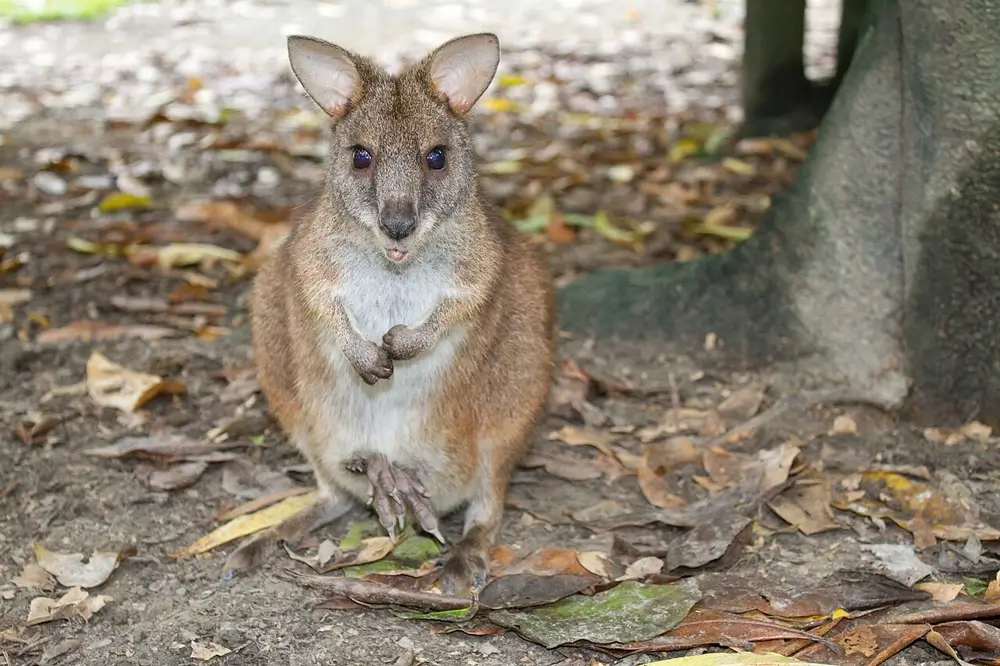
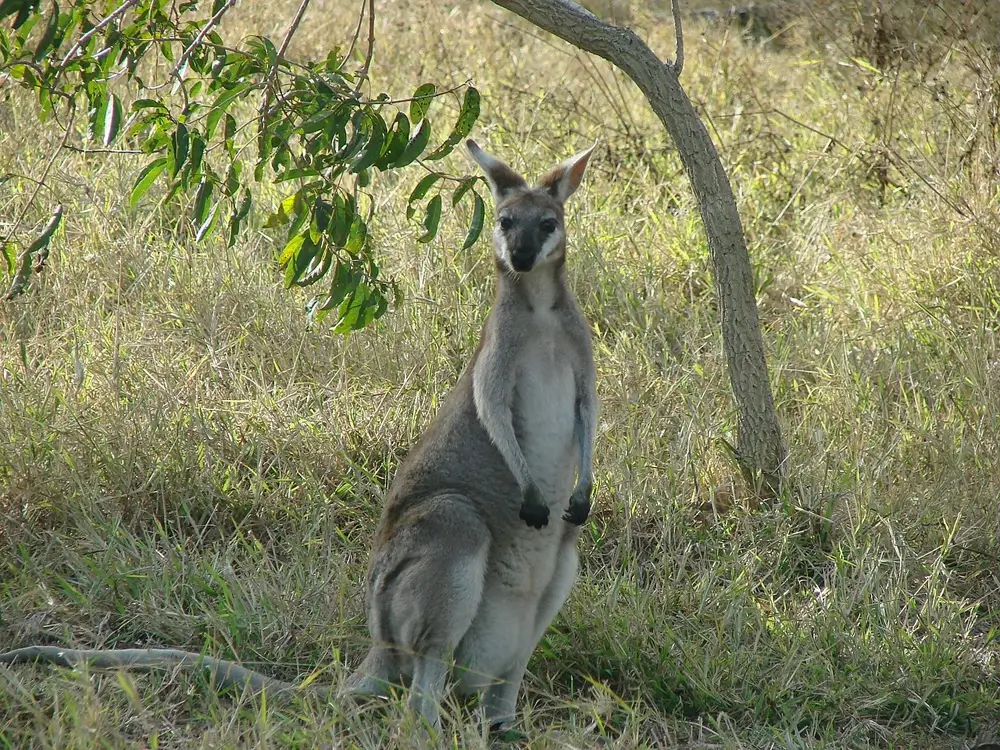
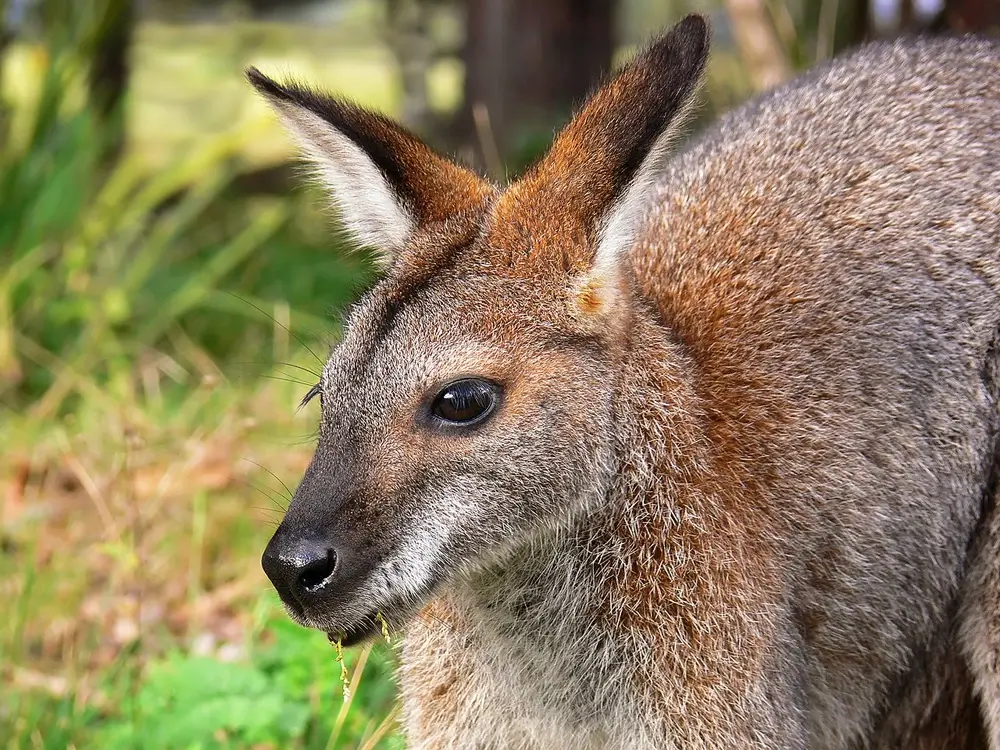
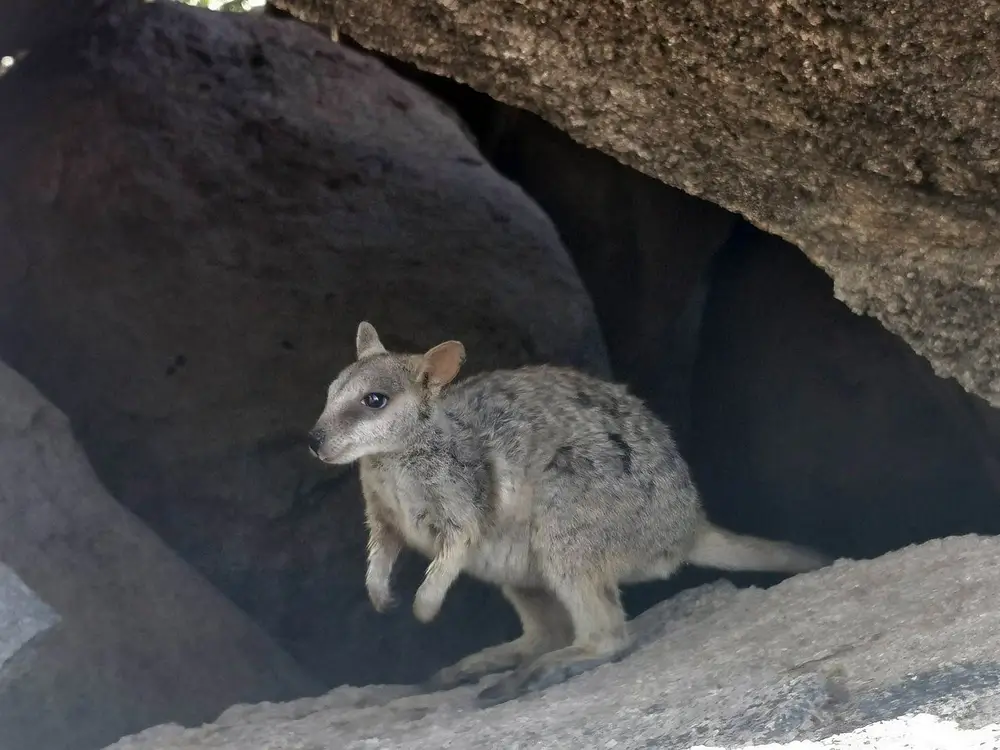
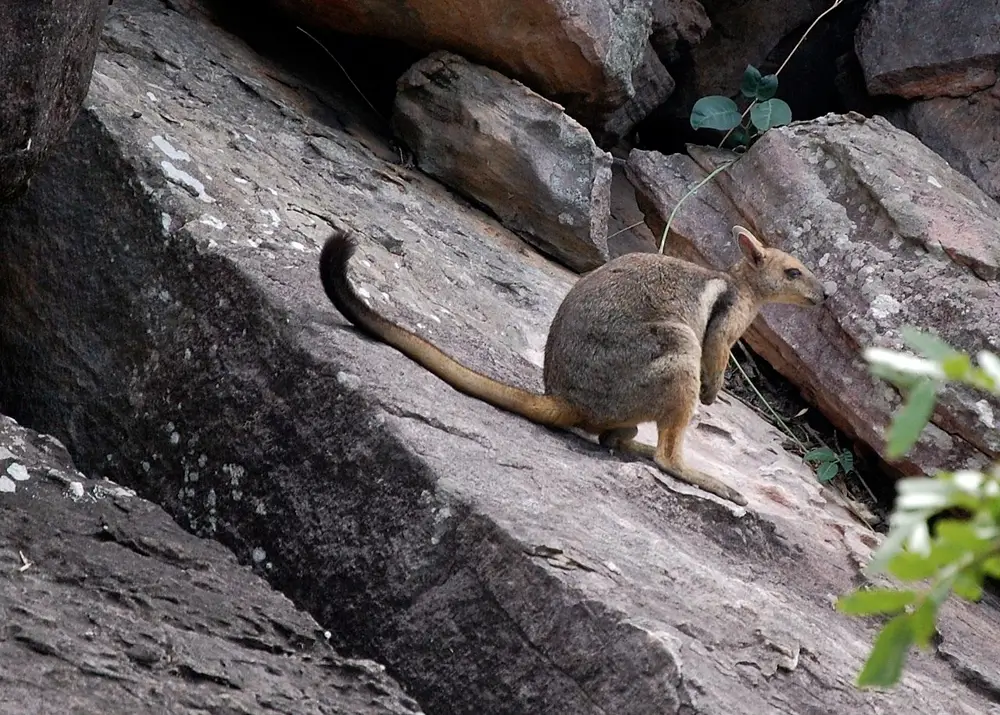
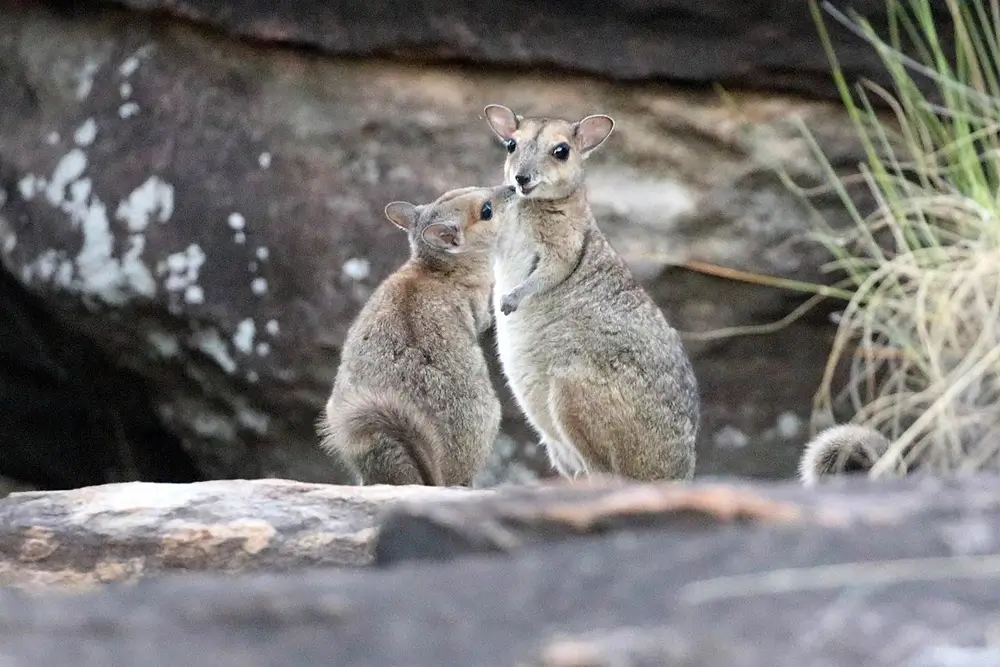
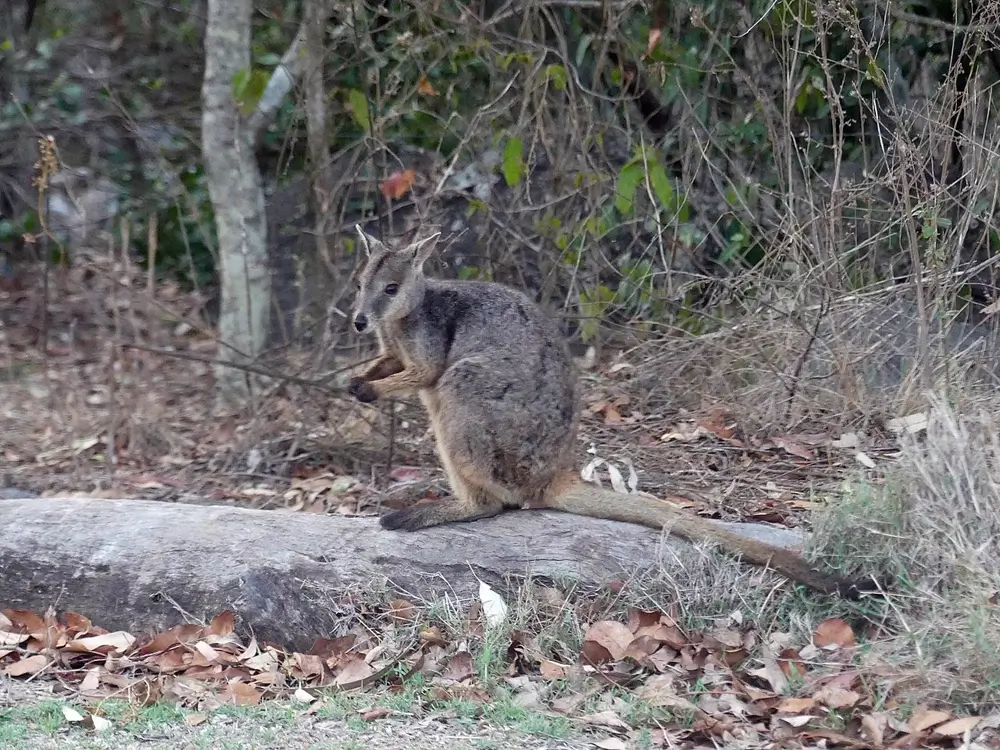
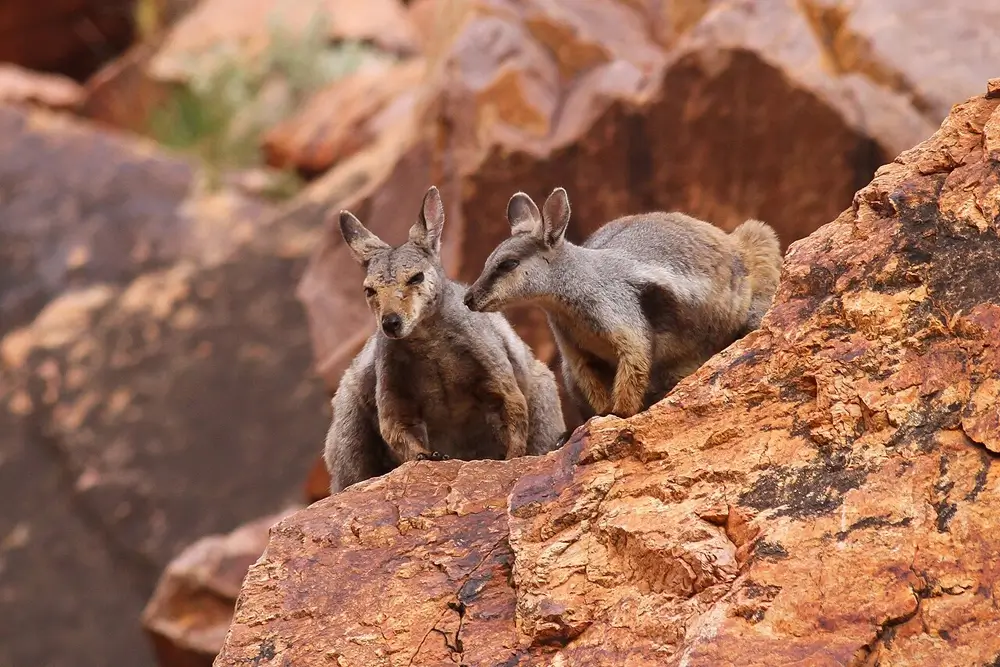
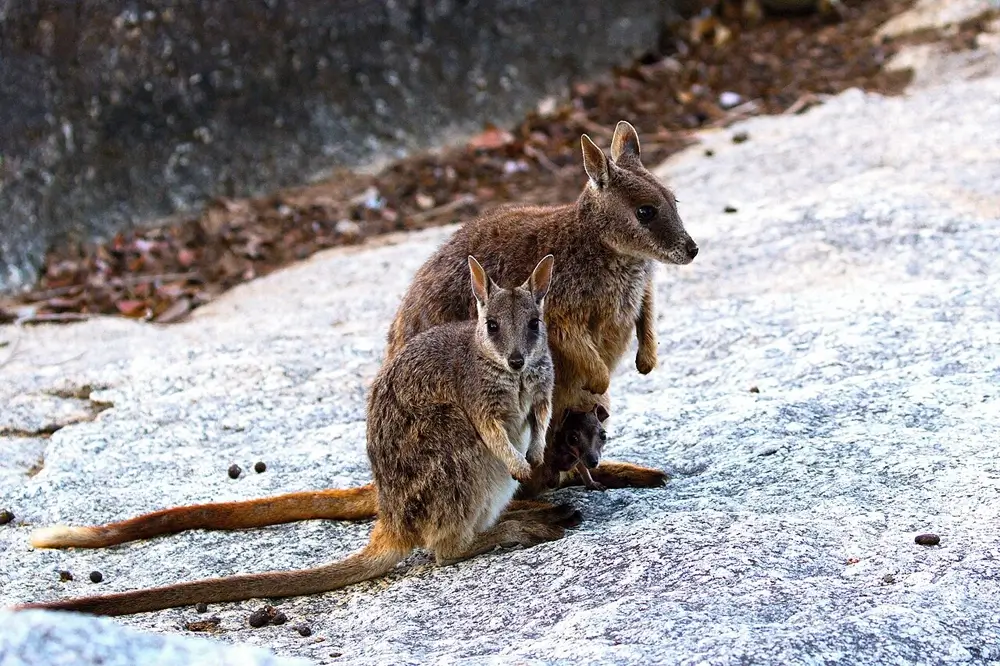
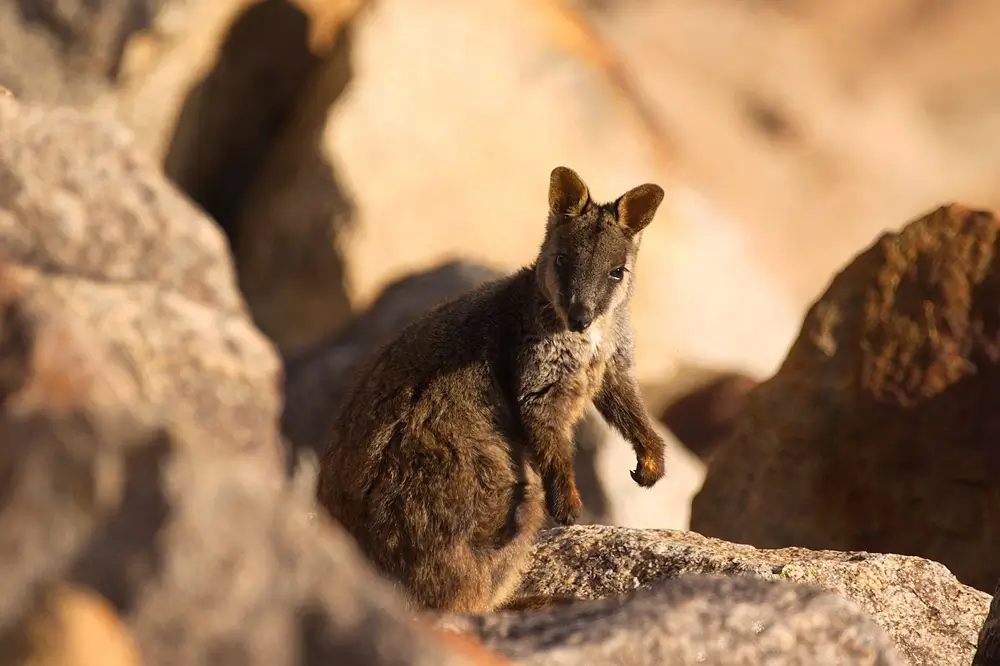
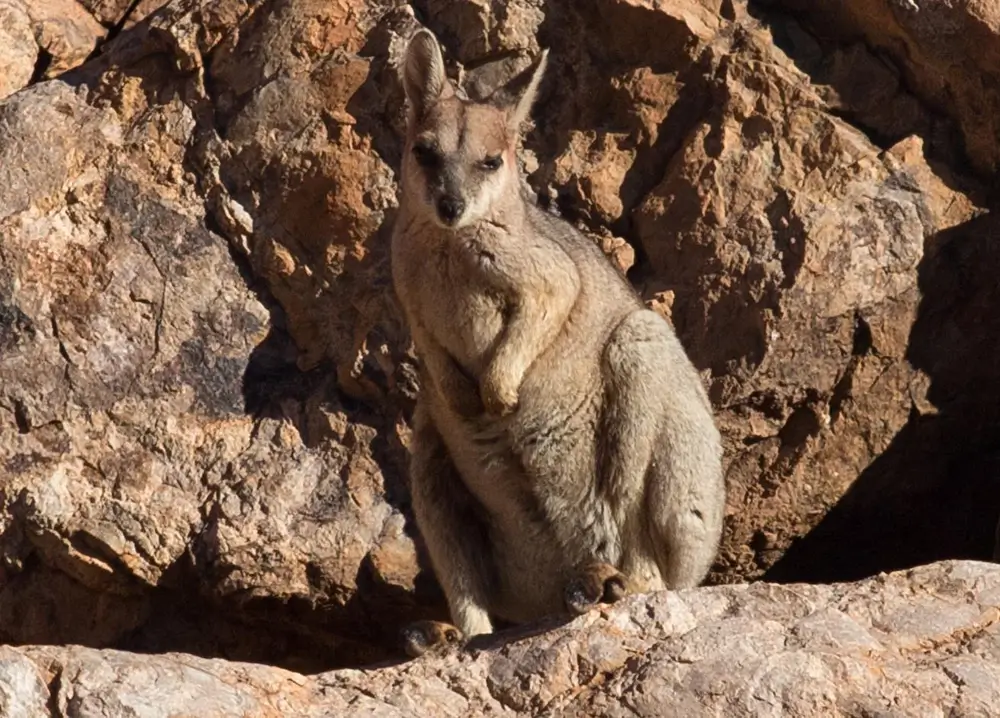
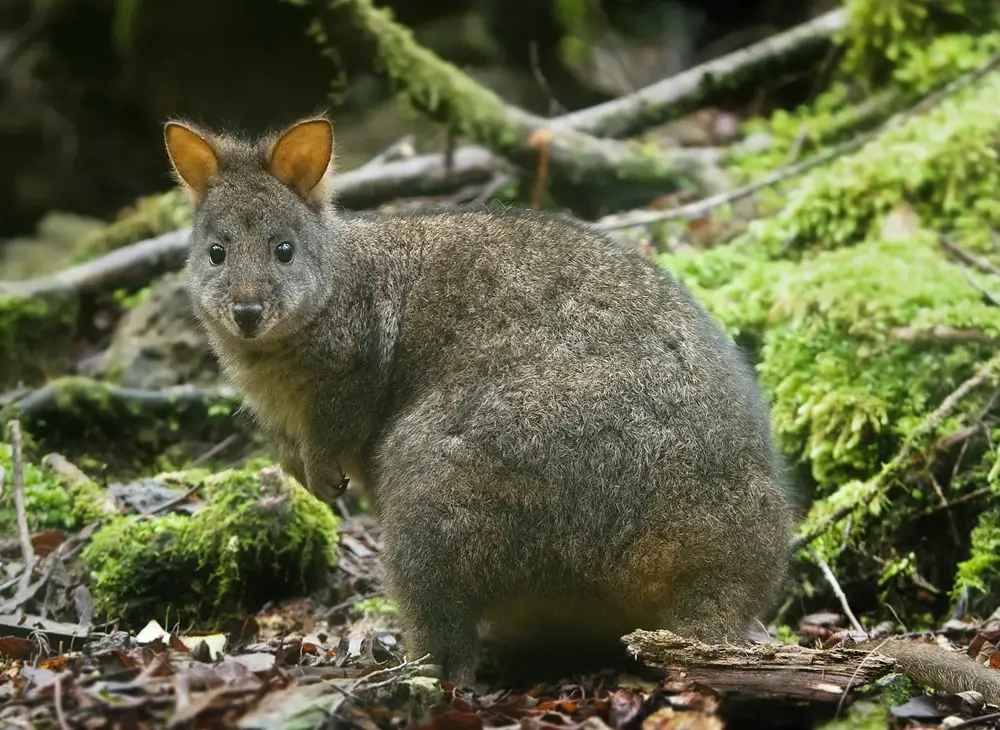
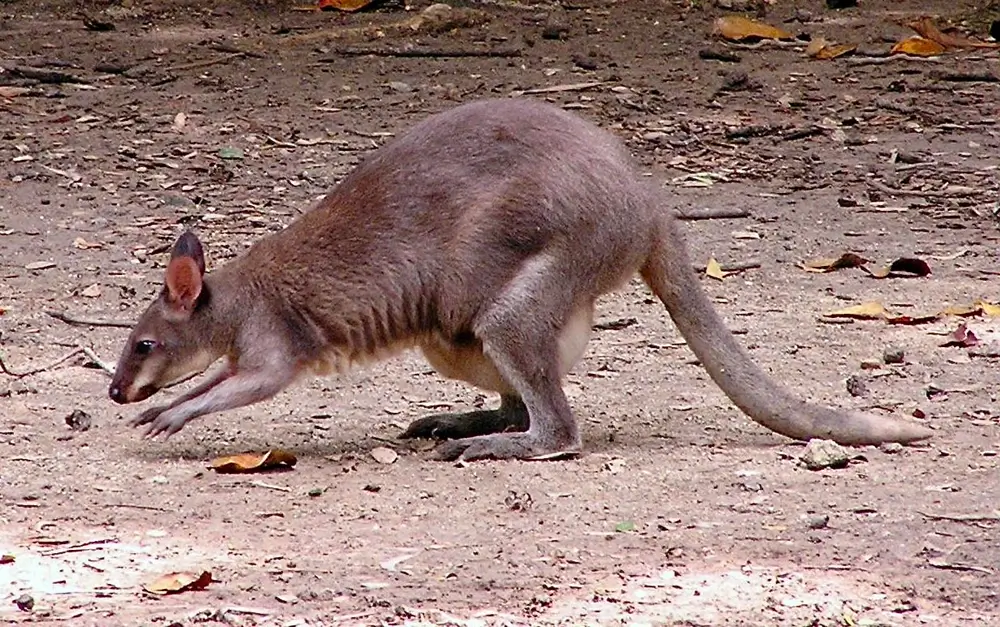
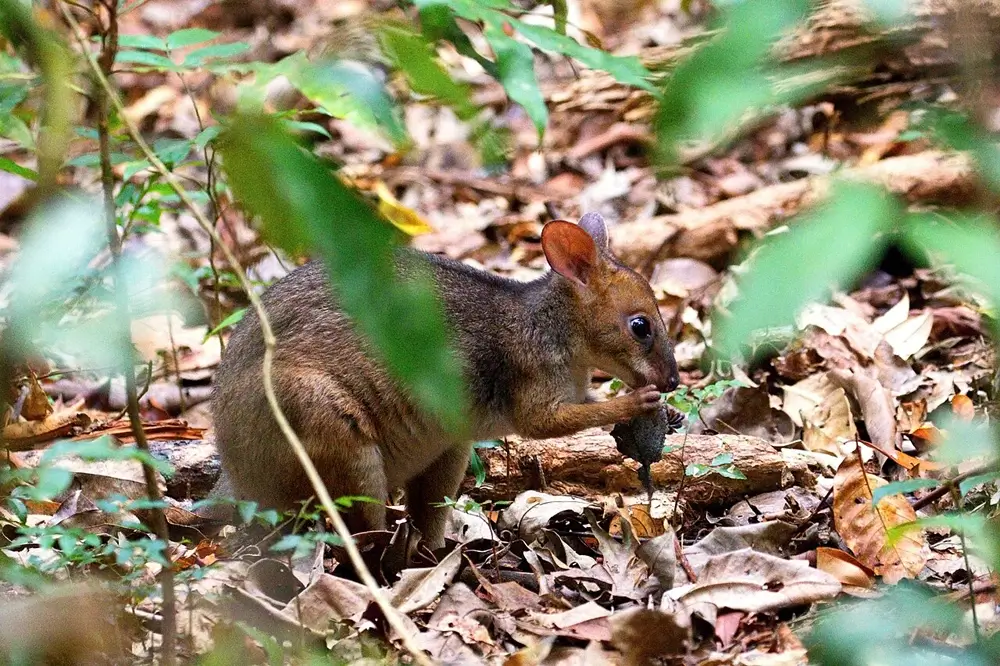
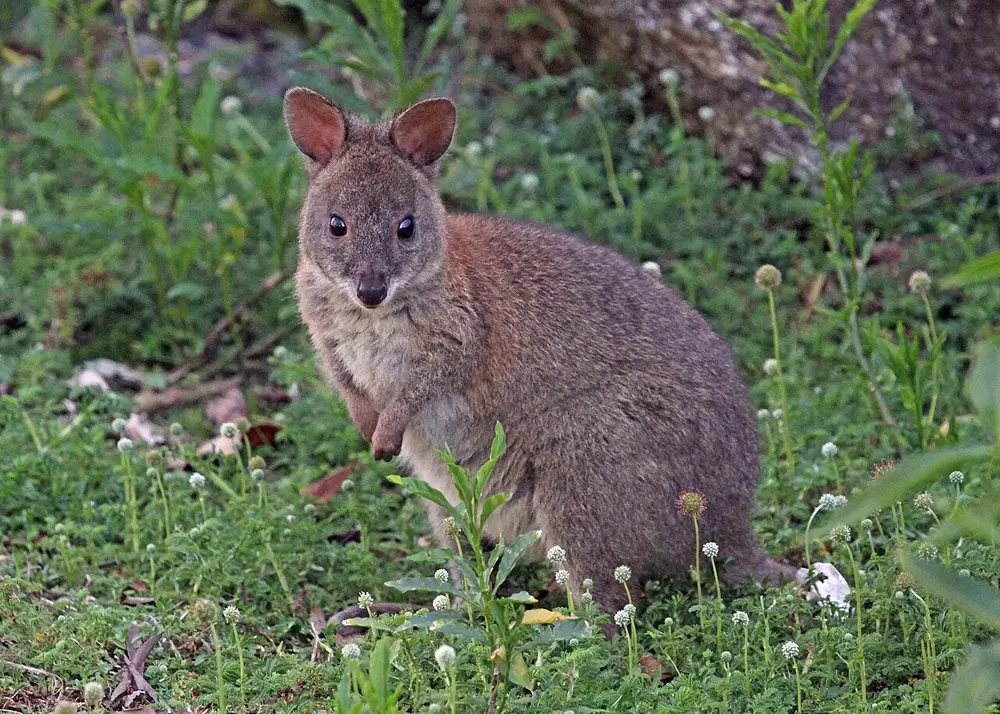
There are 67 species of marsupials in this family. They are found in Australia and New Guinea.
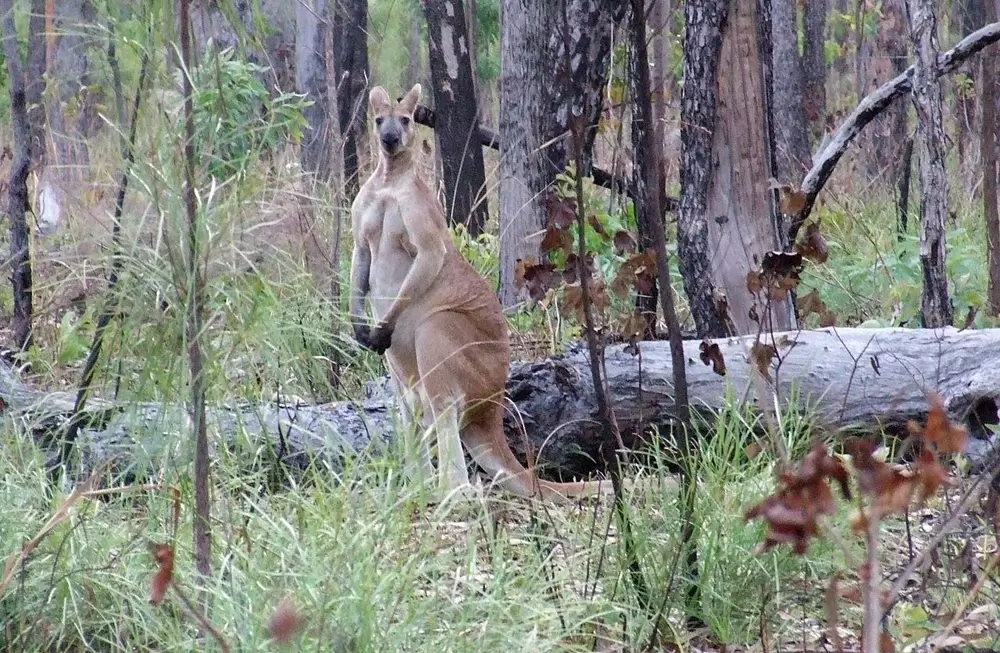
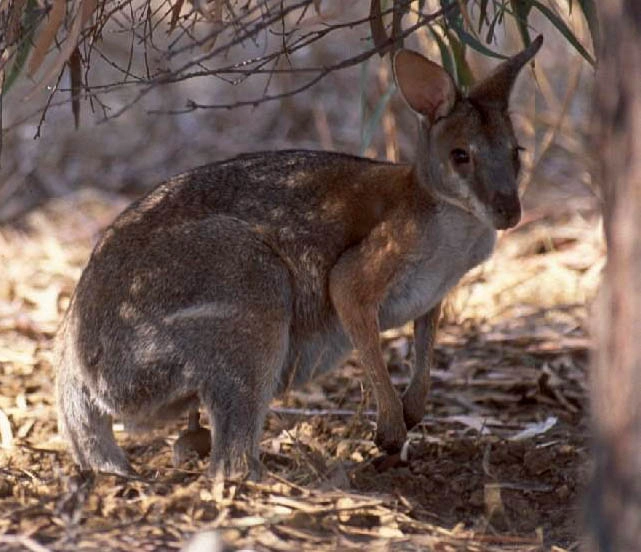
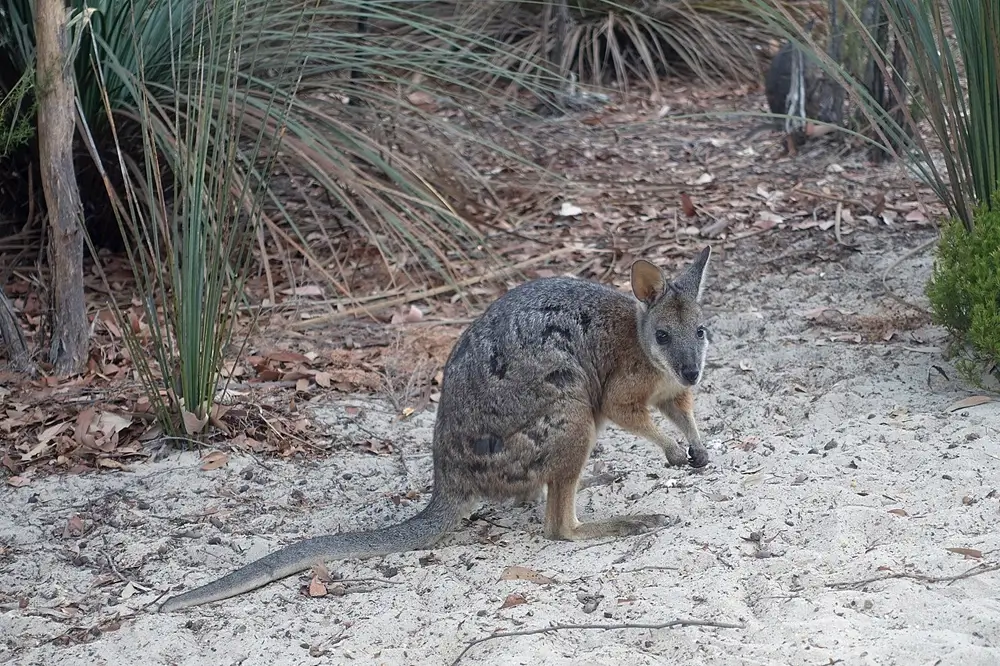
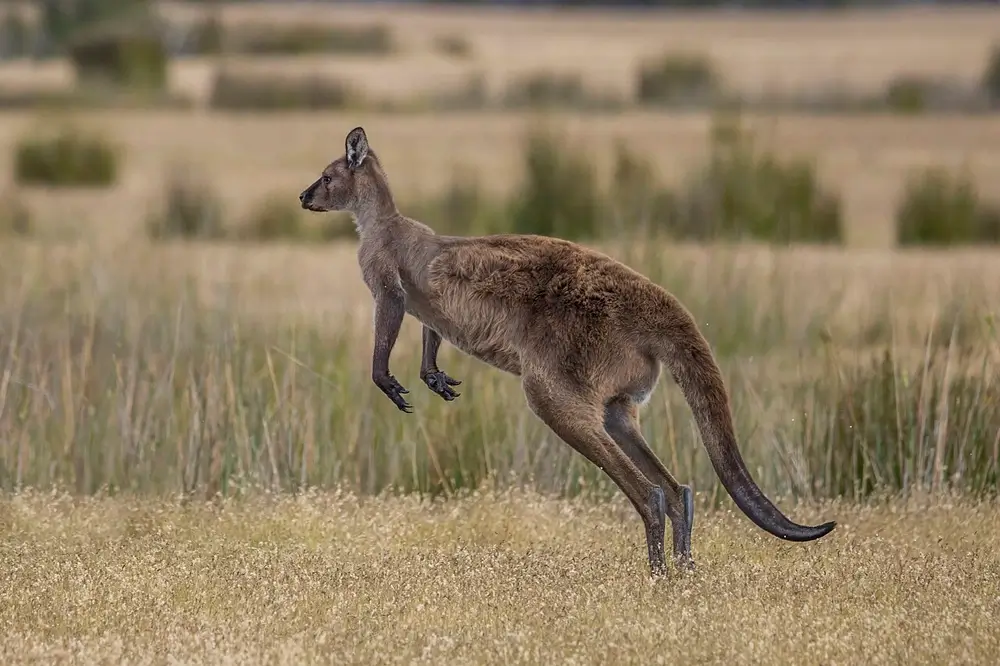
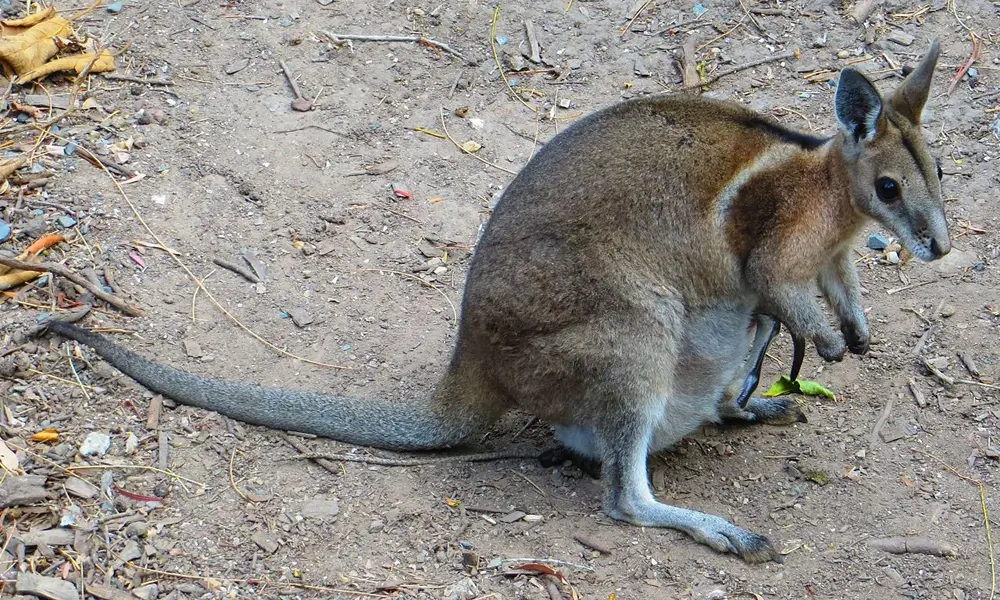
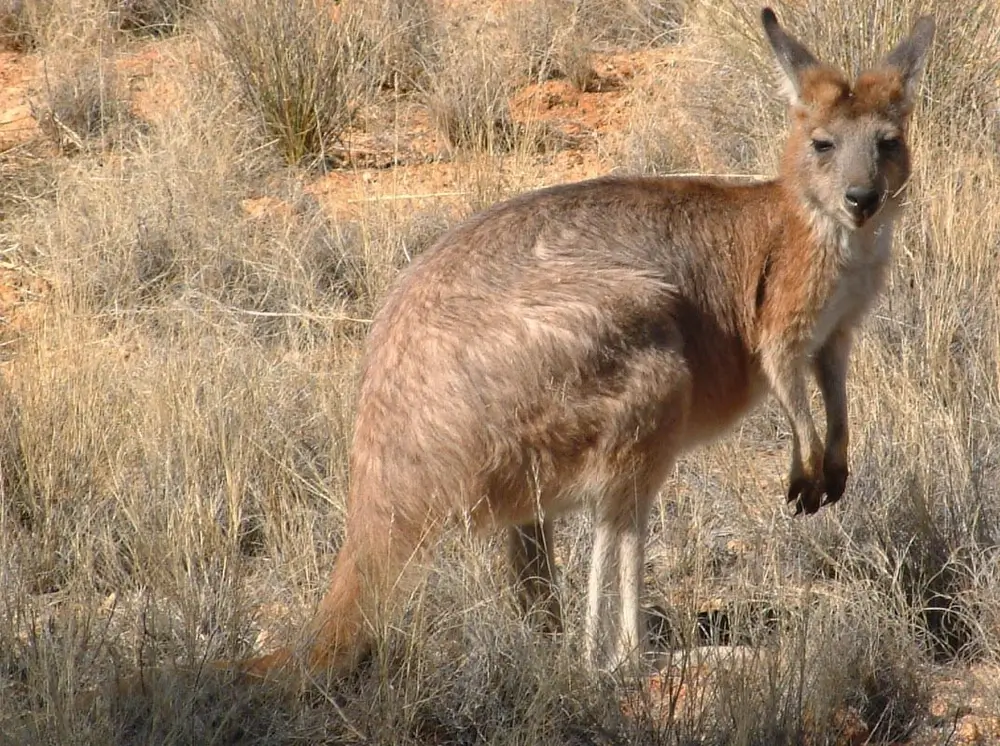
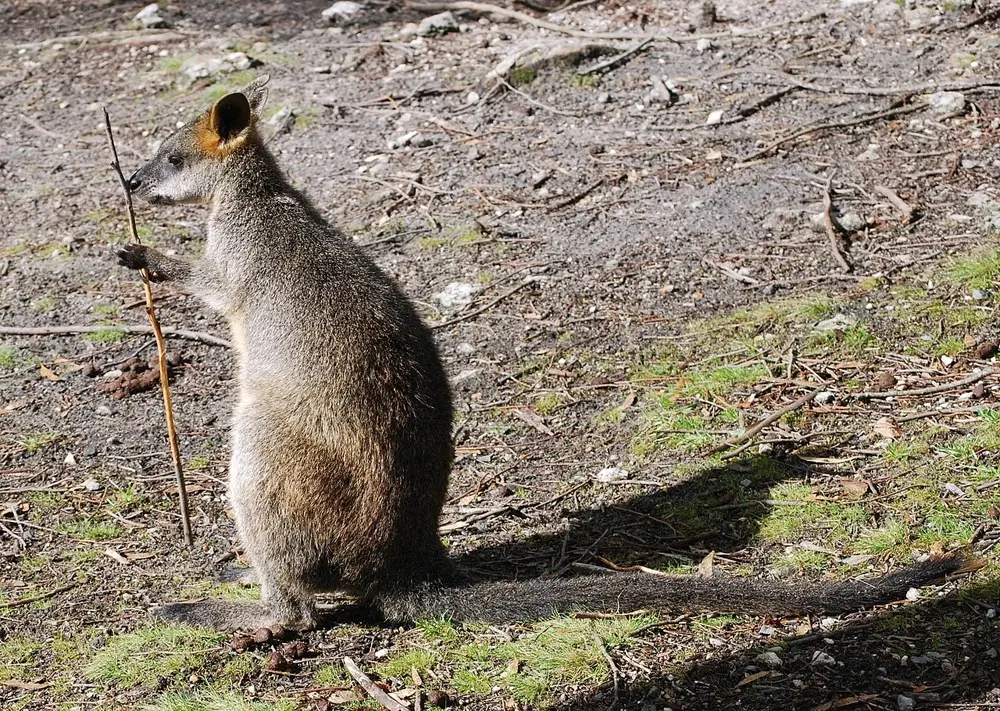
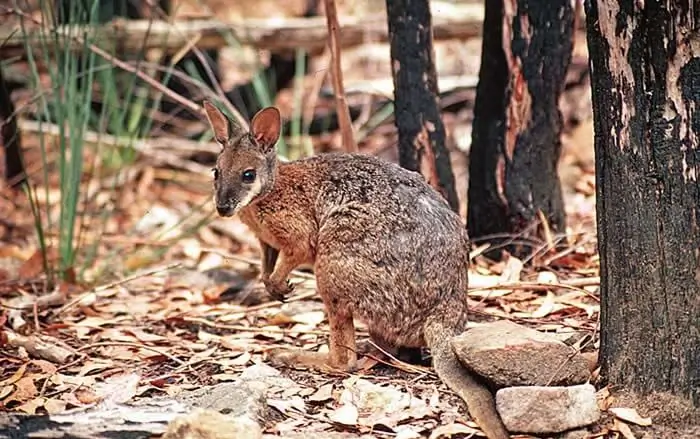
They have long rear feet and small front legs. They can stand upright by resting on their rear feet. They are powerful hoppers, and they have long, thick tails that they use to help them keep their balance. They have long, triangular heads and large ears.
They are herbivores, and most species are nocturnal.
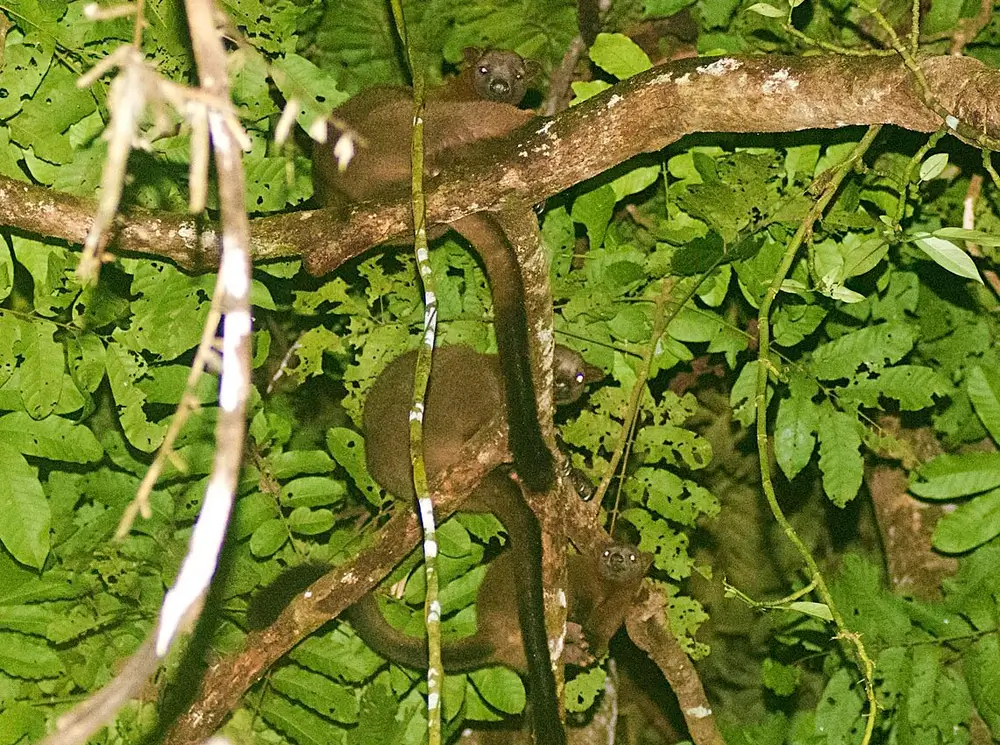
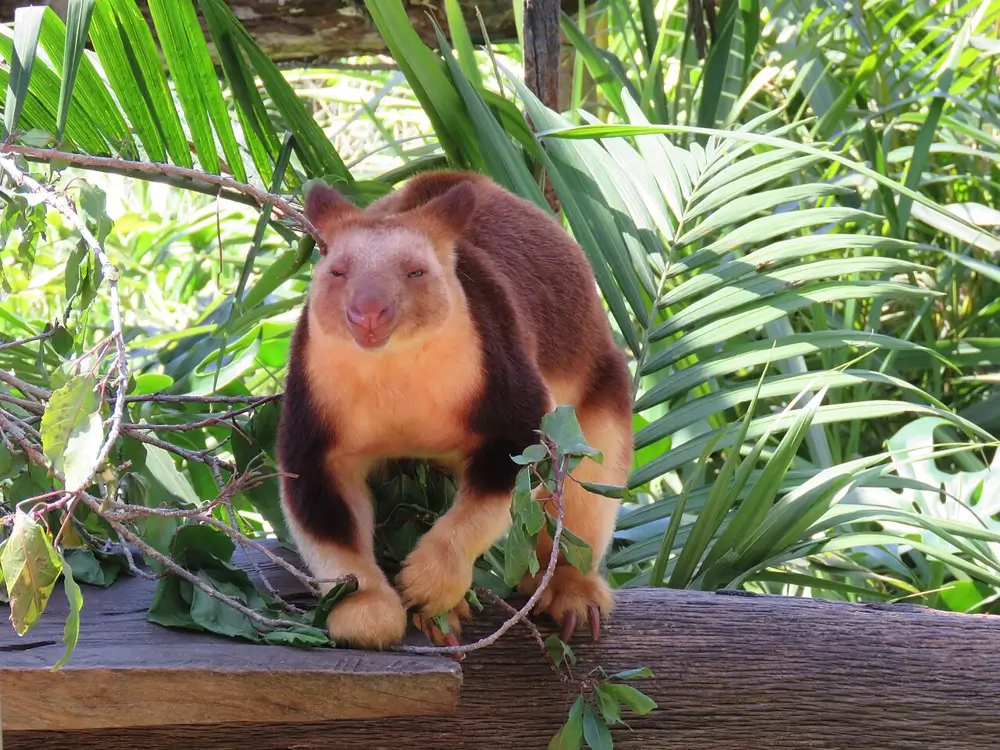
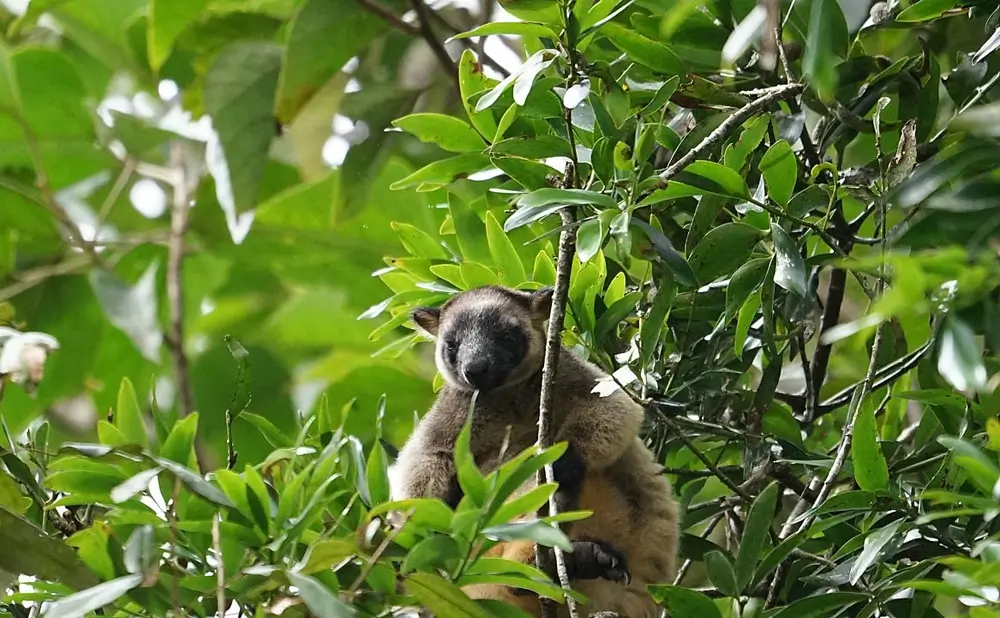
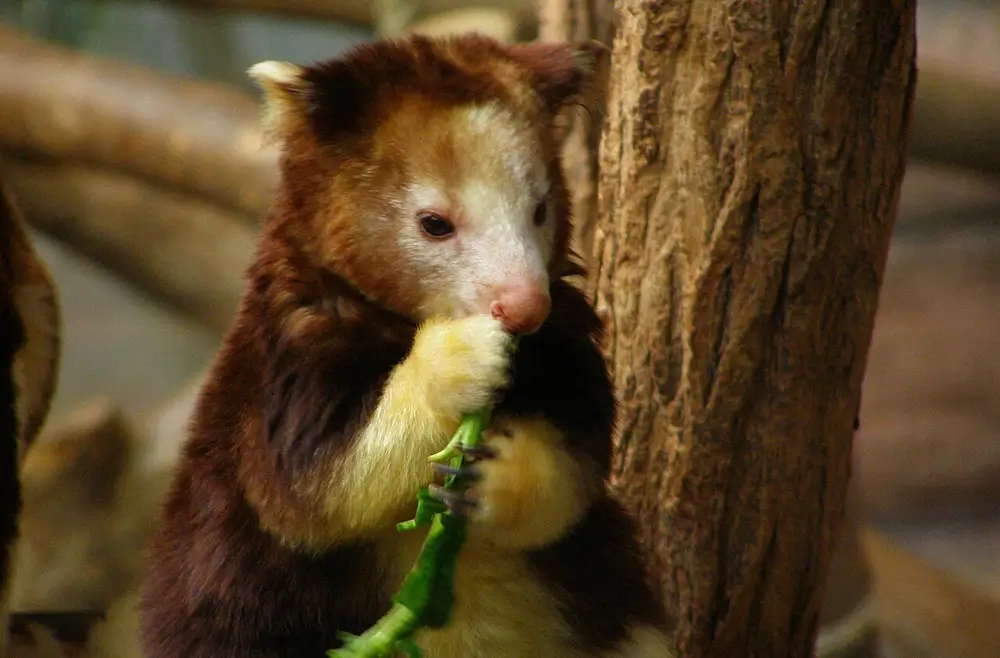
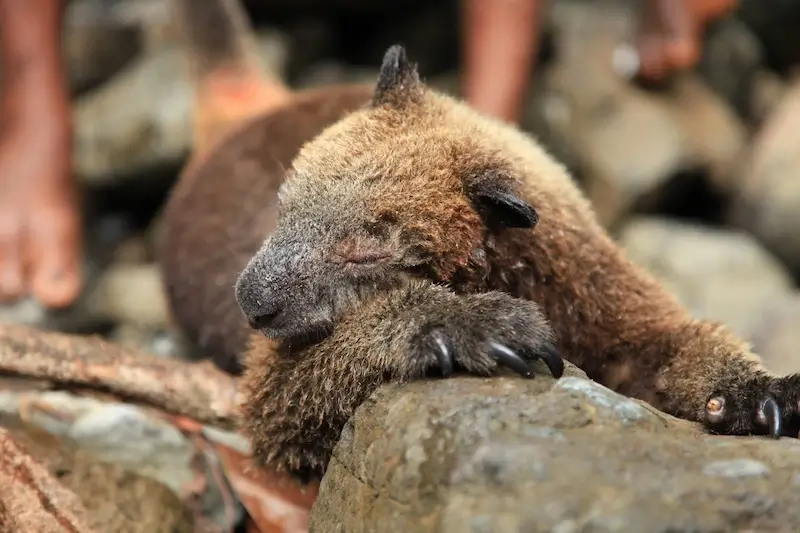
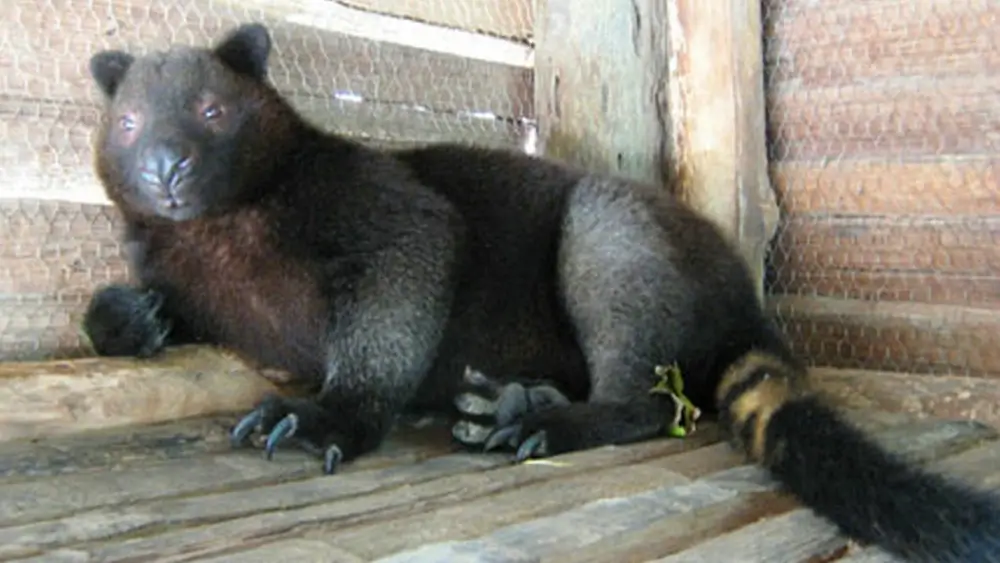
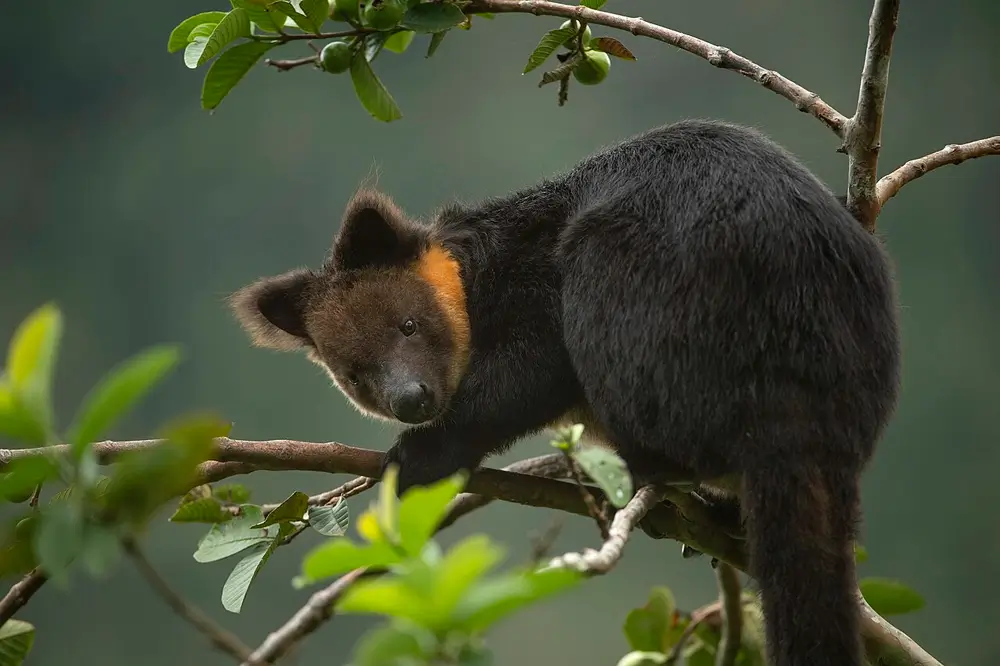
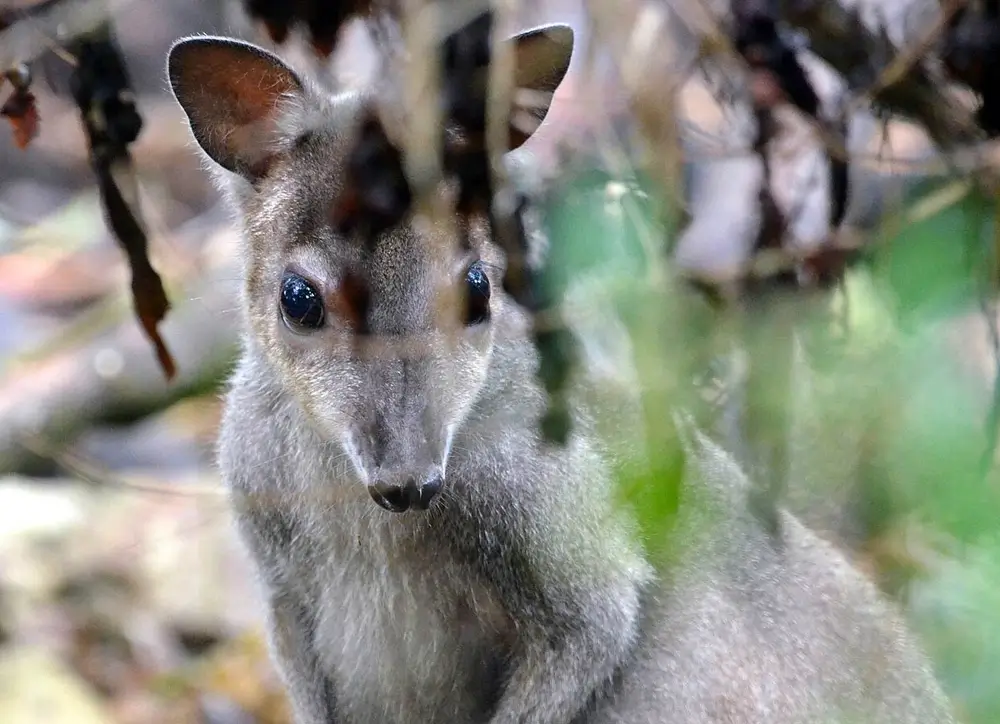
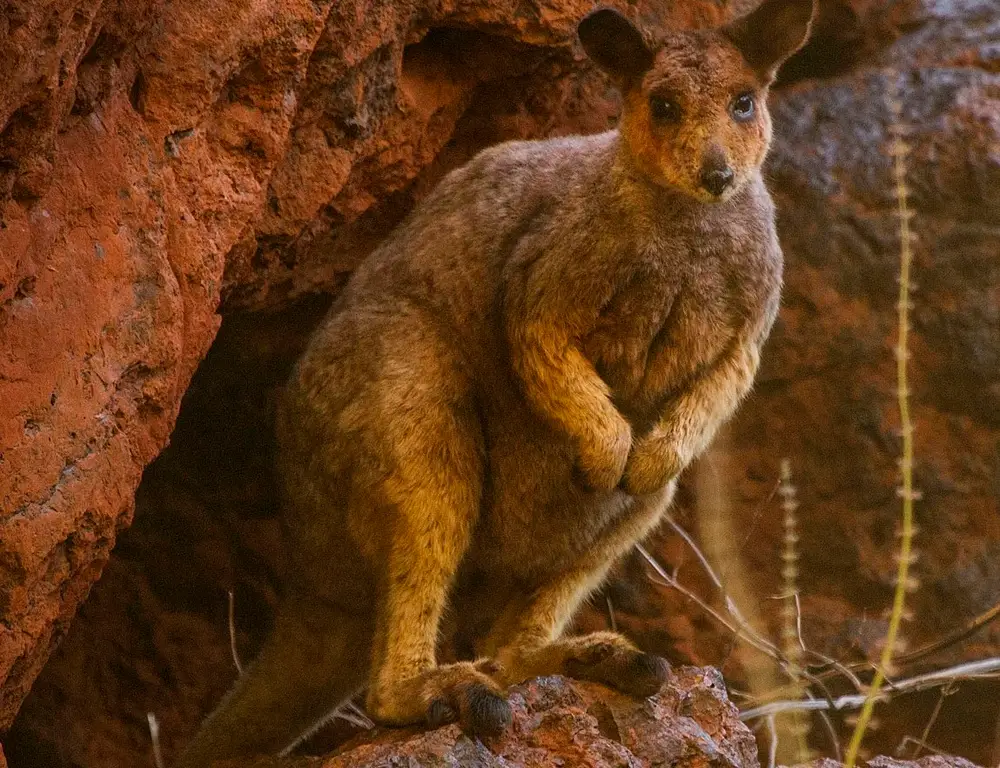
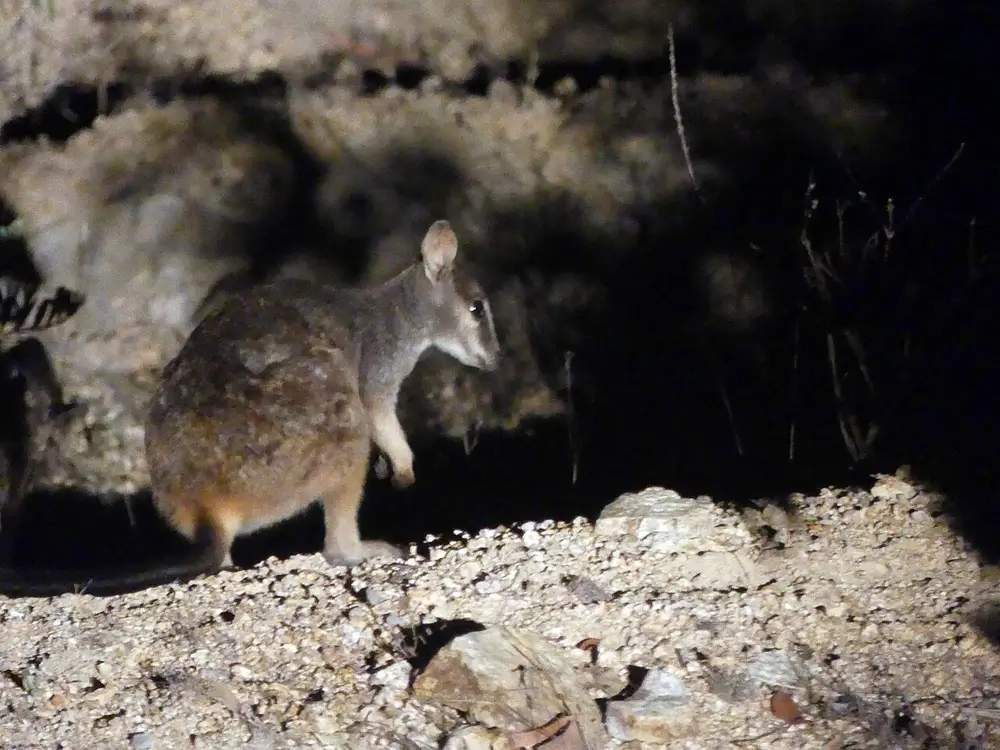
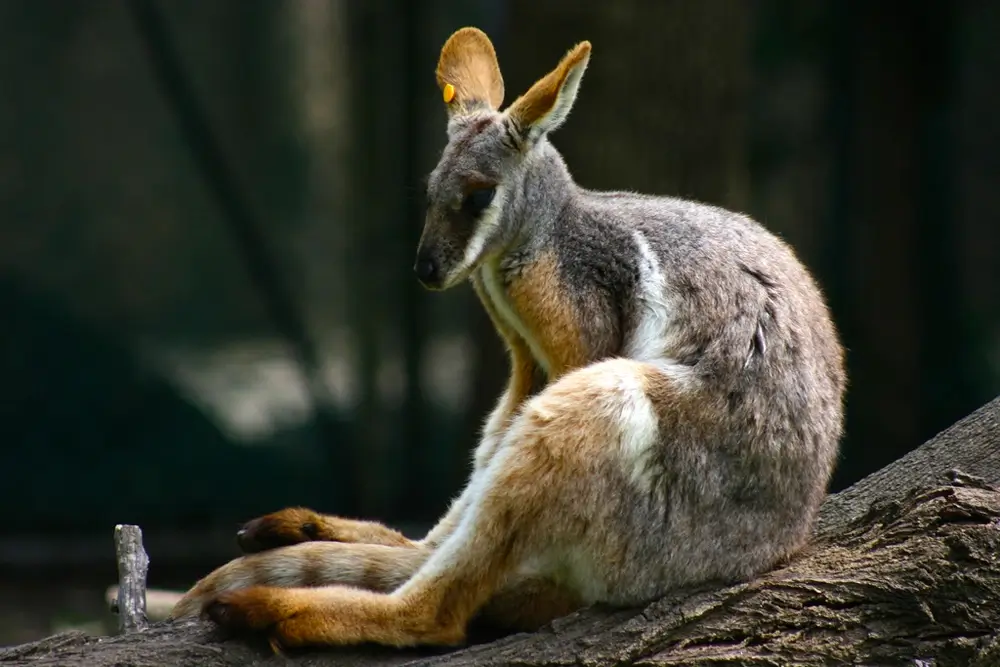
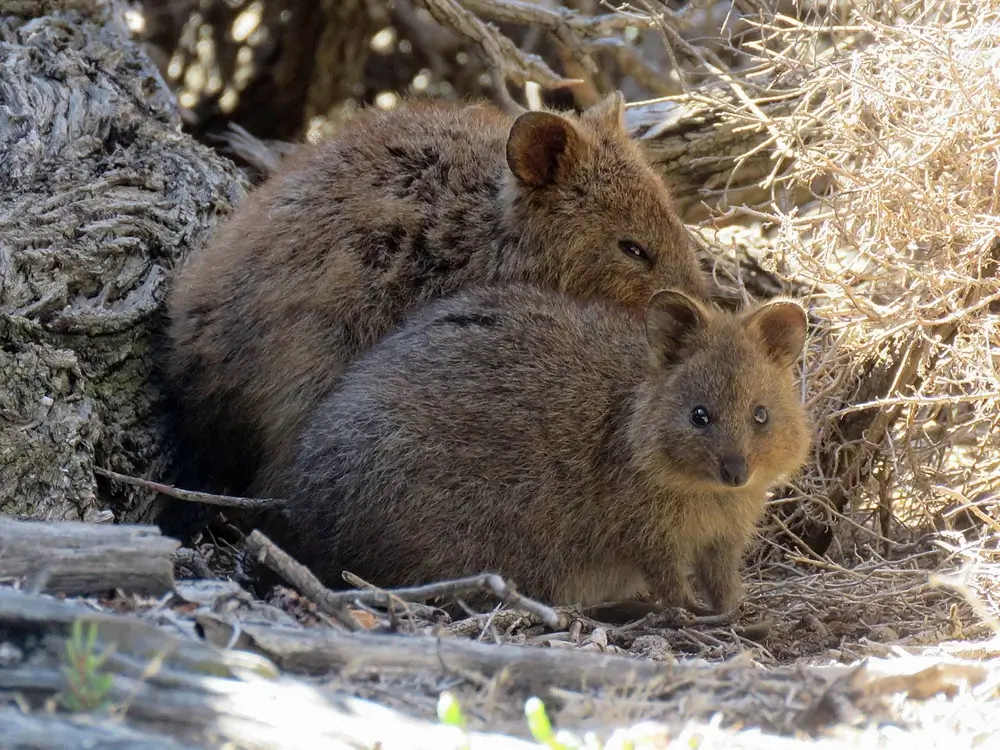
Species in this family include the lowland tree kangaroo, the white-throated tree kangaroo, the black dorcopsis, the yellow-footed rock wallaby, the lesser forest wallaby, the rufous hare-wallaby, the red kangaroo, the eastern gray kangaroo, the black wallaroo, the red-necked pademelon, the quokka, and the whiptail wallaby.
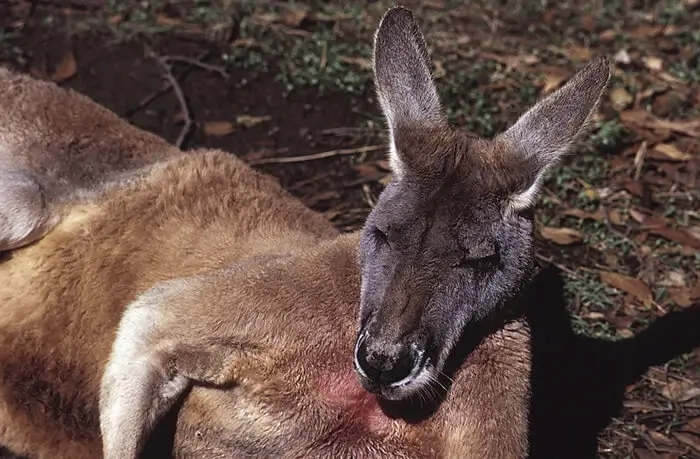
RED KANGAROO
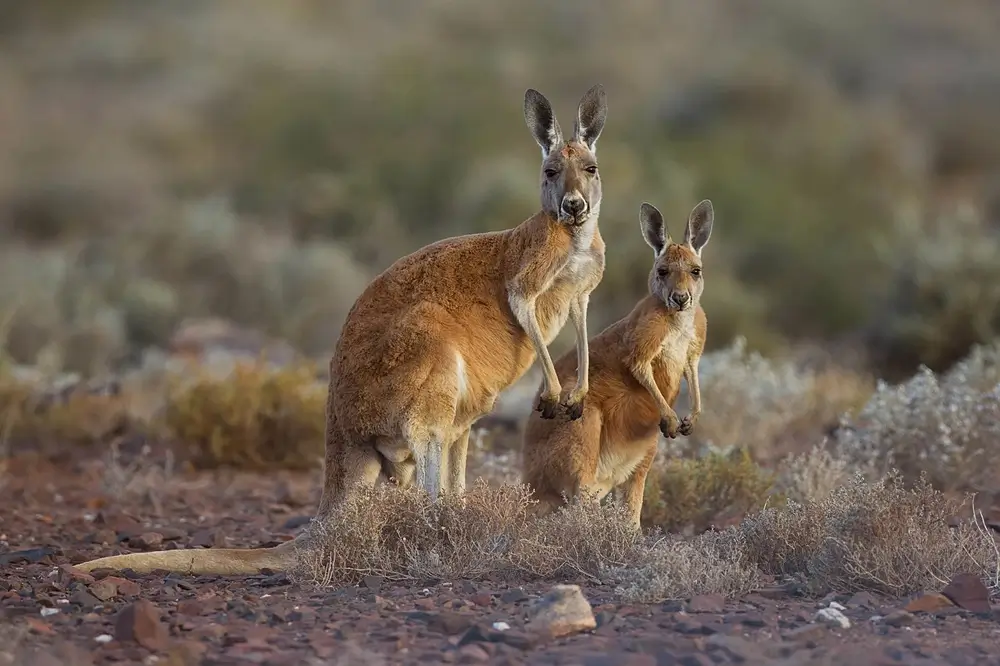
The red kangaroo is the largest marsupial. It is found in central Australia. It stands about 5 feet tall and has a tail that is over 40 inches long.
The male red kangaroo is usually reddish-brown, and the female is usually a bluish-gray.
The red kangaroo can’t walk; it hops when it needs to move. It can leap up to six feet in the air and can hop as far as 25 feet! It can hop at speeds of up to 35 miles per hour for short distances.
The red kangaroo lives in groups, known as pods. It is nomadic and moves from place to place in search of food.